GÜLAY YAŞAYANLAR & MÜMTAZ SAĞLAM
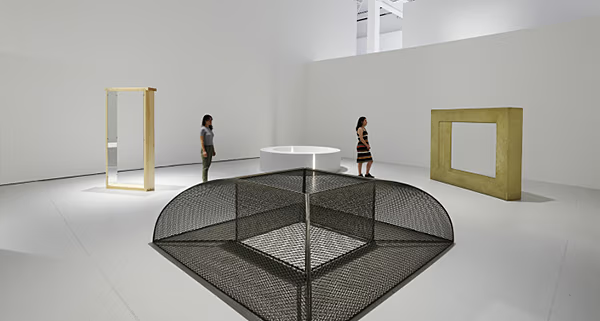
Minimalist artists relate painting to three-dimensional experimentation. This mode of formation, which carries artistic expression toward a transcendent arrangement, acquires an intensely modern character as a form of spatial organization, depth, balance, and composition rooted in holistic comprehension. In this respect, it diverges from geometric abstraction into a distinct territory, advocating a confrontation with plain formalism through a pursuit of relational equilibrium, alongside repetition, methodical positioning, and relationality.
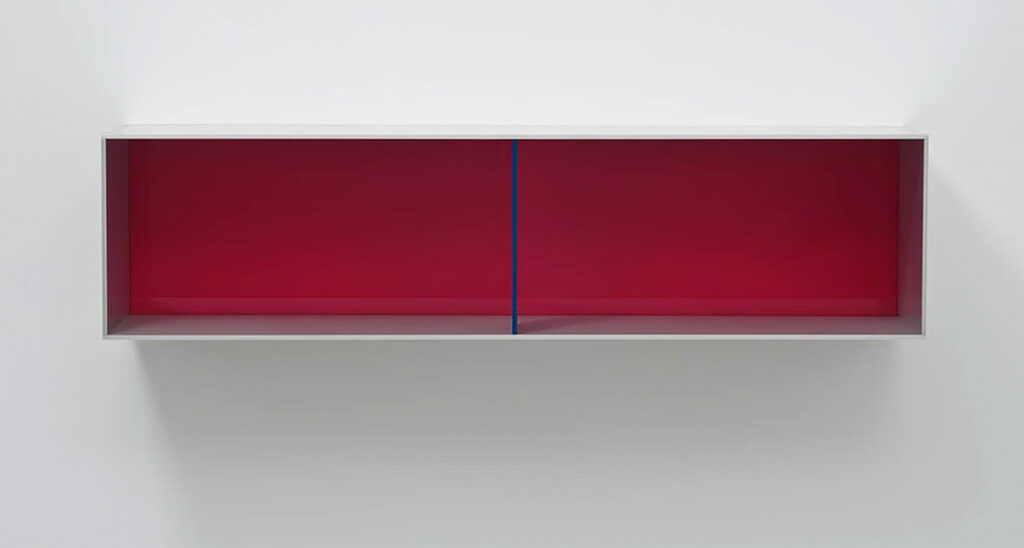
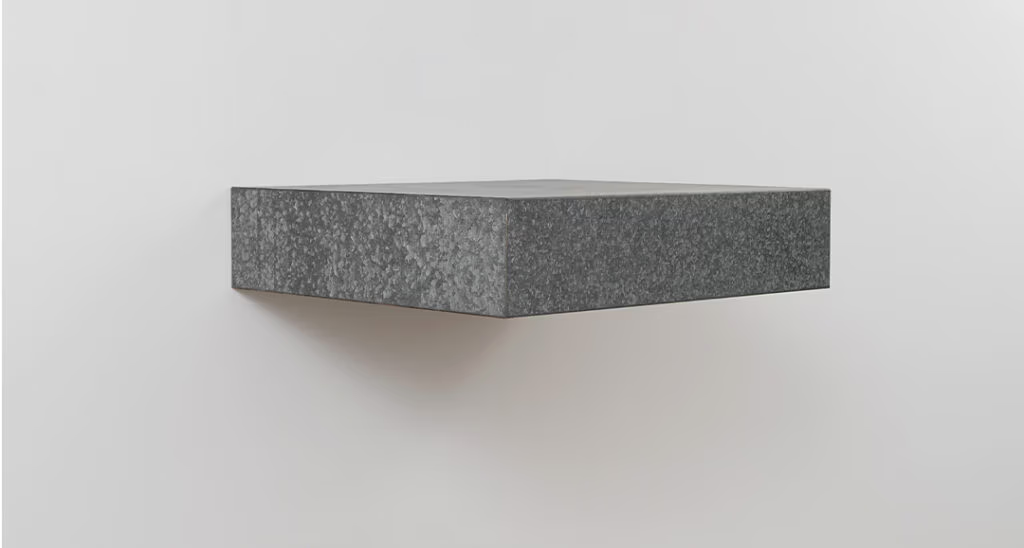
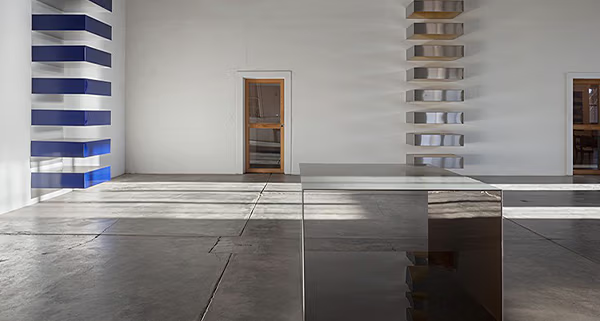
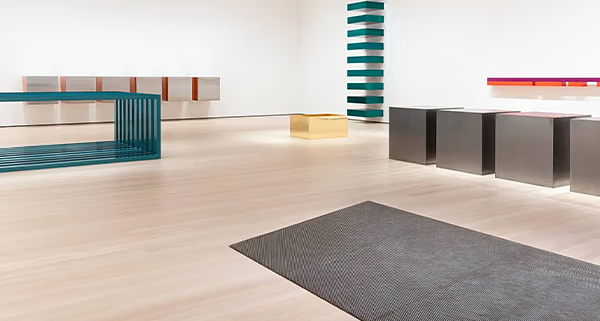
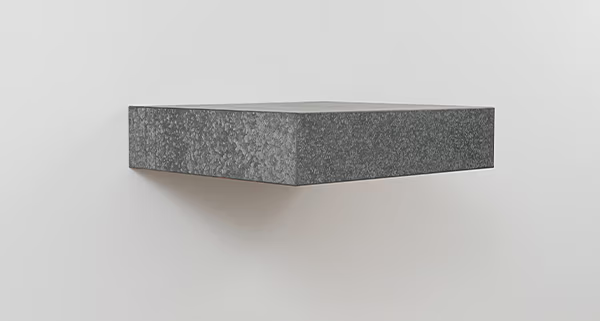
Donald Judd, for instance, during the first half of the 1960s, engaged in a movement of repetition-based installation and order-making, arranging similar forms such as rows of wall-mounted boxes at regular intervals. This act also gains significance as an effort to neutralize the possibilities of meaning. Dan Flavin, in a comparable manner, continues his approach of resisting meaning through simple formal order by positioning light tubes in relation to the wall. Here, while the functional and semantic use-value carried by the repeated form as an object is bypassed, adherence to stacking order and formal discipline is left alone with a minimal aesthetic. It is therefore evident that these artists tend toward conceptualizing the immediate, abstract, singular, and distanced solitude of the presented or repeated object as a structural and discursive choice.
Donald Judd’s concerns relate to the evolution of pictorial language and image strategy, and to the transformation of painting into the dimension of object through a late modern turn. In the first half of the 1960s, this observation can be explained through a process of reduction and objectification, in which the flat surface gives way to shaped metal surfaces and curves animated by movement and image. Painting here, in Judd’s own terms, is transformed into a specific object or sculpture. (1) This can also be described as a critical abstraction, an investigation, and an aesthetic exercise. Judd’s wall sculpture composed of stacked boxes is, in essence, an endeavor that completes the sculpture through a dimensionality entered into with void, within a structure conforming to the conditions of order, discipline, and balance. Accordingly, it remains debatable whether the void surrounding the intermittent object arrangement produces a cultural spatial effect or lends a psychological dimension to the sculpture. For the interior spatial mediation of the elements constituting the sculpture, along with their material neutrality, appears to have settled for a visuality that, displaced yet faithful to repetition and rhythm, much as Morris himself perceived it, remains self-contained.

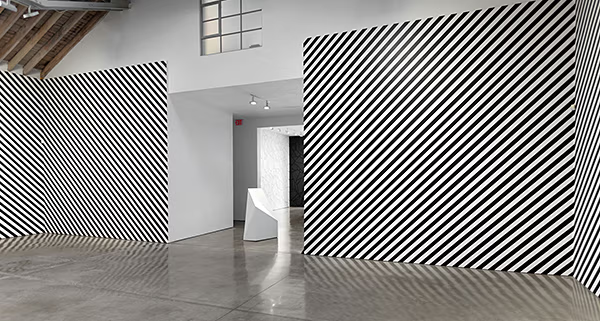
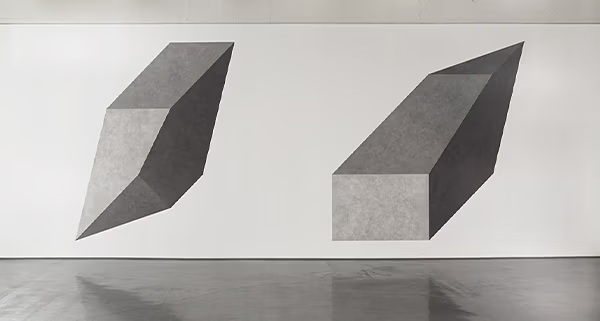
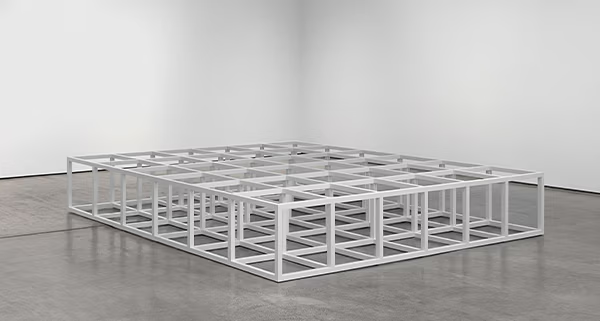
It is precisely at this point that Sol LeWitt stands markedly apart, reaching an imagistic wholeness through the repetition and density of geometric form, while diversifying this approach through pictorial surface textures and color fields and extending it across wall surfaces. LeWitt layers the question of rhythm and repetition with a more psychic and cultural implication through alternative dimensioning experiments that generate pattern, and again chooses differentiation by producing solutions that vary and multiply in accordance with the immediate spatial relationship established within each environment.
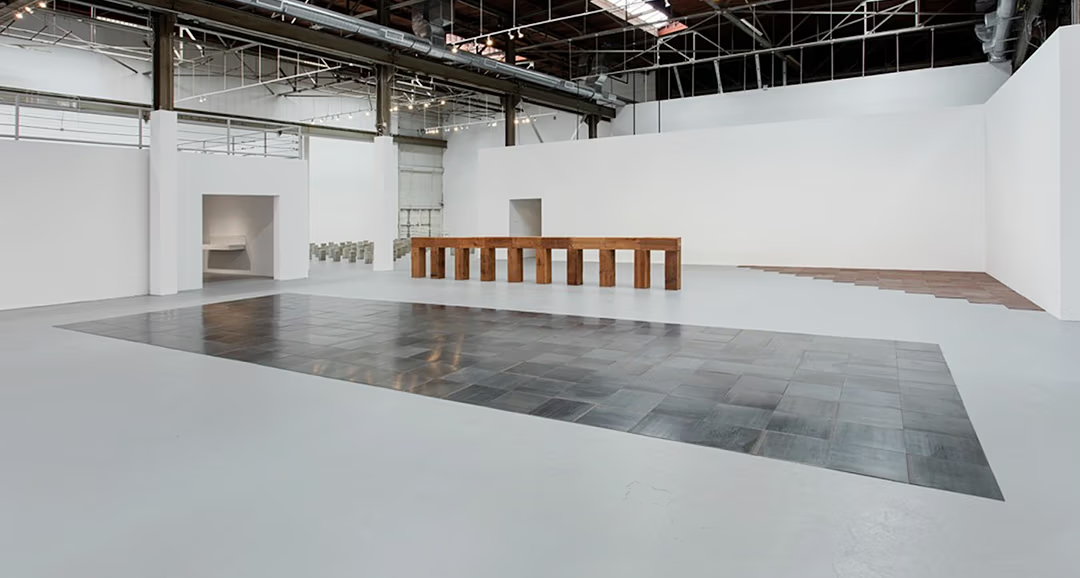
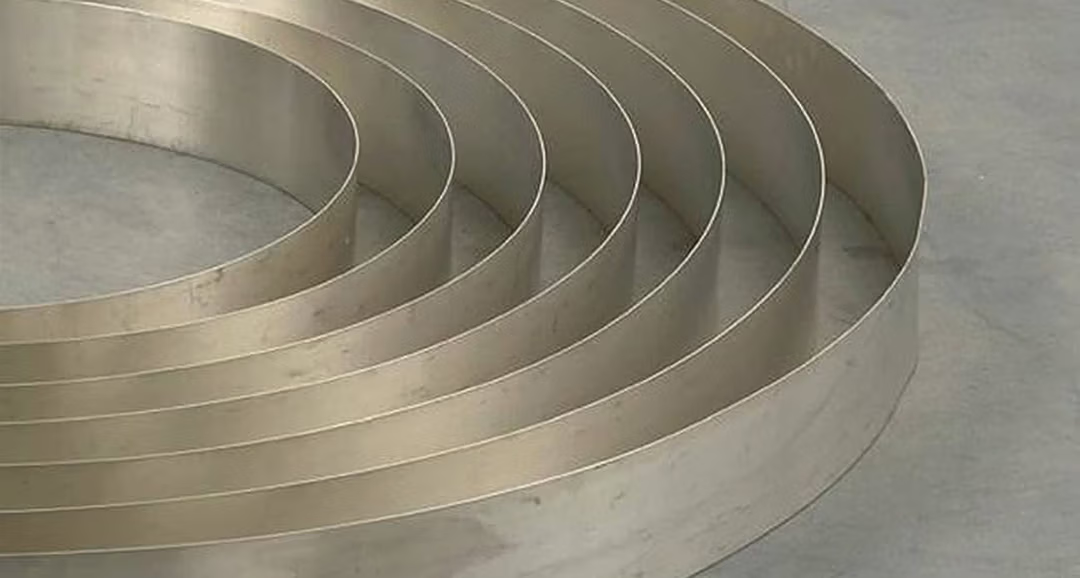
Similarly, Richard Serra’s metal plate arrangements, which generate continuity through repetition and rhythmic curves, evolve into a process of reaching monumental scale through an effort to create a unified field that encompasses the objective meanings and distinctions of metal. At the outset, the rusted surface reality constitutes the sole external motif shaping the qualities of the material beyond its form, emphasizing the character of the hard surface. The sculptural order seems dedicated to the impossible continuity of movement that the material represents, to its colossal scale, and to the aesthetic of geometric continuity formed through curves. The coherence and continuity of effect in Serra have long since transformed into a unity of language and meaning, evolving into an impossible visuality focused on material experience that pushes against spatial dynamics.
NOT
the idea and endeavor of order-making as an internal necessity
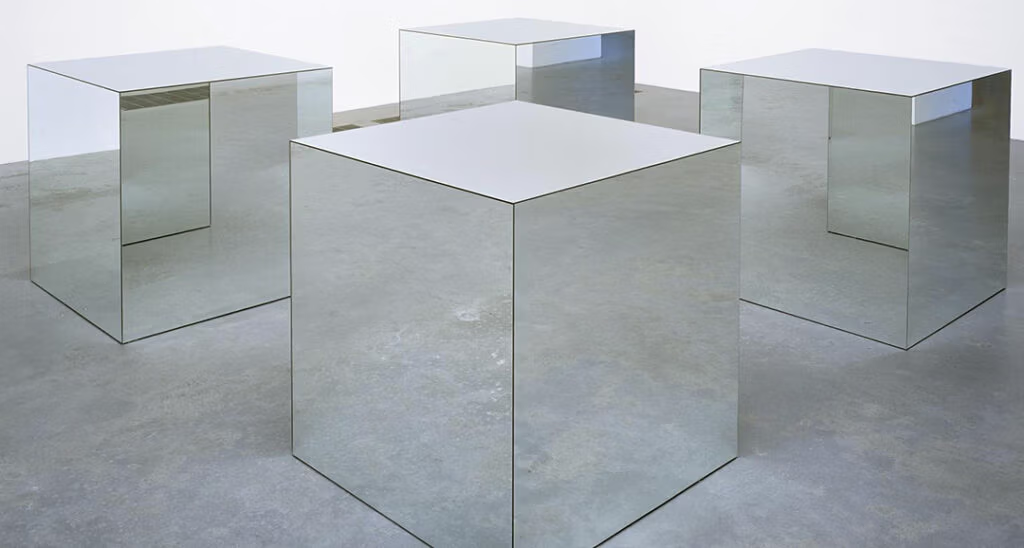
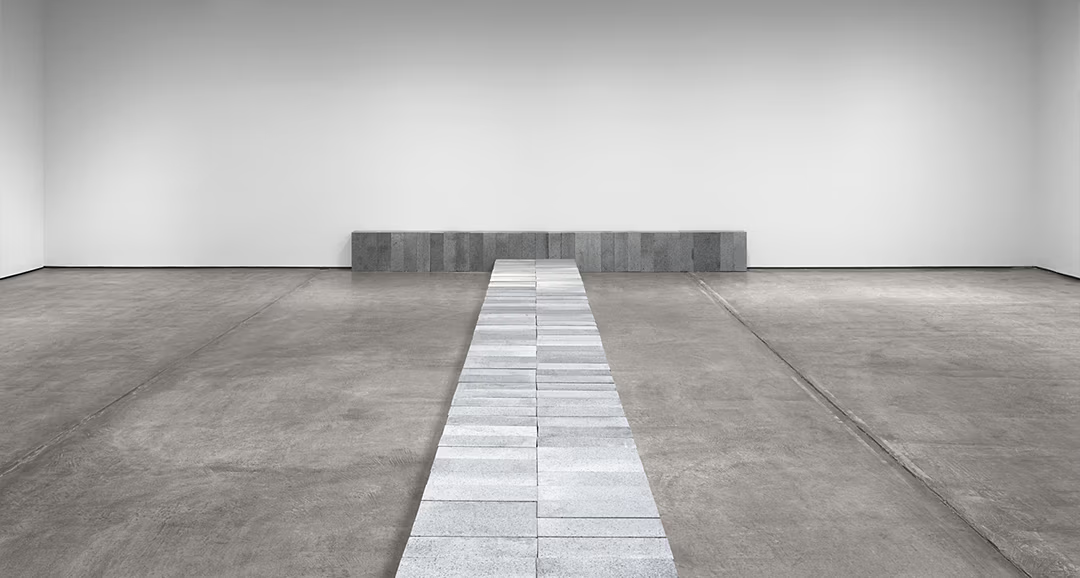
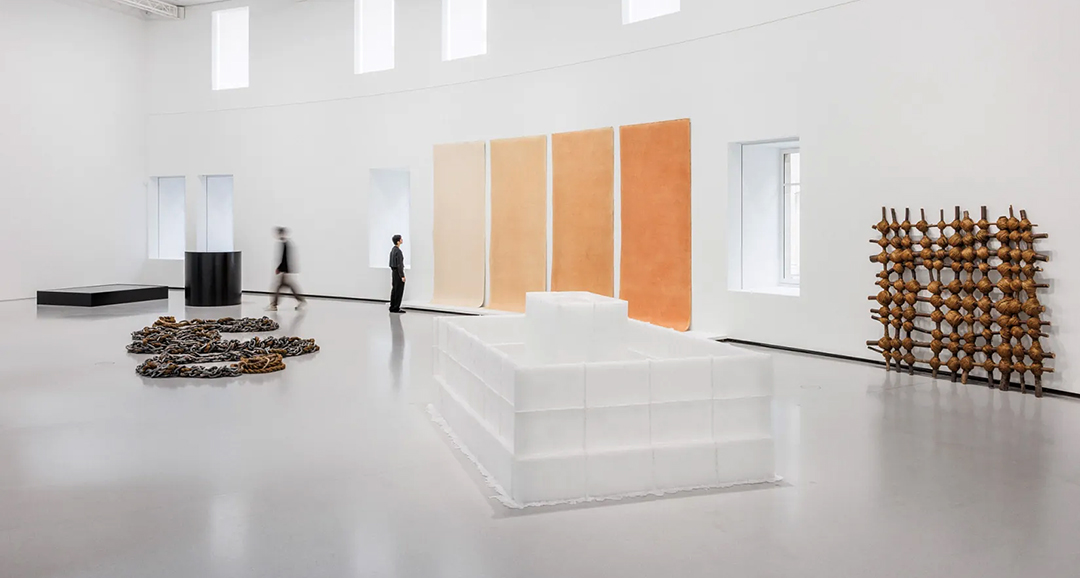
The priority rooted in the rejection of structural order, narrative connections, and possibilities leaves nothing beyond pointing to the abstract and isolated state of the object and form in its simplicity, its solitude. The rhythmic visual and aesthetic effect created by repetition-based order resembles the pursuit of a condition that belongs to itself, arriving at modular form and pattern configurations. The acentric and simultaneous repetition of mass, object, and image, the aesthetic of sequential arrangement, and the construction of surface through grid or modular form are valued here as a means of establishing a rational logic or justification for minimalist attitude and thought. In certain artists, one can observe that the effort to develop an idea of order, transformed into composition through formal repetition, gradually becomes an internal necessity, pressing against the implications of Minimalism within their own processes of personal stylization. Sol LeWitt’s use of form and motif enriched by color exemplifies this reality most effectively.
notes
1 Hal Foster, Gerçeğin Geri Dönüşü / The Return of the Real, Translation: Esin Hoşsucu, Ayrıntı Publication, May 2009, İstanbul. sf. 74.
2 Rosalind Krause, Modern Heykelin Dehlizleri / Passages in Modern Sculpture, Translation: Sibel Erduran, Everest Publishing, October 2021, İstanbul.
Gülay Yaşayanlar & Mümtaz Sağlam Copyright © March 2026, All Rights Reserved.
A FIle on MInImalIsm at Saglamart
minimalism 3 / the abstract and isolated form of an object
minimalism 4 / rhythm and repetition the cultural implications of action
A COLLECTION EXHIBITION
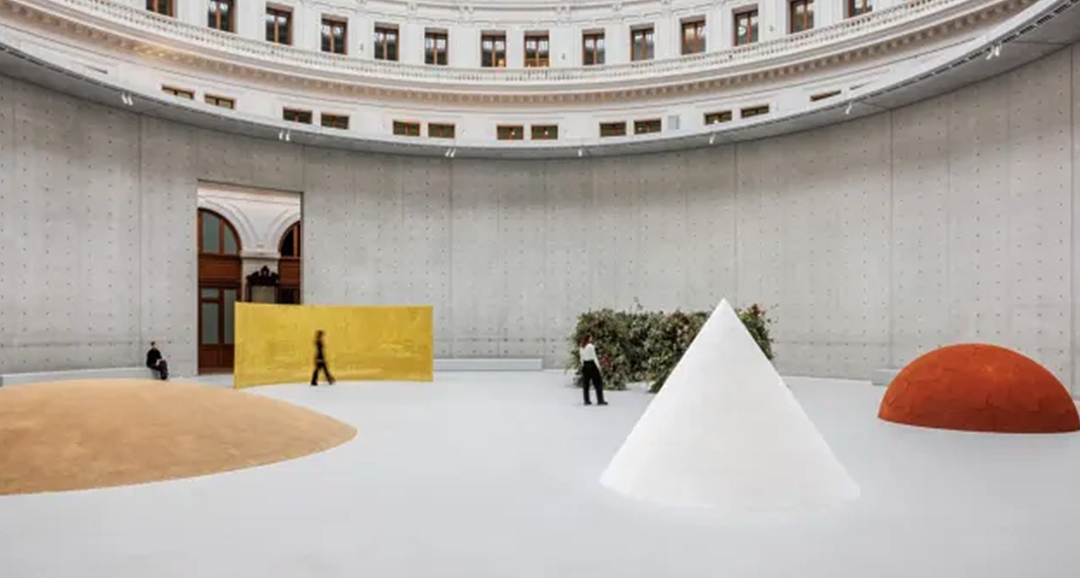
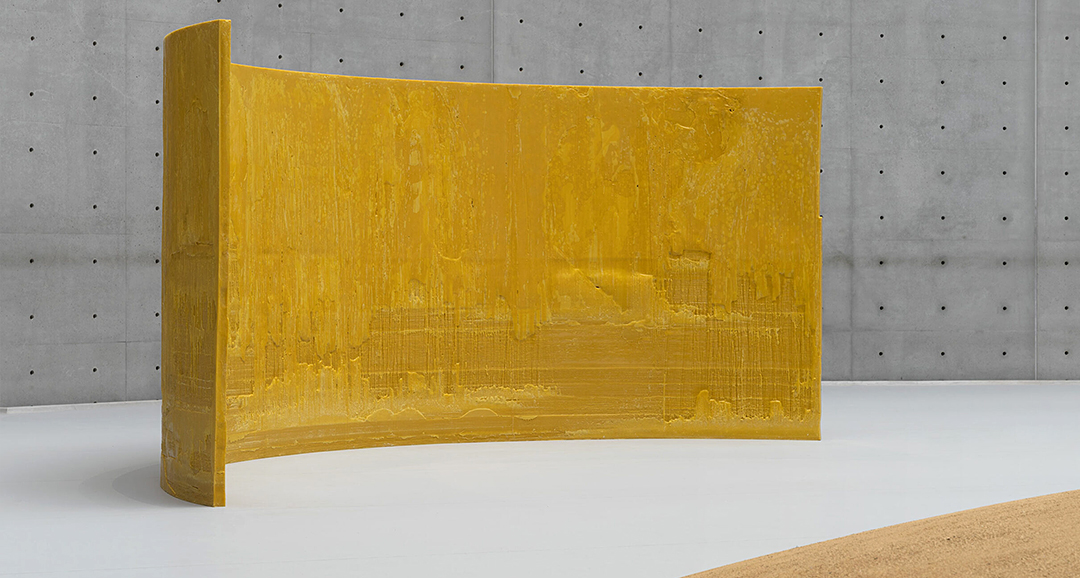
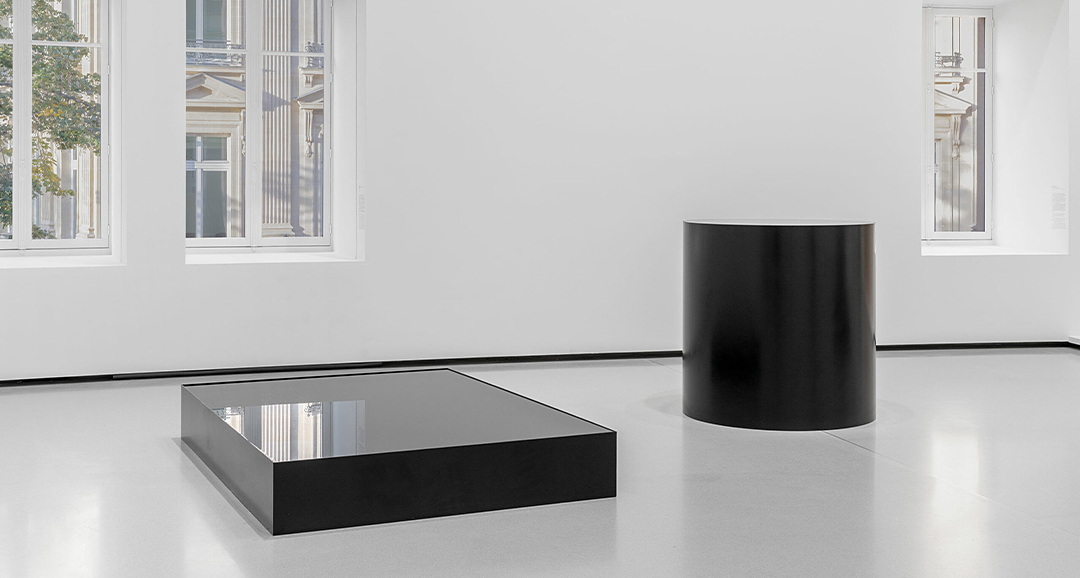
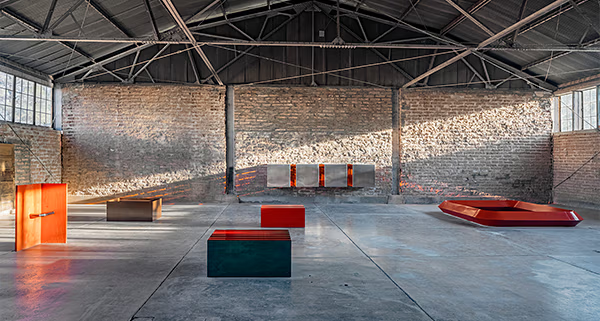
Exhibition view from Minimal, Bourse de Commerce – Pinault Collection, 2nd Floor: Materialism, Gallery 5.
MINIMALIST ARTISTS
MInImalIst ArtIsts at Saglamart
MINIMALISM / 5 BOOKS
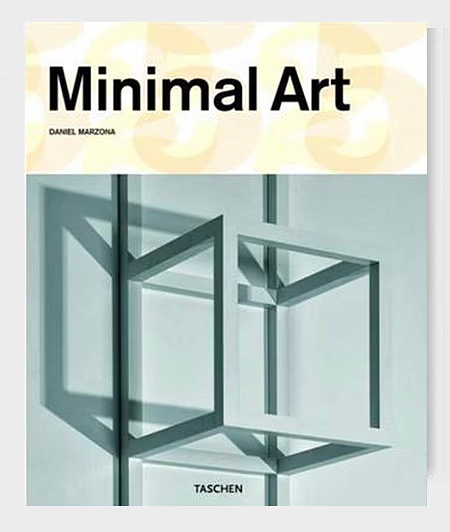
Daniel Marzona, Minimal Art, Tashen Deutschland, 25. Edition, German, Hardcover, 200 pages, 2009.
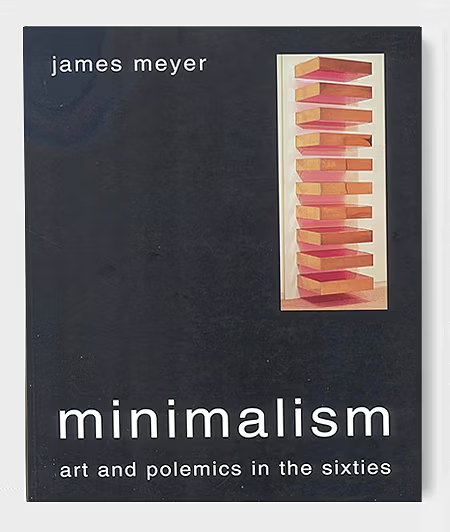
James Meyer, Minimalism / Art and Polemics in the Sixties, Yale University Press, English, Paperback, 340 pages, August 2004.
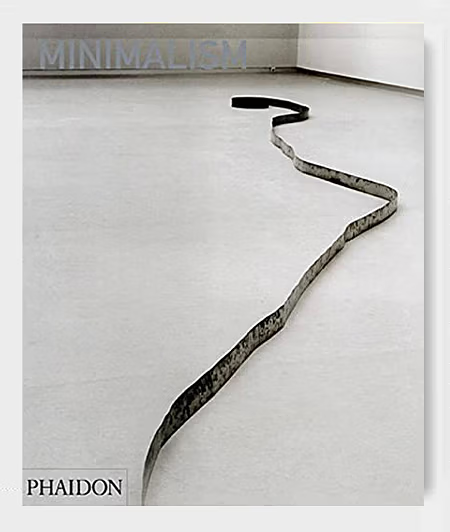
Minimalism, Edited by James Meyer, Phaidon Press, English, Soft Cover, 200 pages, June 2010.
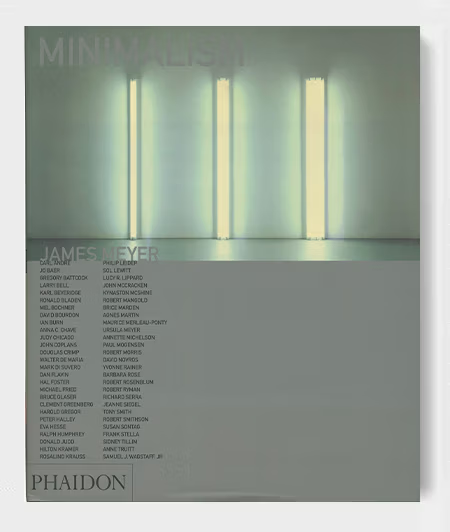
Minimalism, Edited by James Meyer, Phaidon Press, English, Paperback, 304 pages, March 2005.
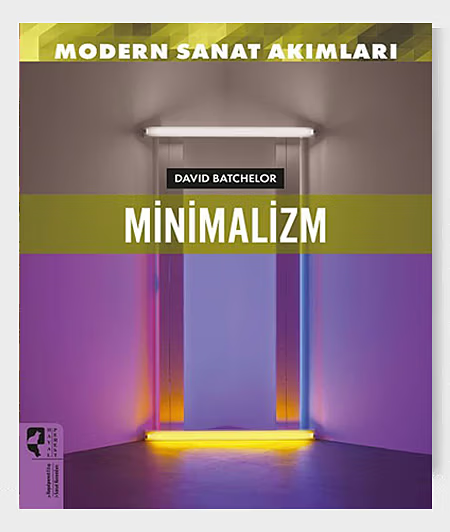
David Batchelor, Minimalizm, Translation: Tüles Üresin, Hayalperest Publication, Turkish, Paperback, 96 pages, İstanbul 2025.
saglamart; dinamik bir anlayış ile hareket eden, kültür-sanat ortamındaki olay ve olgulara, sanatçı tavırlarına, yapıtlara ve yayınlara odaklanan bağımsız bir yayın etkinliğidir. Tüm hakları saklıdır. Görüntü ve yazılar izinsiz kullanılamaz. / saglamart is an independent publishing initiative driven by a dynamic vision, focusing on events and developments in the cultural-artistic landscape, artist perspectives, works, and publications. All rights reserved. Images and texts cannot be used without permission.