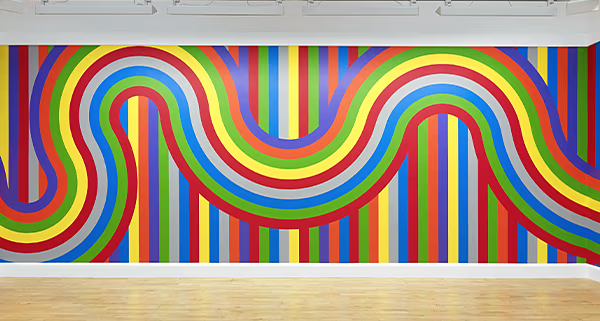
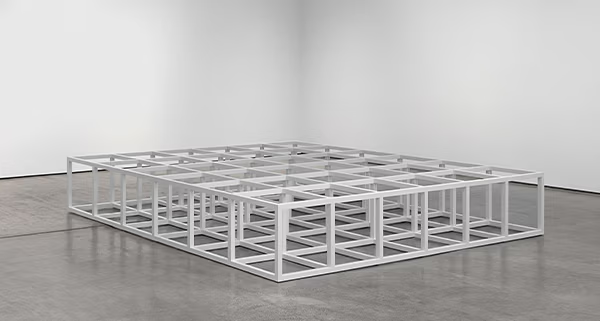
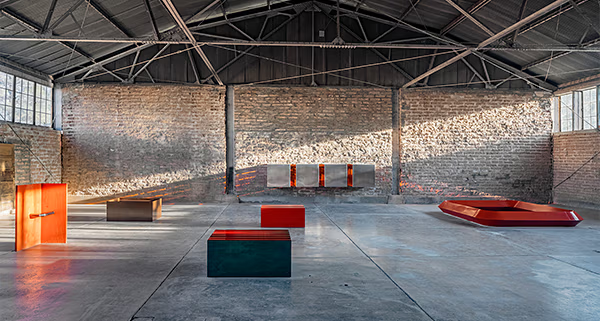
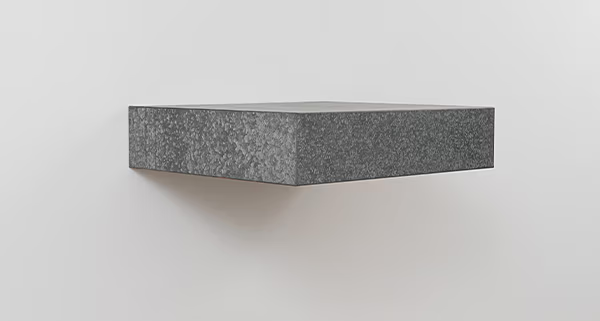
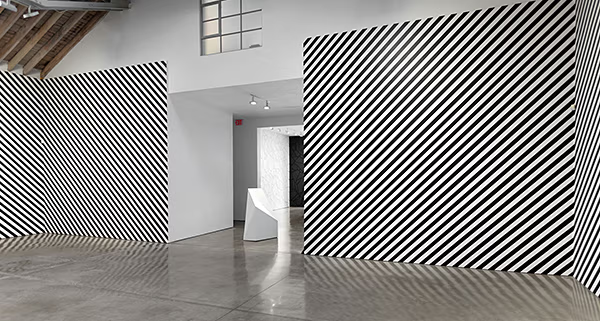
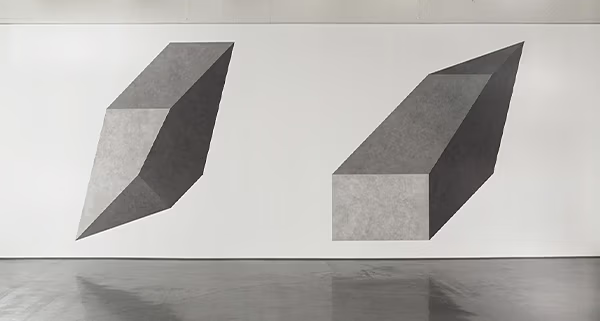
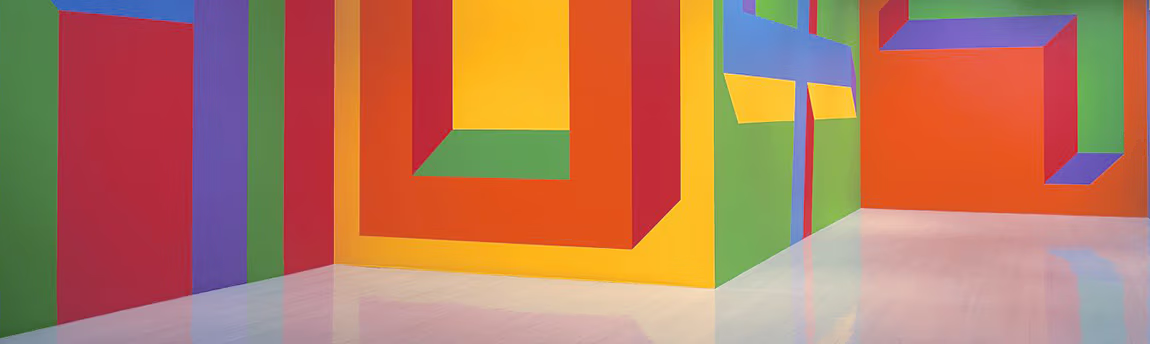
THE WALL DRAWINGS ARE, WITHOUT QUESTION, AN EFFECTIVE MEANS OF UNSETTLING THE CONCEPT OF SITE-SPECIFIC WORK AND PUSHING AGAINST ITS LIMITS, TRANSFORMING SPACE INTO A DEPENDENT VARIABLE THROUGH THE DISRUPTIVE CONTINUITY OF SCRAWLS THAT CARVE AND COVER WALLS. FOR IT IS EVIDENT THAT GREATER VISUAL AND SPATIAL CONTINUITY IS CREATED HERE THROUGH MODULAR GEOMETRIC DRAWINGS AND STRUCTURES SUCH AS THE OPEN CUBE, PYRAMID, OR BROKEN ARCH. THE OPTICAL ILLUSION THAT RESULTS IS, THROUGH ITS VERY SIMPLICITY, REMARKABLY ASTONISHING.
Sol LeWitt produces a substantial body of work within the Wall Drawings series. While some of these works evoke the tradition of mural painting, they gradually establish their own distinct tradition, guided by plain and continuous forms and predetermined rules. The visual language LeWitt constructs through basic geometric shapes rests on the connection and resolution established between sustainable order and chance. Although the plans and projects he develops are executed by other artists and trained assistants following his instructions, the conceptual directives that constitute the essence of the work are carefully preserved. The theme remains fixed, yet the drawing on the wall differs to some degree each time it is realized. Described as a pure sequence of thought draped over the wall, these drawings in a sense also transgress modernism’s definition of painting, pushing against the limits of logic and drawing the viewer into a visual labyrinth.
The Wall Drawings series is also, in another respect, a counterpart to the dematerialization of art. When an exhibition concludes, these drawings are painted over and thus destroyed; only the idea, the instruction, remains. In this practice, where art resists becoming an object or commodity, the work naturally exists only for the duration of its execution. Art thereby becomes a transient event rather than something identical with a permanent form.
spaces where systematic logic is transformed into spatial occupation
The unique working method that Sol LeWitt developed as his fundamental modular unit of artistic inquiry in the 1960s, and which he termed his own simple or minimalist grammar, in fact remains unchanged throughout his career. During this period, he defines his wall drawings in particular as grammatical structures taking the form of geometric forms and progressions. At the same time, he achieves a significant breakthrough by beginning to make large-scale drawings directly on the wall using predetermined line-forming methods and generally industrial materials.
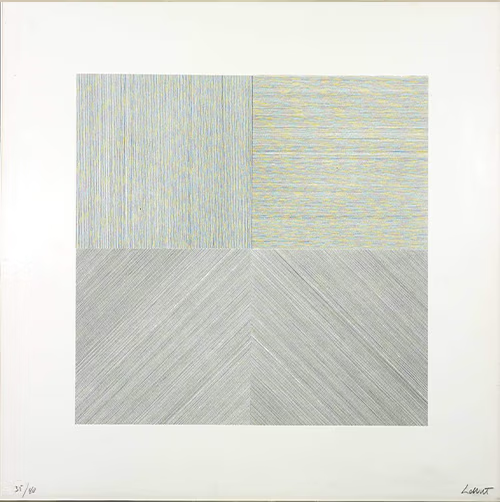
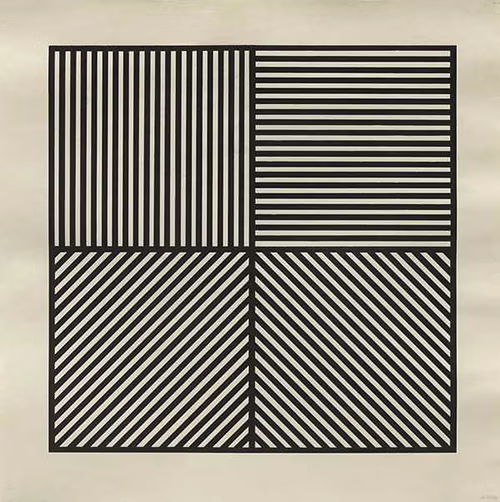
The Wall Drawings series clearly corresponds to a phase in which the artist’s systemic logic is transformed into a spatial occupation. These drawings conceive of the wall and surface, the last refuge of traditional painting, in an entirely different manner. The wall is no longer a support; here, the painting is the wall itself. When thousands of fine lines, grids, or geometric forms spread across the wall, it ceases to be a rigid architectural element and becomes a field of optical vibration. These unframed works expand until they encounter architectural boundaries and integrate with the spaces they inhabit in a remarkable way.
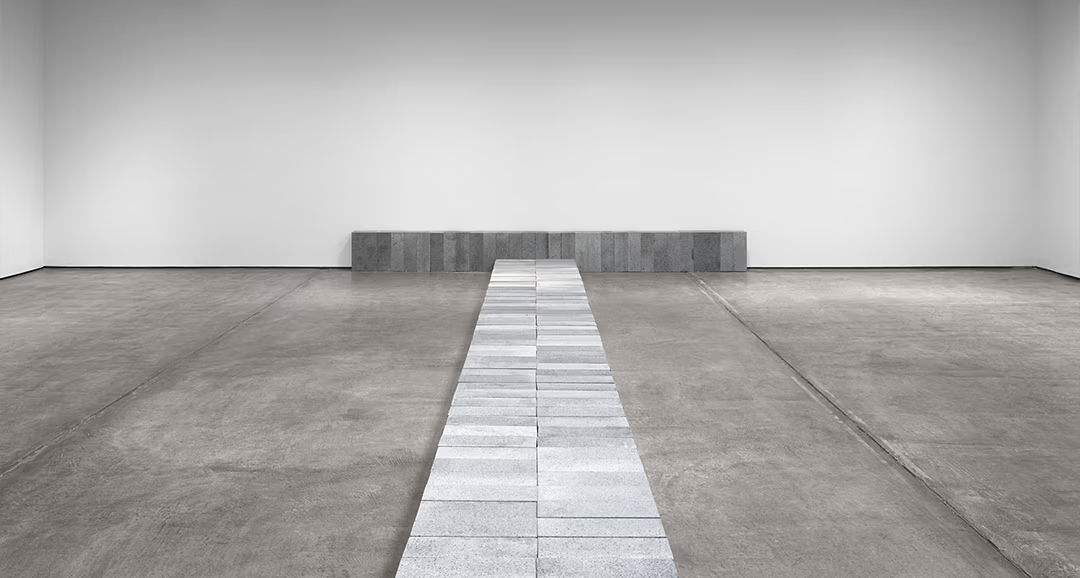
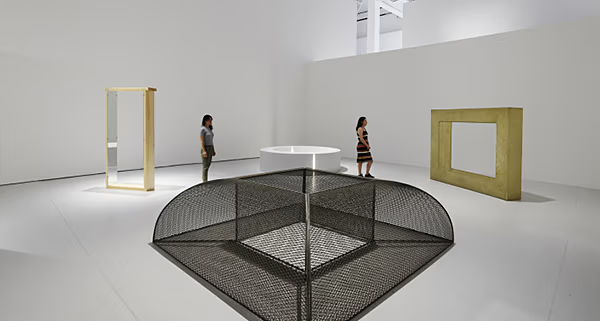
This philosophy of ordered chaos, applied with equal rigor in his three-dimensional works, demonstrates a powerful and sustained architectural implication. The grid or geometric and abstract horizontal sequencing realized through different types and techniques therefore evokes resolute architectural solutions. And perhaps his tendency to avoid depth leads him directly toward drawing on walls and developing the wall drawing as a form. This tendency simultaneously achieves a pure and immediate essentiality that engages with architecture in a conflictual yet boundary-free manner.
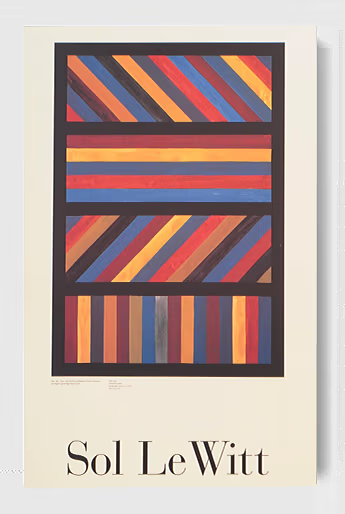
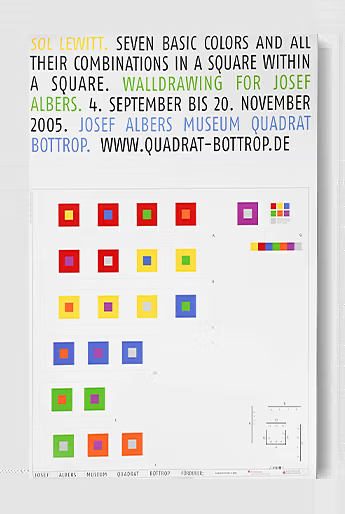
In this context, for instance, he employs the simple square form to explore the illusory effects of color on a two-dimensional plane. He places one square within another to examine the interaction of different colors, ultimately producing optical effects whose appearance shifts as the viewer moves forward or backward. The arrangements that thus unite spatial and temporal dimensions connect with the very essence of minimal art as the product of an experience that is simultaneously ordinary and intense.
Sol LeWitt uses a grid as a support or framing device for his three-dimensional works. The work appears to have risen from two dimensions to three due to its position within the grid. The density of horizontal and vertical lines produced by the grid plan appears strong and orderly, yet it also evokes a sense of chaos. The phenomenon of drawing-design, transferred to the wall and linked to a textual procedure (instructions), cannot escape oscillating between two- and three-dimensional effects here. This is undoubtedly a fundamental characteristic of Sol LeWitt’s drawing practice, which reinforces effects of dimension and depth whilst also enabling the transition to the abstract and conceptual. (See David Batchelor, Modernism, Translated by Tüles Üresin, Hayalperest Publications, Istanbul, 2025, pp. 57–58)
Sol LeWitt: Grid
Two New exhIbItIons
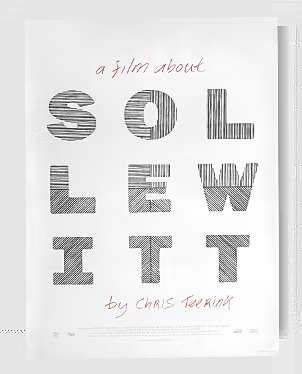
Sol Lewitt: Open Structure, Exhibition Poster, Museum of Contemporary Art Tokyo, Operated by Tokyo Metropolitan Foundation for History and Culture With the Cooperation of the Estate of Sol LeWitt.
Sol Lewitt: Open Structure, Museum Exhibition, Curated by Ai Kusumoto, 25 December 2025 – 2 April 2026 Museum Of Contemporary Art Tokyo, Organized by Sol LeWitt: Open Structure, Museum of Contemporary Art Tokyo, Operated by Tokyo Metropolitan Foundation for History and Culture With the Cooperation of the Estate of Sol LeWitt.
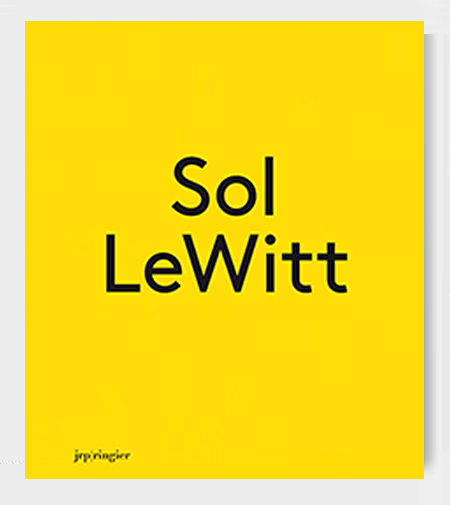
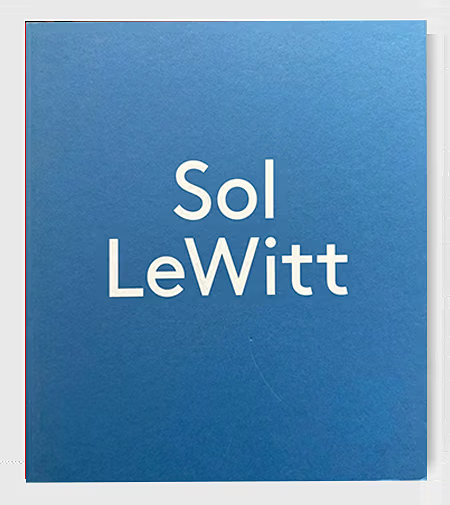
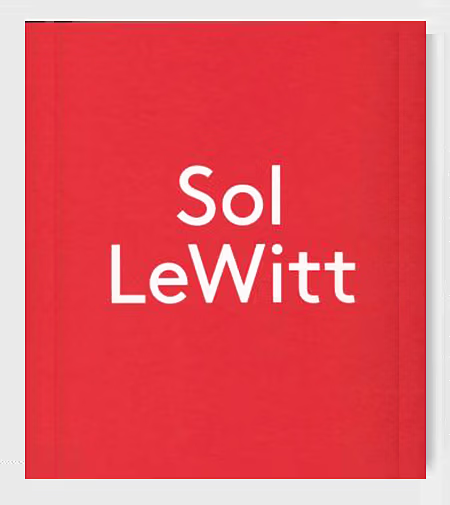
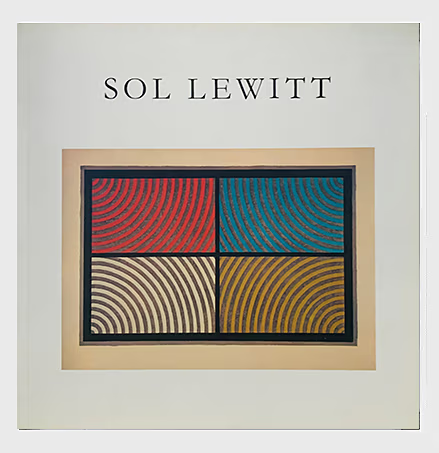
Sol LeWitt, (Monographs & Artist’s Books), 4 Books, Editor: Beatrice Gross, Contributors: Lucy Lippard, Rosalind Krauss, Mel Bochner, Dan Graham ve Robert Smithson, Publisher: Centre Pompidou-Metz, M-Museum de Louvain and JRP/ Ringier, 326 pages, English, Paperback, 2012-2013.
Produced to accompany the two exhibitions Sol LeWitt: 1968–2007 Wall Drawings at the Centre Pompidou-Metz with Sol LeWitt: Colours at the M-Museum in Leuven, this publication documents the most significant collection of LeWitt’s works ever exhibited in Europe. A seminal work in terms of its scope, design and scholarly depth, this book is also the first comprehensive monograph on LeWitt published posthumously. It brings together interview transcripts and numerous significant essays by artists and writers such as Lucy Lippard, Rosalind Krauss, Mel Bochner, Dan Graham and Robert Smithson.
Sol LeWitt: Forms Derived from a Cube (Color), Catalogue for a suite of 12 silkscreen prints by Sol LeWitt, 20 pages, English, Softcover, Published by Edition Achenbach, 1991.
David S. Areford, Strict Beauty: Sol LeWitt Prints, Hardcover, English, 288 pages, Publishers: New Britain Museum of American Art; Williams College Museum of Art; and Yale University Press, 2020.
Sol LeWitt: Not to Be Sold For More Than $100, by Jason Rulnick (Introduction), Sol Lewitt (Artist), Veronica Roberts (Contributor), 240 pages, English, Radius Books, Hardcover – June, 2020.
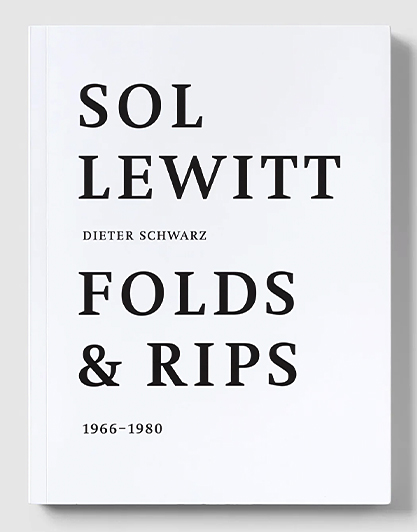
Dieter Schwarz, Sol LeWitt: Fold & Ribs 1966-1980, English, Softcover, 160 pages, Publisher: Walter König, 2020.
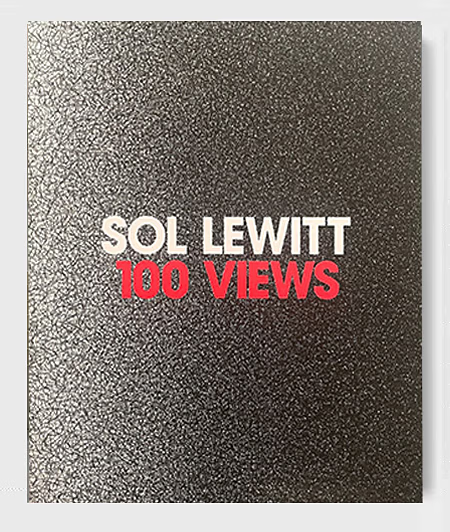
Sol Lewitt: 100 Views, Text by Susan M Cross, by Sol LeWitt (Author), Paperback, English, Yale University Press, Jun 2009.
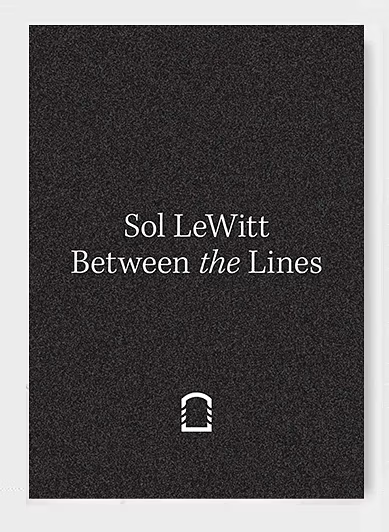
Sol LeWitt: Between the Lines, by Francesco Stocchi (Editor, Contributor), Sol Lewitt (Artist), Rem Koolhaas (Contributor), Adachiara Zevi (Contributor)320 pages, English, Publisher: Koenig Books, Paperback, June 26, 2018.
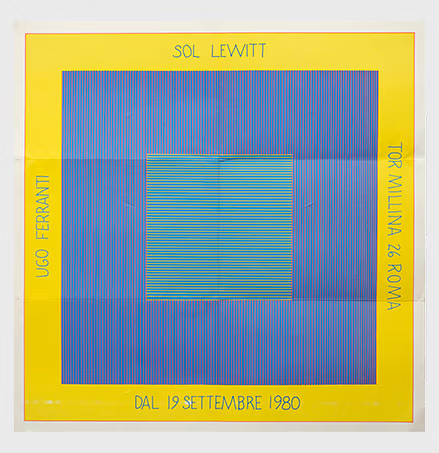
Sol LeWitt / Selected Prints 1970-1986, Original exhibition poster, Tate Gallery, Designer: Anon, Printer: Hillingdon Press, Publisher: Tate Gallery, Size: Double Crown (760 x 510 mm), 1986.
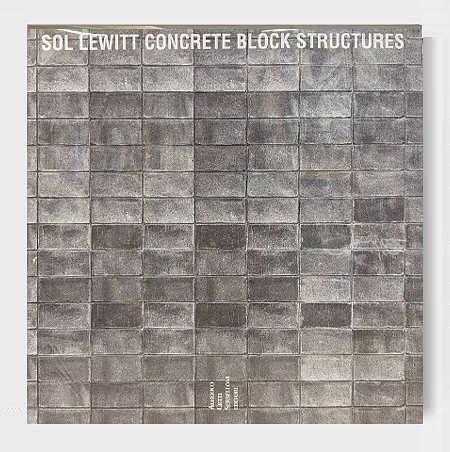
Sol LeWitt: Artist’s Books, Authors: Didi Bozzini, Cecilia Metelli, Marilena Bonomo, Editors: Giorgio Maffei, Emanuele De Donno, Sol Lewitt (Artist), 144 pages, English, Publisher: Edizioni Corraini, Paperback, February 28, 2010
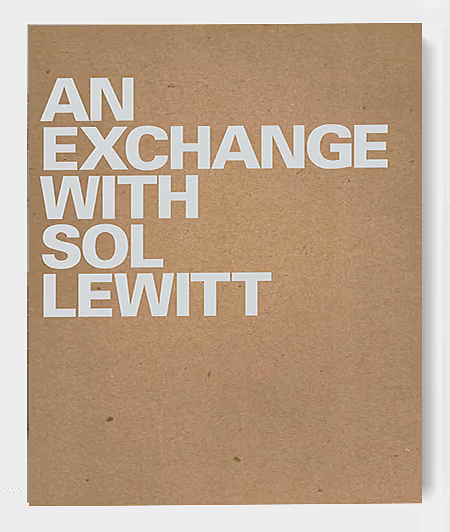
An Exchange with Sol LeWitt, Introduction by Regine Basha, Softcover, English, 192 pages, Cabinet Books, 2011.
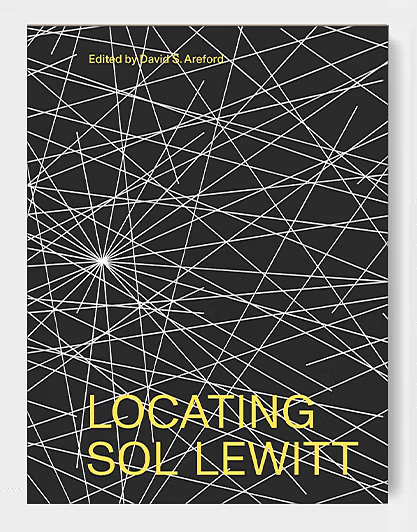
Locating Sol LeWitt, Edited by David S. Areford, Contributors: Lindsay Aveilhe, Erica DiBenedetto, Anna Lovatt, James H. Miller, Veronica Roberts, Kirsten Swenson, John A. Tyson, Hardcover, 288 pages, English, Yale University Press, March 2021.
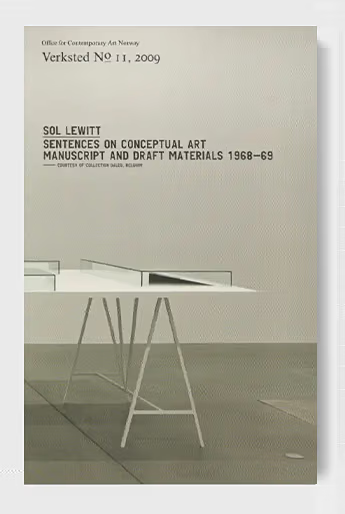
SELECTED DOCUMENTS
BIOGRAPHY
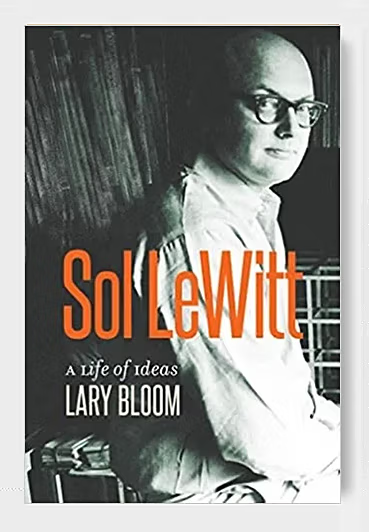
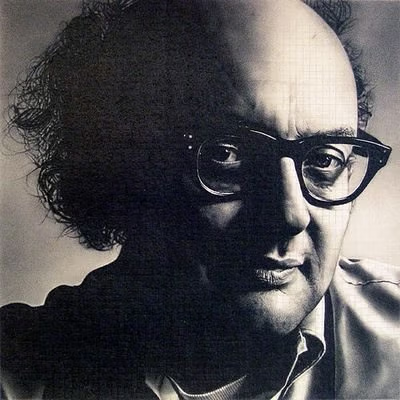
Sol LeWitt (1928–2007), one of the leading figures of Conceptual art and Minimalism, is renowned for his works that demonstrate that art can exist not only through the resulting object but also through the idea itself. Centring his works on the concepts of system, repetition, geometry and mathematical order, the artist invites the viewer to reflect on the production process and intellectual underpinnings of art. LeWitt positions the artist’s role not merely as an executor, but as the designer of an idea. Through his works exhibited in international museums and public spaces, Sol LeWitt has demonstrated that art can exist not merely as a physical object, but also as a system of thought. With his approach to democratising the creative process, the artist has played a significant role in the development of contemporary art by emphasising that art is both an intellectual and an experiential field.
SOL LEWITT: CONCEPTIONAL MOVEMENT IN THE VISUAL AREA
İZMİR - LONDON
saglamart; dinamik bir anlayış ile hareket eden, kültür-sanat ortamındaki olay ve olgulara, sanatçı tavırlarına, yapıtlara ve yayınlara odaklanan bağımsız bir yayın etkinliğidir. Tüm hakları saklıdır. Görüntü ve yazılar izinsiz kullanılamaz. / saglamart is an independent publishing initiative driven by a dynamic vision, focusing on events and developments in the cultural-artistic landscape, artist perspectives, works, and publications. All rights reserved. Images and texts cannot be used without permission.