GÜLAY YAŞAYANLAR & MÜMTAZ SAĞLAM
Minimalist artists relate painting to three-dimensional experimentation. This mode of formation, which carries artistic expression toward a transcendent arrangement, acquires an intensely modern character as a form of spatial organization, depth, balance, and composition rooted in holistic comprehension. In this respect, it diverges from geometric abstraction into a distinct territory, advocating a confrontation with plain formalism through a pursuit of relational equilibrium, alongside repetition, methodical positioning, and relationality.
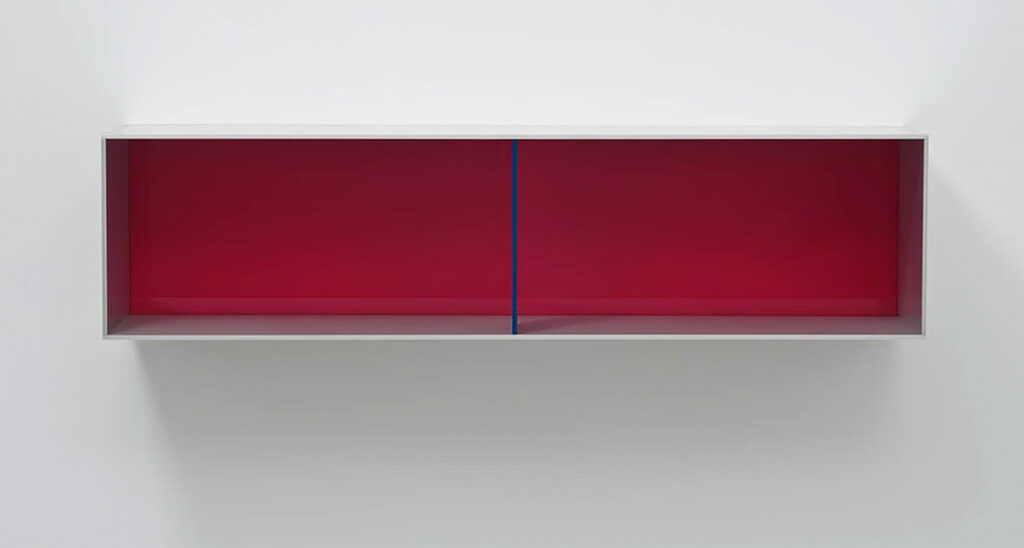
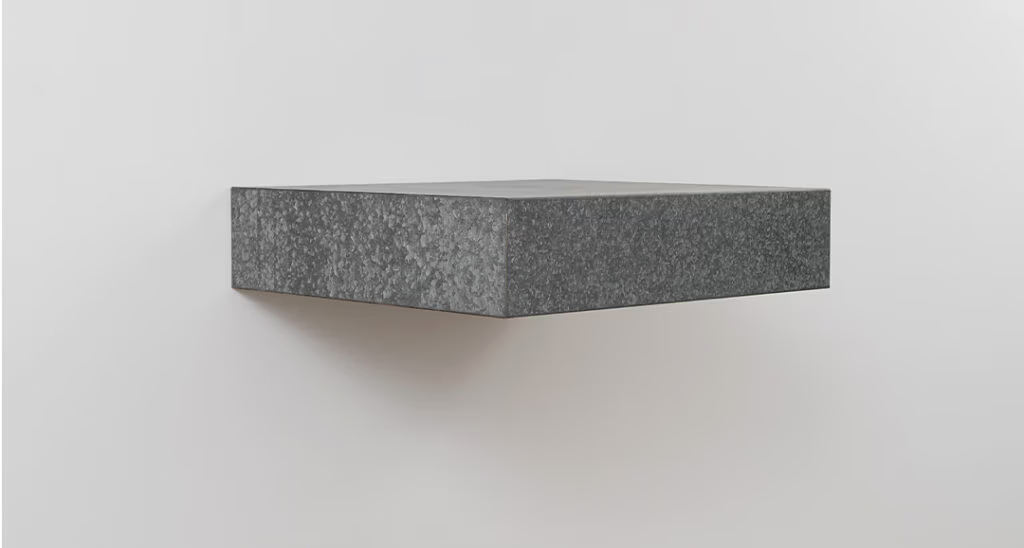
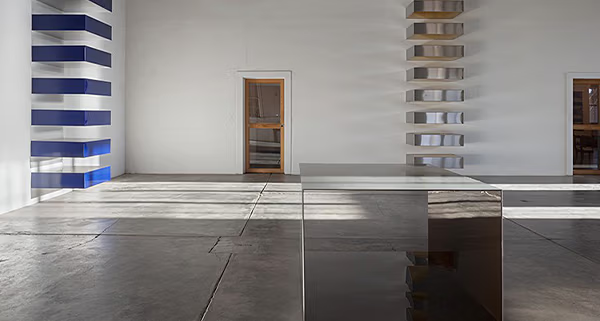
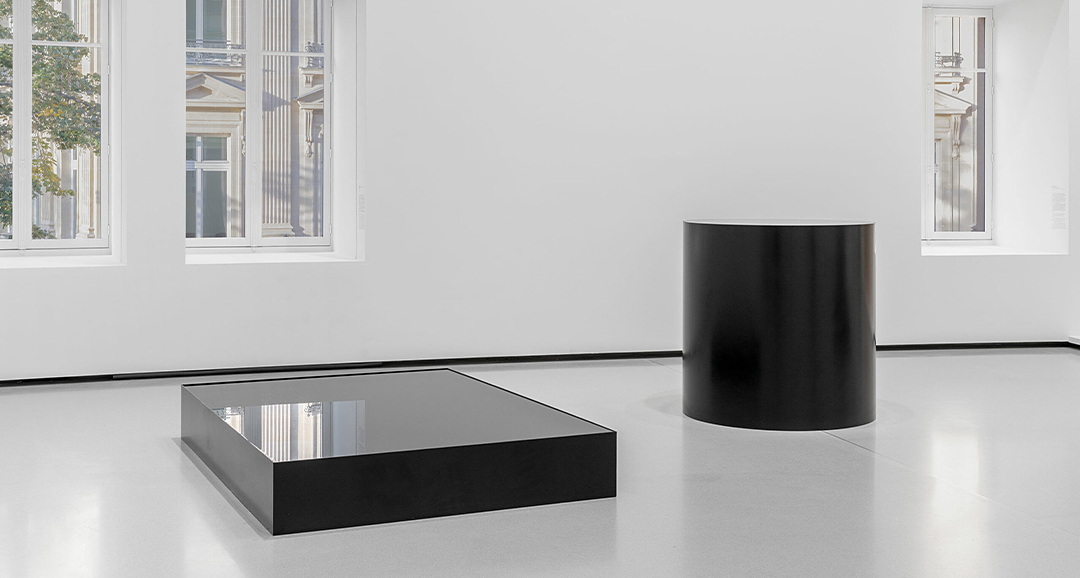
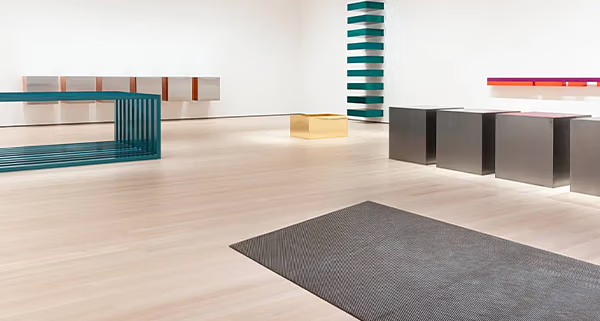
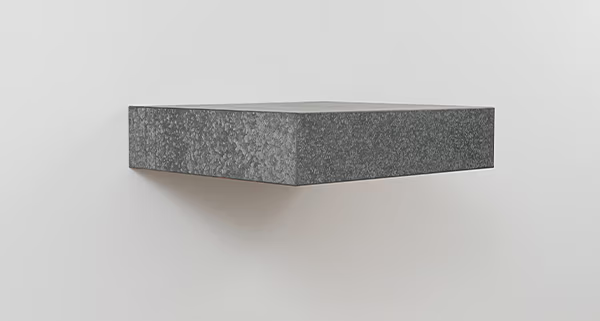
Donald Judd, for instance, during the first half of the 1960s, engaged in a movement of repetition-based installation and order-making, arranging similar forms such as rows of wall-mounted boxes at regular intervals. This act also gains significance as an effort to neutralize the possibilities of meaning. Dan Flavin, in a comparable manner, continues his approach of resisting meaning through simple formal order by positioning light tubes in relation to the wall. Here, while the functional and semantic use-value carried by the repeated form as an object is bypassed, adherence to stacking order and formal discipline is left alone with a minimal aesthetic. It is therefore evident that these artists tend toward conceptualizing the immediate, abstract, singular, and distanced solitude of the presented or repeated object as a structural and discursive choice.
Donald Judd’s concerns relate to the evolution of pictorial language and image strategy, and to the transformation of painting into the dimension of object through a late modern turn. In the first half of the 1960s, this observation can be explained through a process of reduction and objectification, in which the flat surface gives way to shaped metal surfaces and curves animated by movement and image. Painting here, in Judd’s own terms, is transformed into a specific object or sculpture. (1) This can also be described as a critical abstraction, an investigation, and an aesthetic exercise. Judd’s wall sculpture composed of stacked boxes is, in essence, an endeavor that completes the sculpture through a dimensionality entered into with void, within a structure conforming to the conditions of order, discipline, and balance. Accordingly, it remains debatable whether the void surrounding the intermittent object arrangement produces a cultural spatial effect or lends a psychological dimension to the sculpture. For the interior spatial mediation of the elements constituting the sculpture, along with their material neutrality, appears to have settled for a visuality that, displaced yet faithful to repetition and rhythm, much as Morris himself perceived it, remains self-contained.

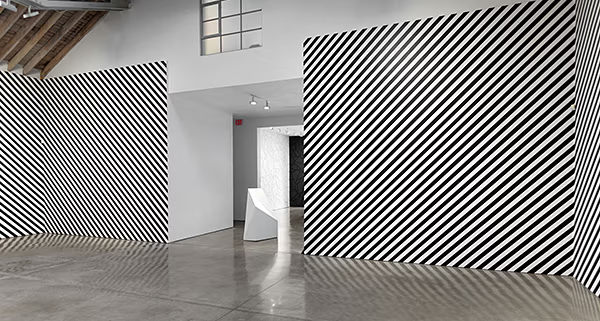
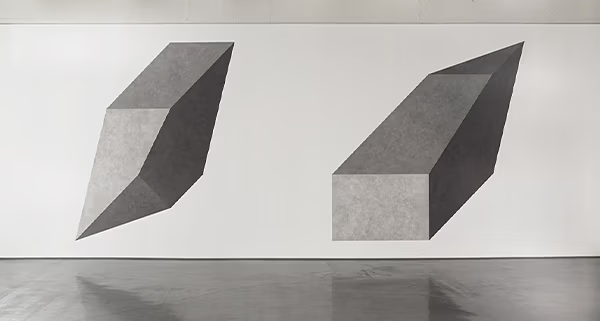
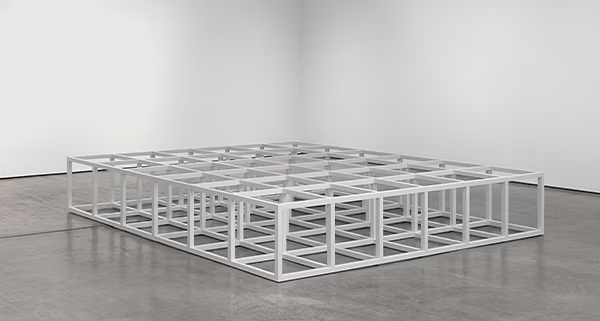
It is precisely at this point that Sol LeWitt stands markedly apart, reaching an imagistic wholeness through the repetition and density of geometric form, while diversifying this approach through pictorial surface textures and color fields and extending it across wall surfaces. LeWitt layers the question of rhythm and repetition with a more psychic and cultural implication through alternative dimensioning experiments that generate pattern, and again chooses differentiation by producing solutions that vary and multiply in accordance with the immediate spatial relationship established within each environment.
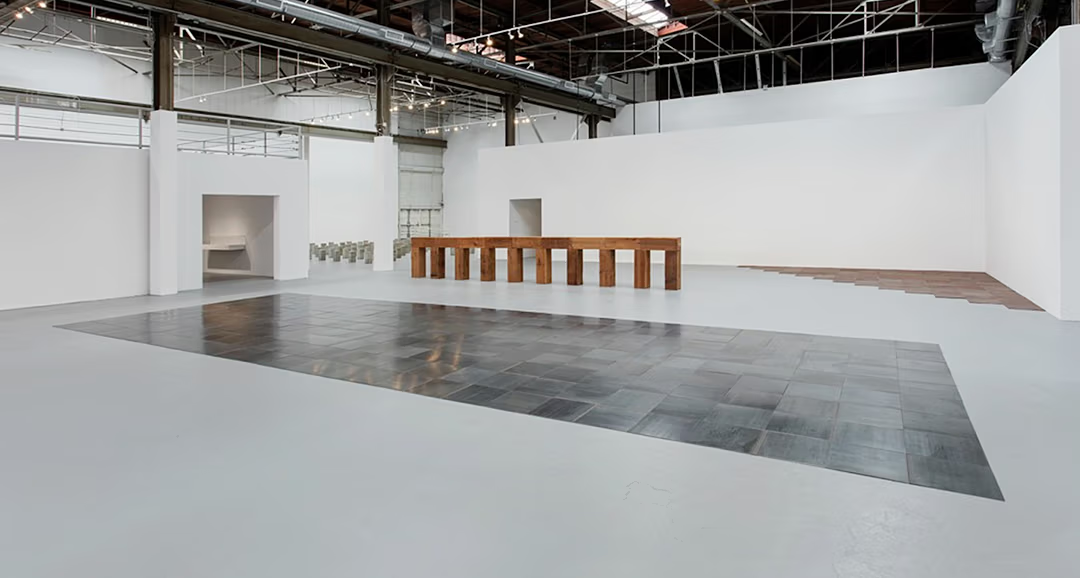
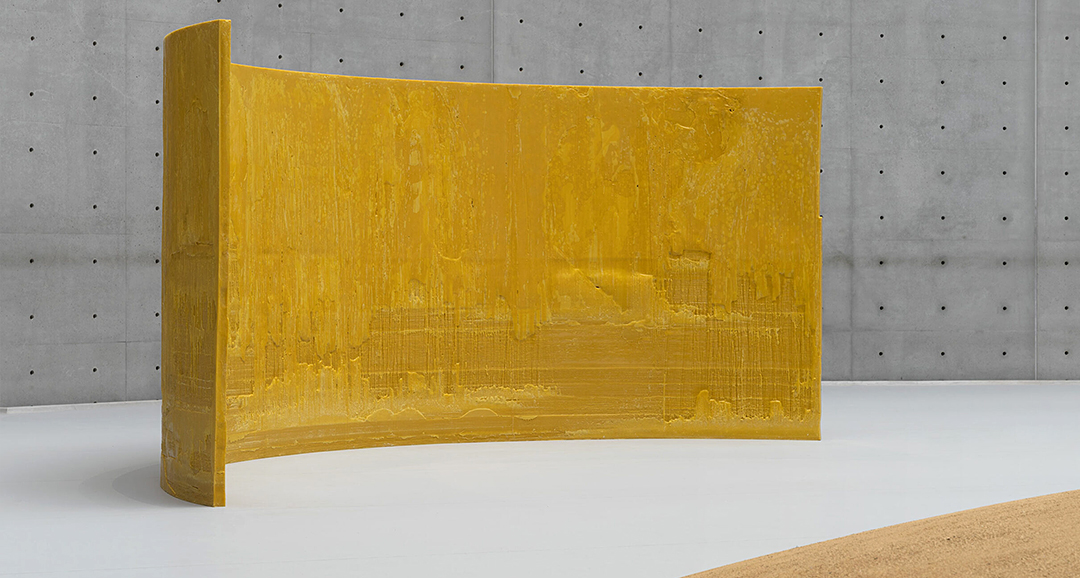
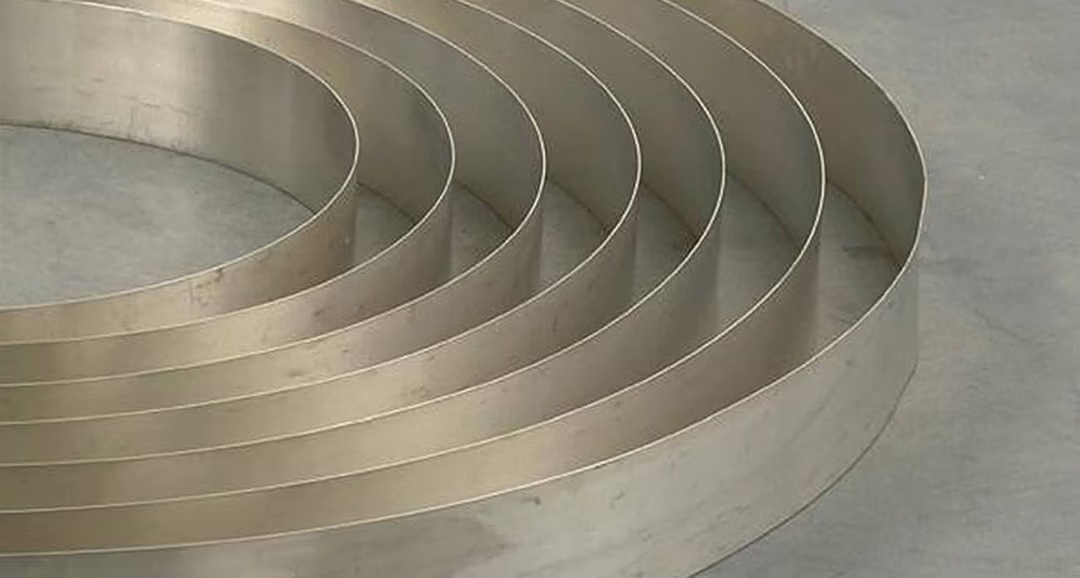
Similarly, Richard Serra’s metal plate arrangements, which generate continuity through repetition and rhythmic curves, evolve into a process of reaching monumental scale through an effort to create a unified field that encompasses the objective meanings and distinctions of metal. At the outset, the rusted surface reality constitutes the sole external motif shaping the qualities of the material beyond its form, emphasizing the character of the hard surface. The sculptural order seems dedicated to the impossible continuity of movement that the material represents, to its colossal scale, and to the aesthetic of geometric continuity formed through curves. The coherence and continuity of effect in Serra have long since transformed into a unity of language and meaning, evolving into an impossible visuality focused on material experience that pushes against spatial dynamics.
NOT
the idea and endeavor of order-making as an internal necessity
The priority rooted in the rejection of structural order, narrative connections, and possibilities leaves nothing beyond pointing to the abstract and isolated state of the object and form in its simplicity, its solitude. The rhythmic visual and aesthetic effect created by repetition-based order resembles the pursuit of a condition that belongs to itself, arriving at modular form and pattern configurations. The acentric and simultaneous repetition of mass, object, and image, the aesthetic of sequential arrangement, and the construction of surface through grid or modular form are valued here as a means of establishing a rational logic or justification for minimalist attitude and thought. In certain artists, one can observe that the effort to develop an idea of order, transformed into composition through formal repetition, gradually becomes an internal necessity, pressing against the implications of Minimalism within their own processes of personal stylization. Sol LeWitt’s use of form and motif enriched by color exemplifies this reality most effectively.
notes
1 Hal Foster, Gerçeğin Geri Dönüşü / The Return of the Real, Translation: Esin Hoşsucu, Ayrıntı Publication, May 2009, İstanbul. sf. 74.
2 Rosalind Krause, Modern Heykelin Dehlizleri / Passages in Modern Sculpture, Translation: Sibel Erduran, Everest Publishing, October 2021, İstanbul.
Gülay Yaşayanlar & Mümtaz Sağlam Copyright © March 2026, All Rights Reserved.
COLLECTION EXHIBITION
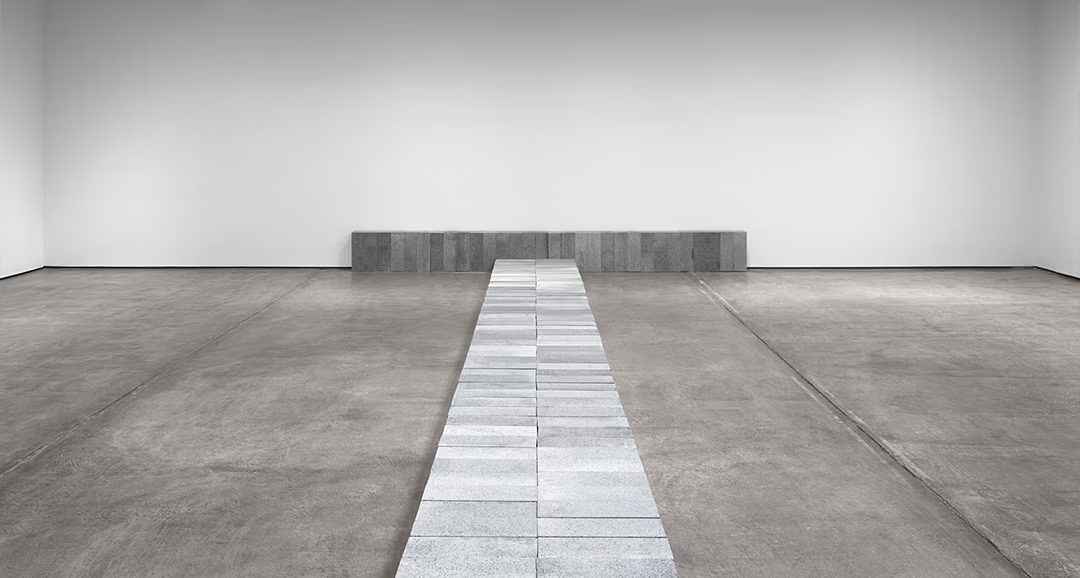
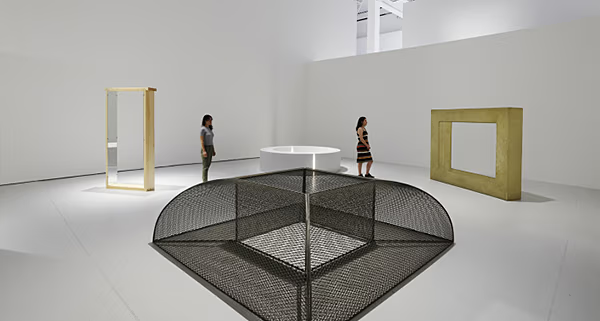
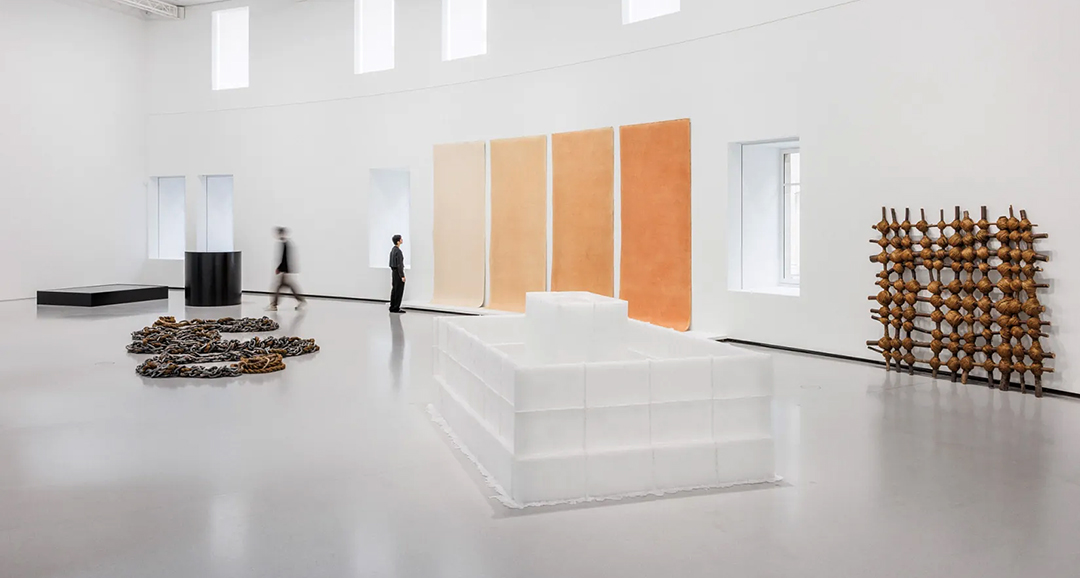
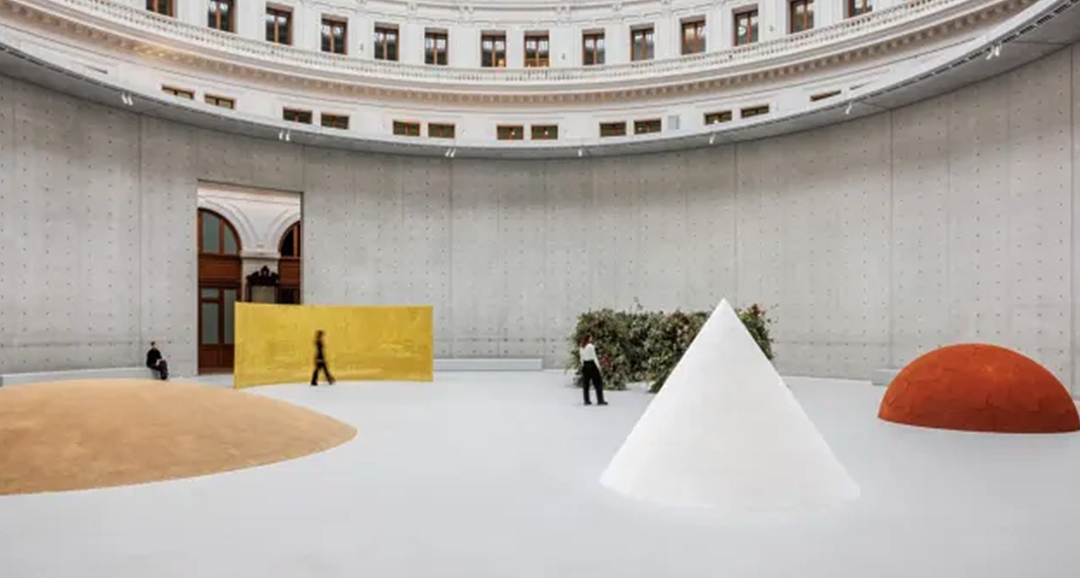
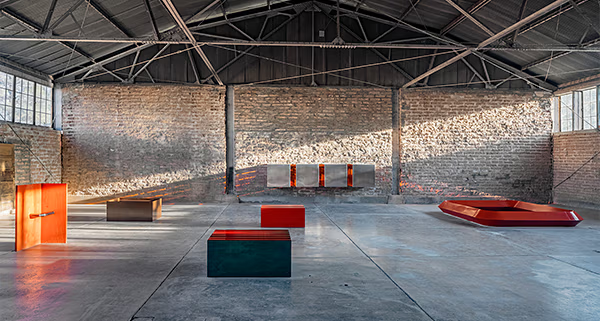
Exhibition view from Minimal, Bourse de Commerce – Pinault Collection, 2nd Floor: Materialism, Gallery 5.
EXHIBITION CATALOGUE
Minimal, Editor: Jessica Morgan, Contributors: Emma Lavigne, Jessica Morgan, Jean-Pierre Criqui, Frances Morris, Alexandra Bordes, Clara Meister, Teresa Kittler, Nicolas-Xavier Ferrand ve Alexis Lowry, Pinault Collection & Éditions Dilecta, Paris, 2025.
4 ESSAYS ON MINIMALISM / BY GÜLAY YAŞAYANLAR & MÜMTAZ SAĞLAM
MINIMALIST ARTISTS
DONALD JUDD
Donald Judd (1928-1994) describes his series of works, which shifted from painting to sculpture and consisted of a few identical elements mounted on the wall through radical experiments, as “specific objects,” in accordance with the term he used in his 1965 manifesto. Judd’s works, created with an extremely simple and radical approach to abstraction, have a distant spatial effect. Conceiving his objects in an equivalent relationship with space, Judd envisions a minimalist and unsettling plane derived from form and structural formation. He thus spreads a spirit of minimal transcendence, legitimized by creating a potential for questioning the causality and uniformity of the perceptible, across the object and space. By withdrawing the sensory perception caused by things and thoughts in an abstract and ambiguous relational environment, he recreates the expanded rigidity emitted by the pure image within an aesthetic mise-en-scène. With his hard lines and angular boundaries, Donald Judd leaves nothing behind from the plane of perceived consistency and immanence in the context of constantly repeating new impossible forms.
ROBERT MORRIS
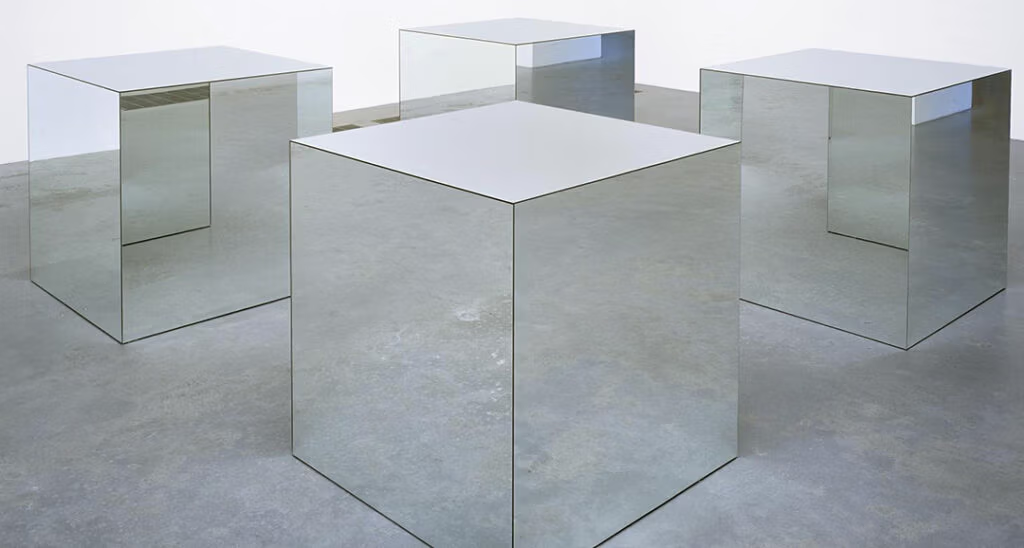
Robert Morris, (1931-2018) He radically simplified and developed the concept of minimalism that emerged in New York in the early 1960s. Having begun his career as a painter, he adopted a new style consisting of sculptural installations and, through a series of published articles, helped to define the minimalist movement… In fact, his approach challenges traditional art-historical classifications and movements. It is evident that he views his artistic practice as a single, coherent work, an ongoing project, and a sustainable, philosophical-artistic experiment. All his works aim to create a complex, sometimes paradoxical space, independent of the medium used; and this space restores to the viewer processes of experience and perception that seem inaccessible today. In fact, these works, which concern the relationship between the visible and the known, are shaped by philosophical scepticism, prioritising a variable principle of representation based on experimental propositions. Despite his methodological rigour, Morris’s practice is therefore highly subjective, imbued with intense introspection and an emphasis on the quest for selfhood.
DAN FLAVIN
Dan Flavin (1933–1996) is considered one of the pioneers of Minimal Art for his work with fluorescent light beams and his radical and innovative sculptures. In the early 1960s, he experimented with fluorescent light, a mysterious material that suggested simplicity and singularity, emphasized its form and therefore itself, and possessed independent qualities. With this material, he created radically simple and transformative light installations that led to a new breakthrough. His work to Don Judd (1964), found in the Pinault Collection, consists of neon lights arranged in an alternating cross pattern. Here, the cross pattern extending along the wall brings together industrial aesthetics, the sensuality of the material, and the intensity of the light, conveying a palpable sense of energy that alters the viewer’s perception of space and draws their gaze. This work is the first in which Flavin systematically used the wall sconces and standard fluorescent tubes found in stores. It transforms an everyday object into a work of art and reconfigures the spatial experience.
SOL LEWITT
Sol LeWitt (1928-2004) One of the leading figures of Minimal Art, LeWitt is known for his wall drawings or geometric sculptures, which he referred to as “structures.” By creating multiple variations of his structures, LeWitt explored a geometric and mathematical system using industrial materials such as aluminum, metal, or concrete. A key figure in the evolution of Conceptual Art, LeWitt insisted that the idea, the diagram, and the planning of these structures were the artwork itself. In doing so, the actual implementation of the sculptures—the objects themselves—was less important than the concept of the structure.
RICHARD SERRA
Richard Serra (1938-2024) is one of the first Minimalist artists known for his monumental sculptures. He uses industrial materials such as steel to create simple, continuous surfaces that bend or curve in space. He attempts to influence our perception of space and dimension by compelling the viewer to enter the sculpture. The rusty textures that form on the plate surfaces lend a pictorial quality to the conceptual origins of his artistic practice. To the extent that he avoids ostentation, a monumental effect based on the structural and graphic integrity of the form is always present. That is why Serra’s metal plates have an extremely disturbing, metaphysical, and existential quality. Arrangements consisting of massive panels, especially flat walls or irregular rows or rising, falling, sloping narrow passages, resembling a labyrinth, take on a chaotic quality. They persistently make the viewer feel the threatening space of the sculpture. In this process, the aura of the sculpture enters into a psychological and intellectual concentration within the mediation of heavy mass reality.
MINIMALIZM / 4 BOOKS
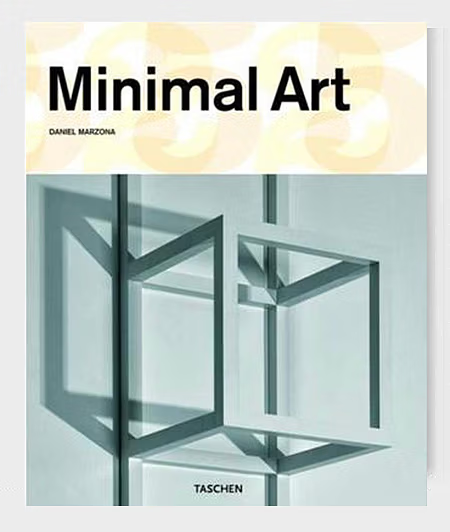
Daniel Marzona, Minimal Art, Tashen Deutschland, 25. Edition, German, Hardcover, 200 pages, 2009.
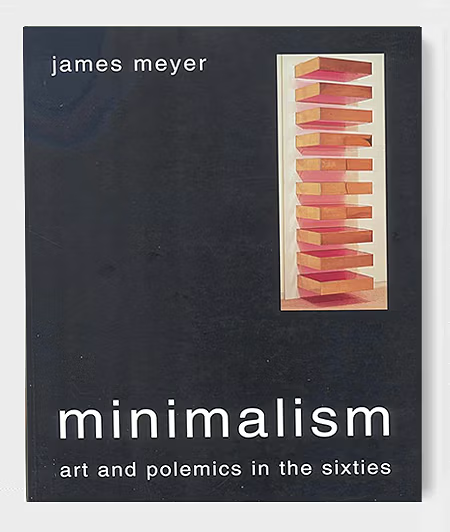
James Meyer, Minimalism / Art and Polemics in the Sixties, Yale University Press, English, Paperback, 340 pages, August 2004.
Minimalism, Edited by James Meyer, Phaidon Press, English, Soft Cover, 200 pages, June 2010.
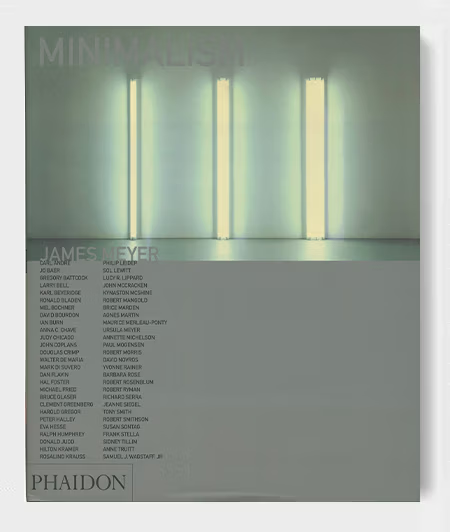
Minimalism, Edited by James Meyer, Phaidon Press, English, Paperback, 304 pages, March 2005.
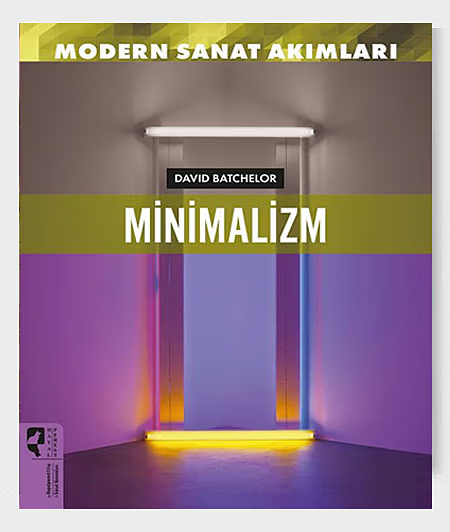
MİNİMALİZM / DAVID BATCHELOR
David Batchelor, Minimalizm (Modern Sanat Akımları), Translation: Tüles Üresin, Editor: Talha Lafçı, Powerback, 95 pages, Türkçe, Hayalperest Publishing, First Edition, March 2025, İstanbul.
First published by Tate Publishing in 1977, Minimalism was also published in Turkish by Hayalperest Publishing in 2025. (1) Written by the painter and author David Batchelor, this book is a highly compelling work that distinguishes itself from publications aimed at the general reader by examining the movement within the context of its overall development and its key figures. Minimalism, which has been examined in detail by art writers such as Hal Foster, Benjamin H.D. Buchloh, Rosalind Krauss and Michael Fried, proceeds through a two-part analytical framework in which David Batchelor adopts a distinct perspective, addressing contexts such as the establishment of visual quality and unity, and the representation and transformation of material or object. It evaluates the differences in approach among the five artists representing the movement -Carl Andre, Robert Morris, Donald Judd, Dan Flavin and Sol LeWitt- through a comparative analysis of the terms, concepts and principles of practice they established. Without shying away from tackling problematic areas such as meaning, emotion and psychological impact -which are particularly evident in definitions of minimalist art- it seeks to explain the images of identity and difference experienced during a brief yet enduring process through a discussion of causality. In the final chapter, titled ‘On Texts and Contexts’, the author examines the current state of the post-minimalist era, as exemplified by artists such as Richard Serra and Eva Hesse, and focuses on radical critiques of minimalist art, placing particular emphasis on the critical perspective offered by Anna Chave. (2) This study, which is supplemented by a bibliography surveying key publications on minimalism in art literature as of 1997, stands before us as a fundamental reference work thanks to its comprehensive content, fluid language, insightful observations and numerous high-quality visual aids.
1 David Batchelor, Minimalism (Movements in Modern Art), Powerback, 96 pages, English, Tate Publishing, First Edition, 1997, London.
2 See. Ann C. Chave, “Minimalism and the Rhetoric of Power”, Arts Magazine, Issue: 64, September 1990, pg. 44-63.
saglamart; dinamik bir anlayış ile hareket eden, kültür-sanat ortamındaki olay ve olgulara, sanatçı tavırlarına, yapıtlara ve yayınlara odaklanan bağımsız bir yayın etkinliğidir. Tüm hakları saklıdır. Görüntü ve yazılar izinsiz kullanılamaz. / saglamart is an independent publishing initiative driven by a dynamic vision, focusing on events and developments in the cultural-artistic landscape, artist perspectives, works, and publications. All rights reserved. Images and texts cannot be used without permission.