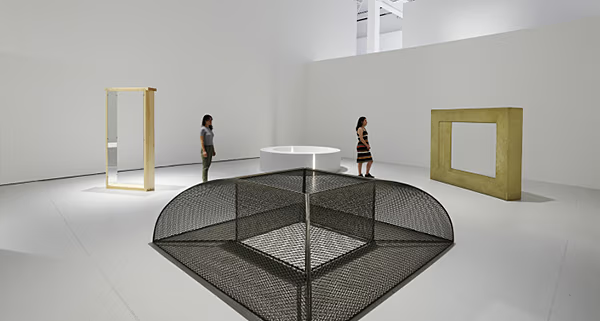
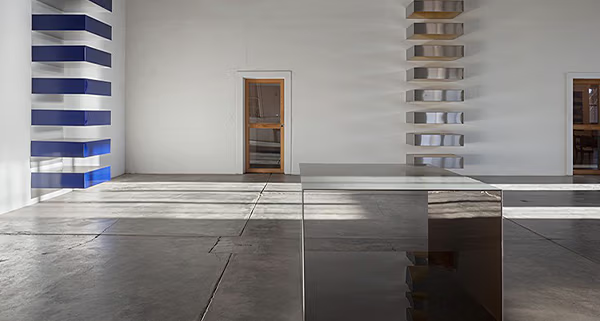
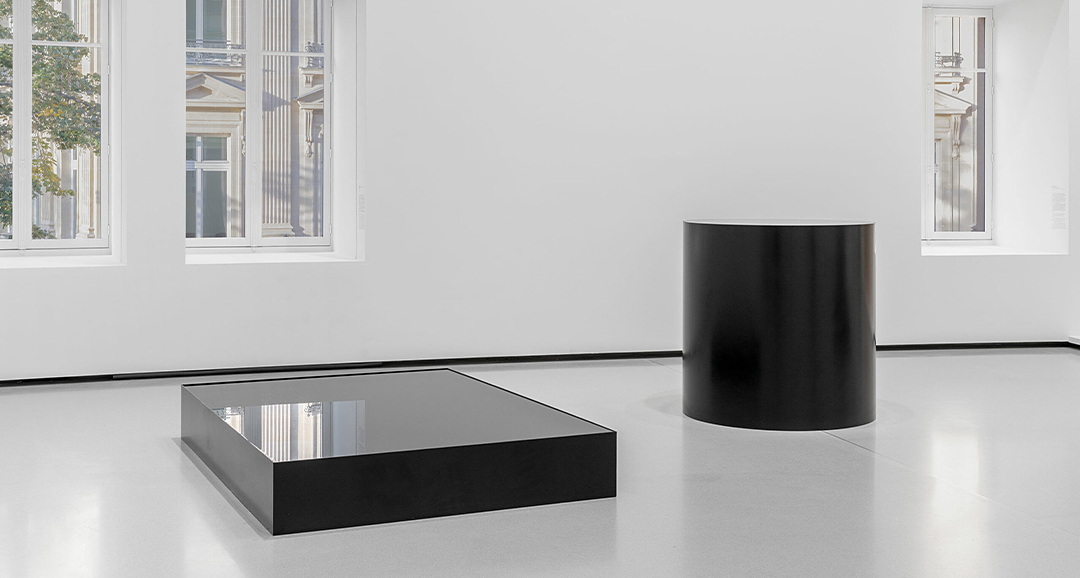
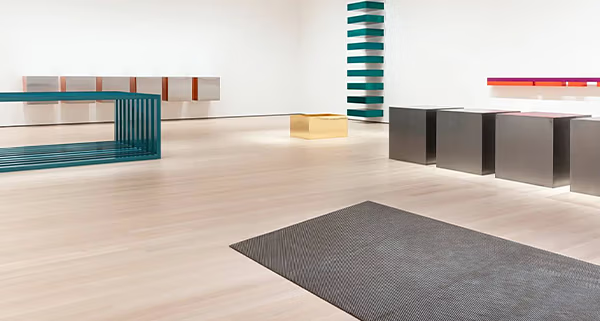
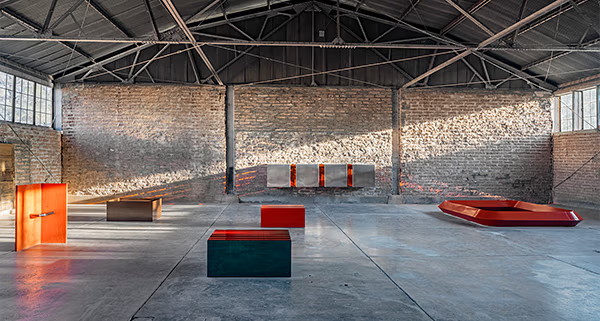
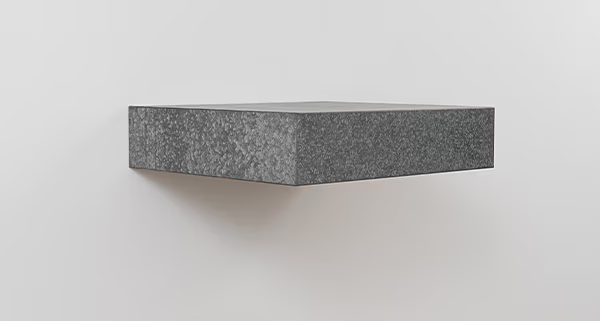
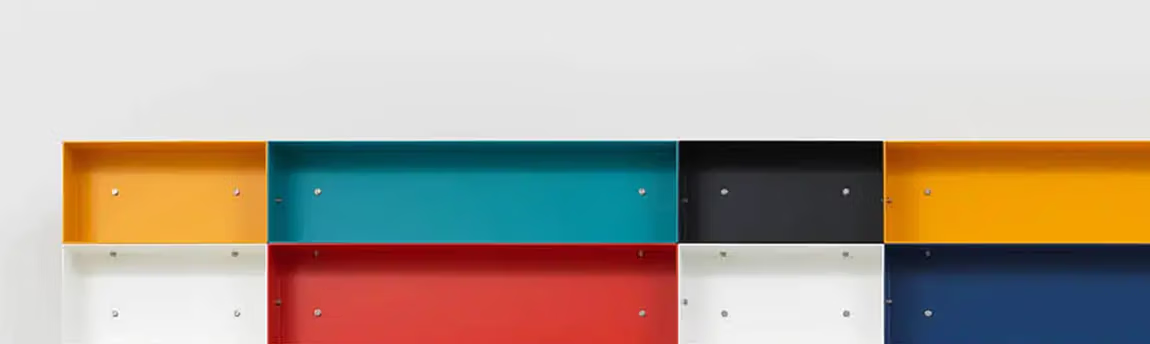
Donald Judd. Untitled, 1964, (Detail) Orange pebbled Plexiglas and hot-rolled steel. 50.8 × 115.3 × 78.7 cm), Stephen Flavin, Garrison. © 2020 Judd Foundation / Artists Rights Society (ARS), New York

minimalism - 1

a pure, experimental and fictional construction process

GÜLAY YAŞAYANLAR & MÜMTAZ SAĞLAM

"

THE INDEPENDENCE AND SIMPLICITY OF A MINIMALIST ARTWORK ACTUALLY CREATE AN AMBIGUITY THAT REINFORCES ITS PERCEPTION AS AN OBJECT. THE QUESTION OF HOW ABSTRACT AND STATIC FORMS CREATE A DEPTH OF MEANING IN THE BACKGROUND IS, IN THIS RESPECT, A MATTER OF DEBATE. THE EXPERIMENTAL SHIFT CHARACTERISING THE PRODUCTION PROCESS CAN BE EXPLAINED AS A MATTER OF TRANSCENDENCE OR ICONISATION, AND AS A CONCEPTUALISED STATE. THE SENSE OF DISTANCE CREATED HERE, DUE TO THE NEGATION OF ALL OTHER THINGS, SEEMS TO HARBOUR AN IRONIC LONELINESS PERCEIVED THROUGH THE RELATIONSHIPS BETWEEN OBJECT, FORM AND SPACE.

Minimalism 3 Andre

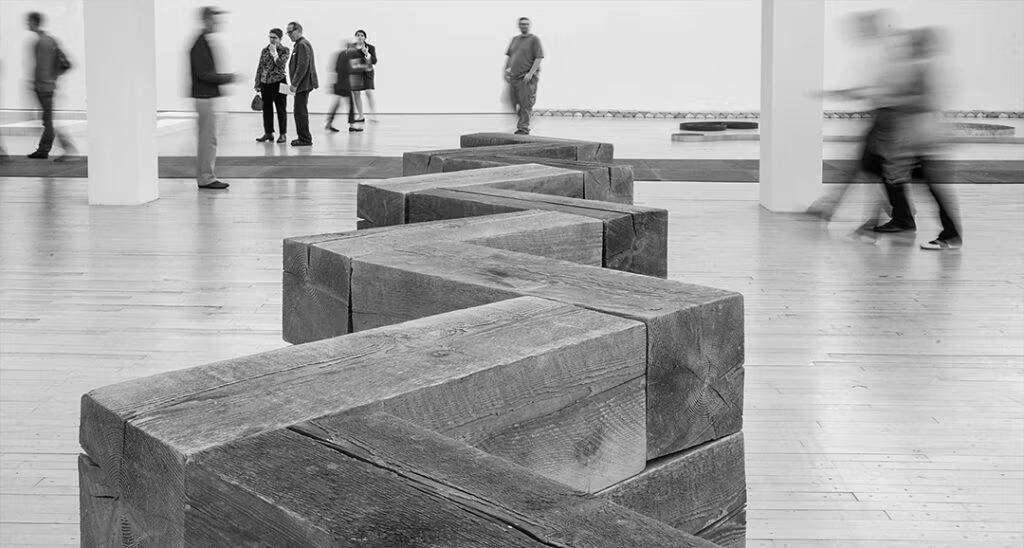
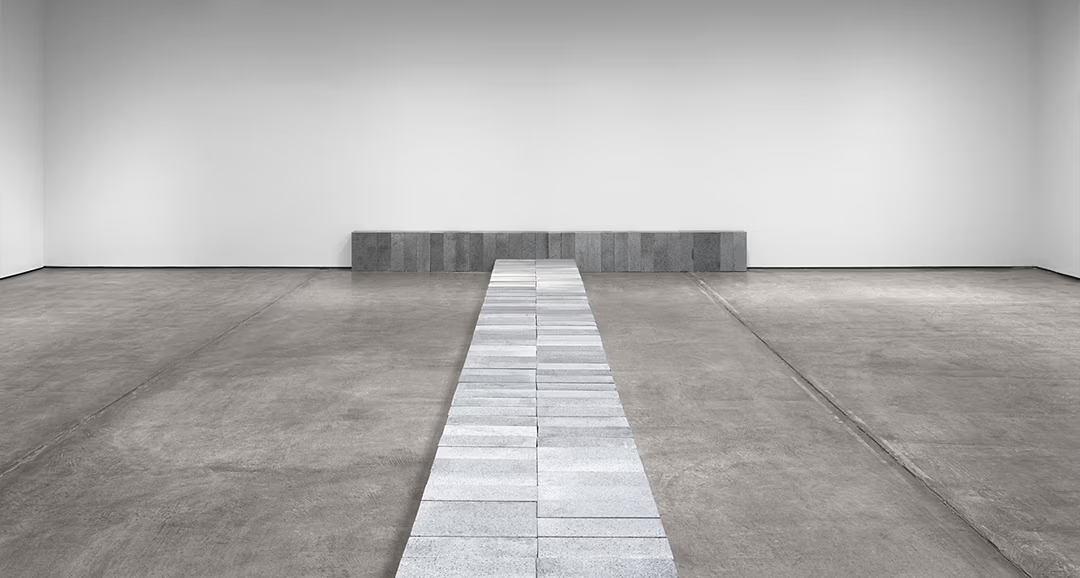
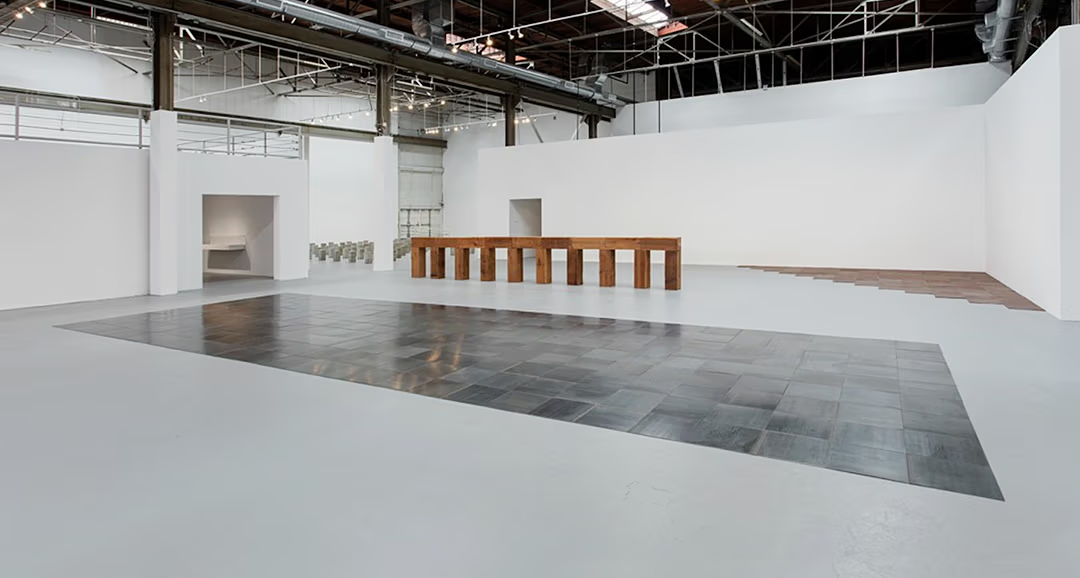
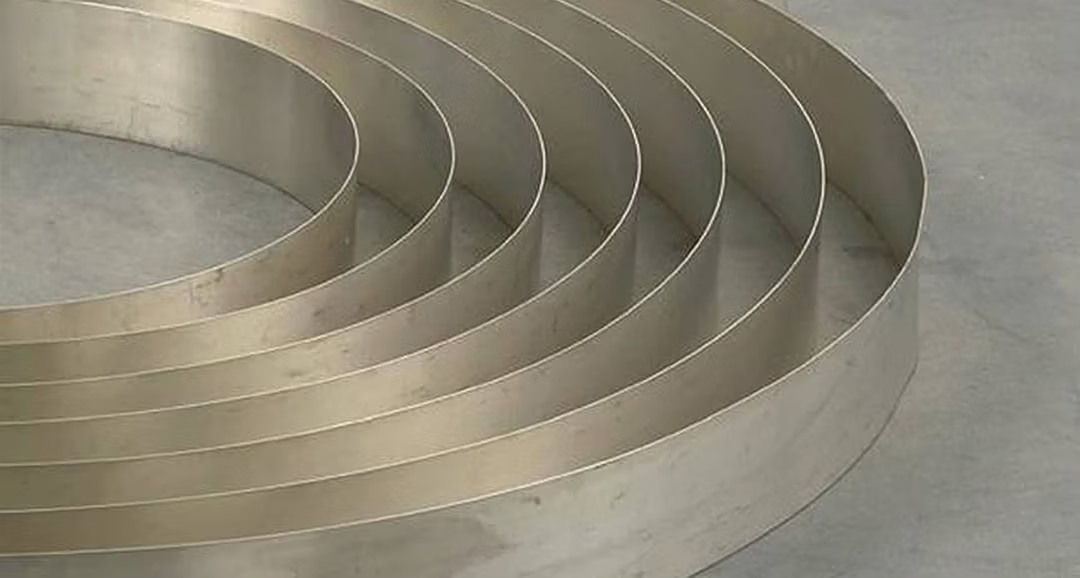
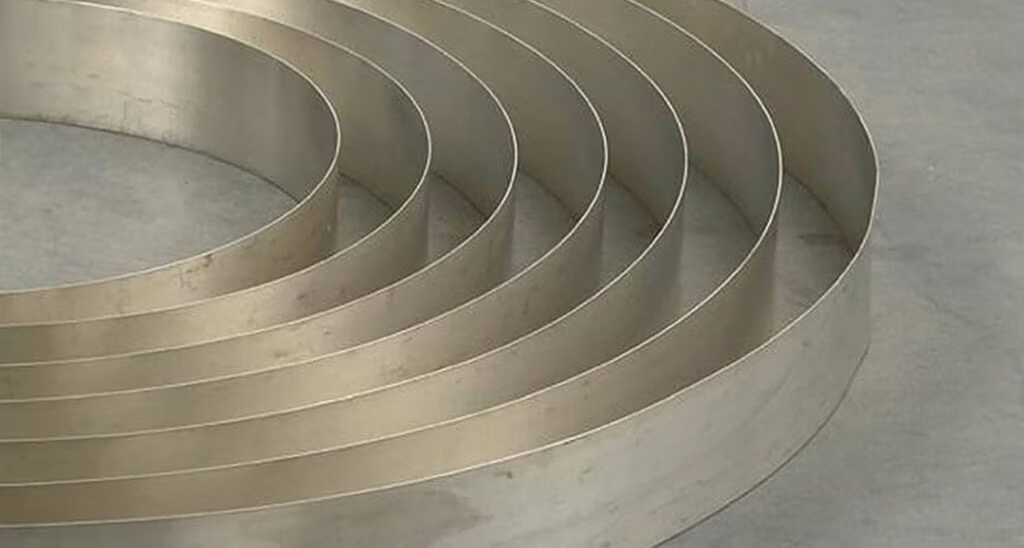
Carl Andre, Gümüş Şerit / Silver Ribbon, (2002), Detail, Strip of sheet silver, on floor, 0,1 cm x 9 cm x 21 m. Sadie Coles HQ, London, UK.

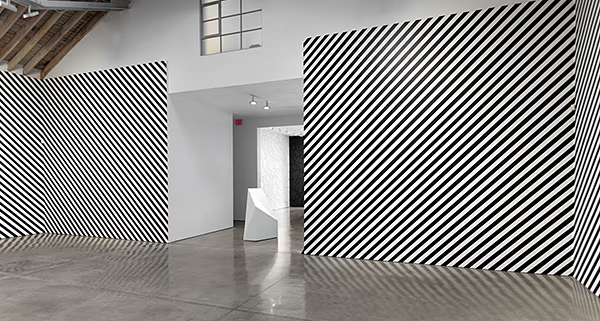
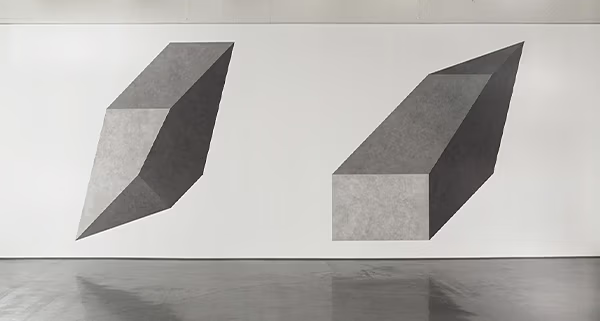
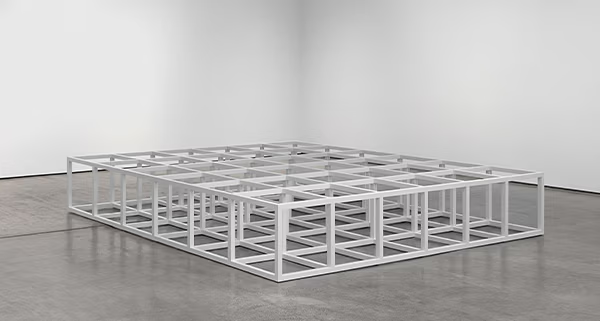
The terms minimal art or minimalism are used to describe a group of artists working independently in 1960s New York, whose methodological affinities led them to produce works characterized by ambiguity, design-oriented intent, monochromy, abstraction, and three-dimensionality, gathered under a common theoretical framework. (1) It would not be incorrect to read this tendency — one that swiftly elevated its modernist context in pursuit of a mature formal idealism — as a reactive stance against Abstract Expressionism, which had gained considerable momentum in the 1950s. Minimalism, also regarded as a generative force in the development of Conceptual Art, may be more precisely defined as a rationalist aesthetic disposition: one that foregrounds a purely formalist will, positions itself against emotional diffusion and expressive gesture, and seeks to attain modernist integrity through design-driven formal articulation.

In the work of the Minimalists, the formalist will that elevates artistic expression toward a transcendent order renders holistic comprehension – as a mode of spatial organization, depth, balance, and arrangement- an emphatically modernist quality. In doing so, it draws the work away from geometric abstraction into a distinct register, advocating for a confrontation with stark formalism through the creation of relational conditions and the pursuit of equilibrium, and foregrounding repetition as a methodological principle. Perhaps for this reason, Minimalist works – emerging from a pursuit of discipline, order, and balance, and increasingly approaching sculpture- appear colorless, inexpressive, and divested of meaning. The objective character of the processed material, its industrial quality, its coolness, and/or the manner in which it is arranged or stacked, produces an abstract and detached visual presence. It is therefore of considerable significance that Minimalist art practice possesses a dynamic, creative, and autonomous continuity -located in a shared field of action between painting and sculpture- that is affiliated with such terms and concepts as specific objects, anti-form, structure, and grammar, rather than constituting merely a compelling arc of production.

The field of action referred to here corresponds to a constructed surface shaped by creative processes of systematic repetition, approached through an intellectual and design-oriented lens a surface that is flat and opaque, yet simultaneously corresponds to an objective fact. It is entirely natural that this interface -decentered and at times appearing decorative- should cohere into a visual totality composed of interrelated, organically patterned elements. Moreover, this condition itself signifies, as Hal Foster has noted, a decentering and dehuman­ization of the surface. Minimalist art enacts a formalist aesthetic through iconographic directness, with plain, abstracted forms deployed on an inexpressive plane- precisely because of this. As both a late modernist movement and a neo-avant-garde tendency, it integrates kindred sensibilities within an open radicalism, and contributes to the definition and field of action of art through purely formal and spatial experiences. (2)

Minimalism 1 Carl Andre

Carl Andre, Gümüş Şerit / Silver Ribbon, (2002), Strip of sheet silver, on floor, 0,1 cm x 9 cm x 21 m. Sadie Coles HQ, London, UK.

minimalism 1 richard serra yatay 28

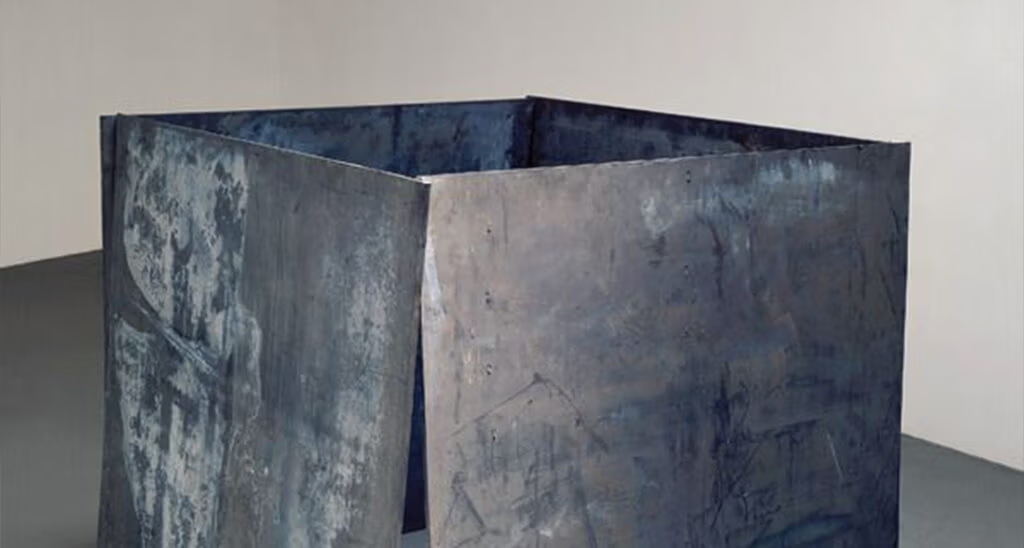
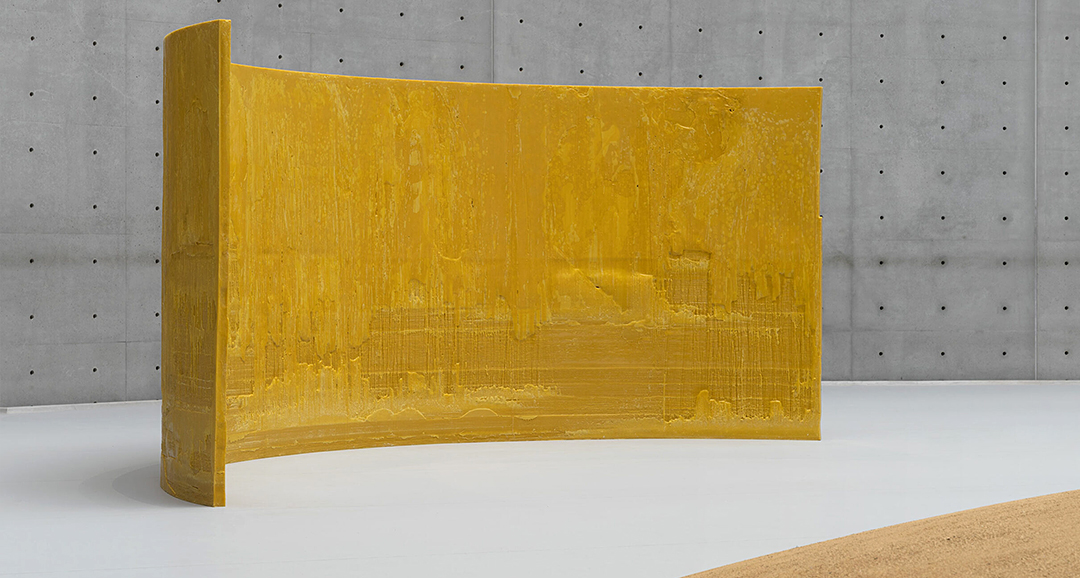
Richard Serra, One Ton Prop (House of Cards), 1969, Detail, (refabricated 1986), Lead antimony, four plates, Each plate 122 x 122 x 2.5 cm., © 2026 Richard Serra / Artists Rights Society (ARS), New York.

the process of experimental transformation: transcendence, iconization, and conceptualization

The autonomy and simplicity of the Minimalist artwork in fact generates an ambiguity that reinforces its perception as object. The question of what depth of meaning abstract and static forms produce in the background is, from this perspective, open to debate. The experimental transformation that characterizes the process of production may be understood as a matter of transcendence or iconization – and as an unfolding conceptualization. The sense of distance produced here -by virtue of all that is negated- seems also to harbor an ironic solitude felt through the relationships among object, form, and space. It is for this reason that definitions positing minimalism as constructed solely upon pure forms, rational arrangements, and abstract and conceptual thought appear incomplete.

It is evident that the emotional and spiritual dimension this productive dynamic captures between subject, space, and time layers this ostensibly austere formalist output. Richard Serra’s One Ton Prop / House of Cards (1969), for instance -a configuration assembled from geometric forms using metal plates-  clearly anticipates its own aura through the dramatic perception achieved via its metallic texture and temporal materiality, within a discontinuity that marks a late modern transitional period. One should also recall that in Serra’s installations, the metal plate gradually constitutes a more distinctly expressive formal plane over time.

From this vantage point, it may be argued that Minimalist works through their relationships with material reality and the rationality of formal articulation as reflected in the production process are forms that sustain the possibility of meaning, and that are grounded not only in pure intellectuality but also in the intersection of the vital and the subjective. This, however, does not prevent the formalist-material presentation of minimalism from establishing its own aesthetic discipline as a categorical distinction. This emphasis is necessary only to remove the constraints that operate in our viewing of the work and to liberate production and this knowledge is required in order to properly evaluate the change and development that occurred during the process (the years 1960–1980). Otherwise, as Hal Foster contends, it is difficult to encounter a Minimalist work that, grasped in a single glance, expresses a moment of transcendent virtue. (3)

Indeed, no Minimalist work escapes association with a rationalism regarded with suspicion. The question of spatial and temporal production, entangled with the connotations shaped by design, constitutes simultaneously a synchronous, immanent, sequential, tension-laden, and subjective field of experience. Accordingly, it would be problematic to evaluate the perception demanded by this absolute formal multiplicity phenomenologically – abstracted from referential fields such as history, language, sexuality, religion, and power. (4) An experimental reading of this field requires, beyond the transparent and legible sign, a resolution of the historically and ideologically contradictory appearance of conditions that seem disconnected.

It is evident that, partly due to this perceptual lacuna, Minimalist Art has not appeared sufficiently forceful in relation to the Abstract Expressionist movement. Alternatively, this may be the reason why the formalist modernism of the Minimalists struggled to consolidate its position in the face of an expanding postmodern diffusion. Its redirection or transfer of energy toward Conceptual Art, and its continuation of debates around structure, form, object, surface, language, and reality in a renewed context, already appears as a necessary means of remedying this deficiency.

notes

Minimalist artists living in New York in the 1960s who worked independently of one another: Carl Andre (1935-2024), Dan Flavin (1933-1996), Donald Judd (1928-1994), Sol LeWitt (1928-2007) ve Robert Morris (1931-2018).

2   See. Hal Foster, Gerçeğin Geri Dönüşü / The Return of the Real, Translation: Esin Hoşsucu, Turkish, Ayrıntı Publishing, May 2009, İstanbul. pg. 18.

Hal Foster, Ibid, pg. 69.

Hal Foster, Ibid. pg. 71-72.

Gülay Yaşayanlar & Mümtaz Sağlam  Copyright © March 2026, All rights reserved.

A FIle on MInImalIsm at Saglamart 

A COLLECTION EXHIBITION

MINIMALIST ARTISTS 

 MInImalIst ArtIsts at Saglamart 

MINIMALIZM / 5 BOOKS

Minimalizm 1 Book 2

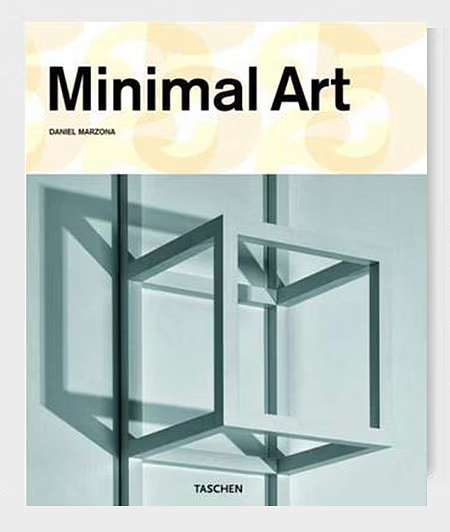
Daniel Marzona, Minimal Art, Tashen Deutschland, 25. Edition, German, Hardcover, 200 pages, 2009.

Minimalizm 1 Book 7

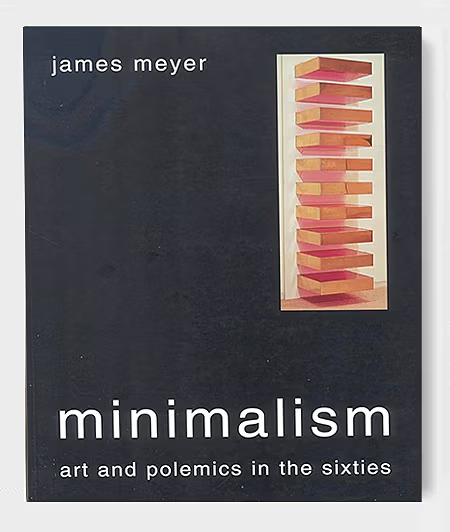
James Meyer, Minimalism / Art and Polemics in the Sixties, Yale University Press, English, Paperback, 340 pages, August 2004.

Minimalizm 1 Book 8

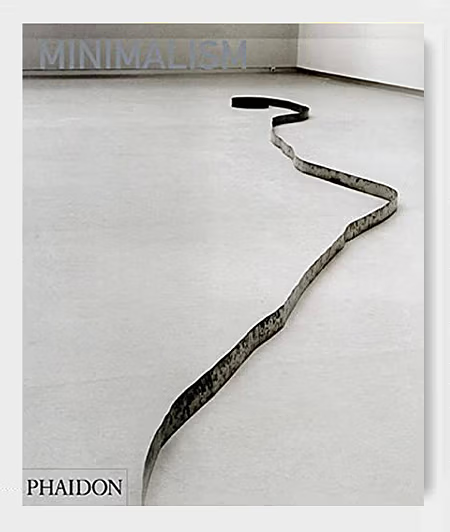
Minimalism, Edited by James Meyer, Phaidon Press, English, Soft Cover, 200 pages, June 2010.

Minimalizm 1 Book 9

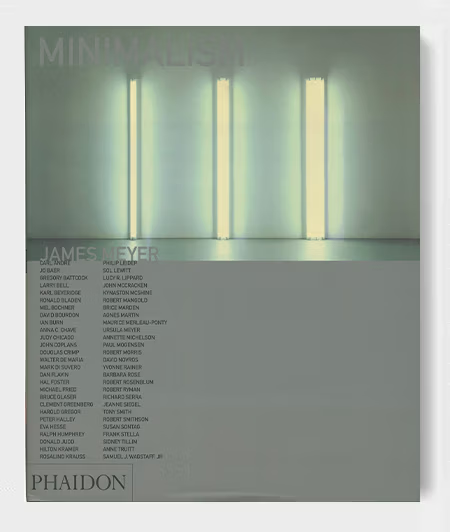
Minimalism, Edited by James Meyer, Phaidon Press, English, Paperback, 304 pages, March 2005.

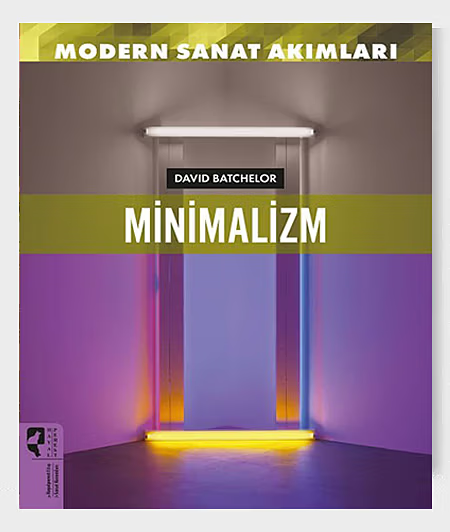
David Batchelor, Minimalizm, Translation: Tüles Üresin, Hayalperest Publication, Turkish, Paperback, 96 pages, İstanbul 2025.

Donald Judd

İZMİR - LONDON

saglamart; dinamik bir anlayış ile hareket eden, kültür-sanat ortamındaki olay ve olgulara, sanatçı tavırlarına, yapıtlara ve yayınlara odaklanan bağımsız bir yayın etkinliğidir. Tüm hakları saklıdır. Görüntü ve yazılar izinsiz kullanılamaz. / saglamart is an independent publishing initiative driven by a dynamic vision, focusing on events and developments in the cultural-artistic landscape, artist perspectives, works, and publications. All rights reserved. Images and texts cannot be used without permission.

Copyright ©
Can Sağlam - Gülay Yaşayanlar Mümtaz Sağlam, 2025.