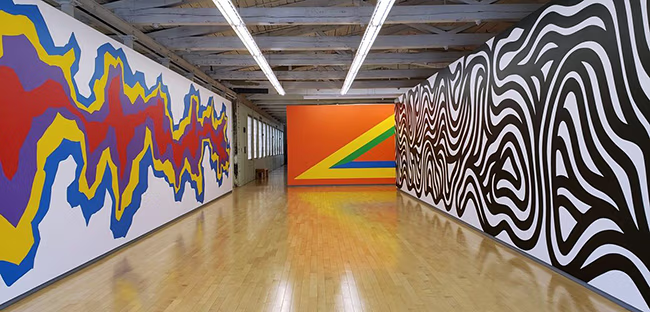
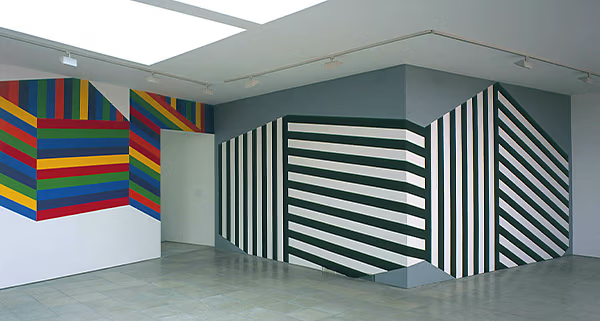
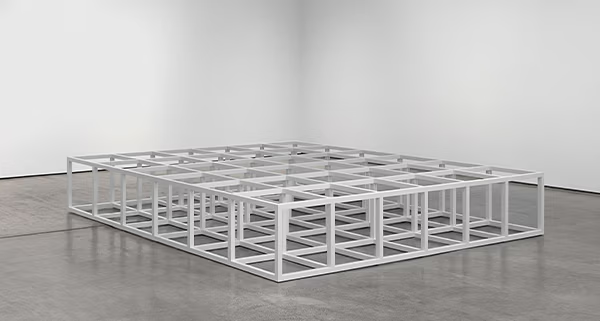
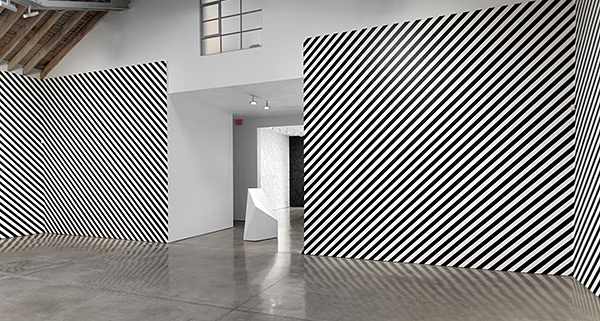
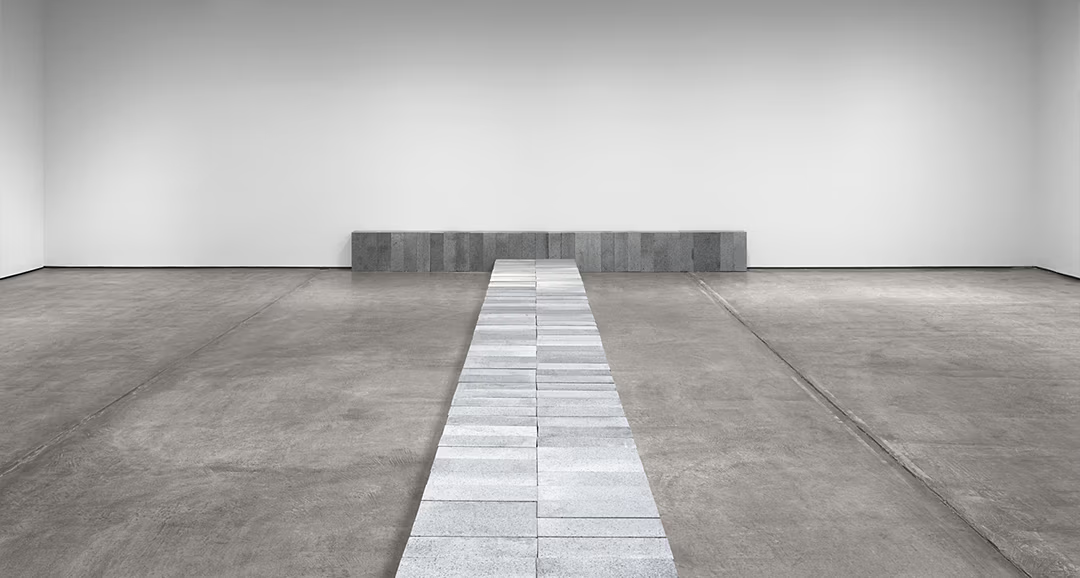
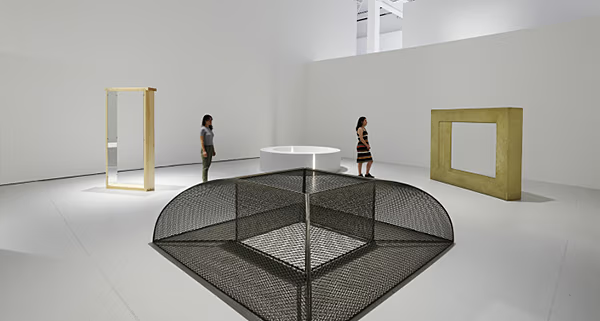
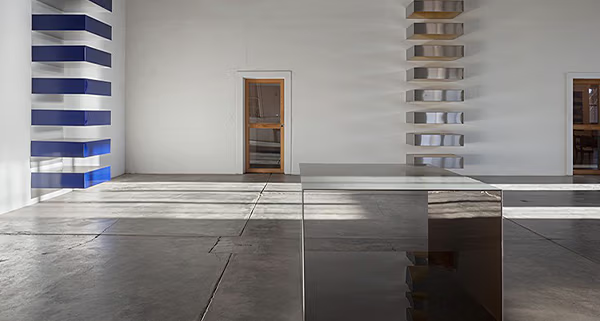
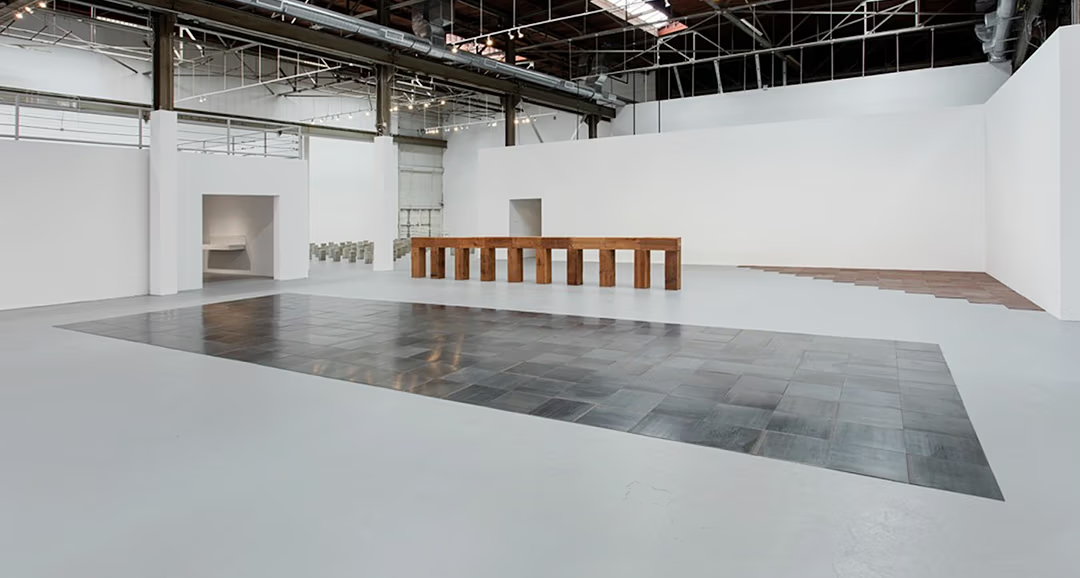
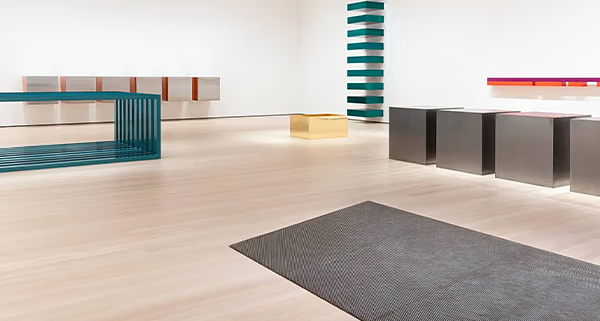
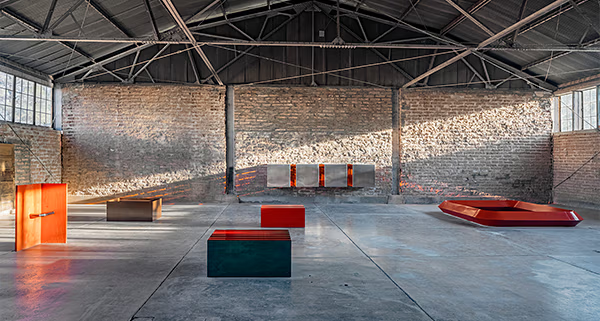
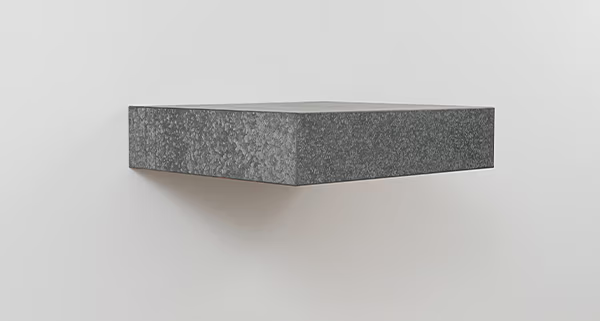
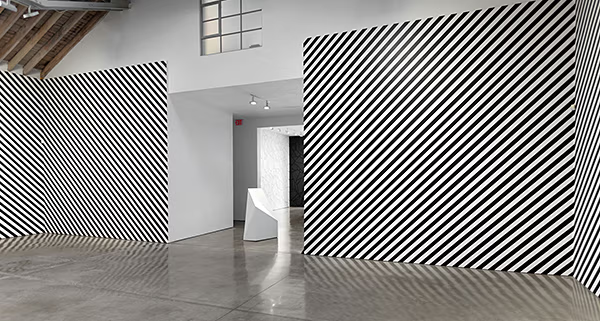
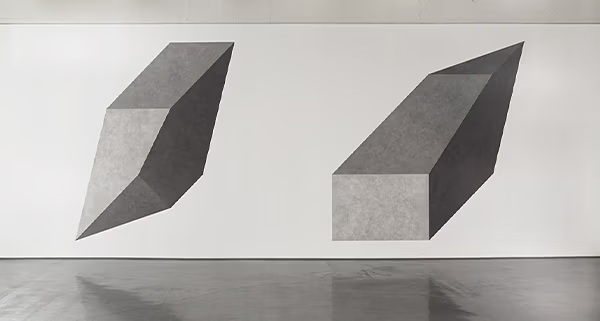
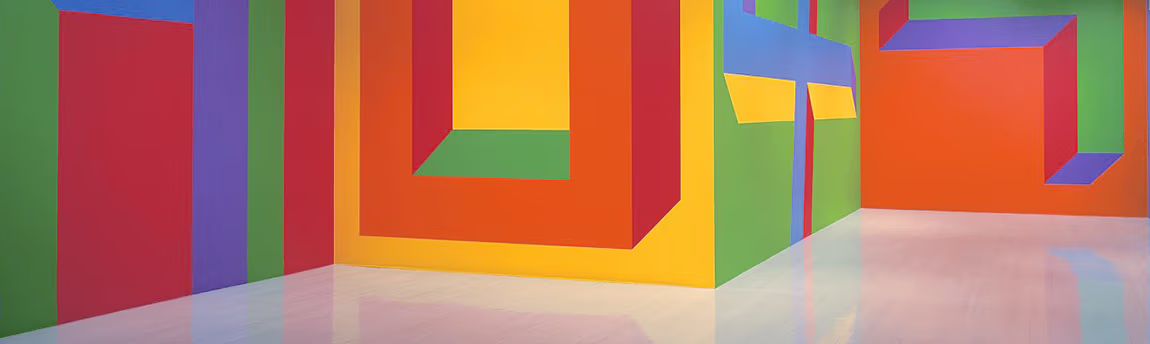
Installation view of Sol LeWitt: A Wall Drawing Retrospective, MASS MoCA, 2008-2043. © Estate of Sol LeWitt 2021, https://yalebooks.yale.edu/2021/06/09/sol-lewitt-in-all-directions-part-2/
Sol LeWitt is an artist who produces work in a transitional space between painting and sculpture, distinguished by pieces encoded between line, form, and surface, as well as by the writings that ground his avant-garde approach. His works correspond to a revolutionary illusionist spirit established through the cyclical movement and repetition of minimal and conceptual forms. His wall drawings, executed in particular at monumental scale, resemble the reflections of a formal freedom spreading across a geometric expanse.
LeWitt’s rhythmic arrangements, composed of repetitions of simple lines and forms, operate as a model of conceptual action, excluding narrative propositions and foregrounding the thresholds of intellectual pursuit. His site-specific wall applications, woven from thick black or white strips or colored lines, are charged with timeless associations evoking an infinite universe. These works, which in every instance exclude emotional experience and strive to divest themselves of meaning, symbolize a spatiotemporal and malleable energy on the wall surface through a relative mobility that moves from one end to the other. Nevertheless, there is no doubt that the planes generated by the power of sequential forms and their resulting repetition in LeWitt’s arrangements, together with their infinite conceptual connections, harbor in essence an intense, meticulous, and obsessive interiority.
Sol LeWitt, Wall Drawing #1138: Acrylic paint, Forms composed of bands of color, 2004. [ https://www.lissongallery.com/exhibitions/sol-lewitt–2 ]
creating a visual-conceptual paradox of movement
Sol LeWitt’s geometric linear arrangements, which find form and rhythm through dense repetition, resemble a perception-based conceptual map that investigates the connections of a continuously shifting fictional superstructure with other lines from within itself. They therefore rest on an imagery that accelerates by repeating the line-mass mobility foregrounded in a vast flow, bringing lines from different directions together on a single surface and generating imperceptible minor differences.
The minimal causality governing geometric formation in LeWitt necessitates a continuously revolving scribble rotation among lines that generate movement in space. What emerges here is a controlled operation, a grid, of a linear pattern grounded in perceptual play, situated within a plane of coherence integrated with sociological and psychological rationale. LeWitt’s aim is precisely to create a visual-conceptual paradox of movement within the interactive fields of memory.
Sol LeWitt’s practice, generally composed of variable and selected geometric forms and lines, proposes without question a substantial mode of dispersal, arrangement, and an alternative model of abstract comprehension. A mastery of recurring arrangement transforms internal variables that preserve a homogeneous structure, in keeping with a minimal style and accompanied by diversifying lines, into signifiers of a conceptualizing language. LeWitt’s intellectual formations, which develop in different directions yet carry the same functionality and constitute a continuum that unfolds outside of semantics, thus resemble in some sense tonal cosmic structures held within silence. They are like projections of a visuality that unites and continuously diversifies an internalized pragmatic structure with conceptual foresight, anticipating perceptual difference through infinite repetition and construction. Indeed, it is possible to define LeWitt’s simplified minimal language, whether grounded in linear performance or in optical engagement with geometric forms, as a functional space that continues uninterrupted as linguistic acts, accompanied by the illusionist potential of static speed intervals.
a proposal for a model of abstract comprehension
Ultimately, the transformations of geometric formal structures added to and made identical with Sol LeWitt’s conceptual field, and the interactive field-void experiences they generate, invite the viewer into a performative experience. These privileged planes of reflection, formed from a simple idea of geometric order, also convert intellectual force into a minimal literary discourse through sequential forms. LeWitt’s mode of transmission is, in any case, not entirely formal. This idea of arrangement, which carefully constructs the imagistic connections between things, is simultaneously a reductive re-expression of existing knowledge directed at the work of art.

Gülay Yaşayanlar / Copyright © March 2026, All rights reserved.
Two New exhIbItIons
Sol Lewitt: Open Structure, Exhibition Poster, Museum of Contemporary Art Tokyo, Operated by Tokyo Metropolitan Foundation for History and Culture With the Cooperation of the Estate of Sol LeWitt.
Sol Lewitt: Open Structure, Museum Exhibition, Curated by Ai Kusumoto, 25 December 2025 – 2 April 2026 Museum Of Contemporary Art Tokyo, Organized by Sol LeWitt: Open Structure, Museum of Contemporary Art Tokyo, Operated by Tokyo Metropolitan Foundation for History and Culture With the Cooperation of the Estate of Sol LeWitt.
Sol LeWitt, Works from the 1960s, Installation view, Paula Cooper Gallery, New York. © Stephen Flavin/Artists Rights Society (ARS), New York. © Paula Cooper Gallery, New York. Photo: Propert Studio.
SOL LEWITT
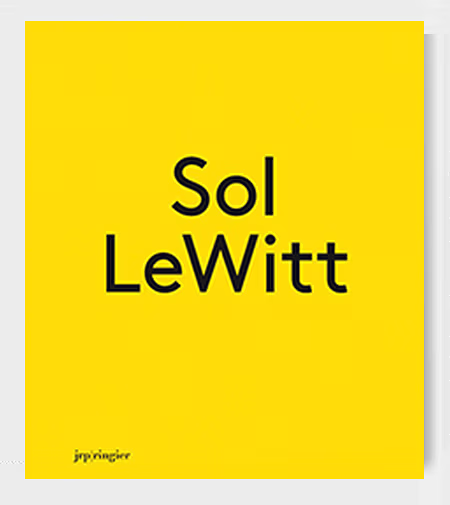
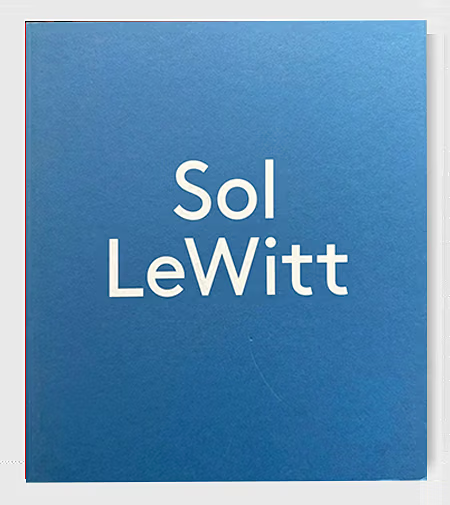
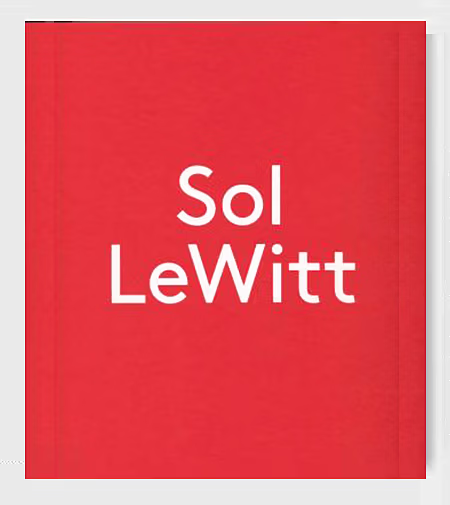
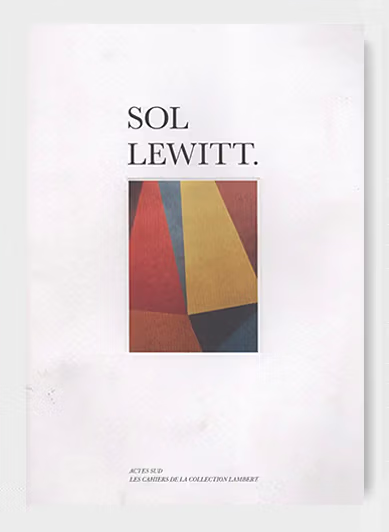
Sol LeWitt, (Monographs & Artist’s Books), 4 Books, Editor: Beatrice Gross, Contributors: Lucy Lippard, Rosalind Krauss, Mel Bochner, Dan Graham ve Robert Smithson, Publisher: Centre Pompidou-Metz, M-Museum de Louvain and JRP/ Ringier, 326 pages, English, Paperback, 2012-2013.
Produced to accompany the two exhibitions Sol LeWitt: 1968–2007 Wall Drawings at the Centre Pompidou-Metz with Sol LeWitt: Colours at the M-Museum in Leuven, this publication documents the most significant collection of LeWitt’s works ever exhibited in Europe. A seminal work in terms of its scope, design and scholarly depth, this book is also the first comprehensive monograph on LeWitt published posthumously. It brings together interview transcripts and numerous significant essays by artists and writers such as Lucy Lippard, Rosalind Krauss, Mel Bochner, Dan Graham and Robert Smithson.
BOOKS AND POSTERS
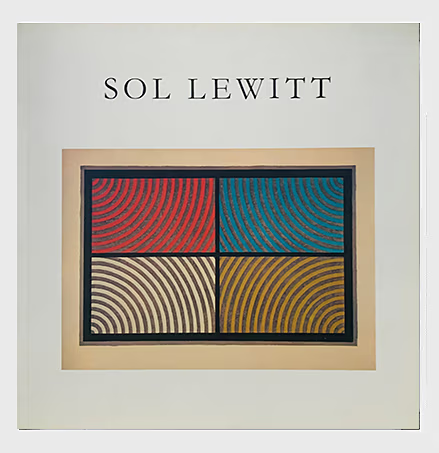
David S. Areford, Strict Beauty: Sol LeWitt Prints, Hardcover, English, 288 pages, Publishers: New Britain Museum of American Art; Williams College Museum of Art; and Yale University Press, 2020.
Sol LeWitt: Not to Be Sold For More Than $100, by Jason Rulnick (Introduction), Sol Lewitt (Artist), Veronica Roberts (Contributor), 240 pages, English, Radius Books, Hardcover – June, 2020.
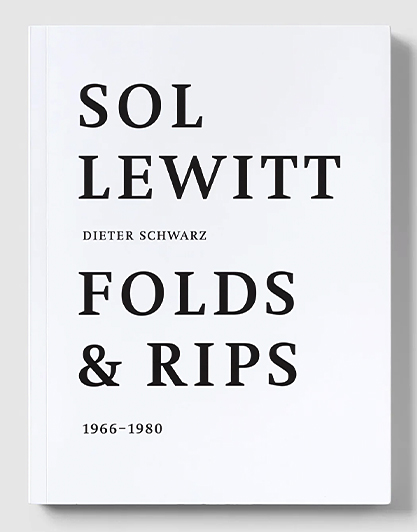
Dieter Schwarz, Sol LeWitt: Fold & Ribs 1966-1980, English, Softcover, 160 pages, Publisher: Walter König, 2020.
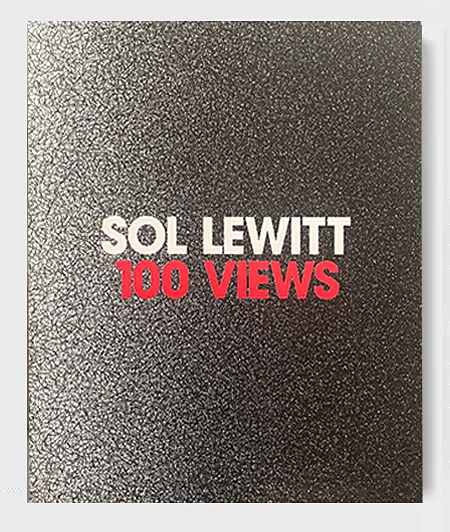
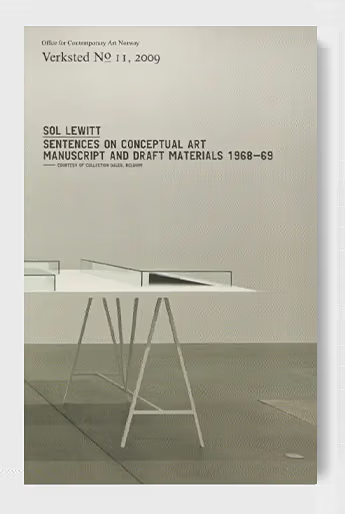
Sol Lewitt: 100 Views, Text by Susan M Cross, by Sol LeWitt (Author), Paperback, English, Yale University Press, Jun 2009.
Sol LeWitt: Forms Derived from a Cube (Color), Catalogue for a suite of 12 silkscreen prints by Sol LeWitt, 20 pages, English, Softcover, Published by Edition Achenbach, 1991.
Sol LeWitt: Artist’s Books, Authors: Didi Bozzini, Cecilia Metelli, Marilena Bonomo, Editors: Giorgio Maffei, Emanuele De Donno, Sol Lewitt (Artist), 144 pages, English, Publisher: Edizioni Corraini, Paperback, February 28, 2010
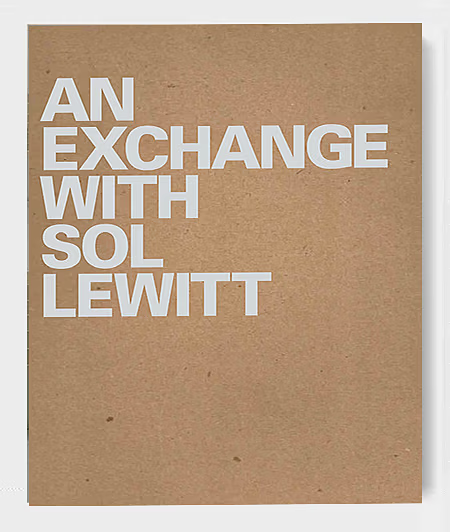
An Exchange with Sol LeWitt, Introduction by Regine Basha, Softcover, English, 192 pages, Cabinet Books, 2011.
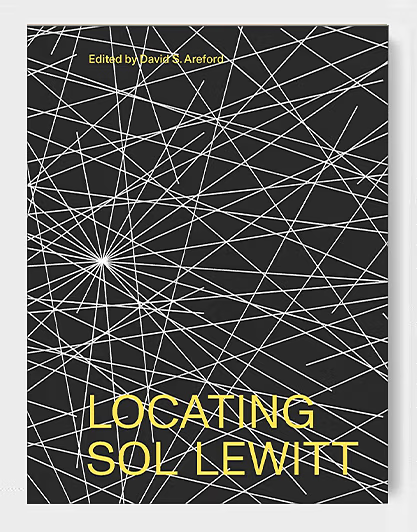
Locating Sol LeWitt, Edited by David S. Areford, Contributors: Lindsay Aveilhe, Erica DiBenedetto, Anna Lovatt, James H. Miller, Veronica Roberts, Kirsten Swenson, John A. Tyson, Hardcover, 288 pages, English, Yale University Press, March 2021.
Sol LeWitt: Structures 1965-2006, English, Hardcover, Publisher: Public Art Fund / Yale University Press, 2011.
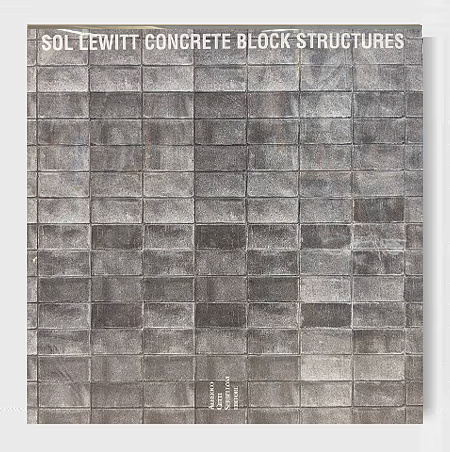
Sol LeWitt: Concrete Block Structures, by Michael Brenson Hardcover, by Sol LeWitt (Author), Publisher: Alberico Cetti Serbelloni, June 2002.
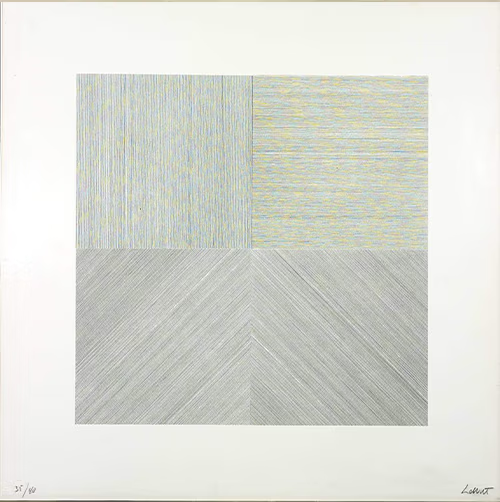
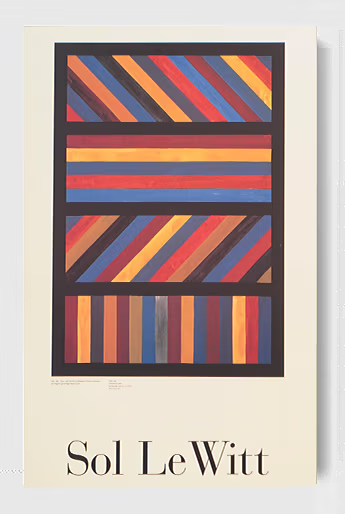
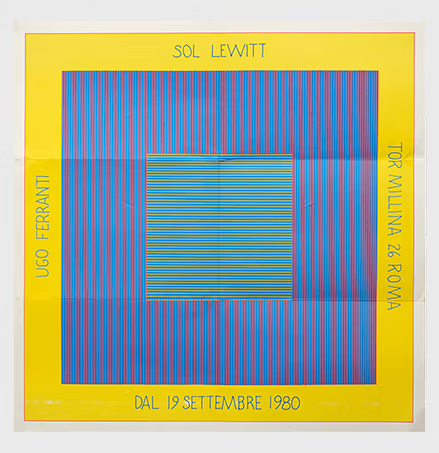
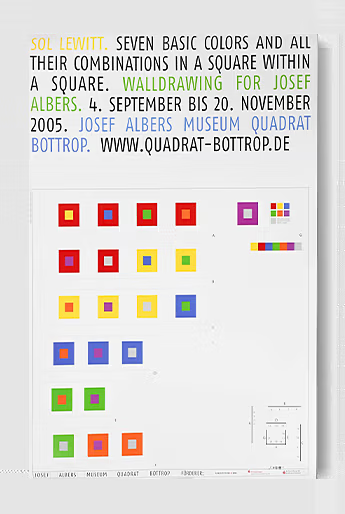
Sol LeWitt / Selected Prints 1970-1986, Original exhibition poster, Tate Gallery, Designer: Anon, Printer: Hillingdon Press, Publisher: Tate Gallery, Size: Double Crown (760 x 510 mm), 1986.
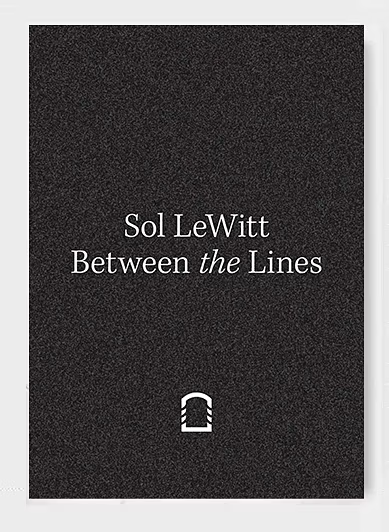
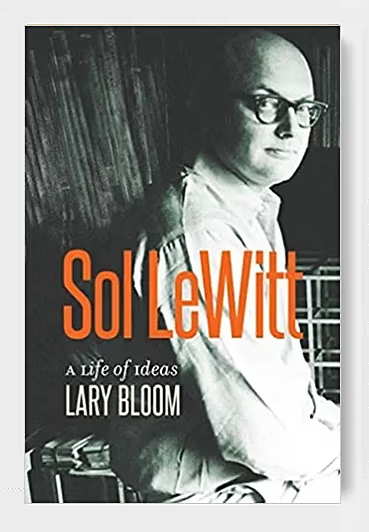
Sol LeWitt: Between the Lines, by Francesco Stocchi (Editor, Contributor), Sol Lewitt (Artist), Rem Koolhaas (Contributor), Adachiara Zevi (Contributor)320 pages, English, Publisher: Koenig Books, Paperback, June 26, 2018.
Sol LeWitt produced numerous works as part of his Wall Drawings series. Whilst some of these works may evoke wall paintings, over time he established his own distinctive tradition, guided by simple, repetitive forms and defined rules. [...] Wall Drawings are, without a doubt, an effective means of subverting the concept of site-specific art by pushing boundaries and transforming the space into a dependent variable through the disruptive continuity of scribbles that etch and cover the walls. For here, it is evident that greater visual and spatial continuity is created through modular geometric drawings (structures) such as open cubes, pyramids or broken arches. The resulting optical illusion, however, is astonishingly surprising in its simplicity.
SELECTED DOCUMENTS
BIOGRAPHY
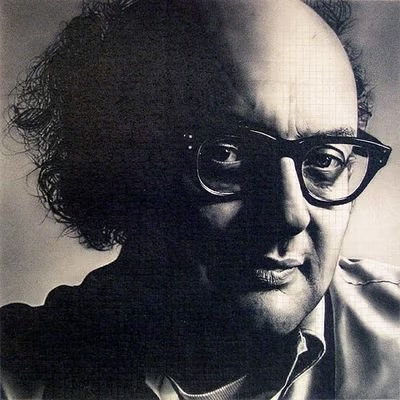
Sol LeWitt (1928–2007), one of the leading figures of Conceptual art and Minimalism, is renowned for his works that demonstrate that art can exist not only through the resulting object but also through the idea itself. Centring his works on the concepts of system, repetition, geometry and mathematical order, the artist invites the viewer to reflect on the production process and intellectual underpinnings of art. LeWitt positions the artist’s role not merely as an executor, but as the designer of an idea. Through his works exhibited in international museums and public spaces, Sol LeWitt has demonstrated that art can exist not merely as a physical object, but also as a system of thought. With his approach to democratising the creative process, the artist has played a significant role in the development of contemporary art by emphasising that art is both an intellectual and an experiential field.
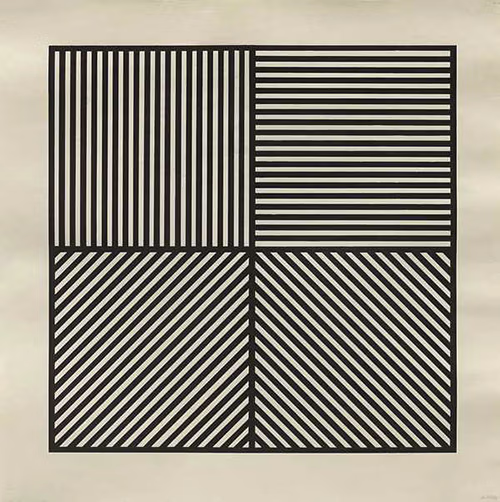
See: https://www.galeriartist.com/artist-detail?id=45
Also See: https://www.lewittcollection.org/
A FIle on MInImalIsm and MInImalIst ArtIsts at Saglamart
SOL LEWITT: GÖRSEL ALANDA KAVRAMSAL BİR DEVİNİM
saglamart; dinamik bir anlayış ile hareket eden, kültür-sanat ortamındaki olay ve olgulara, sanatçı tavırlarına, yapıtlara ve yayınlara odaklanan bağımsız bir yayın etkinliğidir. Tüm hakları saklıdır. Görüntü ve yazılar izinsiz kullanılamaz. / saglamart is an independent publishing initiative driven by a dynamic vision, focusing on events and developments in the cultural-artistic landscape, artist perspectives, works, and publications. All rights reserved. Images and texts cannot be used without permission.