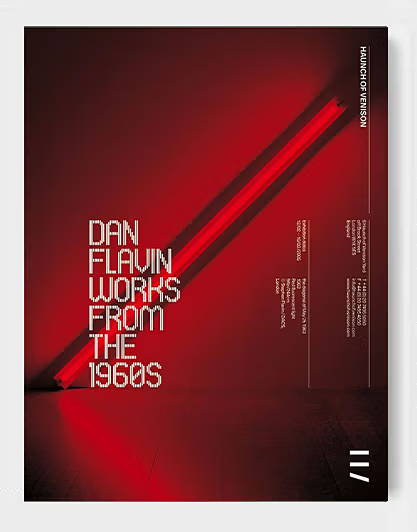
Dan Flavin, Alternate diagonals of March 2, 1964 (to Don Judd), 1964. (Detail), Rote und gelbe Leuchtstoffröhre, 366 cm lang über die Diagonale; The Estate Collection David Zwirner. Foto: Billy Jim, New York; © Stephen Flavin/VBK, Wien; © David Zwirner, New York

dan flavin

a spatial experience that dimensionalizes light

"

FLAVIN'S ART IS, ABOVE ALL, A PARODY OF THE POSSIBILITIES OF ILLUMINATION, CONSISTING OF OPERATIONS AND ACTS THAT COMPLETE A USEFUL, ASSOCIATIVE, TRANSCENDENT, AND ICONIC ENCHANTMENT. HE FINDS HIMSELF COMPELLED, HOWEVER, TO VOICE HIS OBJECTIONS REGARDING THE MYSTICISM THAT EMERGES ACROSS HIS VARIOUS ILLUMINATED ARRANGEMENT SERIES. HE STATES THAT THE EXTRAORDINARY EFFECTS OF LIGHT MANIFEST THEMSELVES DIRECTLY, WHILE THEIR ECSTATIC DIMENSIONS ATTAIN AN IRONIC REGISTER THROUGH SPATIAL CONNECTIONS. HE NOTES THAT THE IMMATERIALITY OF LIGHT, WHILE PRIORITIZING OBJECTIVE OPPOSITION AND TENSION, INEVITABLY GIVES RISE TO THE DEPTH ILLUSION BOUND TO SHADOW AND THE COMPELLING VISUAL EFFECTS CREATED BY OPTICAL SHIFTS. HAL FOSTER, FOR THIS VERY REASON, HOLDS THAT FLAVIN EXPANDS THE FIELD OF ILLUSION WITHIN MINIMALISM.

Minimalizm 3 Flavin

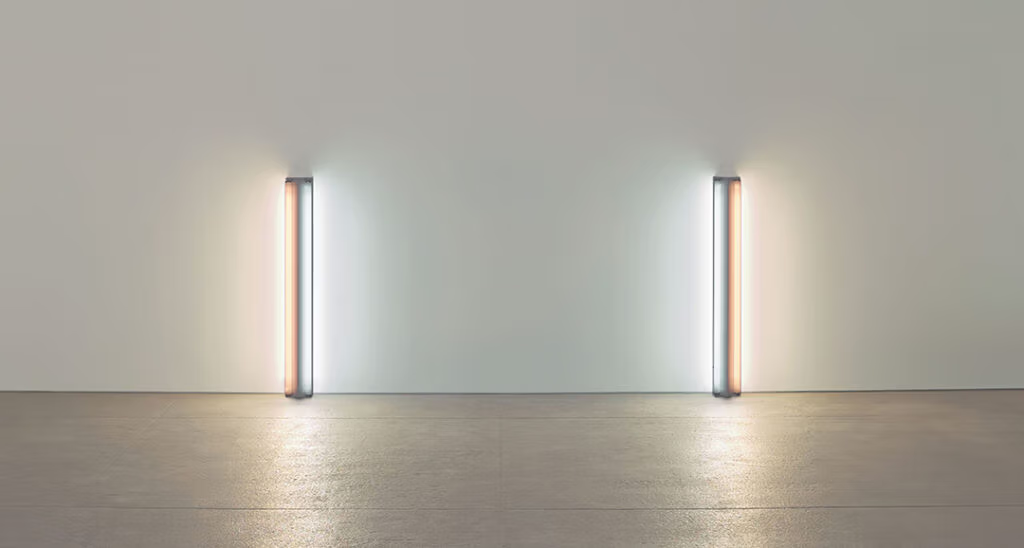
Dan Flavin, Untitled (for Robert Ryman), 1996, Detail, Warm white and daylight fluorescent light, 4 ft. (122 cm) high, Edition of 5, © Stephen Flavin/Artists Rights Society (ARS), New York.

Dan Flavin is one of the pioneers of minimal art, recognized for his radical and innovative light sculptures. From the 1960s until the final years of his life, he was immersed in a prolific practice of experimental work using fluorescent light tubes. His avant-garde approach employs the optical intensity of this industrial material to create a mystical atmosphere and transform the existing perception of space. This reconstitution of spatial experience is, without question, a significant innovation in both language and expression.

shaping space as illusion

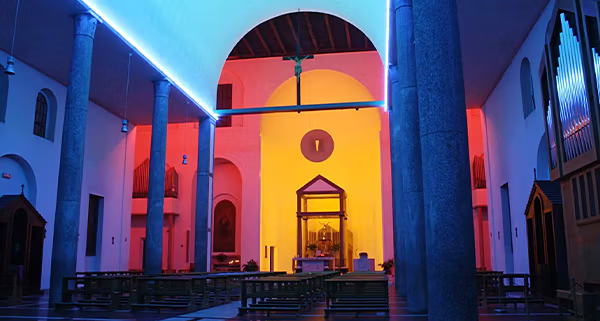
Throughout Dan Flavin’s artistic practice, the fluorescent lamp, held at the center as both image and object, sustains a constant tension between the object itself and its transcendent effect. Fluorescent light here occupies a threshold between the aesthetic and the utilitarian, between the virtual and the real. (1) The tension that arises from this condition generates an attractive field of movement, produced by the optical depth and reality effect that plays between the real and the illusory, and by the confusion induced by an order that has become both iconic and fetishized. The manner in which the lamps are employed within this iconicized order, their presentation as modern and fetish objects, is enlisted here in service of an almost enchanting display of presence. It is simultaneously an experience of transition and renewal that makes possible a connection with historical continuity.

Flavin’s art is, above all, a parody of the possibilities of illumination, consisting of operations and acts that complete a useful, associative, transcendent, and iconic enchantment. He finds himself compelled, however, to voice his objections regarding the mysticism that emerges across his various illuminated arrangement series. He states that the extraordinary effects of light manifest themselves directly, while their ecstatic dimensions attain an ironic register through spatial connections. He notes that the immateriality of light, while prioritizing objective opposition and tension, inevitably gives rise to the depth illusion bound to shadow and the compelling visual effects created by optical shifts. Hal Foster, for this very reason, holds that Flavin expands the field of illusion within minimalism. The anti-illusionist stance has been simultaneously neutralized and re-imposed, directly and anew, upon space through the mediation of a new image or specific object charged with optical effects. This constitutes an inverted illusion. Flavin’s minimalism has therefore not moved from illusion toward space; rather, it has enabled or initiated the shaping of space as illusion. (2)

Dan Flavin ve Işık

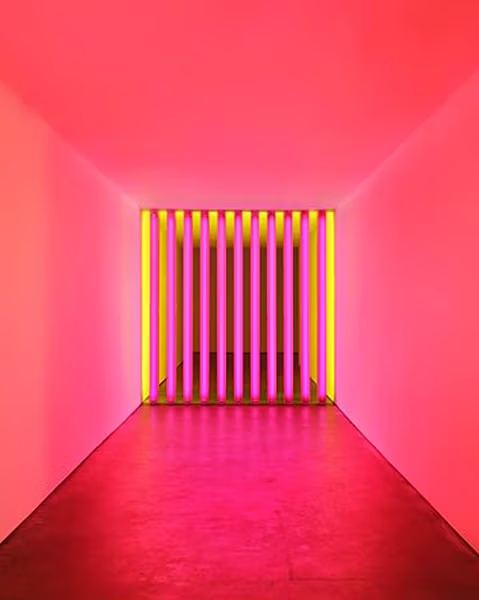
Dan Flavin, Untitled (to Barry, Mike, Chuck and Leonard), 1972-1975, yellow and pink fluorescent light, 244 x 244 cm. via​​ Dan Flavin: Corners, Barriers and Corridors, (cover image), Publisher: David Zwirner Books, 2016.

Dan Flavin ve Işık

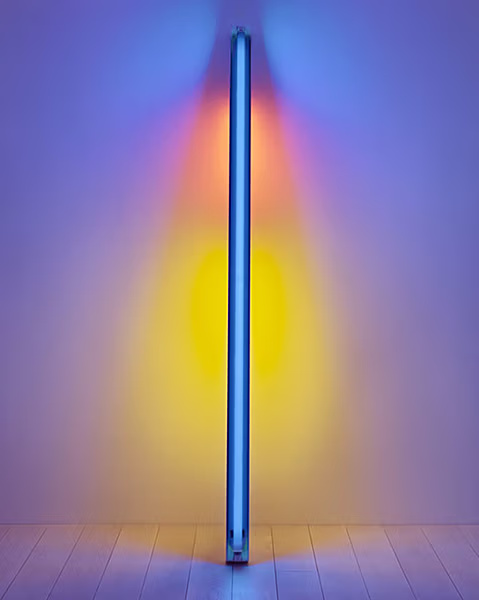
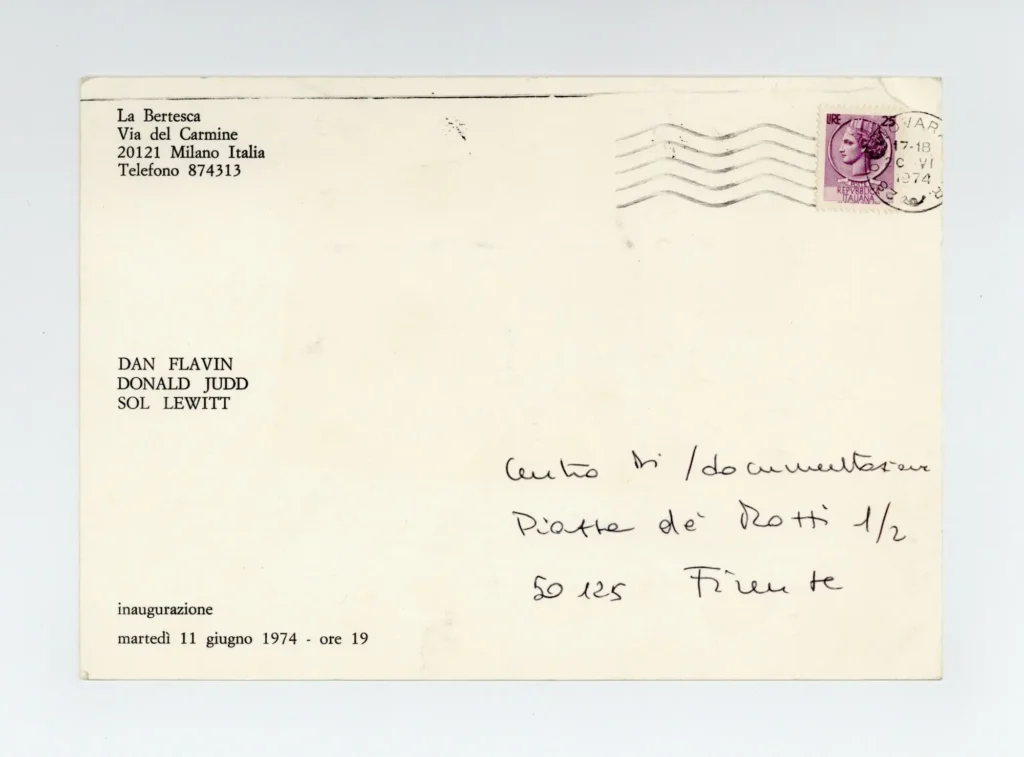
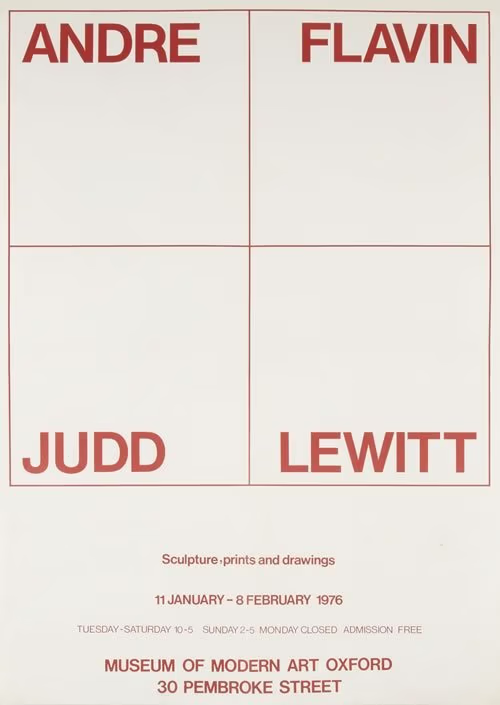
Dan Flavin, Untitled (to Eleanor McGovern), 1972. Blue, pink and yellow fluorescent light. 96 in. (244 cm.) https://www.xibtmagazine.com/2018/03/mignoni-gallery-andre-flavin-kawara-lewitt/
dimensioning light

The colored lamp lights Dan Flavin employs shape the environments in which they are installed and direct a distinctive process of perception and experience. (3His celebrated 1963 work The Diagonal of Personal Ecstasy, for instance, consists of a fluorescent light strip in any color available on the market. (4The luminous tube and the shadow cast by its supporting panel appear, in isolation, thoroughly ironic. The work, in its own right, renders its physical presence nearly invisible through its brightness, shining directly and dramatically on the wall. For the brilliance of the neon tubes makes it difficult for the viewer’s eye to determine its length. Flavin employs them as structural elements of the surrounding space. The reason behind this choice lies in the fact that his works reach their most essential state when the neon lights distort the viewer’s spatial perception, bending the space occupied by both viewer and work alike. The simplicity and linearity of this luminous object and material, together with its distanced relationship to emotional dimension, ultimately endow minimalism with a distinct expressive and affective register alongside its spatial breadth.

an innovative and integrative act of construction

Flavin, who produces works of a hard and industrial appearance, nonetheless operates within an approach whose effects and sensibility appear organic and emotional. His use of the colored planes of light effect, together with its impact on void and atmosphere, keeps this emotional connection consistently present. This effect, which openly permeates space, is presented as something complex, visually compelling, and possessed of a spiritual dimension. Flavin maintains, however, that this spatial and sensory emphasis, achievable through artificial light, is not conceived specifically for the psychology of contemplation, for symbolism, or for the creation of mystery. In his view, this effect and the space it inhabits should be approached as a simple and direct plastic phenomenon. In every respect, Dan Flavin’s artistic stance is best described as an innovative and integrative act of construction, one experienced within an explicit engagement with questions of material objecthood and illusion, structurally and conceptually powerful, and visually expansive in its optical reach.

notlar

1  Hal Foster, Sanat Mimarlık Kompleksi / Art-Architecture Complex, Translation: Serpil Özaloğlu, İletişim Publication, İstanbul, 2013. pg. 287.

2  See. Hal Foster, Ibid, pg. 294-297.

3  See. Chiara Guidoni, https://www.xibtmagazine.com/2018/03/dan-flavin-dimensions-of-light/

4  Dan Flavin, Diagonal of Personal Ecstasy, (the Diagonal of May 25, 1963, to Constantin Brancusi), Red fluorescent light, 244 x 10.5 x 11 cm. https://lesoeuvres.pinaultcollection.com/en/artwork/diagonal-may-25-1963

Prepared by Gülay Yaşayanlar & Mümtaz Sağlam  Copyright © Mart 2026, All rights reserved.

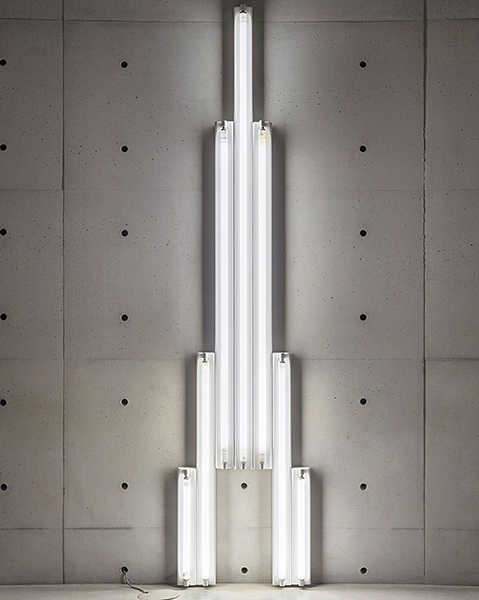
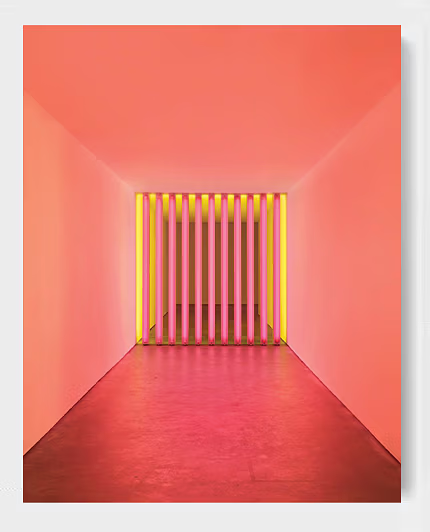
This work, which references Vladimir Tatlin’s Monument to the Third International -designed in 1920 but never realised- is composed of fluorescent tubes arranged in a staircase-like formation. Both a tribute and a reinterpretation, this iconic piece is the product of an abstract and conceptual approach that defies interpretation through its simple formal arrangement.

Two New exhIbItIons

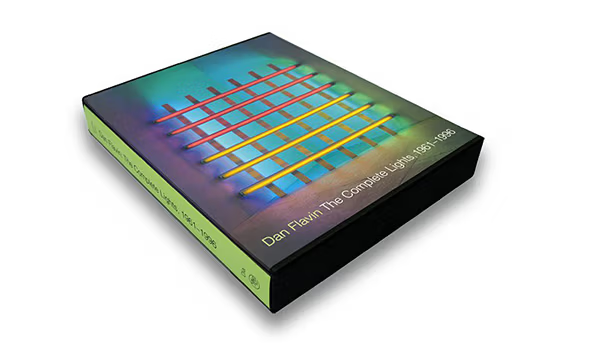
Dan FlavIn: The Complete LIghts, 1961-1996

Dan Flavin: The Complete Lights, 1961-1996, by & David Gray; Dan Flavin Govan, Michael & Tiffany Bell; Brydon E. Smith (Author), Hardcover, 431 pages, English, Yale University Press; Foundation, January 1, 2004. 

This book-catalogue, entitled *Dan Flavin: The Complete Lights, 1961–1996*, is the only publication to bring together over 750 of the artist’s works. The book documents the artist’s entire career, providing details for each work, including the title, date, materials, dimensions, edition number, exhibition history and bibliographical information. It also serves as a unique resource, enriched with new interpretations of the artist’s work.

BOOKS 

Dan Flavin ve Işık

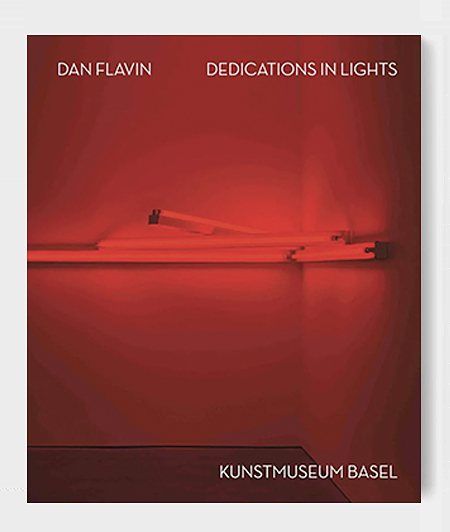
Dan Flavin: Dedications in Lights, Editors: Josef Helfenstein and Olga Osadtschy, Dan Flavin (Artist), Contributors: Jules Pelta Feldman, Aden Kumler, Hardcover, 256 pages, English, Publisher: Walther König, Köln, November 19, 2024.

Dan Flavin ve Işık

Dan Flavin: Icon, Authors: Corinna Thierolf & Johannes Vogt, Hardcover, German, 77 pages, Publisher: Schirmer / Mosel, 2008

 
Dan Flavin ve Işık

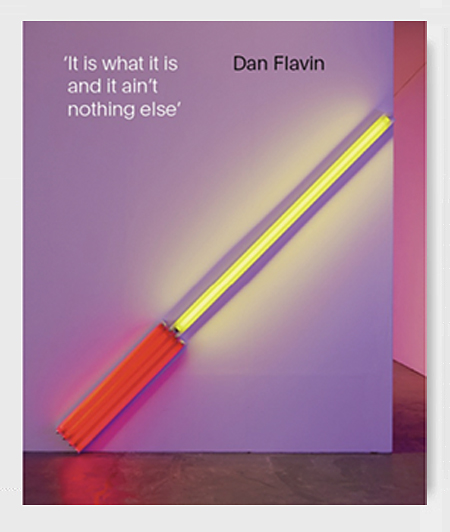
Dan Flavin, Essay by Jeffrey Weiss, Publisher: Ikon Gallery Ltd, Paperback, English, Birmingham, 2016.

 
Dan Flavin ve Işık

Dan Flavin: Corners, Barriers and Corridors, Texts by Michael Auping and Alexandra Whitney, English, 96 pages, Designer: McCall Associates, Hardcover, David Zwirner Books, 2016.

Dan Flavin ve Işık

Dan Flavin, Designed by Sinéad Madden, 29 x 33.7 cm., 44 pages; Publisher: Ordovas Gallery, London, 2025.

Dan Flavin ve Işık

Dan Flavin Lights, by Rainer Fuchs (Author), Hardcover, 264 pages, English, Publisher: Hatje Cantz, December 6, 2012.

Dan Flavin ve Işık

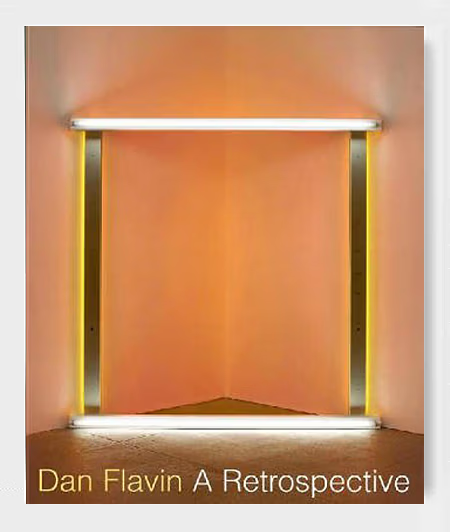
Dan Flavin: A Retrospective, Authors: Michael Govan, Tiffany Bell, Contributors: Brydon E. Smith, Earl Powell III, Jeffrey Weiss, 208 pages, Paperback,, English, Yale University Press, October 1, 2004.

Flavin Işık

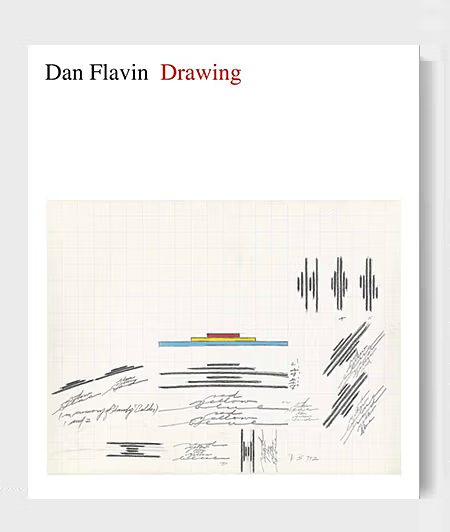
Dan Flavin: Drawing, Artist: Dan Flavin, Contributors: Tiffany Bell, Isabelle Dervaux, Jennifer Raab, Hardcover, English, Publisher: The Morgan Library & Museum, 2012.

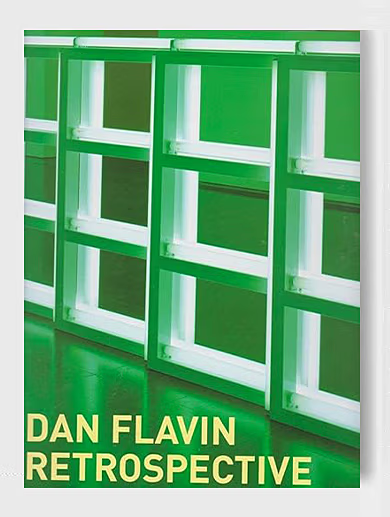
Dan Flavin: Retrospective, Authors: Michael Govan, Tiffany Bell, Contributors: Brydon E. Smith, Earl Powell I II, Jeffrey Weiss, 208 pages, Paperback,, English, Yale University Press, October 1, 2004.

Dan Flavin ve Işık

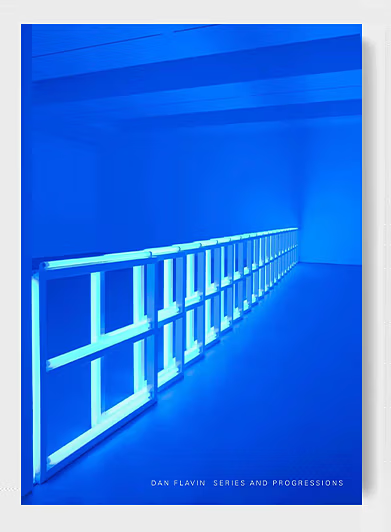
Dan Flavin: Series and Progressions, Texts by Tiffany Bell, Anne Rorimer, Richard Shiff, and Alexandra Whitney. Interview with Dan Graham, Designer: Simon Johnston Desig, 156 pages, Hardcover, Publisher: David Zwirner / Steidl, 2010.

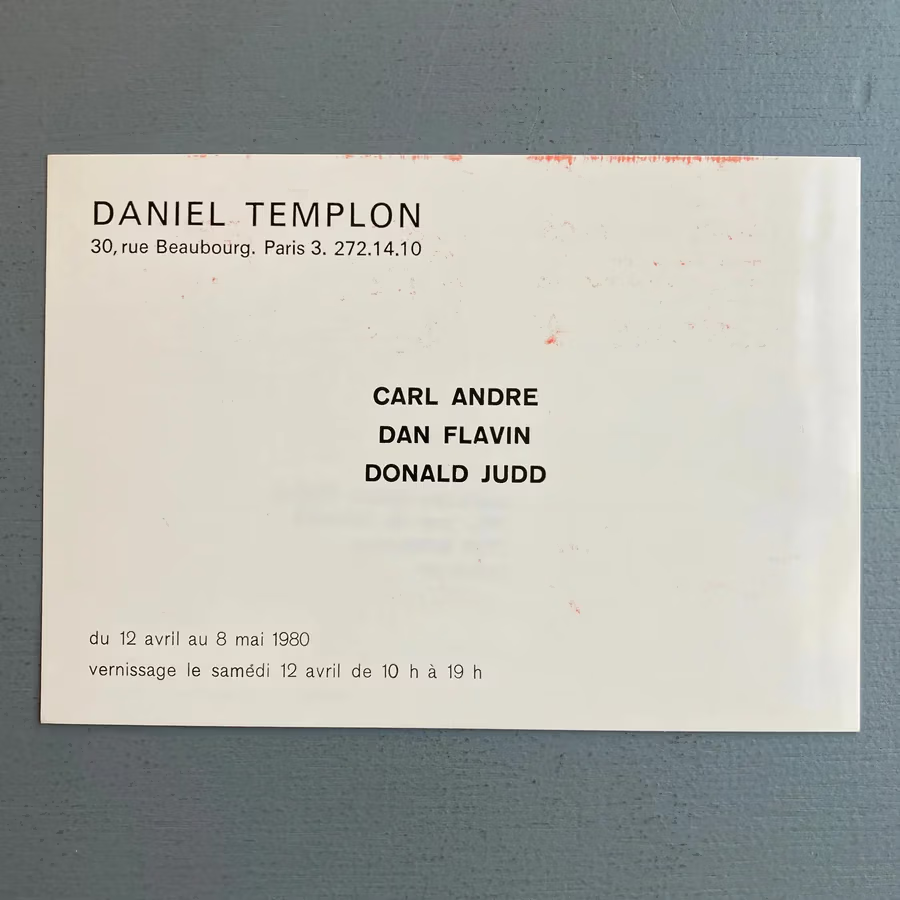
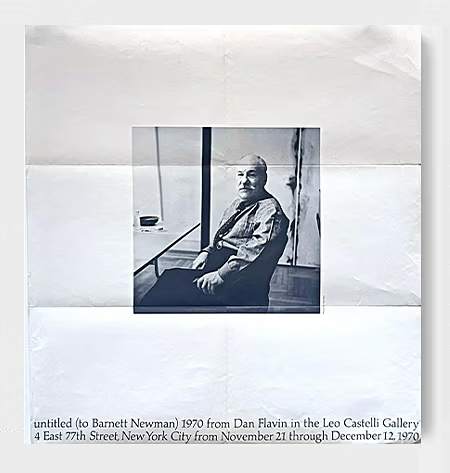
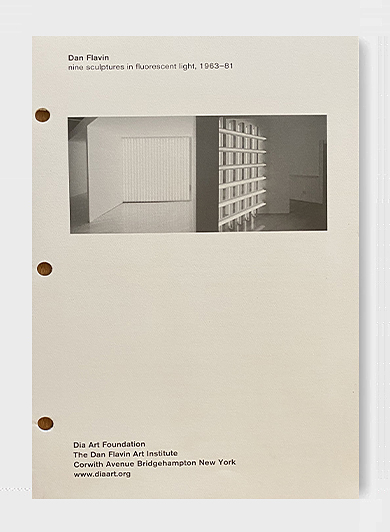
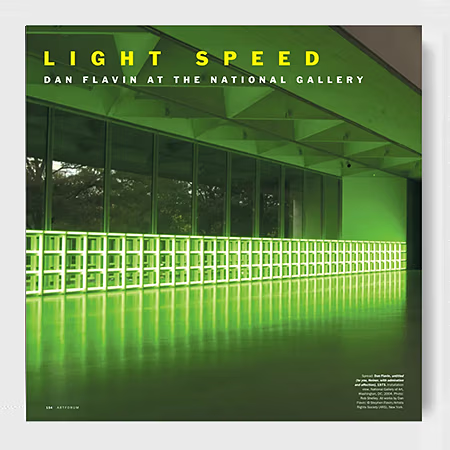
DIa BrIdgehampton / NEW YORK (DAN FLAVIN ART INSTITUTE)

SELECTED DOCUMENTS

Flavin Işık
Dan Flavin ve Işık
Flavin Işık
Flavin Işık
Flavin Işık
Flavin Işık
Flavin Işık
Flavin Işık
Flavin Işık
Dan Flavin ve Işık
Flavin Işık
Flavin Işık
Dan Flavin ve Işık
Flavin Işık

BIOGRAPHY

Dan Flavin (1933–1996) attended the Hans Hofmann School of Fine Arts in New York in 1956 and studied art history at the New School for Social Research. In 1959, he took courses in painting and drawing at Columbia University. His artistic career began with paintings that reflected his interest in Abstract Expressionism, as well as works involving collage and assemblage. In 1961, he began creating sketches for sculptures incorporating electric lights. He later transformed these sketches into arrangements- which he termed icons -where lights were placed side by side on monochrome canvases. In 1963, he completely dispensed with the canvas and began working directly with fluorescent tubes. https://www.guggenheim.org/artwork/artist/dan-flavin

RELATED CONTENTS

İZMİR - LONDON

saglamart; dinamik bir anlayış ile hareket eden, kültür-sanat ortamındaki olay ve olgulara, sanatçı tavırlarına, yapıtlara ve yayınlara odaklanan bağımsız bir yayın etkinliğidir. Tüm hakları saklıdır. Görüntü ve yazılar izinsiz kullanılamaz. / saglamart is an independent publishing initiative driven by a dynamic vision, focusing on events and developments in the cultural-artistic landscape, artist perspectives, works, and publications. All rights reserved. Images and texts cannot be used without permission.

Copyright ©
Can Sağlam - Gülay Yaşayanlar Mümtaz Sağlam, 2025.