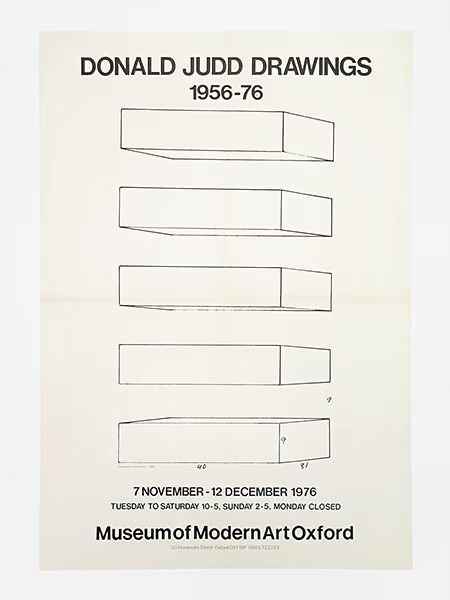
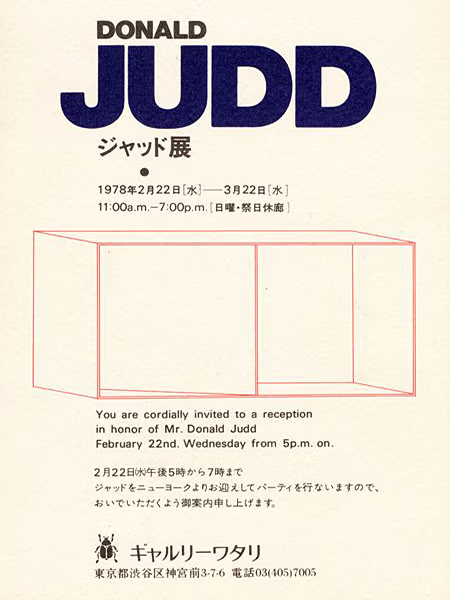
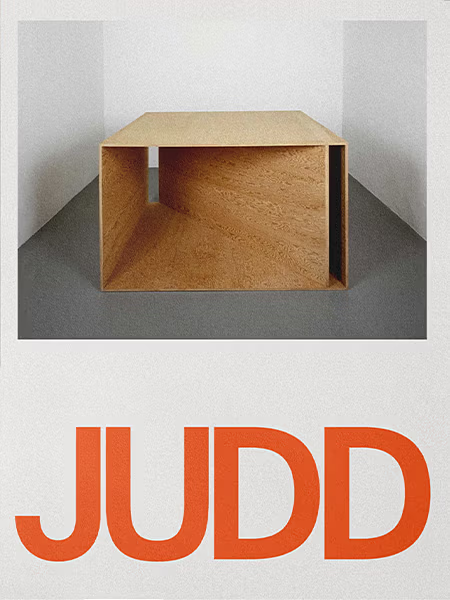
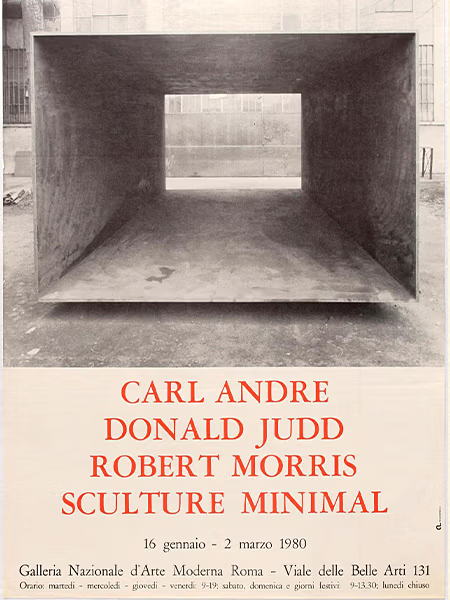
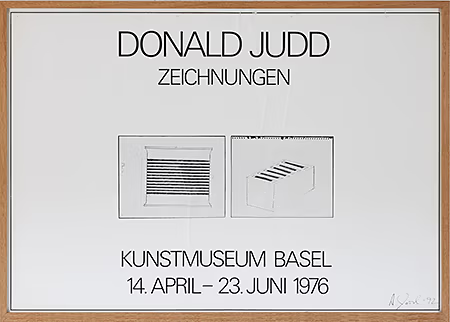
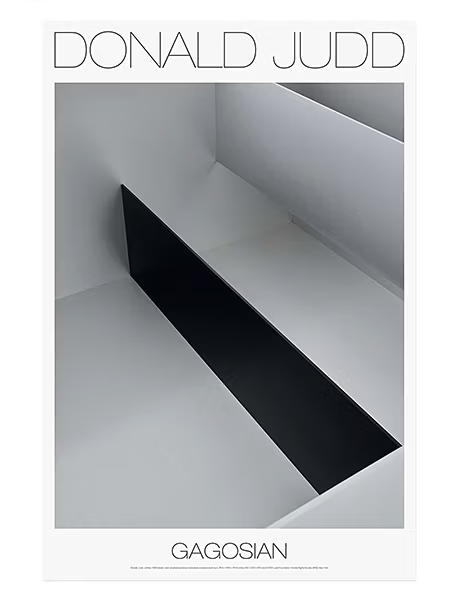
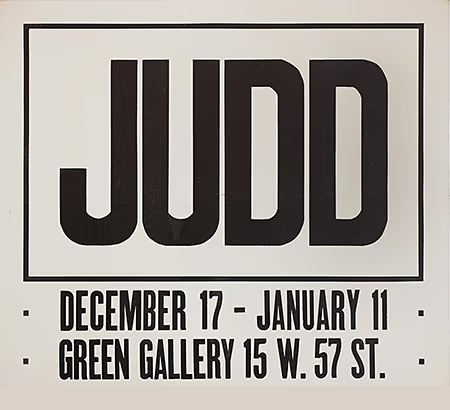
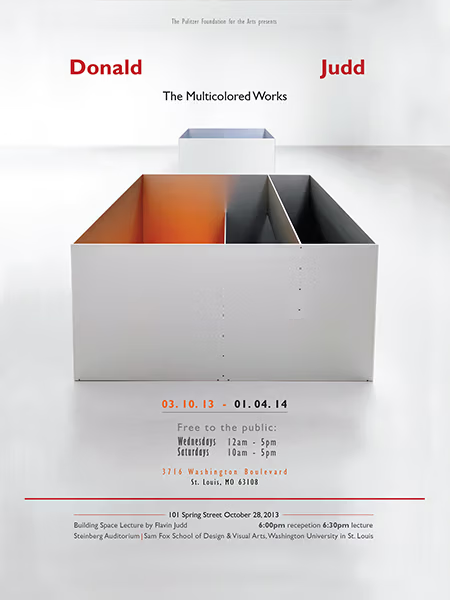
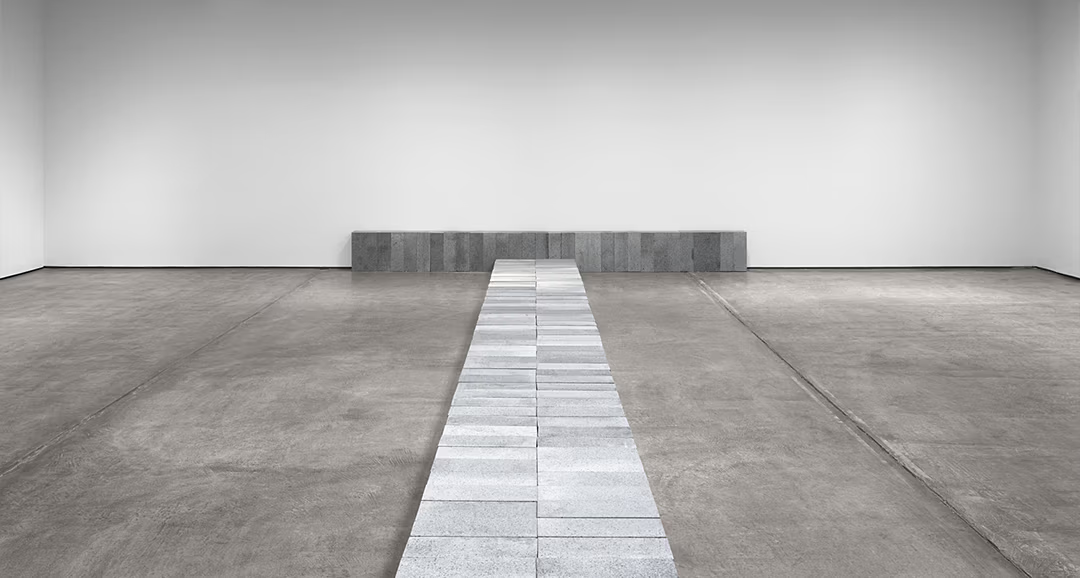
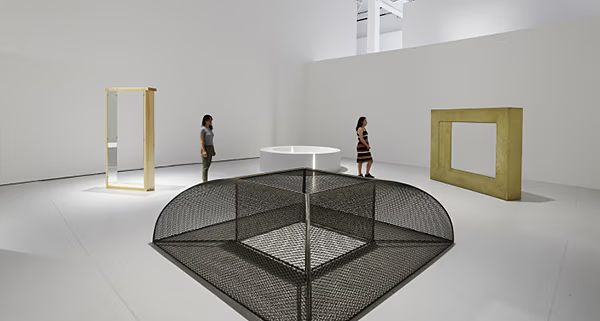
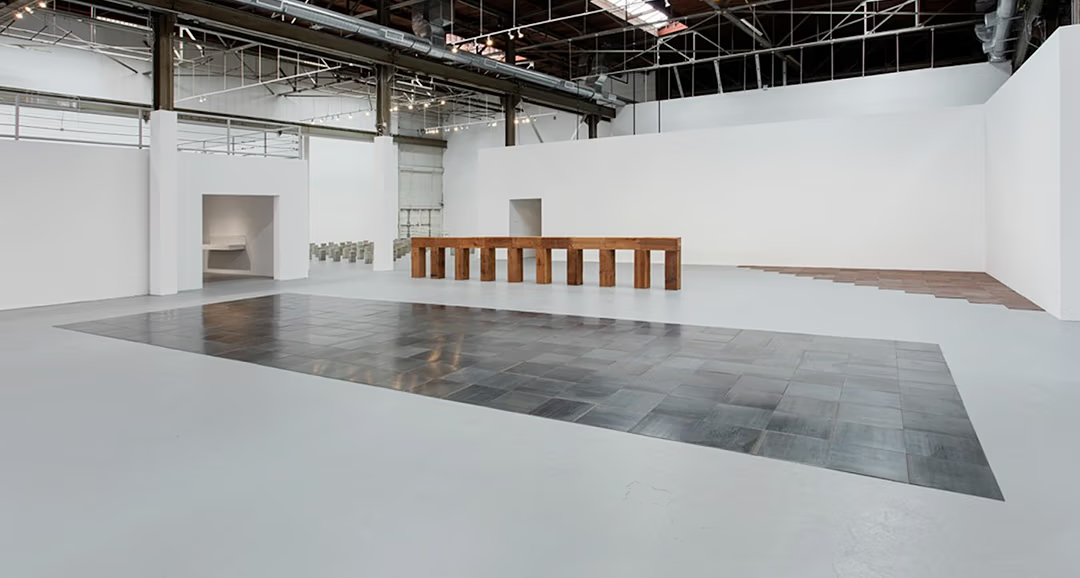
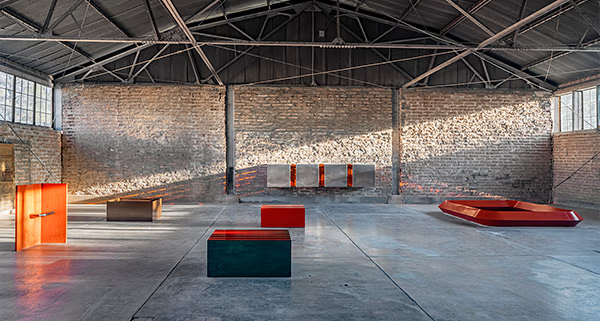
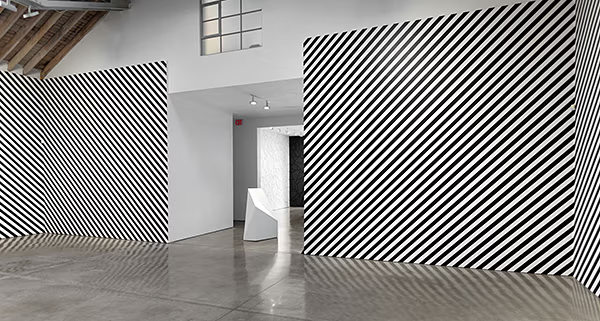
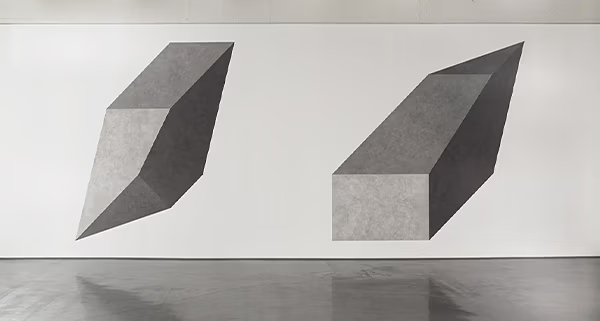
Donald Judd; undoubtedly, by arrangIng Identical unIts at Intervals and placIng them agaInst the wall, he proposes a holIstIc and vIsual sensory experIence. ThIs fragmented composItIon transforms Into a straIghtforward spatIal arrangement by creatIng a new sense of planar movement. ThIs hypothetIcal arrangement, based on specIfIc solutIons developed wIthIn horIzontal or vertIcal sequences, presents Itself as a dIstInct and experImental phenomenon.
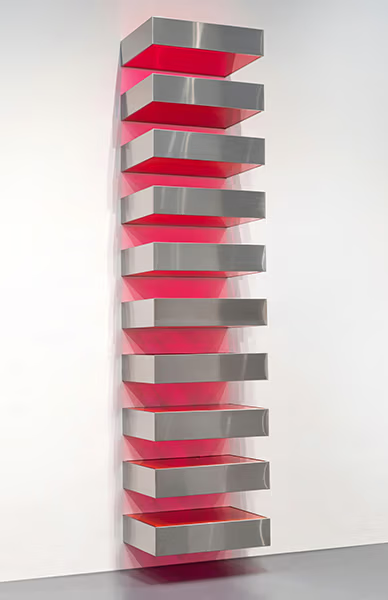
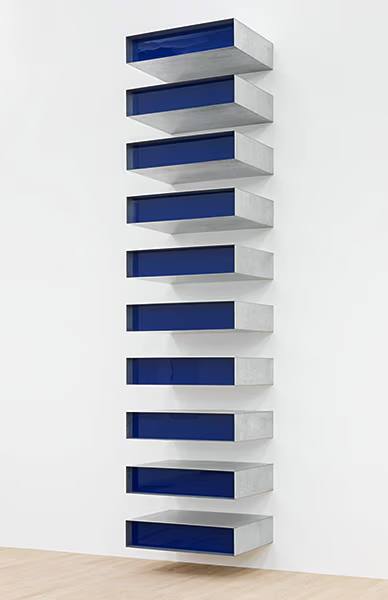
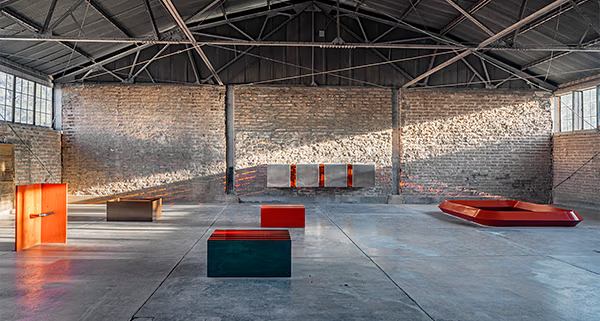
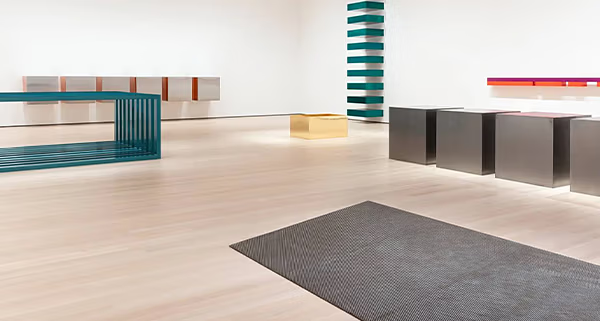
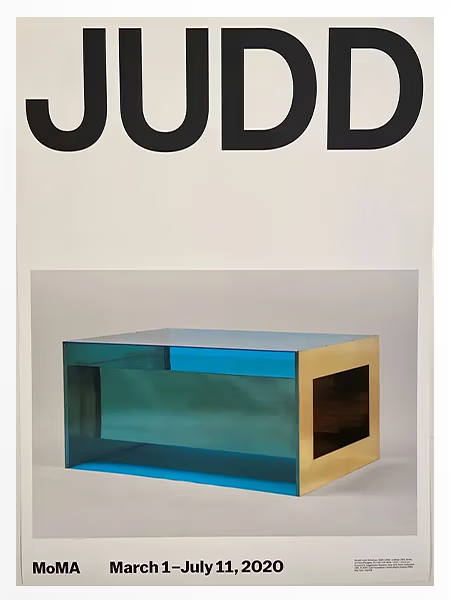
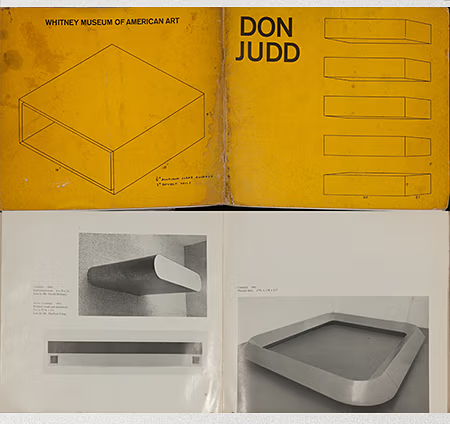
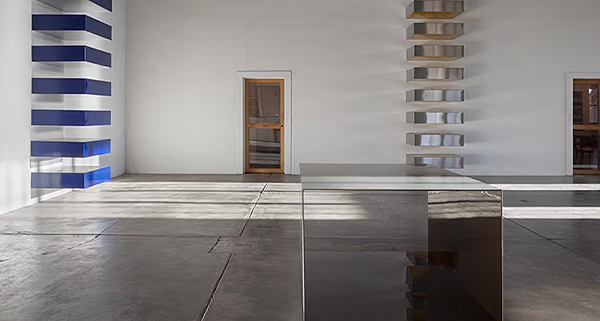
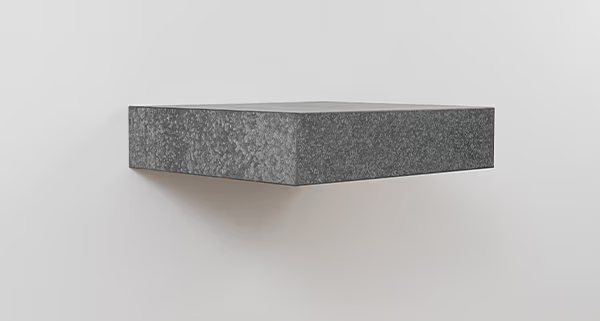
Donald Judd produces sculptures that combine industrial materials with a radical conceptual stance. In the first half of the 1960s, he employs techniques and methods that lend his works an impersonal, factory-made aesthetic. He carefully develops an artistic language grounded in regularly repeated geometric units, consisting of boxes hung symmetrically on the wall in a vertical stack formation or horizontally as progressions, or placed directly on the floor. In response to criticisms regarding an apparent absence of content, he has stated that his primary concern is to create simple objects that point to nothing beyond their own physical presence and stand alone as part of an expanded field of image.
the effect of depth achieved through sequence and repetition
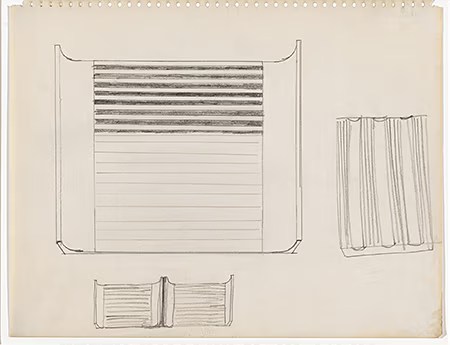
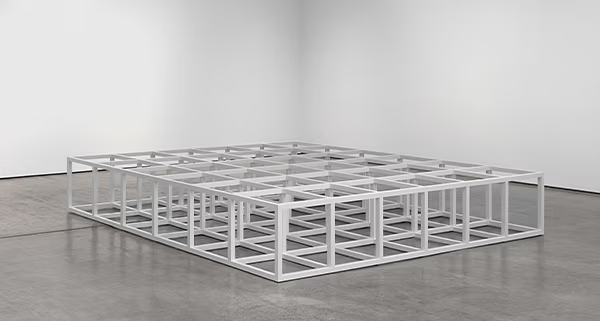
In these arrangements, the horizontal and vertical open box forms used in a linear manner represent, for Judd, ideal structures. They are also the two most elemental stacking configurations that cut through space in the simplest and most direct way across all of his sculptural arrangements. The fact that each object Judd employs here shares identical dimensions and shape is equally important for the visual wholeness achieved through rhythm and repetition. In this sequence, in which no hierarchical relationship between elements is permitted, a logic prevails that appears rational yet points more decisively toward repetition and serial progression. The conception of composition, within this framework, resides in a continuity achieved through horizontal progression and the side-by-side repetition of units. With its orderly and industrial appearance, the work exists within a materiality that is sharper, more precise, and more layered, yet simultaneously unsettling. Judd seems to be proposing, through boxes that are identical to one another, an analogy unmanipulated by external factors or connections. As conveyed by Rosalind Krauss, Judd’s arrangements, which reject an art that grounds its meaning in illusion, are nonetheless to a certain degree affected by the optical illusions produced by effects such as light, shadow, and depth.
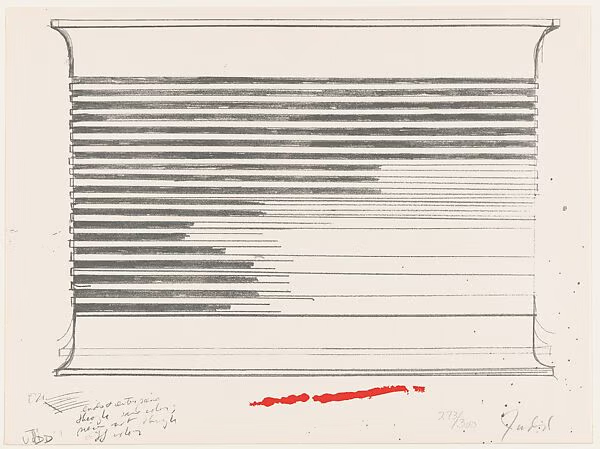
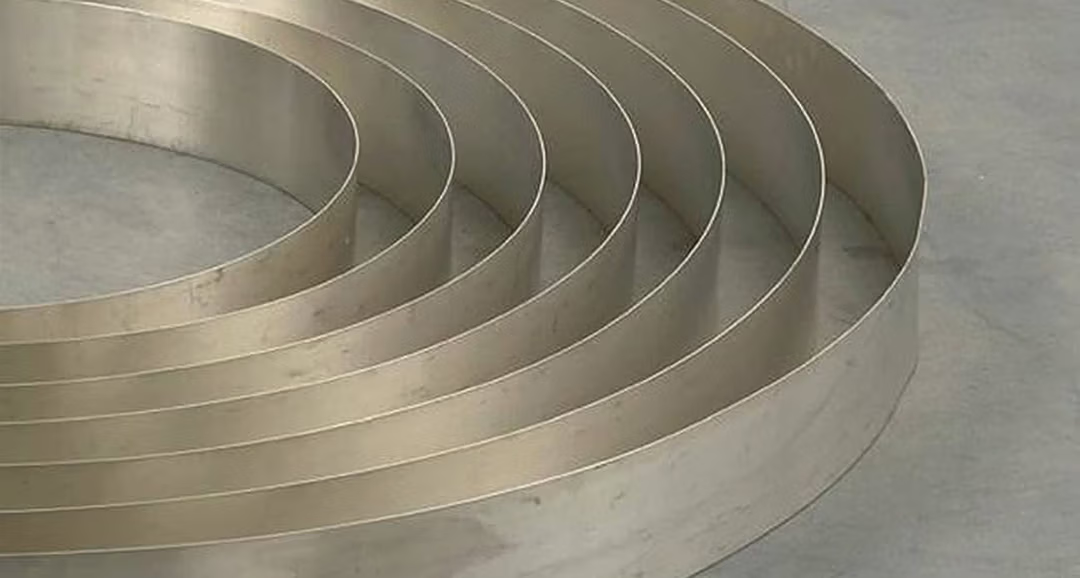
The shadowed depths produced by the sequential repetition of stacked forms in horizontal and vertical positions, and by their contact with light, are naturally only one of the dynamics that complete these works. Judd holds, contrary to general attempts at reading them, that the three-dimensionality that emerges constitutes real space and liberates us from the problem of illusion. He notes that minimalist objects are opposed to all forms of illusion and virtual space, and that they stand apart from the stance developed against pictorial illusion in the advanced stages of minimalism. Yet it is also evident that Judd’s installations are, in terms of their structural qualities, already engaged in perceptual shifts tied to perspective in a compelling manner. Moreover, the non-hierarchical sequencing of form and object reinforces precisely these pictorial effects. Judd, in an intriguing turn, actually preserves himself by employing illusion, both technically and visually, as Foster has also emphasized.
an immediate spatial arrangement
Donald Judd, without question, proposes a holistic visual and perceptual experience by arranging identical units at intervals and positioning them against the wall. This fragmented structuring creates a new planimetric mobility and is transformed into an immediate spatial arrangement. This hypothetical positioning, grounded in specific solutions that unfold within horizontal or vertical sequences, presents itself as a distinctly experimental phenomenon.
notes
1 Rosalind Krauss, Modern Heykelin Dehlizleri / Passages in Modern Sculpture, Translation: Sibel Erduman, Everest Publishing, October 2021, İstanbul. pg. 285.
2 David Batchelor, Modernizm / Modernism, Translation: Tüles Üresin, Hayalperest Publishing, İstanbul 2025, pg. 51.
3 Rosalind Krauss, Ibid, pg. 283-292.
4 In Judd’s stack series, made from galvanised steel and plexiglass, the surfaces of the rectangular prisms reflect light in different ways: whilst the steel has a metallic sheen, the plexiglass is transparent and reveals what lies within. The same geometric form produces different experiences depending on the properties of the materials. The geometry remains constant, but the physics of the material reveals something new each time.
5Hal Foster, Sanat Mimarlık Kompleksi / The Art-Architecture Complex, Translation: Serpil Özaloğlu, İletişim Publishing, İstanbul, 2013. pg. 279-280.
Specific Objects is one of the most influential manifestos in art history. In this text, published in 1965, Donald Judd argued that the two fundamental categories of Western art -painting and sculpture- were becoming obsolete, and he gave the name specific objects to works that transcended the boundaries of both categories. Objects defined in this way are neither paintings nor sculptures. They represent nothing other than themselves; they exist within a new category of their own. They are predominantly made of industrial materials, are three-dimensional, and can stand on a wall or the floor but are without a plinth. This ambiguous space between categories is, according to Judd, precisely the most productive area. The intellectual focus of the essay lies in the opposition to illusion. Here, Judd defends real space. He finds the relationship a physically existing object establishes with space to be strong and authentic. Judd embodies this in his own practice. The galvanised steel and plexiglass boxes he uses create no illusion. The object stands there; it merely reflects light; it influences the surrounding space.
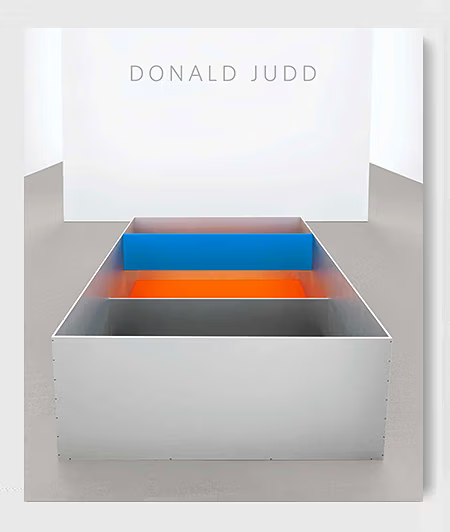
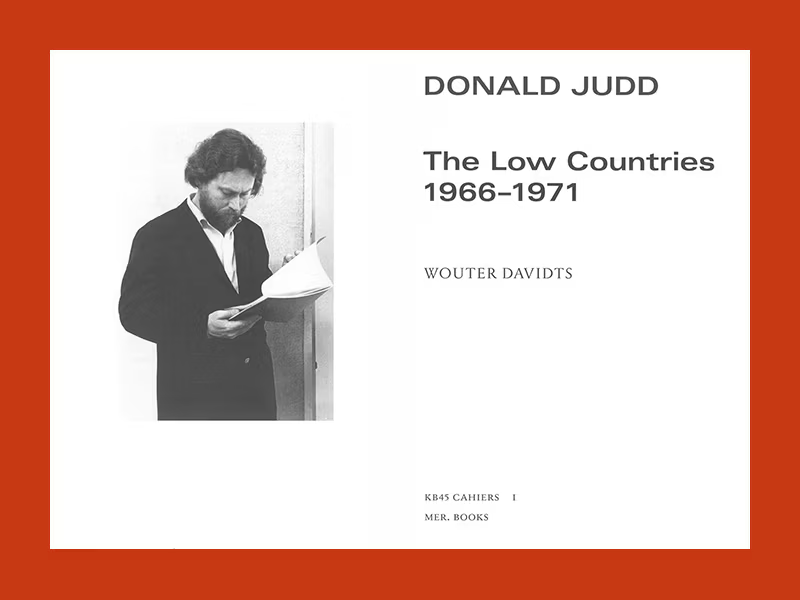
Donald Judd: Artworks 1970–1994, by Donald Judd (Author), Flavin Judd (Foreword), Contributor: Johanna Fateman, Lucy Ives, Thessaly La Force, Branden W. Joseph, Anna Lovatt, Lauren Oyler, Michael Stone-Richards, Mimi Thompson, Marta Kuzma, Wendy Perron, English, Hardcover,284 pages, David Zwirner Books, February, 2022.
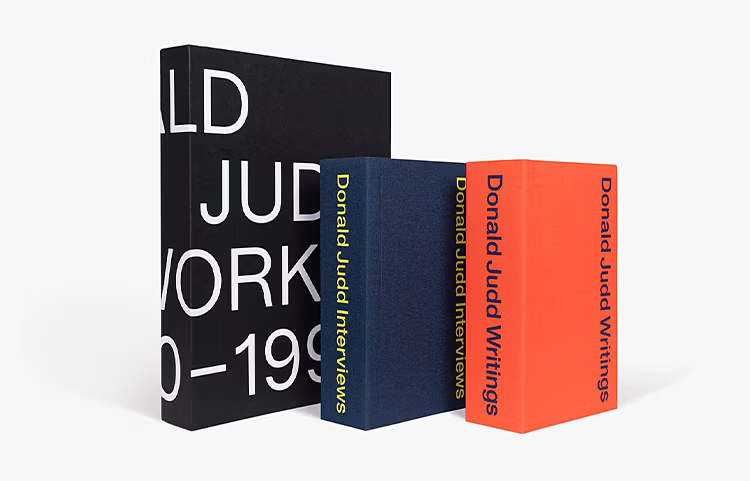
This three-volume set, curated and meticulously designed by David Zwirner Books, highlights the enduring influence of Judd’s art and his striking visual language. The comprehensive volume Donald Judd: Artworks 1970–1994 comprises a selection of Judd’s iconic and ambitious works, alongside a variety of critical essays. Donald Judd Writings, meanwhile, is a collection comprising hundreds of pages of Judd’s essays, notes and letters, some of which have never been published before. Furthermore, the third volume, Donald Judd Interviews, is also meticulously compiled, presenting sixty interviews conducted with the artist over a forty-year period and stands out as the first compilation of its kind.
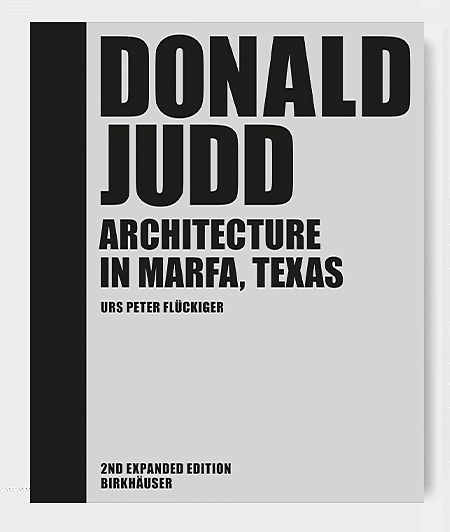
Donald Judd: Architecture in Marfa, Texas,by Urs Peter Flückiger(Author), Hardcover, 208 pages, English, Publisher: Birkhäuser, October, 2021.
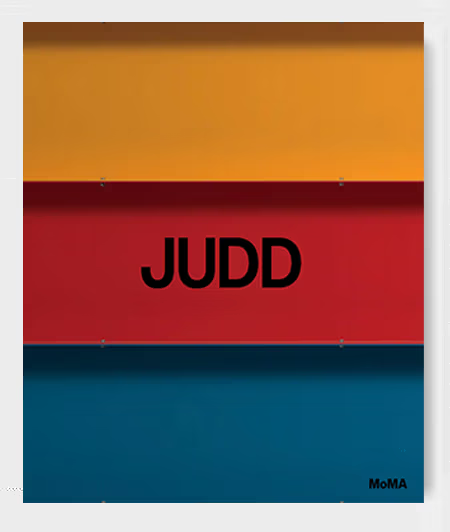
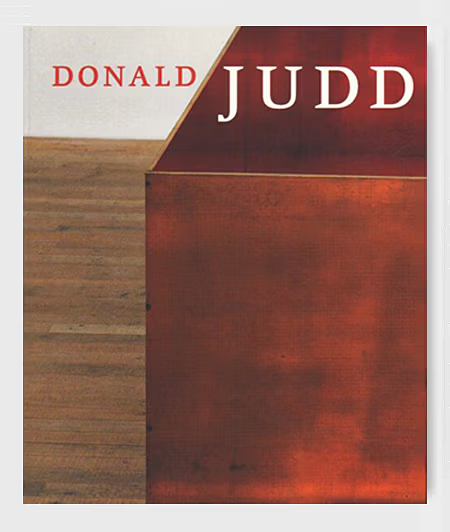
Judd, Edited by Ann Temkin. With contributions by Erica Cooke, Tamar Margalit, Christine Mehring, James Meyer, Annie Ochmanek, Yasmil Raymond, and Jeffrey Weiss, Hard Cover, 304 pages, Publisher: The Museum of Modern Art-Moma, New York, March 2000.
Donald Judd, Contributors Nicholas Serota (Director of the Tate), Rudi Fuchs, Richard Schiff and David Raskin, and David Batchelor, English, Softcover, 288 pages, Published by D.A.P/Tate,
Donald Judd, Text by Richard Shiff. Interview with the artist by Jochen Poetter, Designer: Margaret Bauer, David Zwirner Books & Steidl, Printer: Steidl, Göttingen, Germany, English, German, Hardcover, 2011.
Donald Judd: The Early Works 1955-1968 by Donald Judd (Author), Thomas Kellein (Editor) English, 184 pages, Hardcover, D.A.P. / Distributed Art Publishers, Inc., September 2002.
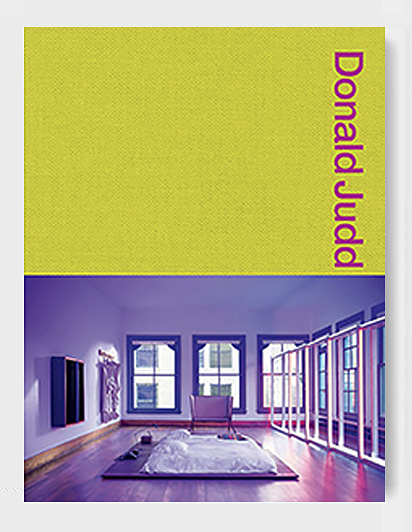
Donald Judd Spaces: Judd Foundation New York & Texas, by Donald Judd (Author), Editor: Flavin Judd and Rainer Judd, Judd Foundation (Editor), 400 pages, English, 400 pages, Hardcover, Publisher: Prestel, February 2020.
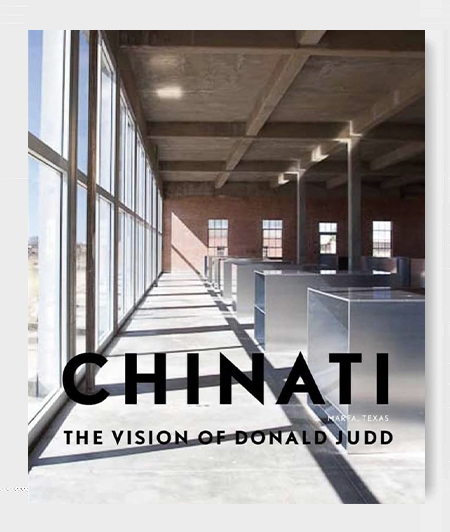
Chinati: The Vision of Donald Judd, Contributors: Jenny Moore and Marianne Stockebrand, 352 pages, 184 color and, 68 black-and-white illustrations, co-published by the Chinati Foundation, Yale University Press, and Hatje Cantz, Second Edition, Spring 2020, Marfa/Texas.
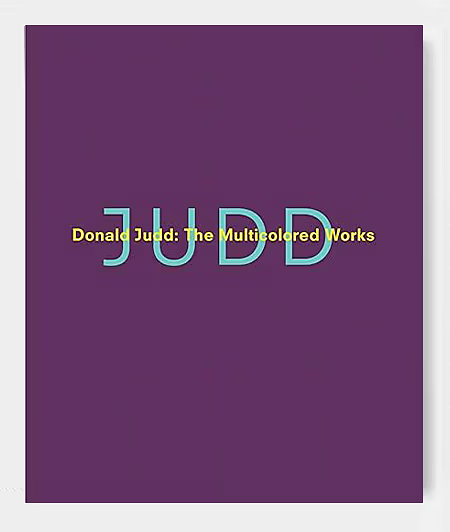
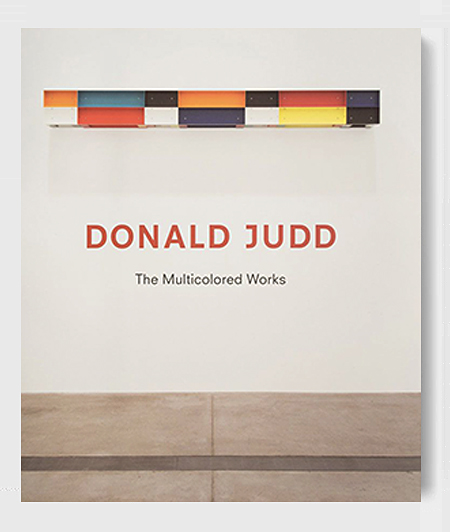
Donald Judd: The Multicolored Works by Marianne Stockebrand (Author, Editor), Authors: William C. Agee, Rudi Fuchs, Donald Judd, Adrian Kohn, Richard Shiff, Hardcover, English, 304 pages, Yale University Press, December, 2014.
Donald Judd: The Multicolored Works, by Donald Judd (Author), English, 56 pages, Paperback, The Pulitzer Foundation for the Arts, First Edition, January 2013.
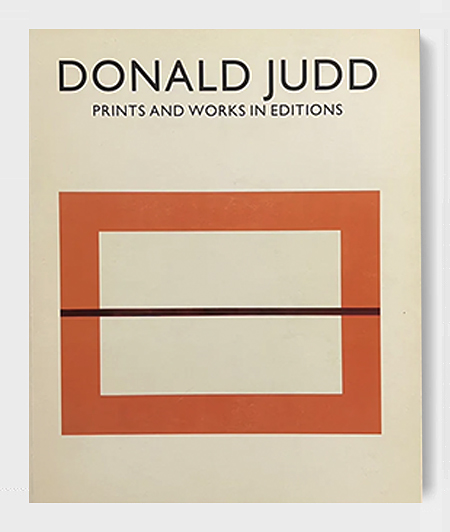
Donald Judd: Prints and Works in Editions, Edition Schellmann 1993 Catalogue raisonné of prints and multiples by Donald Judd, Contributions by Rudi Fuchs, Mariette Josephus Jitta and Jörg Schellman, 152 pages, English, Hardcover, 1993.
saglamart; dinamik bir anlayış ile hareket eden, kültür-sanat ortamındaki olay ve olgulara, sanatçı tavırlarına, yapıtlara ve yayınlara odaklanan bağımsız bir yayın etkinliğidir. Tüm hakları saklıdır. Görüntü ve yazılar izinsiz kullanılamaz. / saglamart is an independent publishing initiative driven by a dynamic vision, focusing on events and developments in the cultural-artistic landscape, artist perspectives, works, and publications. All rights reserved. Images and texts cannot be used without permission.