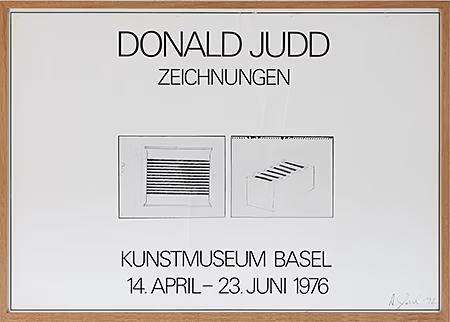
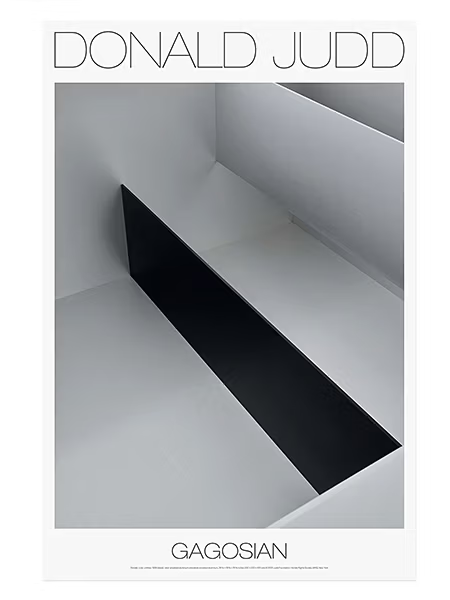
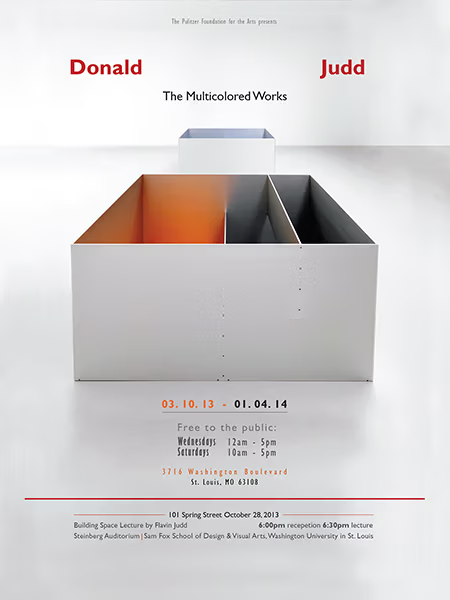
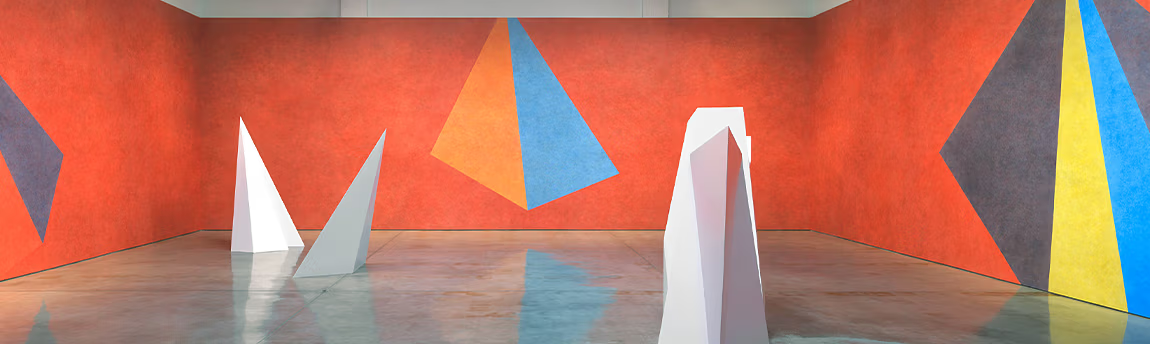
AS AN AVANT-GARDE CONCEPT DEFINING A NEW CATEGORY OF MINIMALIST AESTHETICS, ‘SPECIFIC OBJECTS’ EXPLAINS THE RETURN TO OBJECTS IN JUDD’S MINIMALISM WITHIN A LATE-MODERN CONTEXT. THIS PROBLEMATISES A NEW SITUATION CONCERNING THE CREATION AND ARRANGEMENT OF OBJECTS. IT CORRESPONDS TO A MINIMALIST PHASE IN WHICH THE IDEAL OF PURE ART TRANSFORMS INTO THE REALITY OF A MORE DISTINCT OBJECT; A HISTORICAL TURNING POINT WHERE THE FORMALIST NATURE OF ART BOTH REACHES A ZENITH AND FRACTURES.
Specific Objects is one of the most influential manifestos in art history. Arguing that the two fundamental categories into which Western art had long been classified, namely painting and sculpture, were by then approaching exhaustion, Donald Judd, in this text published in 1965, assigned the name specific objects to works that transcended the boundaries of both categories. The objects thus defined are neither painting nor sculpture. They represent nothing other than themselves and exist within a new category entirely their own. Composed predominantly of industrial materials, they are three-dimensional and may stand on the wall or on the floor, but they are without a pedestal. This ambiguous territory between categories is, in Judd’s view, precisely the most fertile ground.
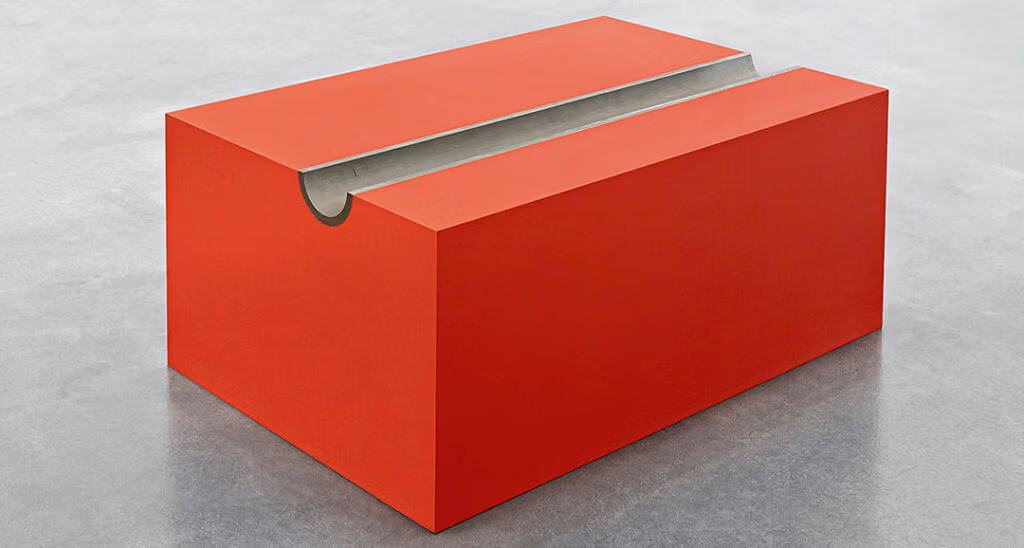
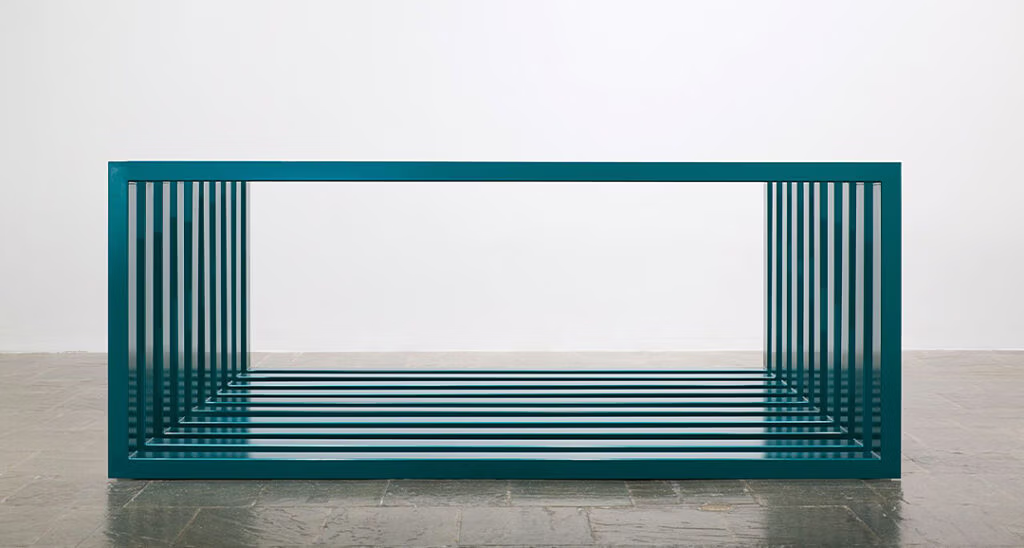
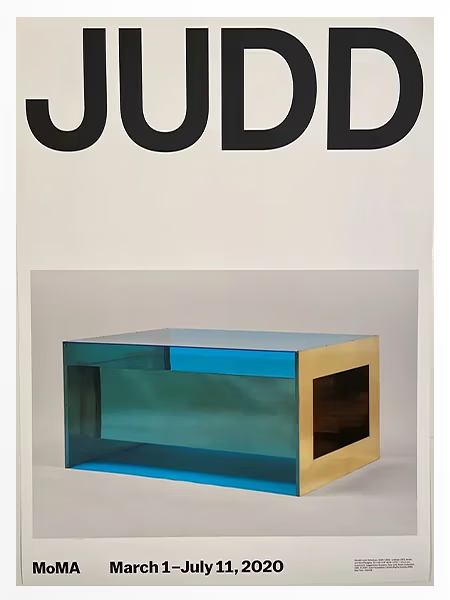
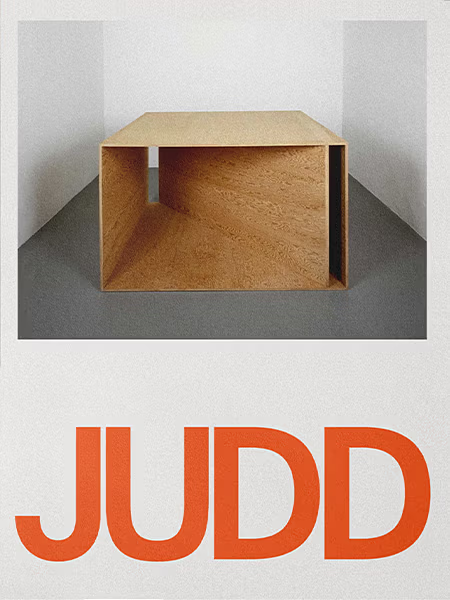
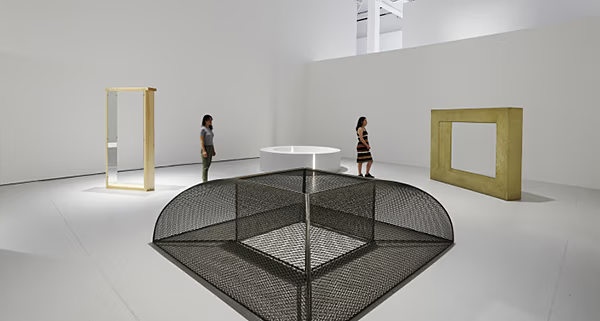
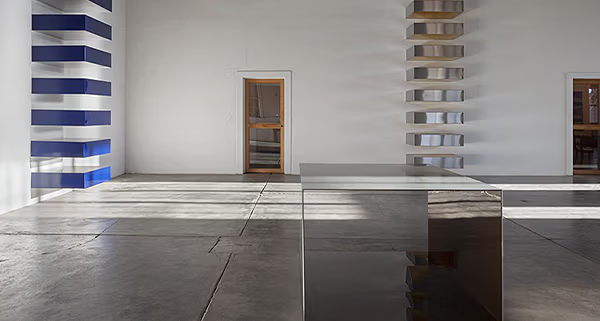
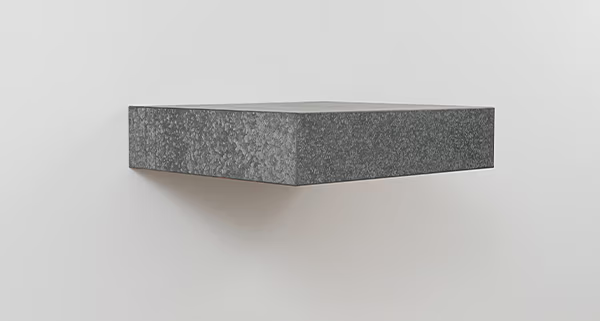
At the intellectual center of the essay lies an opposition to illusion. Judd here defends real space, finding the relationship that a physically existing object establishes with space to be powerful and genuine. He gives concrete form to this conviction in his own practice. The galvanized steel and plexiglass boxes he employs create no illusion whatsoever. The object simply stands there, reflects light, and affects the space surrounding it.
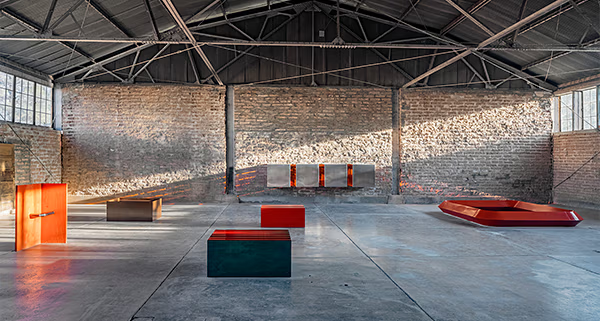
In his essay, Judd also addresses the tactile memory of the surface conveyed through the artist’s hand and trace, the authenticity of the work, and the individuality of the artist, all of which he regards as unnecessary and even detrimental. The specific objects he designs are factory-produced. The choice of ready-made material ensures that the work foregrounds its own physical presence rather than the emotional state of the artist. The object belongs to itself, not to the artist’s expression. This observation constitutes a direct challenge to the prevailing understanding of art of the period. The artist who transferred his own body and emotions onto the canvas through expressionist gestures was now giving way to a designer who places factory orders and calculates the properties of materials.
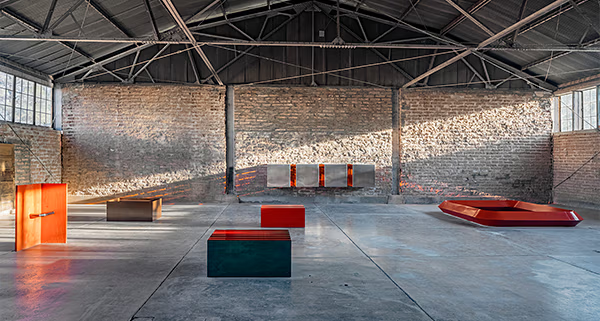
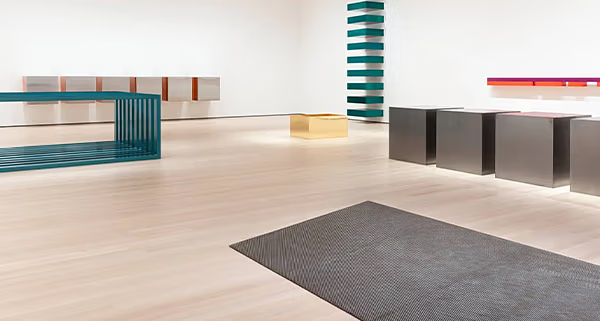
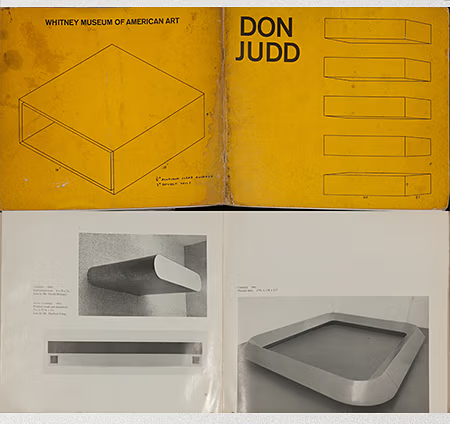
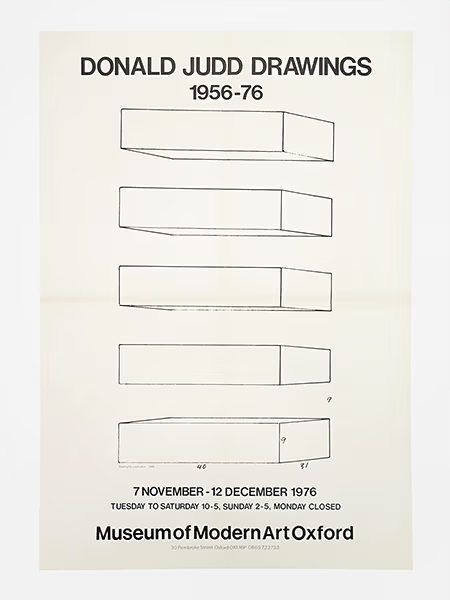
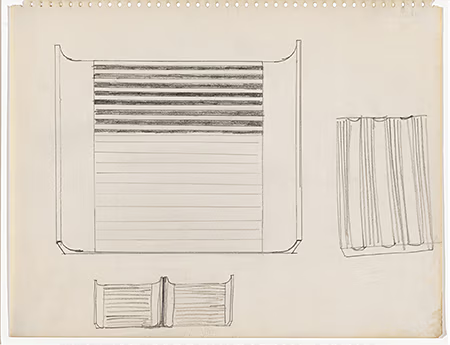
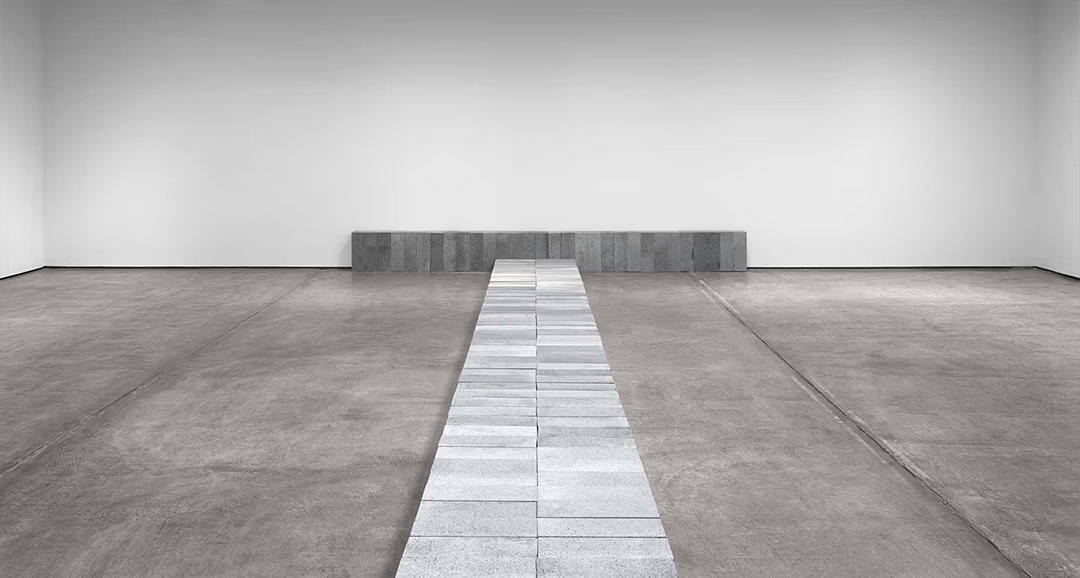
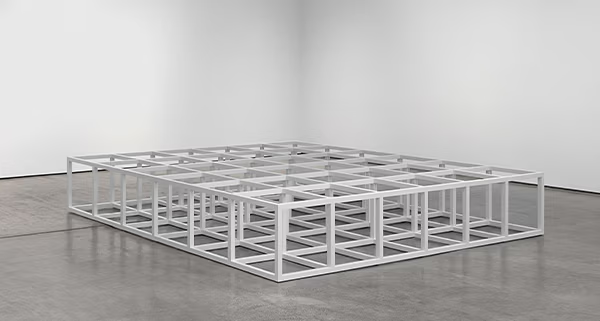
In this significant text, Judd also addresses the concept of non-relational composition. The work must be apprehended as a whole; it is not the relationships between parts that matter, but the whole itself. The means of achieving this are repetition and equivalence: when identical units are arranged at equal intervals, none takes precedence over or appears more important than another. The eye abandons its search for hierarchy and perceives the whole, not the unit but the system. This principle is directly reflected in Judd’s practice. In the Stack series, identical metal boxes mounted on the wall are arranged at equal intervals. Which box sits at the top and which at the bottom is of no consequence; nor does the number of boxes determine anything. The whole is, under all circumstances, the whole.
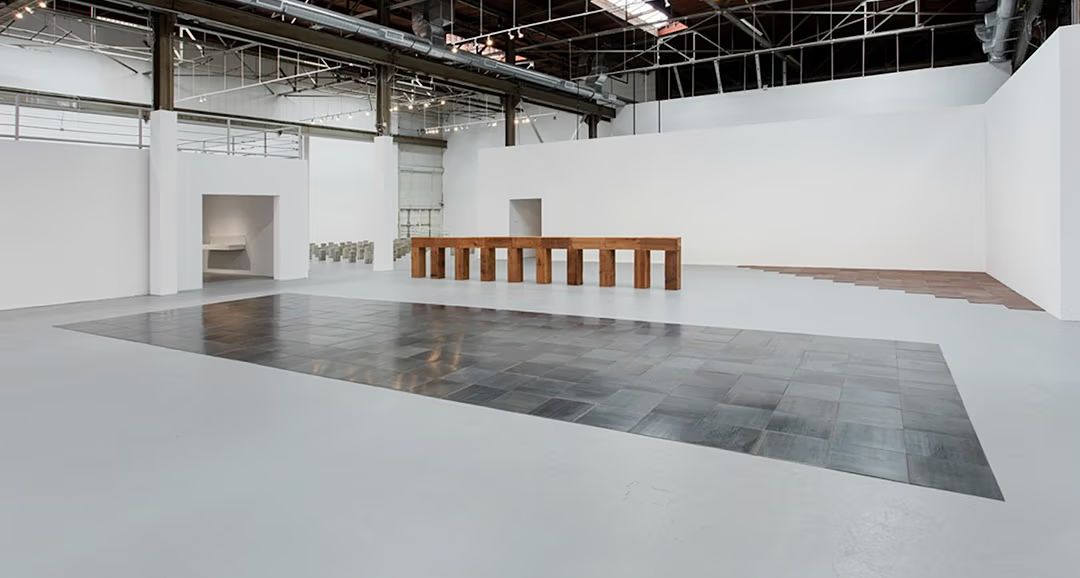
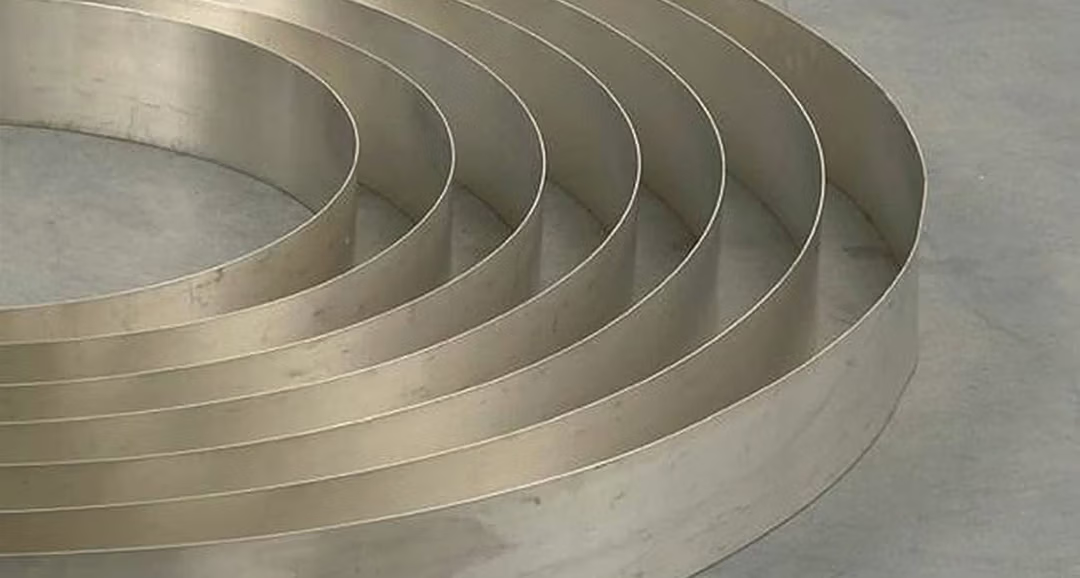
Donald Judd holds that the singularity of an object and its presence in real space determine not only its formal identity but also its power and efficacy as a work of art. Following this logic, he believes that the simpler the form of an object, the more powerfully and deeply its presence will be felt in the space surrounding it. Accordingly, the capacity of specific objects to transform, disrupt, and at the same time articulate the space into which they are placed directly governs Judd’s work. The physical presence and reality of sculptures formed through formal simplicity and pure sensibility have therefore acquired a remarkable quality. These works exist in a state of enigmatic materiality. It is, moreover, such a sharp and precise sense of physical presence that the works affect, alter, and fill with an air of mystery the space in which they are installed. This effect is, to a considerable degree, what Judd describes as the specific object and its natural force.
Ultimately, as an avant-garde concept denoting a new category of minimal aesthetics, Specific Objects accounts for the turn in Judd’s minimalism toward objects within a late-modern mediation. It problematizes a new condition relating to the creation and ordering of objects. It corresponds to a minimalist phase in which the ideal of pure art is transformed into the reality of a more definite object, a historical turning point at which the formalist character of art both reaches its apex and begins to fragment.
not
1Donald Judd, “Specific Objects”, Complete Writings, Arts Year Book, 8, 1965, New Edition: New York and Halifax: The Press of the Nova Scotia School of Art and Design, 1975.
2Judd’s text Specific Objects is as powerful as it is controversial. Art critic Michael Fried takes particular issue with the claim of categorylessness made in his 1967 article “Art and Objecthood”, published in Artforum magazine. According to him, the fact that Specific Objects has come to constitute a category in its own right under the name of minimalist sculpture is a significant development. Despite such objections, Specific Objects continues to influence and shape performative experiences and relational aesthetic debates that seek the generic counterpart of the artwork, alongside the development of conceptual art and installation practice.
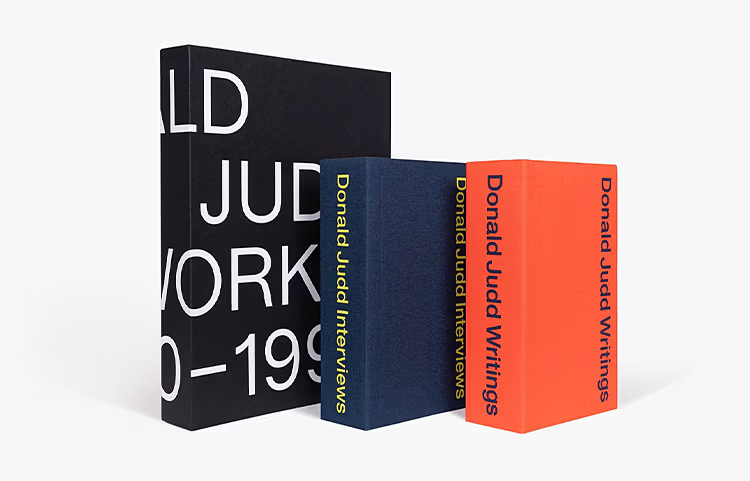
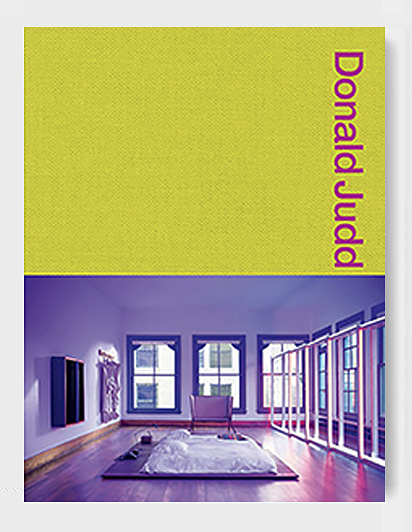
Donald Judd: Artworks 1970–1994, by Donald Judd (Author), Flavin Judd (Foreword), Contributor: Johanna Fateman, Lucy Ives, Thessaly La Force, Branden W. Joseph, Anna Lovatt, Lauren Oyler, Michael Stone-Richards, Mimi Thompson, Marta Kuzma, Wendy Perron, English, Hardcover,284 pages, David Zwirner Books, February, 2022.
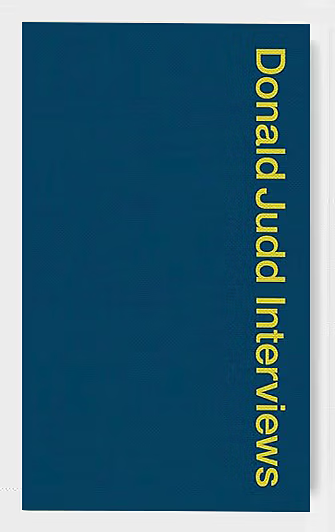
This three-volume set, curated and meticulously designed by David Zwirner Books, highlights the enduring influence of Judd’s art and his striking visual language. The comprehensive volume Donald Judd: Artworks 1970–1994 comprises a selection of Judd’s iconic and ambitious works, alongside a variety of critical essays. Donald Judd Writings, meanwhile, is a collection comprising hundreds of pages of Judd’s essays, notes and letters, some of which have never been published before. Furthermore, the third volume, Donald Judd Interviews, is also meticulously compiled, presenting sixty interviews conducted with the artist over a forty-year period and stands out as the first compilation of its kind.
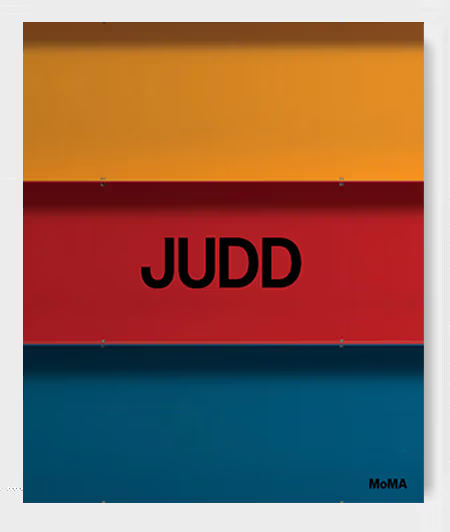
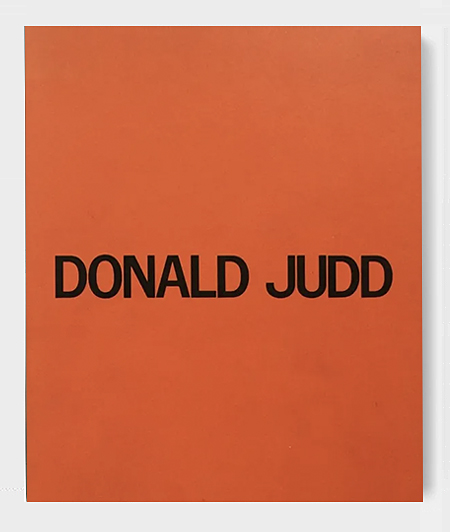
Judd, Edited by Ann Temkin. With contributions by Erica Cooke, Tamar Margalit, Christine Mehring, James Meyer, Annie Ochmanek, Yasmil Raymond, and Jeffrey Weiss, Hard Cover, 304 pages, Publisher: The Museum of Modern Art-Moma, New York, March 2000.
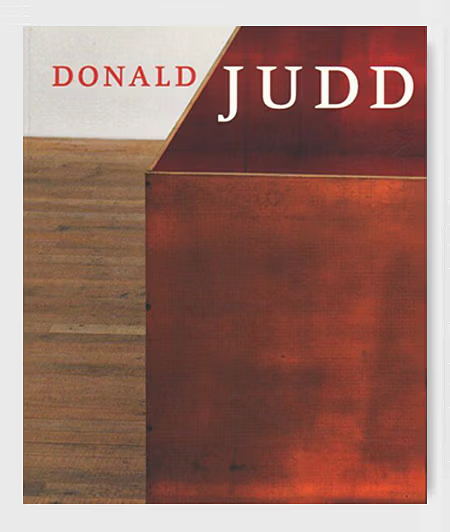
Donald Judd, Contributors Nicholas Serota (Director of the Tate), Rudi Fuchs, Richard Schiff and David Raskin, and David Batchelor, English, Softcover, 288 pages, Published by D.A.P/Tate,
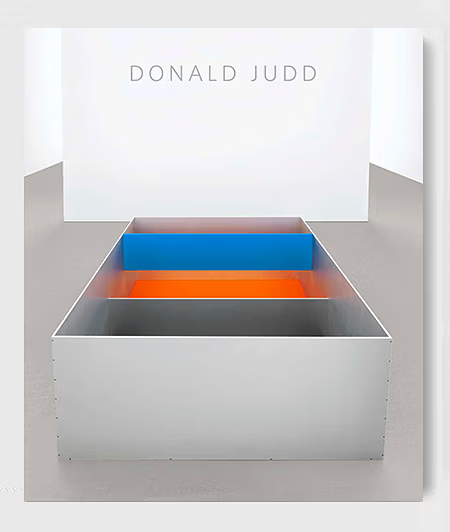
Donald Judd, Text by Richard Shiff. Interview with the artist by Jochen Poetter, Designer: Margaret Bauer, David Zwirner Books & Steidl, Printer: Steidl, Göttingen, Germany, English, German, Hardcover, 2011.
Donald Judd: The Early Works 1955-1968 by Donald Judd (Author), Thomas Kellein (Editor) English, 184 pages, Hardcover, D.A.P. / Distributed Art Publishers, Inc., September 2002.
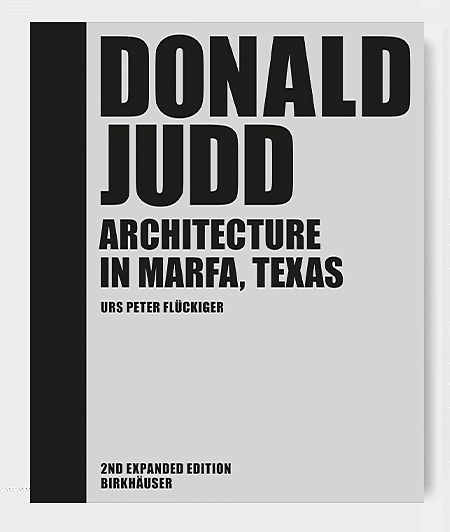
Donald Judd: Architecture in Marfa, Texas,by Urs Peter Flückiger(Author), Hardcover, 208 pages, English, Publisher: Birkhäuser, October, 2021.
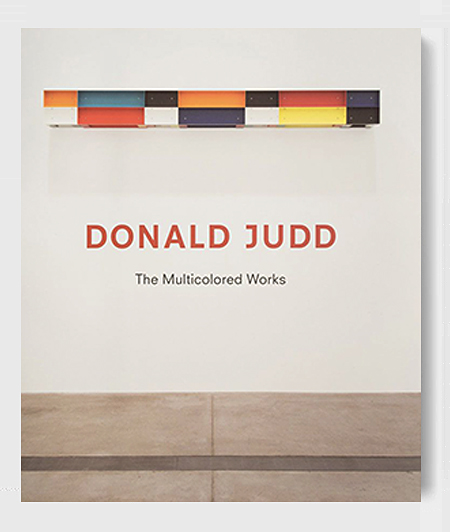
Donald Judd: The Multicolored Works by Marianne Stockebrand (Author, Editor), Authors: William C. Agee, Rudi Fuchs, Donald Judd, Adrian Kohn, Richard Shiff, Hardcover, English, 304 pages, Yale University Press, December, 2014.
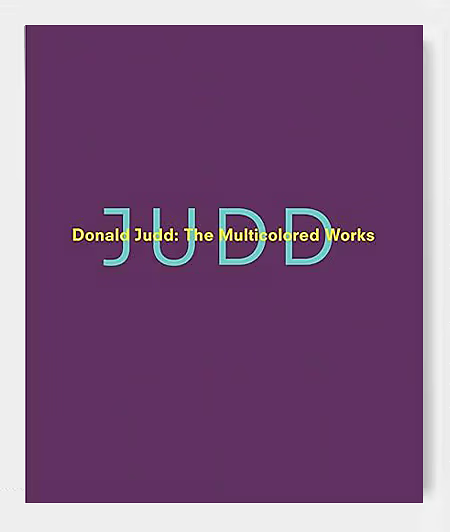
Donald Judd: The Multicolored Works, by Donald Judd (Author), English, 56 pages, Paperback, The Pulitzer Foundation for the Arts, First Edition, January 2013.
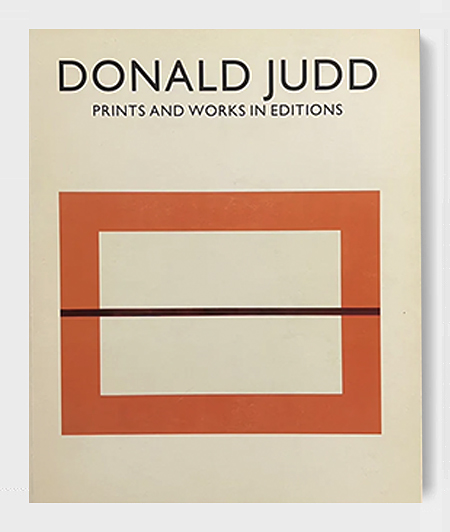
Donald Judd: Prints and Works in Editions, Edition Schellmann 1993 Catalogue raisonné of prints and multiples by Donald Judd, Contributions by Rudi Fuchs, Mariette Josephus Jitta and Jörg Schellman, 152 pages, English, Hardcover, 1993.
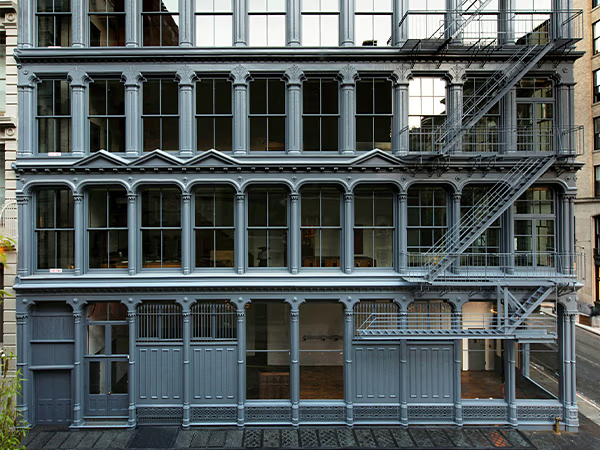
Donald Judd Spaces: Judd Foundation New York & Texas, by Donald Judd (Author), Editor: Flavin Judd and Rainer Judd, Judd Foundation (Editor), 400 pages, English, 400 pages, Hardcover, Publisher: Prestel, February 2020.
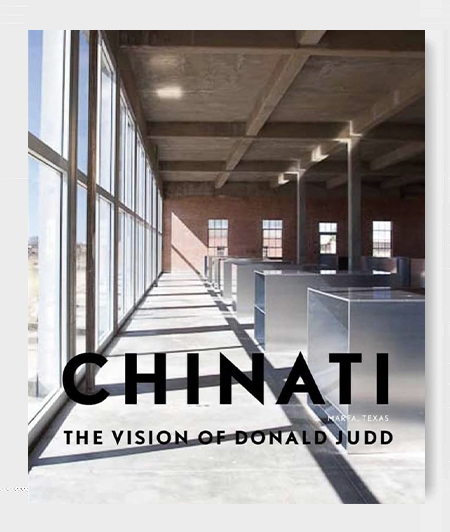
Chinati: The Vision of Donald Judd, Contributors: Jenny Moore and Marianne Stockebrand, 352 pages, 184 color and, 68 black-and-white illustrations, co-published by the Chinati Foundation, Yale University Press, and Hatje Cantz, Second Edition, Spring 2020, Marfa/Texas.
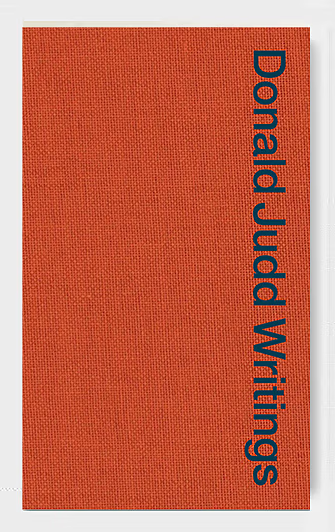
Donald Judd Writings, by Flavin Judd (Editor), Caitlin Murray (Editor), English, Hardcover, 1056 pages, MACK Press, May, 2025.
Donald Judd Interviews, by Flavin Judd (Editor), Caitlin Murray (Editor), 1008 pages, English, Paperback, Judd Foundation / David Zwirner Books, November, 2019
saglamart; dinamik bir anlayış ile hareket eden, kültür-sanat ortamındaki olay ve olgulara, sanatçı tavırlarına, yapıtlara ve yayınlara odaklanan bağımsız bir yayın etkinliğidir. Tüm hakları saklıdır. Görüntü ve yazılar izinsiz kullanılamaz. / saglamart is an independent publishing initiative driven by a dynamic vision, focusing on events and developments in the cultural-artistic landscape, artist perspectives, works, and publications. All rights reserved. Images and texts cannot be used without permission.