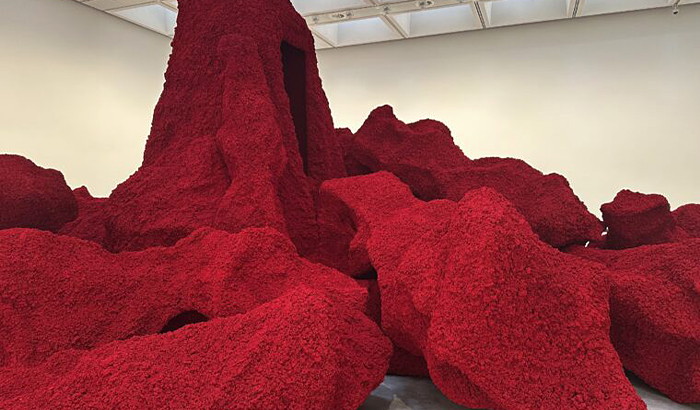
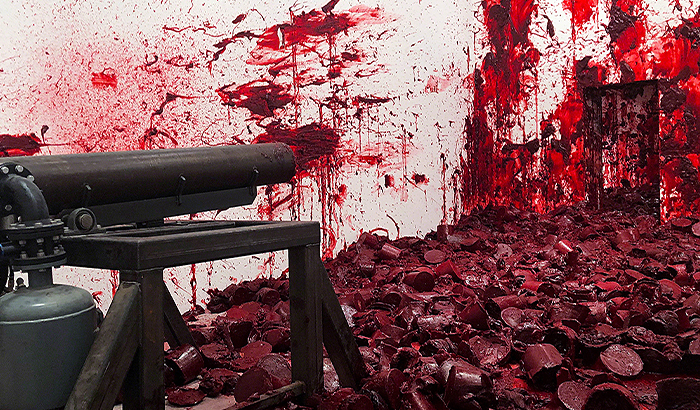
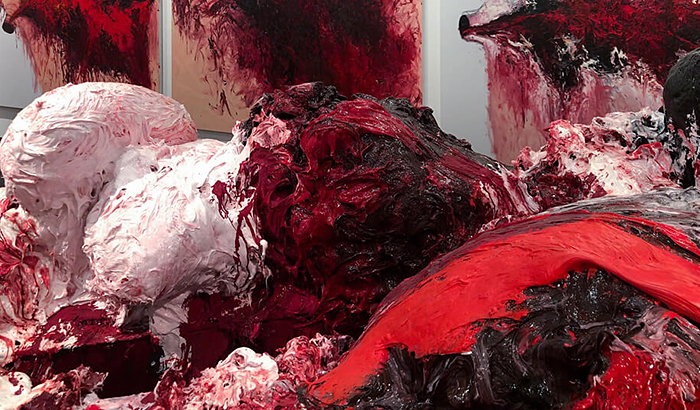
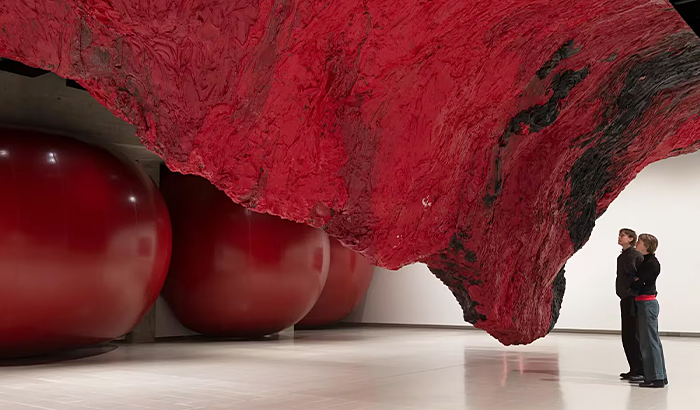
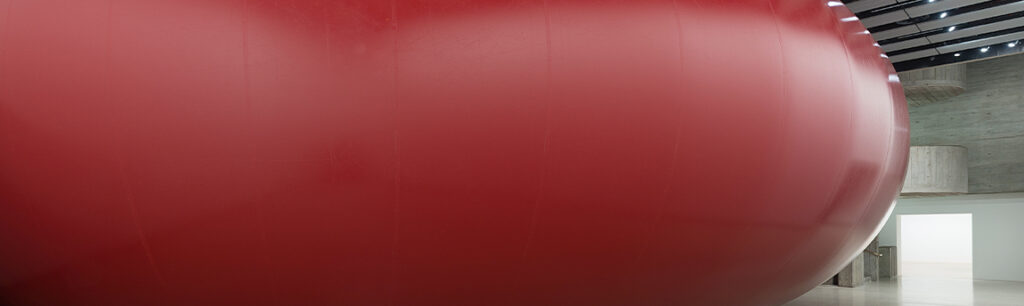
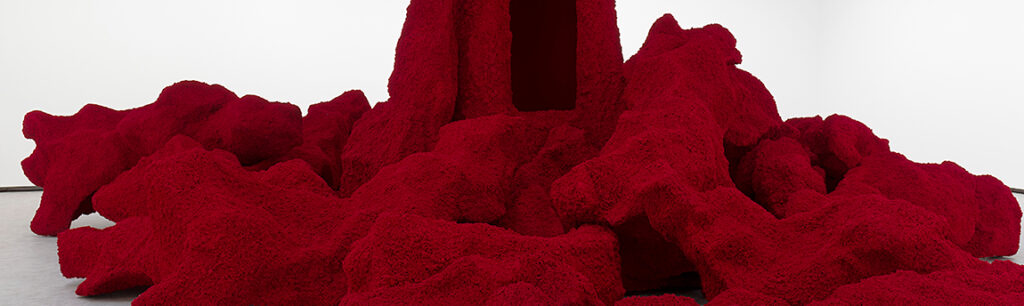
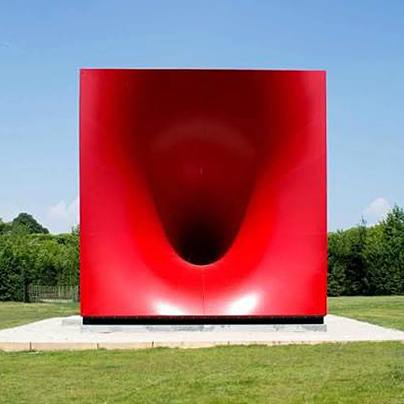
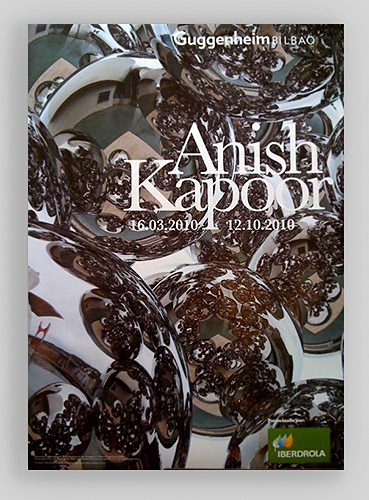
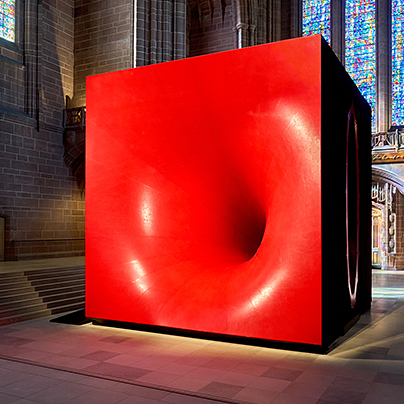
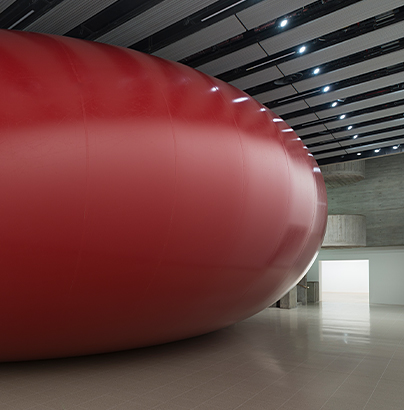
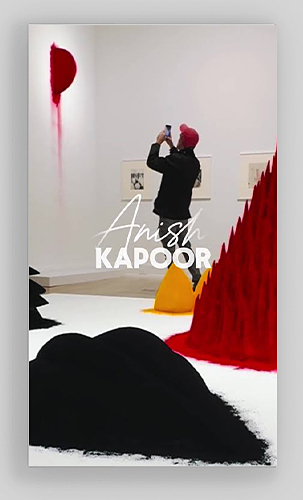
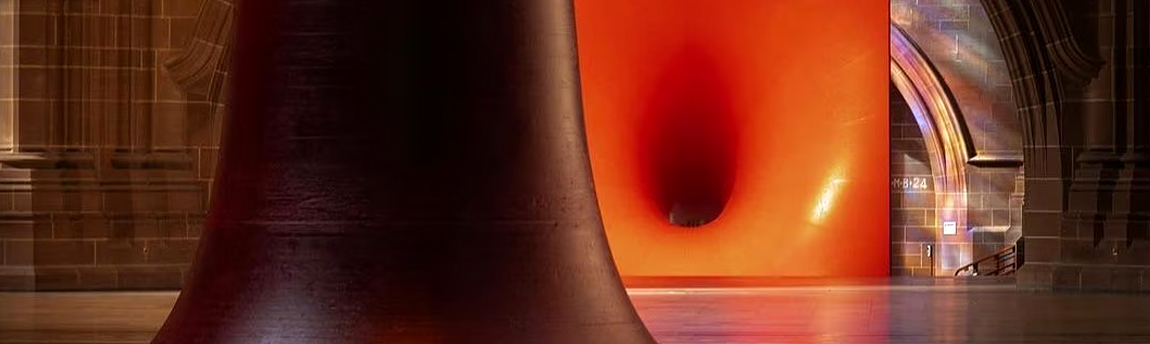
Anish Kapoor, My Red Homeland, Installation view, Mixed Media, Dimensions variable, 16 March - 12 October 2010, Guggenheim Museum Bilbao, Spain. Photo: Erica Barahona - Ede (https://www.guggenheim.org/exhibition/anish-kapoor-3)

anish kapoor

the remains of an anonymous decay

BY MÜMTAZ SAĞLAM

"

IF ONE LOOKS CLOSELY HERE, A SEDIMENT—ASSOCIATED WITH RED AND PURPLE, DIRECTLY EVOKING DECAYED MATTER STEEPED IN BLOOD, AND BROUGHT ABOUT BY PSYCHOLOGICAL AND HISTORICAL PROCESSES—IS MATERIALISED. CONSEQUENTLY, THIS MASS, WHICH OCCUPIES THE THRESHOLD BETWEEN SKIN AND FLESH, COMPLETES AN IMAGINARY DARK LANDSCAPE AS THE FUNDAMENTAL OBJECT OF A NEW VISUAL IDEOLOGY—USED AS RAW MATERIAL IN KAPOOR’S SIGNIFICANT AND LARGE-SCALE WORKS—AS A GEOLOGICAL LAYER AND AS COMPRESSED UNIVERSAL WASTE. THIS RESIDUE, A UNIT OR MEASURE OF THOUGHTS DERIVED FROM WORLDLY WASTE, SCATTERED ABOUT WITHIN THE CATEGORY OF THE REPULSIVE, THIS SEEPAGE OF MUD AND BLOOD UNDOUBTEDLY POSSESSES MORE THAN ENOUGH POWER TO GENERATE EXTRAORDINARY NEGATIVE EMOTIONS; AND, TO THE SAME EXTENT, IT POSSESSES THE CAPACITY TO CONNECT WITH HUMAN NARRATIVES THROUGH A MELANCHOLIC INTENSITY OF THOUGHT.

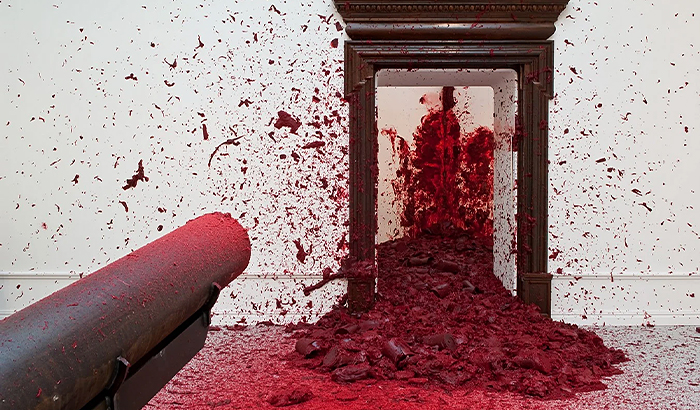
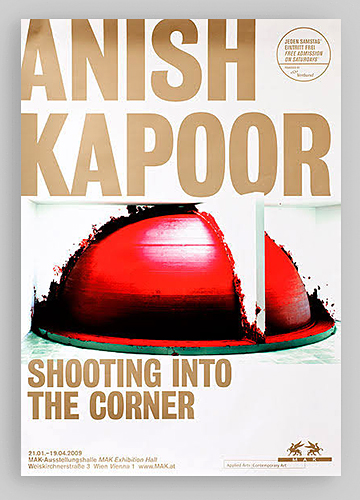
Anish Kapoor, Shooting into the Corner, 2008 - 09, Mixed video. Dimensions variable. MAK, Vienna, Austrian Museum of Applied Arts/Contemporary Art. Installed at the Royal Academy of Arts, London, 2009. Photography: Dave Morgan. © Anish Kapoor. All Rights Reserved, DACS 2022.

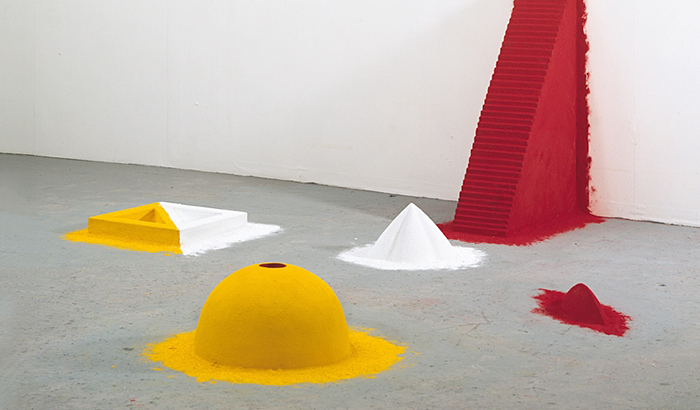
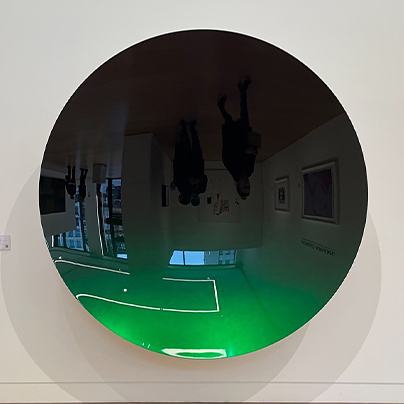
Pigment powder, which stands out as a material in Anish Kapoor’s early work, is the most defining element of the dense materiality he persistently adopts. This material, which lends corporeality to sculpture through its dense, saturated pigmentary effect, appeals to him for its dimension-giving quality as well as for the depth effect it produces on the surfaces it is plastered onto or coated with. Yet the mirror sculptures that proliferated in the 1990s and appeared before us as a magnificent design event are a serious alternative to this self-shaping material preference. For instance, the attempt we encounter in Islamic Mirror to invert the image through a determined engineering effort, or the artist’s search for a manipulative, multi-part arrangement that over time unsettles the effective visuality of optical illusion possibilities, exemplifies his clear departure from design perfection and the minimalist axis. Similarly, Kapoor’s interest in waste material, which he turned to in the 2000s, can likewise be characterized as a deviation occurring in continuation of the earlier pigment-related process. In recent years, it is evident that the giant masses, resembling a blood-paint compound and taking the form of waste material, have evolved into an increasingly extreme and radicalized dimension.


the spatial context of an event of abjection

The dedication of Kapoor’s artistic practice to a process we might define as dark matter, one that displaces the paint-like density of pigment, or purity itself, evolving it into a blood clot and a heap of waste, constitutes a clear attempt to cancel order and regularity. This shift, which drew particular attention with Shooting into the Corner, integrates with expressionistic gestures and transient effects through a spontaneity generated by the splattering of dirty material onto the surroundings, the wall, and the space. In this way, it partly allows the work to be read alongside cultural connections and references that proceed through the abject associations of the variable waste material and through discussions of body, presence, and absence.

The anti-visual context of this process of change, in the practices carried through to recent years, virtually demands that the coagulated massiveness of bloody waste be realized at large scale and heavy tonnage. Svayambhu, an important example of this development, is a giant mobile mass that, through spatial passage across its several different versions, both loses and regains its formal character. Likewise, in the inversely constructed mountain peak of the 2022 work Mount Moriah at the Gate of the Ghetto, this time it is positioned, in the form of a giant horizontal red mass made of fiberglass and paint, overflowing into the space it occupies. Kapoor does not clearly disclose the references he considers in forming these fabricated masses. Moreover, it can be said that he also leaves in shadow the connections to mixed cultural accumulation, religious mythology, or mystical rituals.

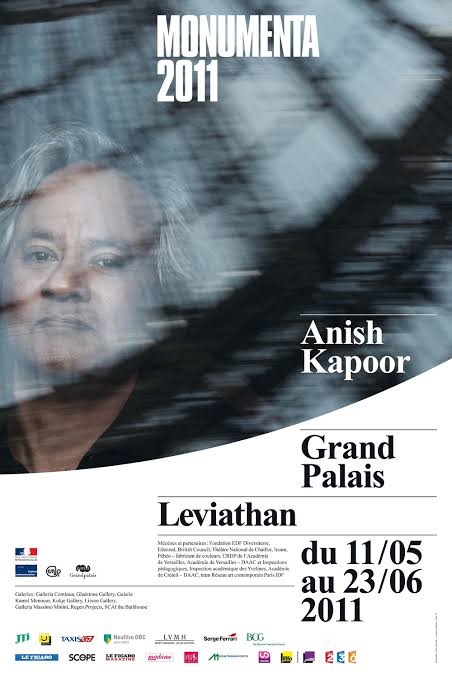
One could even think that Kapoor’s material interest, the new expressive possibilities achieved through material, and an intensifying plasticity, attract him all the more. It is as if he is more concerned with a dark, negative dimensioning, or with establishing an installational apparatus bound up with a disturbing event of abjection. It also seems plausible that this situation might represent a psychological rupture reached with Cloud Gate, and that the image deformation forming beneath that giant metal form may have drawn him toward this exciting change. Similarly, the giant PVC covering encountered in examples such as Marsyas, Ark Nova, Leviathan, and most recently All of Nothing, along with the cell membrane and tissue it emulates and the bodily organism it evokes, likewise draws Kapoor toward a darkness that produces the suffocation and stomach-clenching sensations dominating the gloomy halls of the Palazzo Manfrin. The cold, bloody dark mass is, as it were, the earthly burden of inner distress…

If we look closely, what takes bodily form here is a sediment produced by psychological and historical processes, one identified with red and purple and directly evoking a residue decayed with blood. Consequently, this mass, occupying the threshold between skin and flesh, used as raw material in Kapoor’s major, large-scale works, completes an imagistic dark-landscape, functioning as the fundamental object of a new visual ideology, as a geological stratum, and as a compressed, universal waste. Here, the residue, mud, and blood seepage, scattered about within the category of the abject and serving as a unit or measure of thought derived from earthly waste, unquestionably possesses, to an ample degree, the power to generate extraordinary negative emotions, as well as the capacity to connect, in equal measure, to a mournful density of thought and to human stories.

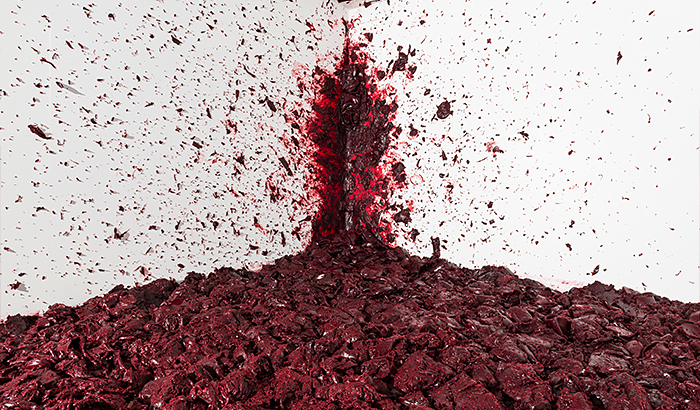
Anish Kapoor, Ha Makom, (Mother as a Mountain, My Red Homeland III, As if to Celebrate I Discovered a Mountain Blooming with Red Flowers), 2026, Mixed media and pigment, Dimensions variable © Anish Kapoor. (https://anishkapoor.com/9676/ha-makom) image: Anish Kapoor, Ha Makom, 2026. © Anish Kapoor. All rights reserved, DACS, 2026. Photo: Dave Morgan.

the sediments of an anonymous decay

Through this material, which Anish Kapoor uses in the large-scale arrangements he has produced recently, it becomes possible for us to arrive at the indeterminate, spontaneously forming shapes of decay in a metaphorical sense. The body implied in this density of mass, and the color and density associated with flesh and blood, are, above all, a frightening reflection or interpretation of an aberrant plasticity identified with waste. Through the association created by the main material previously used in Shooting into the Corner and Svayambhu as well, the waste field seems to have become the ground and cause of a strange communication within an entirely different space-time dimension. The other things sensed within a space contaminated, smeared with blood or oil, naturally add an anti-aesthetic context to this fantastical expanse, creating a relational condition or environment. This event of action and time therefore transforms, within the space formed by the debris of the processed waste material, into a collective conception that we must think through in terms of memory or selfhood.

Therefore, the repellent and disturbing mass that Kapoor employs in his recent arrangements is, through a meaningful and ostentatious apparatus, the counterpart, integrated with time and space, of the paint and plaster seeping into metaphorical fissures and cracks, of the anonymous decay currently taking place. And this waste mass is steeped in a contamination that is as much cultural as it is biological, and as much intellectual as it is ideological. Or perhaps it is a psychological sediment that emerges as the product or result of the relationships we establish with the outside world.

1 Anish Kapoor, Islamic Mirror (2009), Diameter: 2.4 metres, Weight: 80 kilograms, Material: a concave circular mirror. It is a special public art installation exhibited between 2008 and 2009 in the Sharq al-Andalus Hall at the Santa Clara Monastery (Museo de Santa Clara) in Murcia, Spain, curated by Rosa Martínez. The mirror is composed of small, polished stainless steel pieces in octagonal and square shapes, and perfectly reflects the geometric, formal and mathematical transformation between the circle and the square.

2 Composed mainly of silicone and beeswax, this material remains semi-solid at room temperature and can transmit and reflect light in much the same way as skin. It can be described as an in-between object that evokes both revulsion and attraction simultaneously. It occupies a threshold between skin and flesh, appearing to have a surface composed of living tissue. It resists being fixed into a definite form, maintaining an appearance of constant flow or melting.

Prof. Mümtaz Sağlam, Copyright © Ağustos 2026, All Rights Reserved .

CURRENT EXHIBITIONS 2025 – 2027

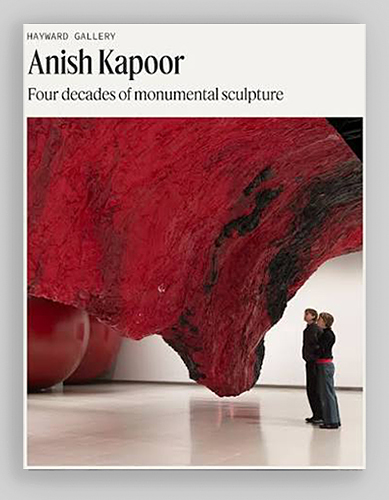
Anish Kapoor is re-examining all the stages of development and change in his artistic career through a conceptual deepening and a Post-Minimalist perspective. With his spectacular exhibition at the Hayward Gallery, the artist summarises creative phases such as Pigment, Emptiness, Mirror, Darkness and Body; he enables us to assess, alongside his new works, which take on an increasingly grotesque form and are shaped by mystical connections, a process that gains momentum through themes of illusion and reflection, and is crowned by large-scale spatial and public installations. (...) In this context, All of Nothing (2026), situated at the entrance to the Hayward Gallery and crafted from red PVC membrane; suspended from the ceiling, the work Mount Moriah at the Gate of the Ghetto (2022), on display for the second time and representing an inverted mountain, along with the colossal installation Ha Makom (2026), which also depicts a mythological mountain peak, serve as claustrophobic installations illustrating the new situation that has been reached.
 ANISH KAPOOR at Saglamart (ENGLISH)

gülay yaşayanlar: mount moriah at the gate of the ghetto

gülay yaşayanlar: all of nothing: elliptical fluid-blood pockets that contain the waste products of the soul

mümtaz saglam / anish kapoor: kütle, yanılsama ve boşluk

ANISH KAPOOR at Saglamart (TURKISH)

gülay yaşayanlar: mount moriah at the gate of the ghetto

gülay yaşayanlar: all of nothing: ruhun atıklarını barındıran eliptik sıvı-kan torbaları

mümtaz saglam: anish kapoor: kütle, yanılsama ve boşluk

mümtaz saglam: anish kapoor 2

mümtaz saglam: anish kapoor 3

NEW WORKS 

Mount Moriah at the Gate of the Ghetto

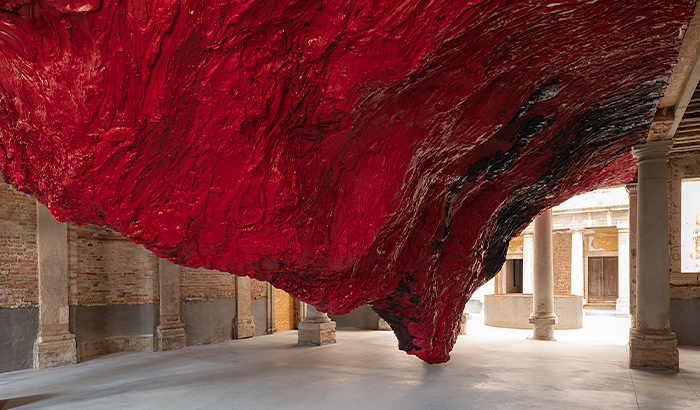
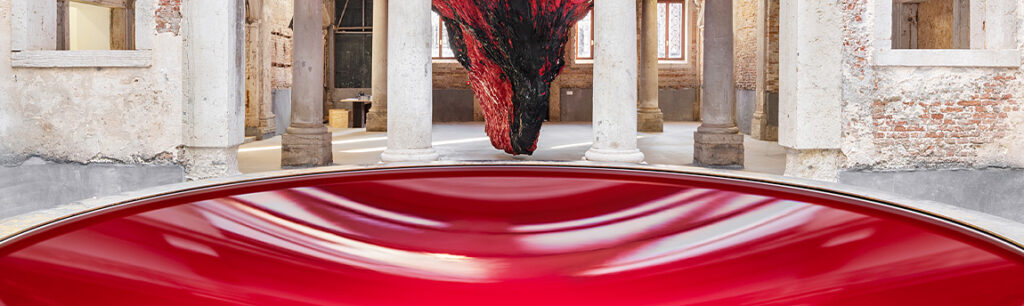
Anish Kapoor, Mount Moriah at the Gate of the Ghetto, 2022 Mixed media / Karışık teknik (silikon, reçine ve yoğun kırmızı pigment), 13.8x6.8x3.9 cm. Photograph: Attilio Maranzano ©Anish Kapoor. All rights reserved, DACS, 2026.

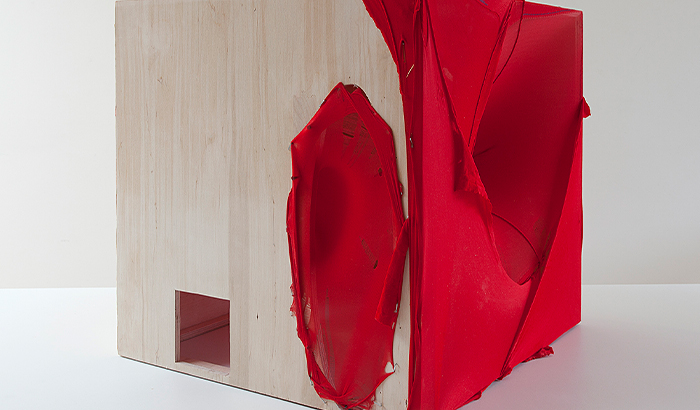
Mount Moriah at the Gate of the Ghetto (2022) is a monumental and jarring work that engages with themes and concepts such as matters of faith, sacrificial rituals, and the inner nature or sublimity of the human body. It evokes feelings of both fear and awe in the viewer. It takes the form of an inverted mountain suspended from the ceiling to the floor in a manner that defies gravity. This installation, which appears as though molten lava or blood is dripping from it, has an abject connotation and resembles freshly cut meat and internal organs. The work takes its name from the sacred Mount Moriah, to which the Prophet Abraham took his son Isaac to sacrifice him. Here, Kapoor explores the psychological and dark aspects of the act of sacrifice undertaken in the name of pure faith. It was first exhibited in 2022 during the Venice Biennale at Palazzo Manfrin, situated directly opposite the entrance gate to the Jewish Ghetto. In 2026, it was re-exhibited as one of the key pieces in the retrospective held at the Hayward Gallery in London.

READ MORE
Gülay Yaşayanlar: Mount Moriah at the Gate of the Ghetto (English), saglamart.com, August 2026.

All of Nothing

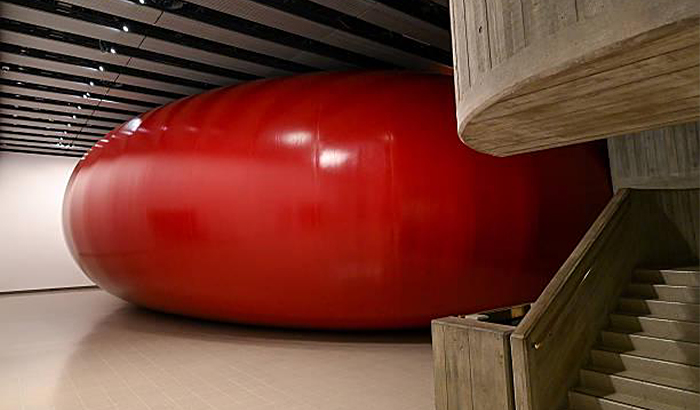
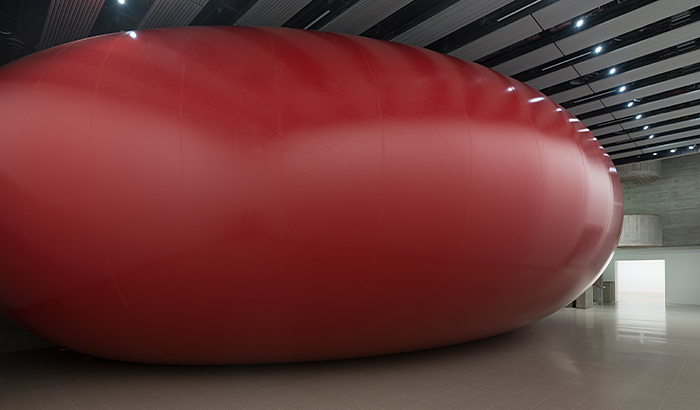
Anish Kapoor, All of Nothing, 2026, (Installation view), Şişirilebilir kırmızı PVC membran, Kalınlık: 0,6 cm. (image: Installation view of Anish Kapoor, All of Nothing (2026). Photo: Dave Morgan. Courtesy of the Hayward Gallery and the artist. © Anish Kapoor. All rights reserved, DACS, 2026)

In All of Nothing, where Anish Kapoor’s intervention in the void takes the form of a postmodern game, it is clear that a complex set of motivations is created through the perception of the body, to which a direct connection is established. Here, first and foremost, within the void, which envelops a central narrative and transforms into an intellectual diagram, giant balloons, suspended in a cramped arrangement and with a sense of tension whilst examining conflicting concepts such as violence, desire, freedom and death, are rendered as images of truth. Furthermore, these elliptical sacs of fluid and blood, which harbour the dregs of the soul, have evolved into colossal masses of dark matter, brimming with secrets due to accumulated sensitivities linked to social violence, and appearing as though they might burst at any moment.

READ MORE
Gülay Yaşayanlar: All of Nothing: ruhun atıklarını barındıran eliptik sıvı-kan torbaları, saglamart.com, August 2026.

READ MORE
Gülay Yaşayanlar: All of Nothing: ruhun atıklarını barındıran eliptik sıvı-kan torbaları, saglamart.com, August 2026.

Ha Makom

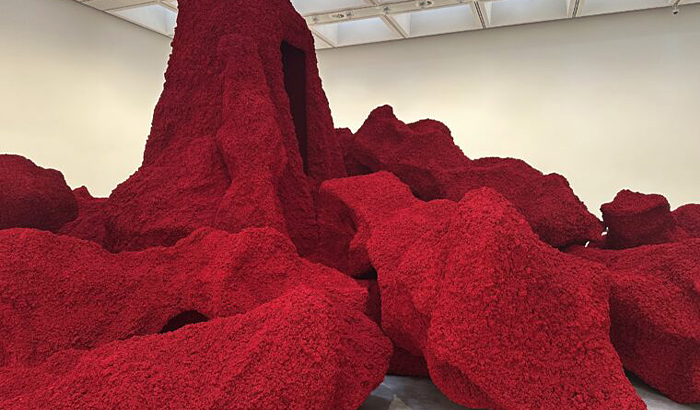
Anish Kapoor, Ha Makom, (Mother as a Mountain, My Red Homeland III, As if to Celebrate I Discovered a Mountain Blooming with Red Flowers), 2026, Mixed media and pigment, Dimensions variable © Anish Kapoor. (https://anishkapoor.com/9676/ha-makom) image: Anish Kapoor, Ha Makom, 2026. © Anish Kapoor. All rights reserved, DACS, 2026. Photo: Dave Morgan.

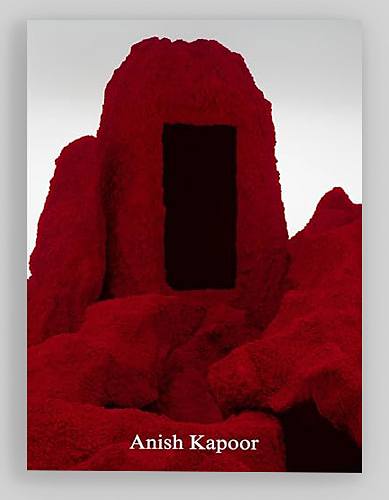
Ha Makom is a monumental and immersive installation executed in red pigment and various materials. Translating to The Place in Hebrew, the term represents both physical space and the divine within the Kabbalistic tradition. Inspired by the famous Uluru rock formation in Australia, the work features a rugged, mountainous, or crater-like landscape appearance, characterised by a dense, vibrant red texture and a deep, mysterious dark portal at its centre. This monumental piece, through which Kapoor aims to make the viewer physically experience 'the presence of the divine in space and time' as well as both the corporeal and the mystical, was first showcased in the comprehensive exhibition held at the Hayward Gallery in London.

HIGLIHGTS 

Shooting into the Corner

Anish Kapoor RA, Shooting into the Corner, 2008 - 09, Mixed video. Dimensions variable. MAK, Vienna, Austrian Museum of Applied Arts/Contemporary Art. Installed at the Royal Academy of Arts, London, 2009. Photography: Dave Morgan. © Anish Kapoor. All Rights Reserved, DACS 2022.

Shooting into the Corner was exhibited at the Royal Academy of Arts in 2009 and subsequently at Palazzo Manfrin in 2022. Receiving critical acclaim, this work stands as one of Kapoor’s most renowned dramatic and performative installations. The apparatus consists of a functional cannon that fires bucket-sized projectiles of blood-red wax at regular intervals. By blasting a dense mixture composed of paint, pigment, wax, and vaseline against the wall, this mechanism creates a painted field of randomly aggregated details on the opposing surface. The physical presence generated by this mixture, replete with scattered viscous stains, residues, and highly adhesive debris, transforms the entire process into an expressionistic performance. Operating primarily through the strategy of automatism, the installation allows the work to actualize itself within a proposed spatiotemporal framework. In this context, the artwork undergoes a semantic shift with each iteration, continuously generating new configurations that evoke situational and fluid meanings.

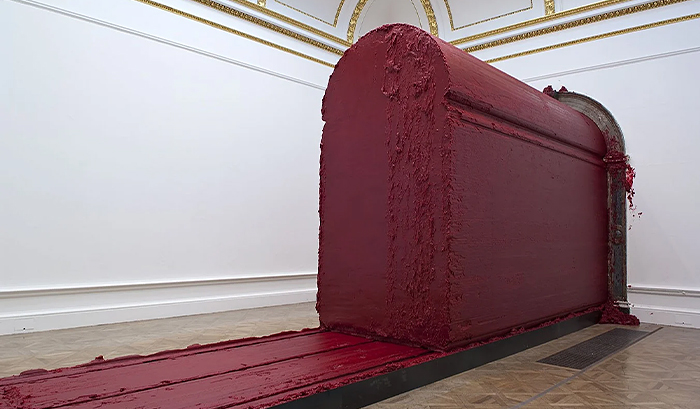
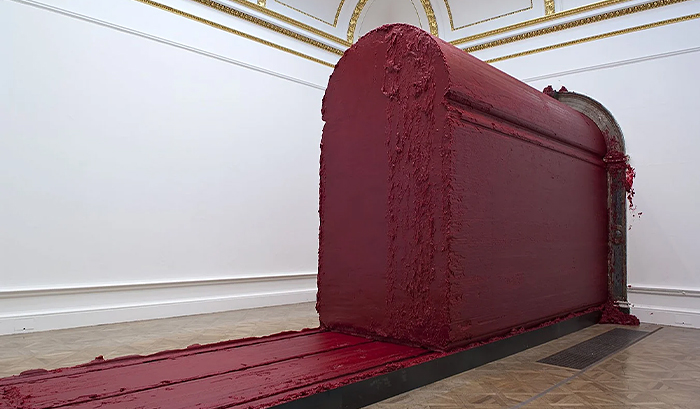
Anish Kapoor, Svayambhu, at the Royal Academy of Arts, London, 2009, Wax and oil-based paint. Dimensions variable © Anish Kapoor. All Rights Reserved, DACS 2022

PALAZZO MANFRIN / ANISH KAPOOR FOUNDATION – VENICE 

Anish Kapoor in Venice: Retrospective, Curator: Taco Dibbits, 2022, Palazzo Manfrin and Gallerie dell'Accademia, Venice. Anish Kapoor, Retrospective, 6 May - 8 August 2026, Palazzo Manfrin, Cannaregio, Venice.

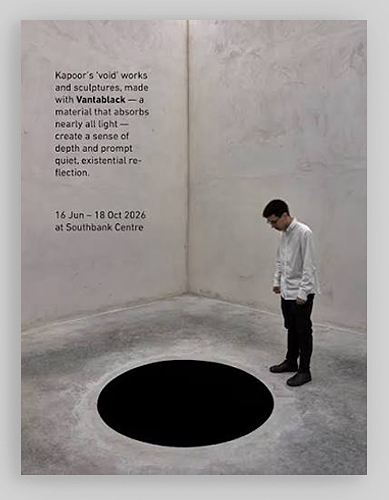
Following an extensive restoration process of the Palazzo Manfrin, which he acquired in 2018, Anish Kapoor staged two large-scale exhibitions concurrent with the Venice Biennale. Curated by Taco Dibbits, Director of the Rijksmuseum, the first retrospective exhibition, titled Anish Kapoor in Venice and organised in tandem with the Gallerie dell'Accademia in 2022, serves as a comprehensive compendium of the artist's career. Exhibited here are two of his renowned installations: Mount Moriah at the Gate of the Ghetto, a monumental amorphous structure featuring red and black silicone and paint trickling down from the ceiling, and Shooting into the Corner (2008–2009). Furthermore, this exhibition marked the debut of his void and aperture sculptures executed in Vantablack, a material that absorbs almost all light, the exclusive rights to which Kapoor famously acquired.In 2026, Kapoor organised his second exhibition, running simultaneously with the 61st Venice Biennale. On this occasion, he presented one hundred architectural models, a portion of which comprises unrealised projects, alongside his works Taratantara (1999) and Ark Nova (2013). Here, Kapoor prioritises inquiries into the spatial positioning of the object and its potential for space-making. According to the artist, these exhibited drawings and models constitute playful experimentations with scale and form, thereby facilitating the emergence of his original concepts and propositions. Additionally, this exhibition features a new, monumental iteration of his work At the Edge of the World (1998), spanning eight metres in diameter and suspended from the ceiling. Alongside another iconic work, Descent into Limbo (1992), his grotesque and eschatological concrete installations titled Ga Gu Ma (2012), which oscillate between mechanical production and organicity, are housed in separate rooms. Finally, he concludes this presentation with the Vantablack sculptures, composed of pitch-black forms that simultaneously manifest and dissolve before the viewer’s eyes, which he had first exhibited in this very venue in 2022.

SELECTED BOOKS AND POSTERS

Anish Kapoor
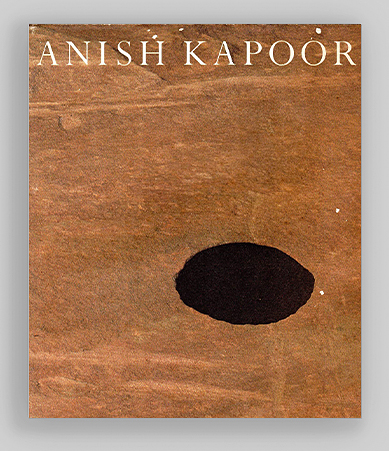
Texts by Ralph Rugoff; Anish Kapoor; Nancy Spector; Julia Kristeva; Sandhini Poddar, Exhibition catalogue, Hayward Publishing, London, 2026

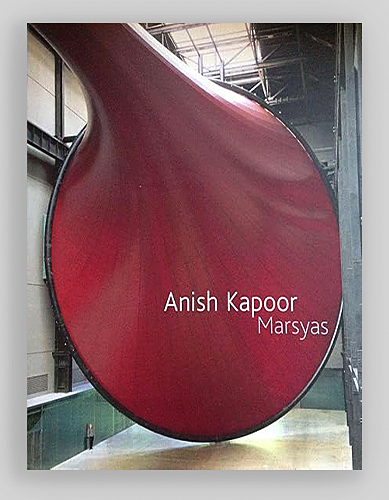
Anish Kapoor: Marsyas
Texts by Donna de Salvo and Cecil Balmond, Exhibition catalogue, Tate Publishing, 2002, ISBN 9781854374417

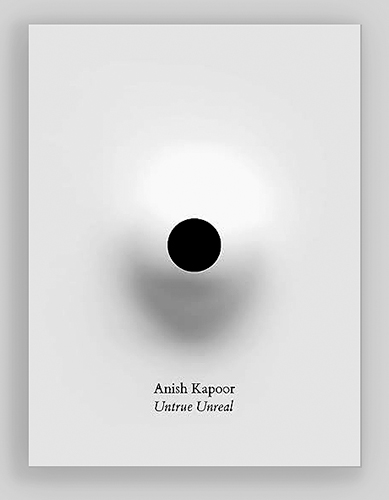
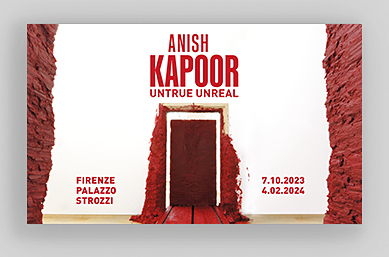
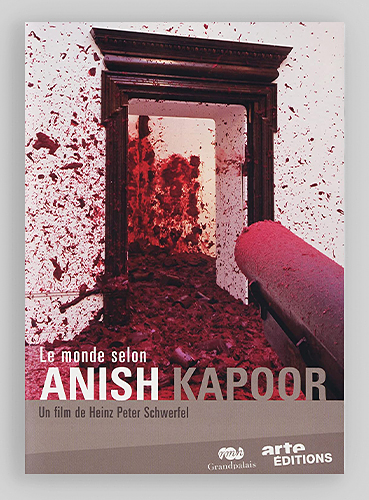
Anish Kapoor: Untrue Unreal, Texts by Arturo Galansino, Daeio Donetti, Tommaso Maozzati. Francesca Borgo, Racel Boyd, Morgan Ng, Diane H. Bodart, Exhibition catalogue, Italian and English editions, Marsillio Editori, Venezia, Italy, 2023

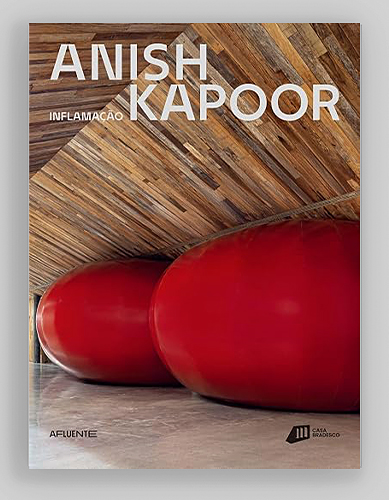
Inflamação: Anish Kapoor, Text by: Marcello Dantas, Publishing: Afluente Art Editora, Portekizce - İngilizce, hardcover, 111 pages, São Paulo 2024.
ISBN: 9786585724623.

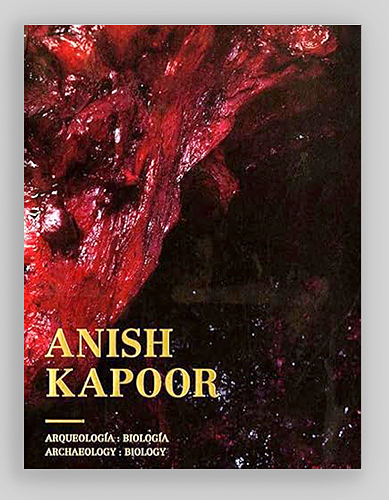
Anish Kapoor. Archaeology: Biology Texts by C.D. Masse, H.K. Bhabha, J. Kristeva, C. Lampert, D. Maxwell, J. S. Frost, P. S. Frost, L. Ufan, M. Warner, Exhibition catalogue, Spanish and English MUAC–Museo Universitario Arte Contemporáneo, UNAM, 2016

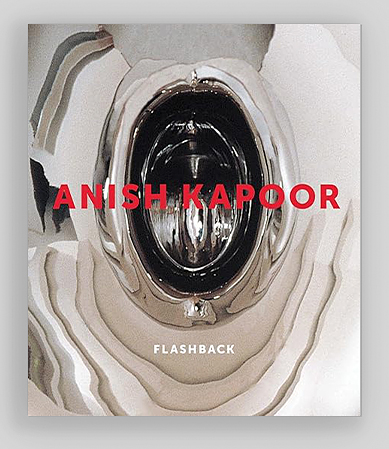
Anish Kapoor: Flashback
Texts by Michael Bracewell and Andrew Renton
Exhibition catalogue, Hayward Publishing, 2011
ISBN 9781853322884

Anish Kapoor
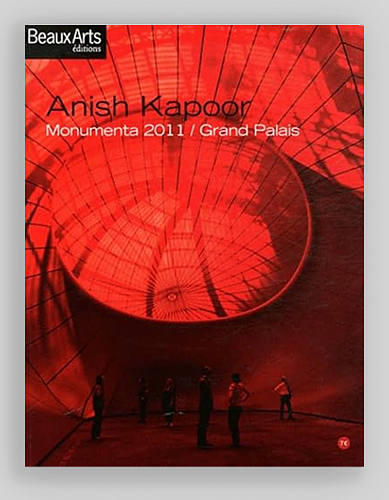
Texts by Homi K. Bhabha, Jean de Loisy and Norman Rosenthal, Exhibition catalogue, Spanish and English editions, Royal Academy of Arts, London, 2009. ISBN 9781905711512

Anish Kapoor
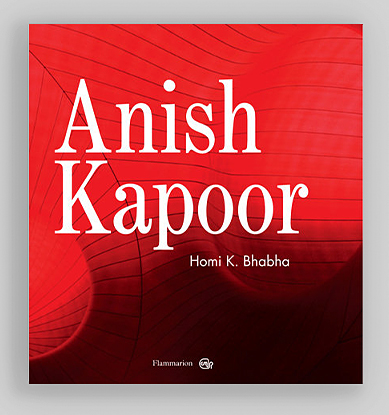
Text by Homi K. Bhabha, Contributions by Homi Bhabha, Introduction by Jean de Loisy, Hardcover, Flammarion, 2011
ISBN 9782080200839

Anish Kapoor
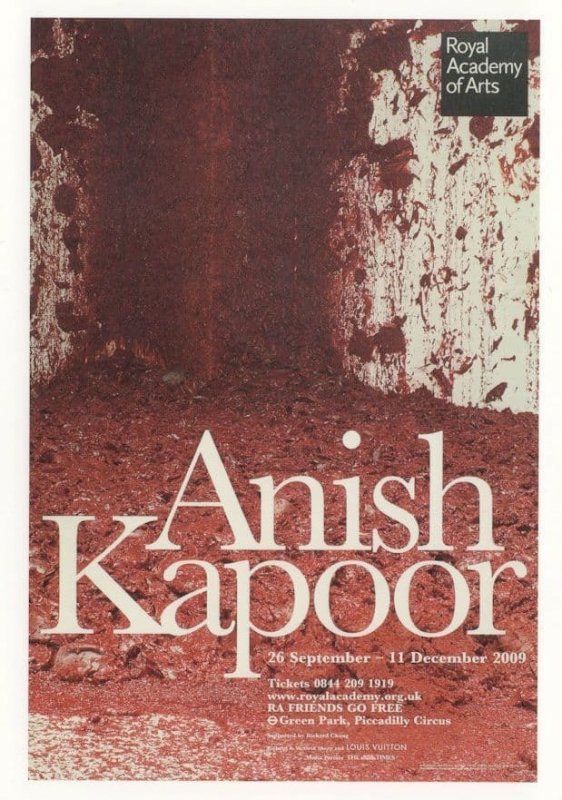
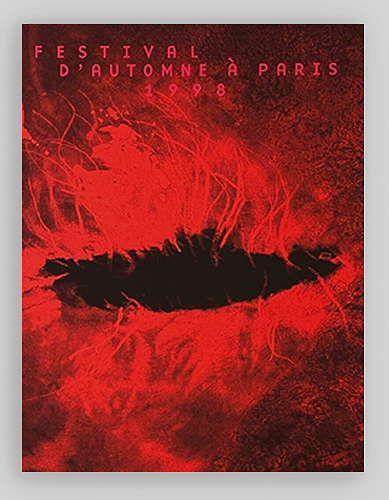
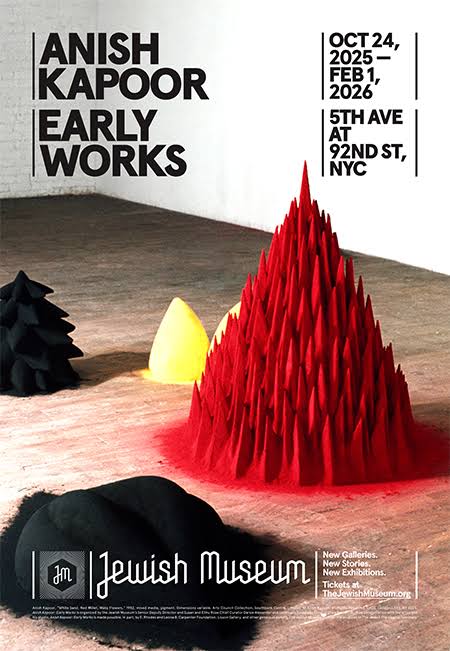
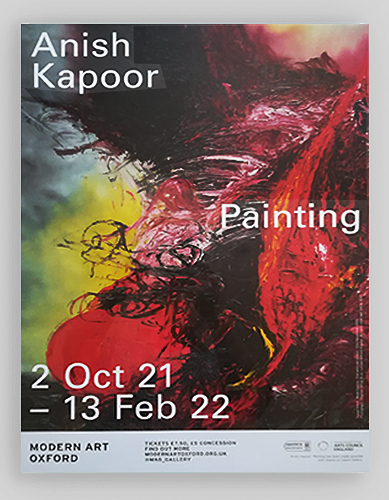
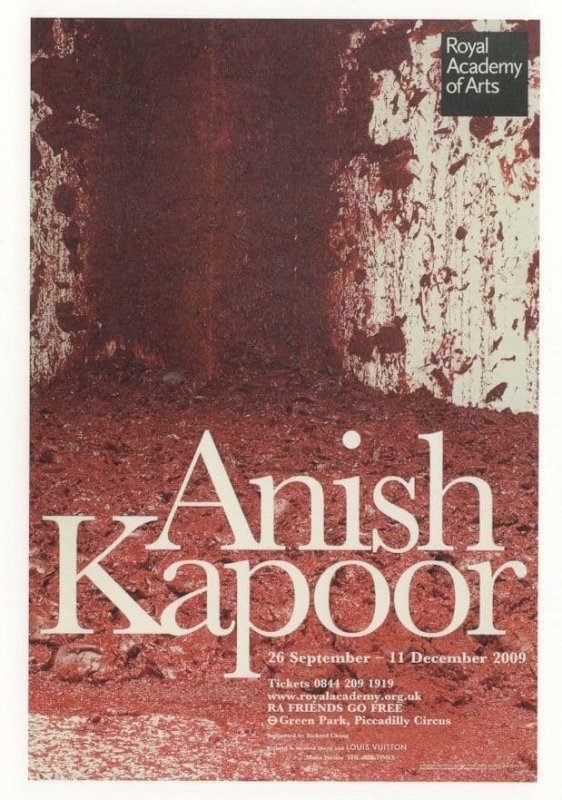
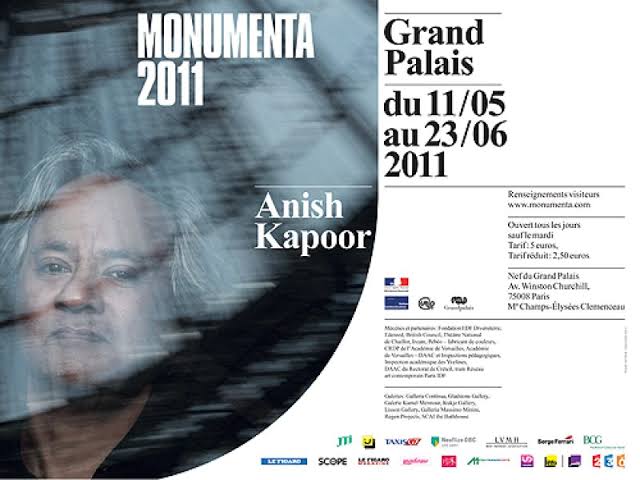
Epic Exhibition Poster, Royal Academy of Arts, 150x100 cm, paper, London, 2009.

Anish Kapoor: Venice Biennale: XLIV Esposizione Internazionale D'arte Biennale Di Venezia - the year Kapoor represented Great Britain at the Venice Biennale,Offset lithograph poster (Hand signed and inscribed by Anish Kapoor), 1990

BIOGRAPHY

Anish Kapoor

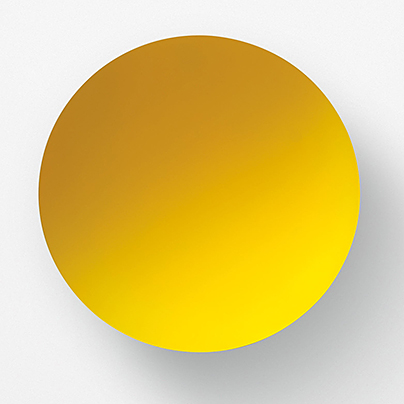
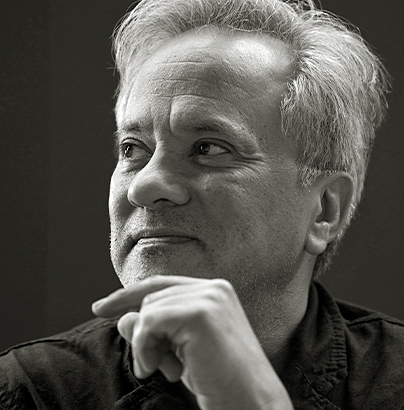
Anish Kapoor (1954, Mumbai) possesses a production practice executed through diverse techniques, dimensions, and materials. He is widely recognized for his monumental sculptural projects that engage with the public sphere, such as Cloud Gate. In both indoor and outdoor settings, he frequently utilizes colossal flayed or inflated PVC membranes integrated with the landscape. The installation titled Marsyas, exhibited at London’s Tate Modern Turbine Hall in 2002, stands as the most prototypical example of this approach. Furthermore, he destabilizes our perception and everyday reality through mirrors that draw the spectator into their dizzying concavity. With works such as Yellow, which comprise pigmented voids carved into stone or walls, he immerses the observer into a symbolic experience of depth. Since the 2000s, Kapoor has continued to blur the boundary between architecture and sculpture through grotesque installations and a performative sequence of self-manifesting artworks centered around concepts such as presence and absence, which he keeps at the forefront of the contemporary agenda through a Post-Minimalist stance. (Anish Kapoor portrait photo by Jillian Edelstein)

İZMİR - LONDON

saglamart; dinamik bir anlayış ile hareket eden, kültür-sanat ortamındaki olay ve olgulara, sanatçı tavırlarına, yapıtlara ve yayınlara odaklanan bağımsız bir yayın etkinliğidir. Tüm hakları saklıdır. Görüntü ve yazılar izinsiz kullanılamaz. / saglamart is an independent publishing initiative driven by a dynamic vision, focusing on events and developments in the cultural-artistic landscape, artist perspectives, works, and publications. All rights reserved. Images and texts cannot be used without permission.

Copyright ©
Can Sağlam - Gülay Yaşayanlar Mümtaz Sağlam, 2025.