anish kapoor

mass, reflection and void

"

WIth the 1990s, Kapoor's attentIon shIfts away from sculptural mass as a self-contaIned whole and toward the voId and depth sensed wIthIn or behInd the object. In thIs perIod he hollows out blocks of stone to create pIgment-lIned fIssures that draw the vIewer Into an unfamIlIar perceptual regIster. These sculptures also carry a fIguratIve rIchness of meanIng that can be lInked to spIrıtual experIence, and they stage a negatIve, hypothetIcal fIeld of darkness that unsettles ordInary depth perceptIon. The artIst appears to be concerned, In effect, wIth a metaphysIcal voId sItuated beyond the vIsIble.

Anish Kapoor Kütle ve Boşluk

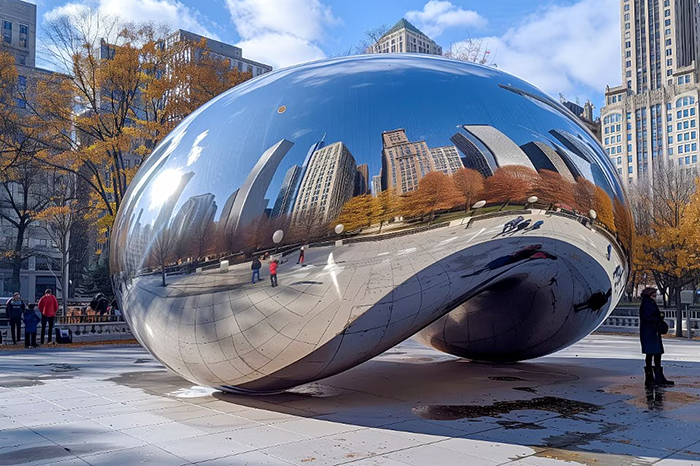
Anish Kapoor, Cloud Gate / Bulut Kapısı, Public Sculpture, (2004-2006). Stainless steel, 10×20×12.8 m, Millenium Park, Chicago, USA. Millennium Park, Chicago, USA. ( Weighing 110 tonnes and resembling an elliptical shape, this sculpture is made up of 168 stainless steel plates./ 110 ton ağırlığında, eliptik bir şekle benzeyen bu heykel 168 paslanmaz çelik plakadan oluşur.) Photo: Darren Green (https://www.domusweb.it/en/news/2024/06/19/lenorme-scultura-cloud-gate-di-anish-kapoor-sar-di-nuovo-accessibile-al-pubblico-.html)

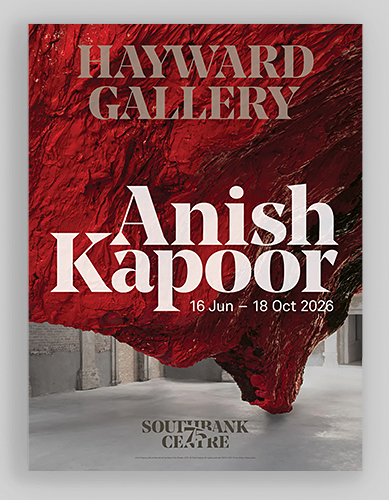
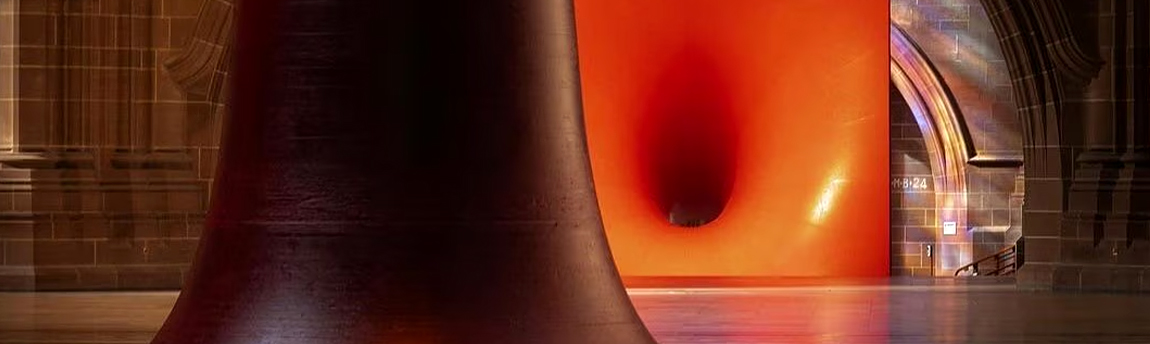
Anish Kapoor recasts the full arc of his artistic development, restaging its various phases within a conceptual deepening and a distinctly Post-Minimalist sensibility. In his expansive exhibition at the Hayward Gallery, the artist surveys the successive stages of his practice, Pigment, Void, Mirror, Darkness, and Body, offering an occasion to consider these phases alongside his newest works: pieces that gather momentum from questions of illusion and reflection, that are crowned by a trajectory of monumental spatial and public commissions, and that have since taken on an increasingly grotesque character shaped by mystical resonances. (1)


the visibility of an interior darkness

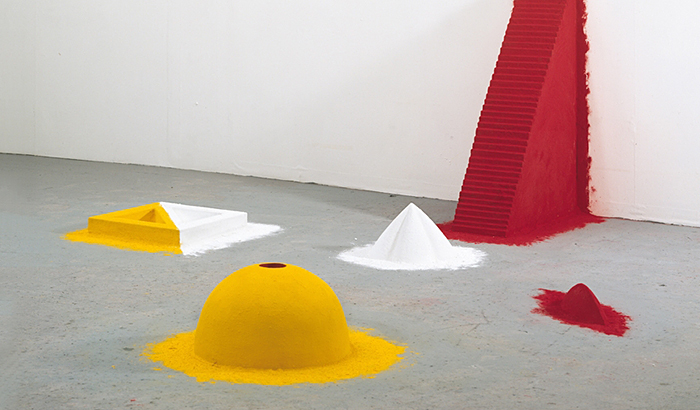
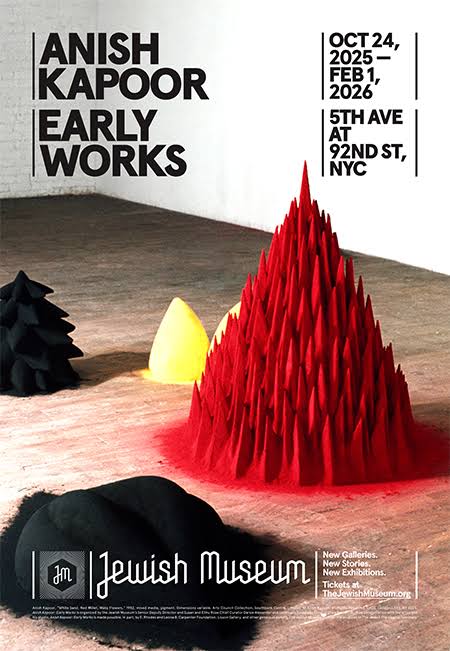
Looking back, it becomes clear that Kapoor’s early work of the 1980s consisted largely of sculptural arrangements built from geometric or organic forms. Coated entirely in pure, saturated pigment, these sculptures rest on a single premise: that the boundary of the object should be rendered indeterminate, or that the object should define itself from the inside outward, generating its own presence.

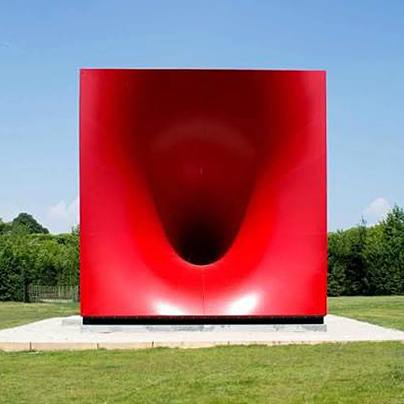
With the 1990s, Kapoor’s attention shifts away from sculptural mass as a self-contained whole and toward the void and depth sensed within or behind the object. In this period he hollows out blocks of stone to create pigment-lined fissures that draw the viewer into an unfamiliar perceptual register. These sculptures also carry a figurative richness of meaning that can be linked to spiritual experience, and they stage a negative, hypothetical field of darkness that unsettles ordinary depth perception. The artist appears to be concerned, in effect, with a metaphysical void situated beyond the visible.


mirrored surfaces: perfect and distant

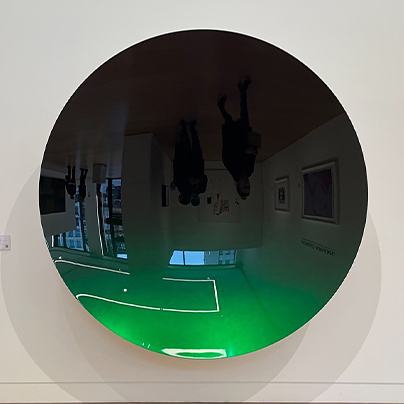
The 2000s mark a distinct phase that consolidated Kapoor’s international recognition. In this period, defined by chrome-plated stainless-steel sculptures of near-flawless metallic finish, the artist advances a set of striking phenomenological inquiries into the contradictions of visual representation, staged through the optical interplay of polished surfaces. Rational, spectacular design is here completed by the formlessness of irrational reflection. What is more, the images that surface on these ceaselessly transforming surfaces either invert, fracture, or disperse.

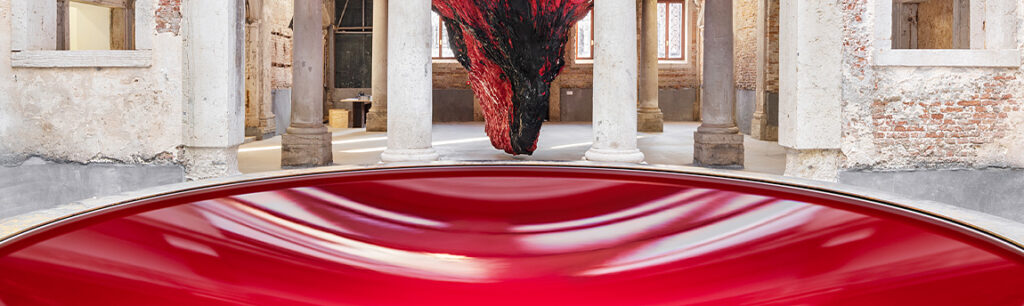
This pleasurable oscillation between abstraction and resemblance unfolds as a mysterious dialogue, submerged in the glimmers exchanged between our bodies and the world around us. Realized through polished stainless steel, projects such as Cloud Gate and Sky Mirror, both widely celebrated in this phase, effectively turn space inside out: they bring the sky down to the ground and return the viewer’s own presence to them within a distorted reality.

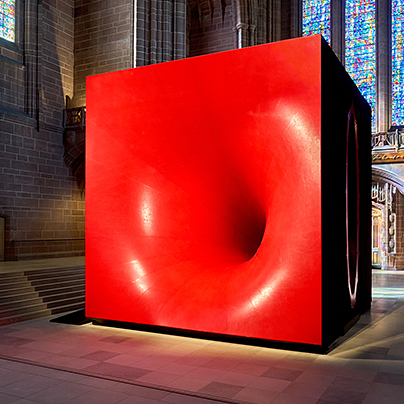
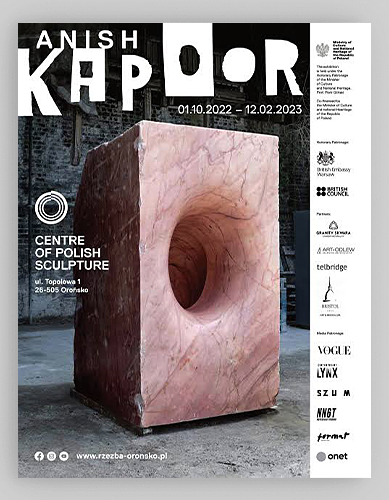
Kapoor’s monumental sculptures, built from concave and convex mirrors that probe the interplay of mass and void, attract comparable attention while provoking a distinct unease. It may be for this reason that these works, which seem to carry a destabilizing aura, are followed by sculptures fashioned from natural materials such as sandstone or alabaster, each pierced by an enigmatic hollow.

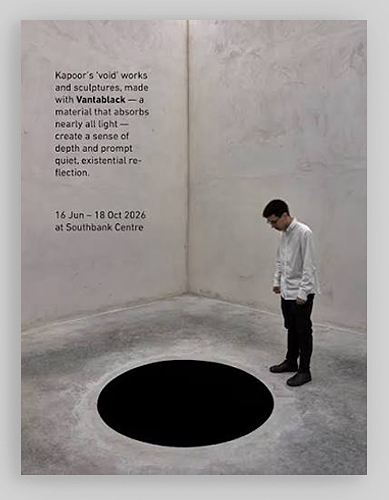
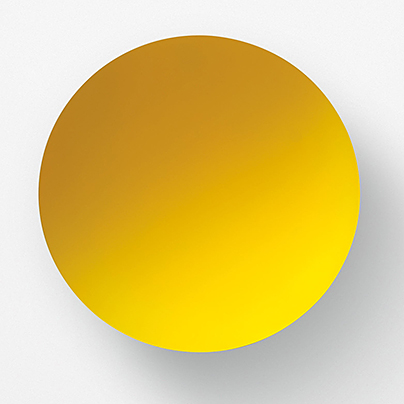
Around this time, Kapoor’s artistic use of Vantablack, a substance that absorbs almost all visible light, seems to bring his pursuit of absolute void to its furthest extreme. As seen in Non-Object Black (2019), this application, a flat, circular void of pure black that entirely erases the viewer’s sense of dimension and depth when viewed frontally, renders three-dimensional objects as if they were flat, two-dimensional openings. Viewed from the side, however, the same objects reveal themselves as projecting outward. Regardless of the surface to which it is applied, Vantablack presents a visuality in which the sensation of infinity and depth generates no perception of dimension whatsoever. The singular illusion of depth this pigment produces is an experience that overturns our prior capacity for visual perception.


dark matter: the body, meat and blood as waste

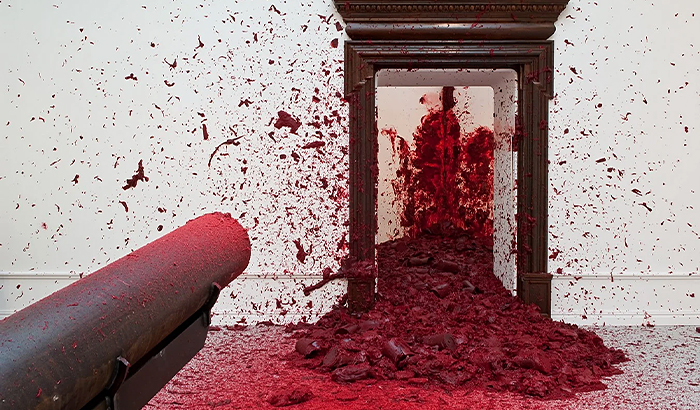
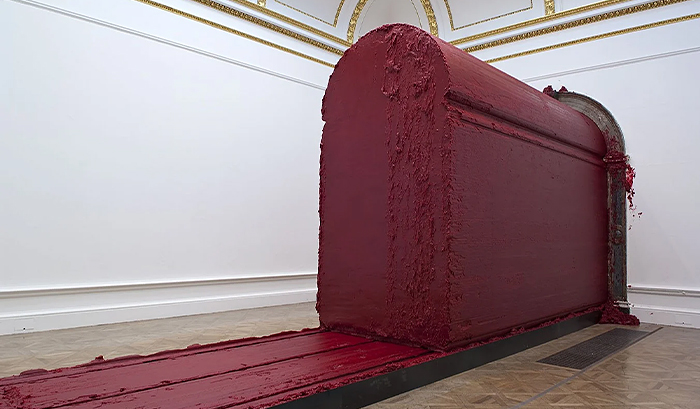
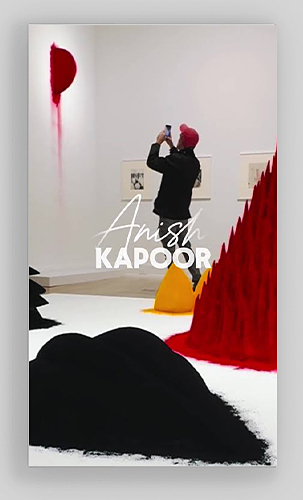
In Kapoor’s most recent installations, the enigmatic mountain-peak forms rendered in sandstone and fiberglass, together with the dense masses of soiled, sludge-like material scattered across the space, appear to mark the beginning of a new trajectory tied to religious association. Moving away from the sterile surface of the mirrors and turning toward more biological, raw themes, the artist now deploys red not merely as pigment but as a color evoking blood, flesh, and viscera, combined, as in works such as Svayambhu or Shooting into the Corner, with moving mechanisms that extrude vast masses of waste-like matter. This approach, concerned directly with the violence of bodily existence, carries a disquieting, even jarring character that unsettles the viewer as well.

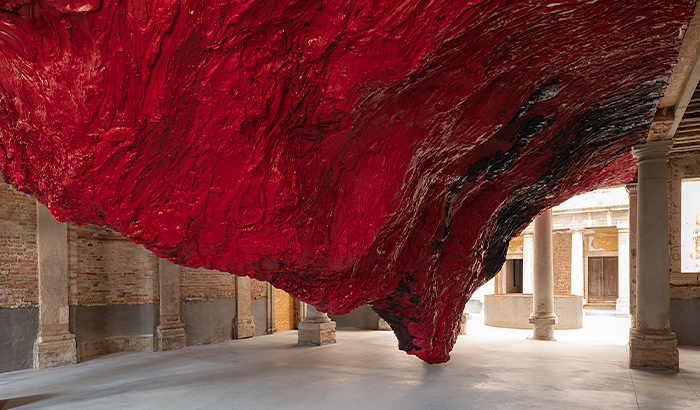
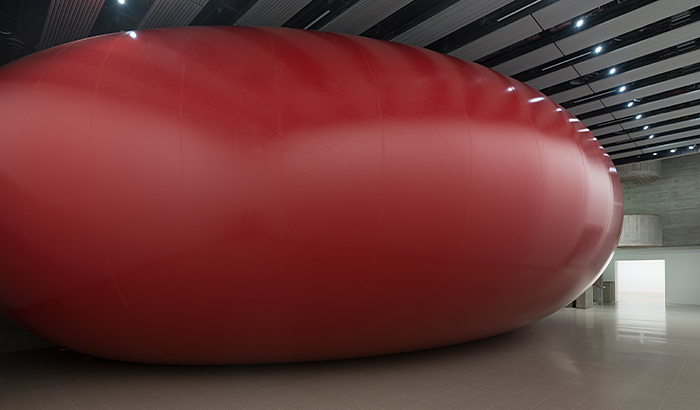
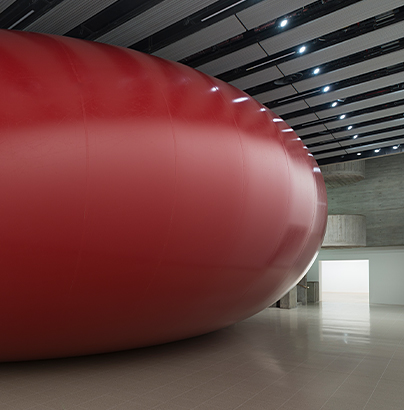
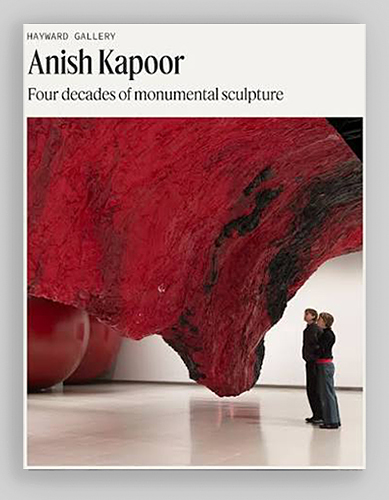
Within this context, three monumental installations demonstrate the state this new trajectory has arrived at, each functioning as an exercise in claustrophobia: All of Nothing (2026), a red PVC membrane positioned at the entrance to the Hayward Gallery; Mount Moriah at the Gate of the Ghetto (2022), an inverted mountain suspended from the ceiling; and Ha Makom (2026), which likewise depicts a mythic mountain peak.

Notes

1- Anish Kapoor, Solo Exhibition, 16 June – 18 October 2026, Curated by: Ralph Rugoff, Hayward Gallery, Southbank Centre, Belvedere Road, London. SE1 8XX

2- Bkz. Anish Kapoor, Descent into Limbo, 1992, concrete and external render, 600 x 600 x 600 cm

References

1- Jonathan Jones, “Anish Kapoor review this gutsy, gore-splattered show is a divine bloodbath”, The Guardian, June 15, 2026, https://www.theguardian.com/artanddesign/2026/jun/15/anish-kapoor-review-hayward-gallery

2- Dale Berning Sawa, “I have a naughty schoolboy attitude: Anish Kapoor reveals his latest epic creations”, The Guardian, Sun 14 Jun 2026 https://www.theguardian.com/culture/2026/jun/14/anish-kapoor-hayward-gallery-interview

3- Raphy Sarkissian, “Anish Kapoor”, The Brooklyn Rail, Dec/Jan 2023–24, https://brooklynrail.org/2023/12/artseen/Anish-Kapoor/

4- Michael Brennan, “Tony Smith ve Anish Kapoor”, The Brooklyn Rail, July 2004. https://brooklynrail.org/2004/07/artseen/tony-smith/

5- Rebecca Mead, “Anish Kapoor’s Material Values”, The NewYorker, 15 August 2022. https://www.newyorker.com/magazine/2022/08/22/anish-kapoors-material-values

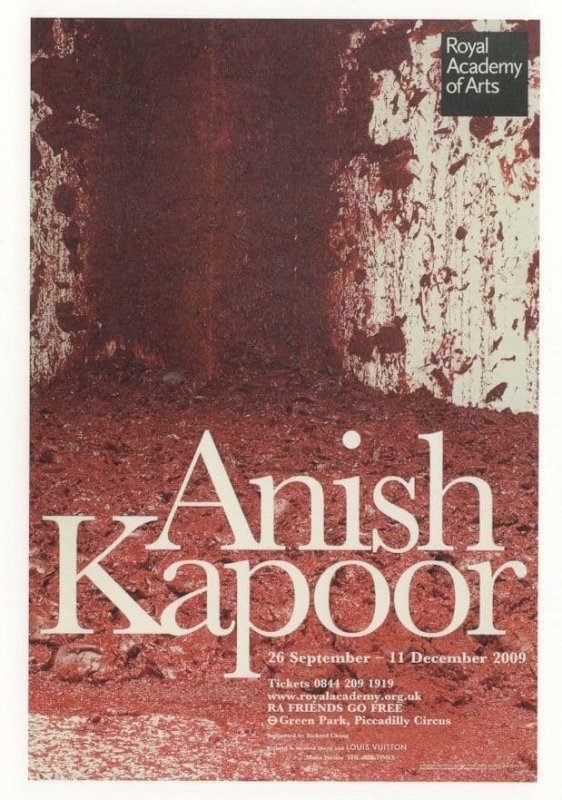
6- Adrian Searle, “Anish Kapoor: A Very Fine Mess”, The Guardian, September 21, 2009, https://www.theguardian.com/artanddesign/2009/sep/21/anish-kapoor-royal-academy

Compiled and written by Mümtaz Sağlam  Copyright © August 2026, All Rights Reserved.

CURRENT EXHIBITIONS 2025 – 2027

Anish Kapoor is re-examining all the stages of development and change in his artistic career through a conceptual deepening and a Post-Minimalist perspective. With his spectacular exhibition at the Hayward Gallery, the artist summarises creative phases such as Pigment, Emptiness, Mirror, Darkness and Body; he enables us to assess, alongside his new works, which take on an increasingly grotesque form and are shaped by mystical connections, a process that gains momentum through themes of illusion and reflection, and is crowned by large-scale spatial and public installations. (...) In this context, All of Nothing (2026), situated at the entrance to the Hayward Gallery and crafted from red PVC membrane; suspended from the ceiling, the work Mount Moriah at the Gate of the Ghetto (2022), on display for the second time and representing an inverted mountain, along with the colossal installation Ha Makom (2026), which also depicts a mythological mountain peak, serve as claustrophobic installations illustrating the new situation that has been reached.

This exhibition, which brings together Anish Kapoor’s large-scale installations and his gleaming stainless steel sculptures, reflects a remarkable body of work in terms of material possibilities, illusion and a magical aura. Indeed, this architecturally conceived environment, designed as a space for both physical and psychological meditation and reflecting Kapoor’s current practice involving wax, silicone and paint, focuses on a fundamental spatial tension.

The exhibition brings together Anish Kapoor’s early pigment sculptures and his more recent works created using Vantablack, a nanotechnological material that absorbs almost all light. In this way, it showcases Kapoor’s skilful play on perception, drawing on the psychological effects of colour and its absence, as well as the allure of objects that seem to defy their own material nature.

 ANISH KAPOOR at Saglamart (ENGLISH)

gülay yaşayanlar: mount moriah at the gate of the ghetto

Anish Kapoor

gülay yaşayanlar: all of nothing: elliptical fluid-blood pockets that contain the waste products of the soul

mümtaz saglam: anish kapoor: kütle, yanılsama ve boşluk

mümtaz saglam: anish kapoor 2

mümtaz saglam: anish kapoor 3

ANISH KAPOOR at Saglamart (TURKISH)

Anish Kapoor Mount Moriah

gülay yaşayanlar: mount moriah at the gate of the ghetto

Anish Kapoor

gülay yaşayanlar: all of nothing: ruhun atıklarını barındıran eliptik sıvı-kan torbaları

Anish Kapoor

mümtaz saglam: anish kapoor: kütle, yanılsama ve boşluk

Anish Kapoor

mümtaz saglam: anish kapoor 2

Anish Kapoor

mümtaz saglam: anish kapoor 3

NEW WORKS 

Anish Kapoor

Mount Moriah at the Gate of the Ghetto

Anish Kapoor, Mount Moriah at the Gate of the Ghetto, 2022 Mixed media / Karışık teknik (silikon, reçine ve yoğun kırmızı pigment), 13.8x6.8x3.9 cm. Photograph: Attilio Maranzano ©Anish Kapoor. All rights reserved, DACS, 2026.

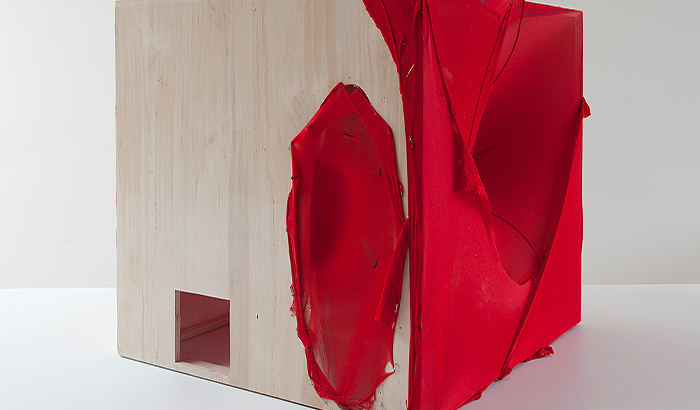
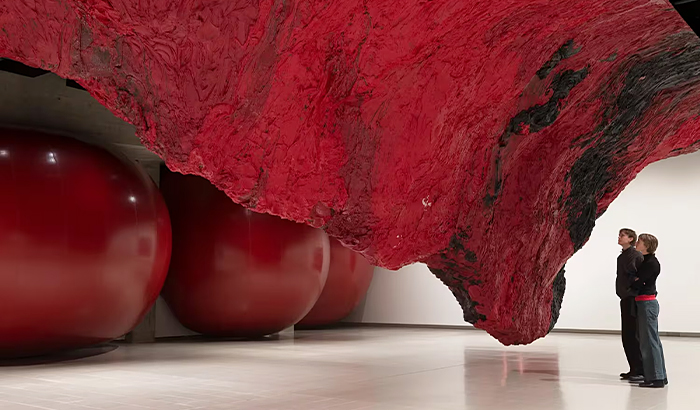
Mount Moriah at the Gate of the Ghetto (2022) is a monumental and jarring work that engages with themes and concepts such as matters of faith, sacrificial rituals, and the inner nature or sublimity of the human body. It evokes feelings of both fear and awe in the viewer. It takes the form of an inverted mountain suspended from the ceiling to the floor in a manner that defies gravity. This installation, which appears as though molten lava or blood is dripping from it, has an abject connotation and resembles freshly cut meat and internal organs. The work takes its name from the sacred Mount Moriah, to which the Prophet Abraham took his son Isaac to sacrifice him. Here, Kapoor explores the psychological and dark aspects of the act of sacrifice undertaken in the name of pure faith. It was first exhibited in 2022 during the Venice Biennale at Palazzo Manfrin, situated directly opposite the entrance gate to the Jewish Ghetto. In 2026, it was re-exhibited as one of the key pieces in the retrospective held at the Hayward Gallery in London.

READ MORE
Gülay Yaşayanlar: Mount Moriah at the Gate of the Ghetto, saglamart.com, August 2026.

All of Nothing

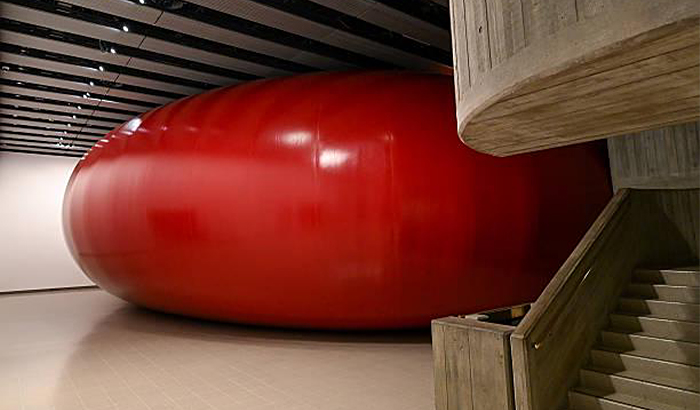
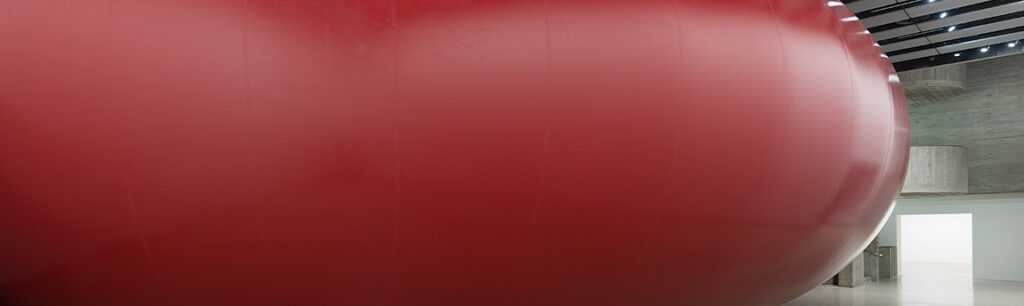
Anish Kapoor, All of Nothing, 2026, (Installation view), Şişirilebilir kırmızı PVC membran, Kalınlık: 0,6 cm. (image: Installation view of Anish Kapoor, All of Nothing (2026). Photo: Dave Morgan. Courtesy of the Hayward Gallery and the artist. © Anish Kapoor. All rights reserved, DACS, 2026)

In All of Nothing, where Anish Kapoor’s intervention in the void takes the form of a postmodern game, it is clear that a complex set of motivations is created through the perception of the body, to which a direct connection is established. Here, first and foremost, within the void, which envelops a central narrative and transforms into an intellectual diagram, giant balloons, suspended in a cramped arrangement and with a sense of tension whilst examining conflicting concepts such as violence, desire, freedom and death, are rendered as images of truth. Furthermore, these elliptical sacs of fluid and blood, which harbour the dregs of the soul, have evolved into colossal masses of dark matter, brimming with secrets due to accumulated sensitivities linked to social violence, and appearing as though they might burst at any moment.

READ MORE
Gülay Yaşayanlar: All of Nothing: ruhun atıklarını barındıran eliptik sıvı-kan torbaları, saglamart.com, August 2026.

Anish Kapoor

Ha Makom

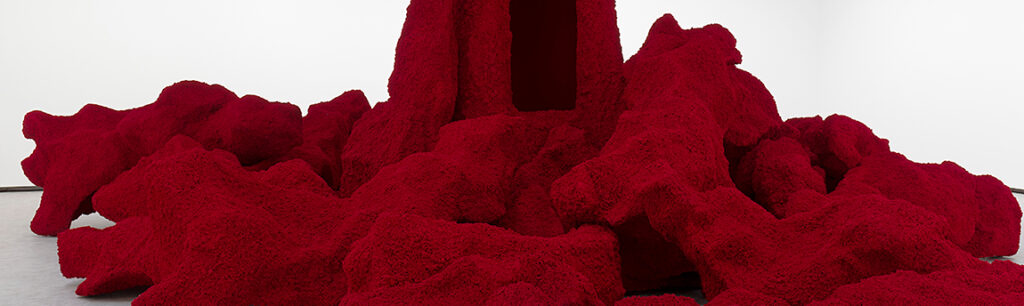
Anish Kapoor, Ha Makom, (Mother as a Mountain, My Red Homeland III, As if to Celebrate I Discovered a Mountain Blooming with Red Flowers), 2026, Mixed media and pigment, Dimensions variable © Anish Kapoor. (https://anishkapoor.com/9676/ha-makom) image: Anish Kapoor, Ha Makom, 2026. © Anish Kapoor. All rights reserved, DACS, 2026. Photo: Dave Morgan.

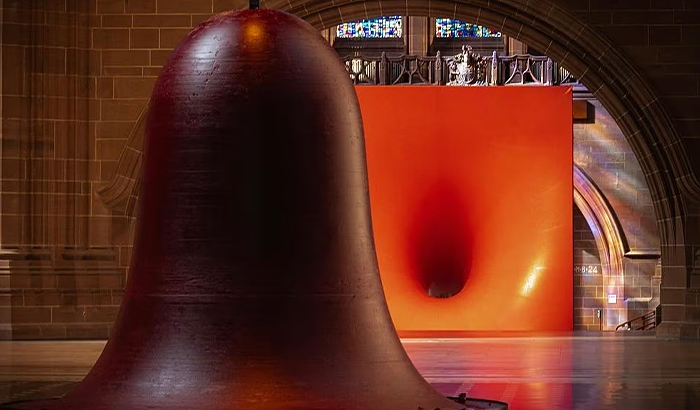
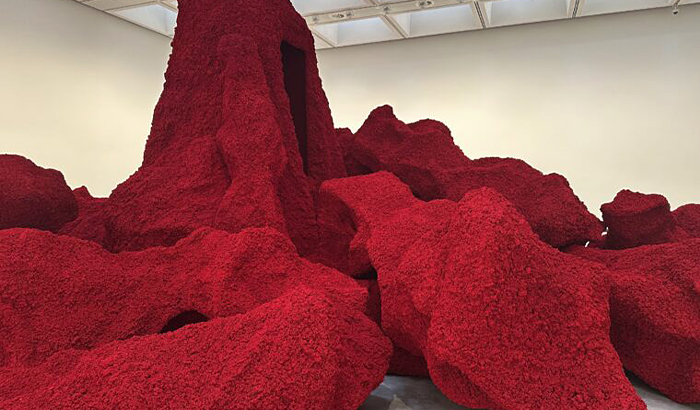
Ha Makom is a monumental and immersive installation executed in red pigment and various materials. Translating to The Place in Hebrew, the term represents both physical space and the divine within the Kabbalistic tradition. Inspired by the famous Uluru rock formation in Australia, the work features a rugged, mountainous, or crater-like landscape appearance, characterised by a dense, vibrant red texture and a deep, mysterious dark portal at its centre. This monumental piece, through which Kapoor aims to make the viewer physically experience 'the presence of the divine in space and time' as well as both the corporeal and the mystical, was first showcased in the comprehensive exhibition held at the Hayward Gallery in London.

HIGLIHGTS / ÖNE ÇIKANLAR 

Shooting into the Corner

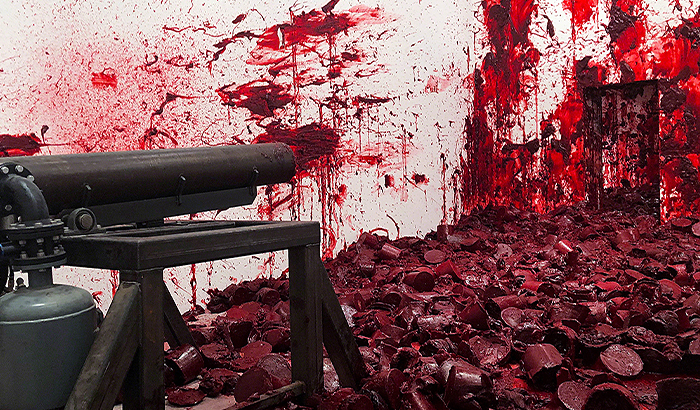
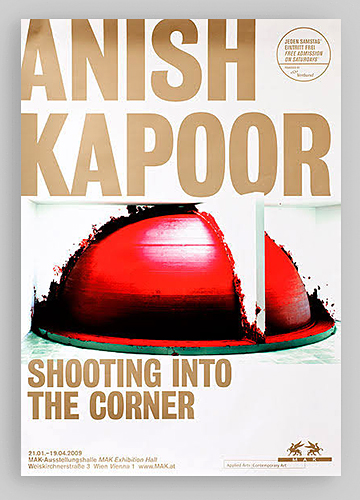
Anish Kapoor RA, Shooting into the Corner, 2008 - 09, Mixed video. Dimensions variable. MAK, Vienna, Austrian Museum of Applied Arts/Contemporary Art. Installed at the Royal Academy of Arts, London, 2009. Photography: Dave Morgan. © Anish Kapoor. All Rights Reserved, DACS 2022.

Shooting into the Corner was exhibited at the Royal Academy of Arts in 2009 and subsequently at Palazzo Manfrin in 2022. Receiving critical acclaim, this work stands as one of Kapoor’s most renowned dramatic and performative installations. The apparatus consists of a functional cannon that fires bucket-sized projectiles of blood-red wax at regular intervals. By blasting a dense mixture composed of paint, pigment, wax, and vaseline against the wall, this mechanism creates a painted field of randomly aggregated details on the opposing surface. The physical presence generated by this mixture, replete with scattered viscous stains, residues, and highly adhesive debris, transforms the entire process into an expressionistic performance. Operating primarily through the strategy of automatism, the installation allows the work to actualize itself within a proposed spatiotemporal framework. In this context, the artwork undergoes a semantic shift with each iteration, continuously generating new configurations that evoke situational and fluid meanings.
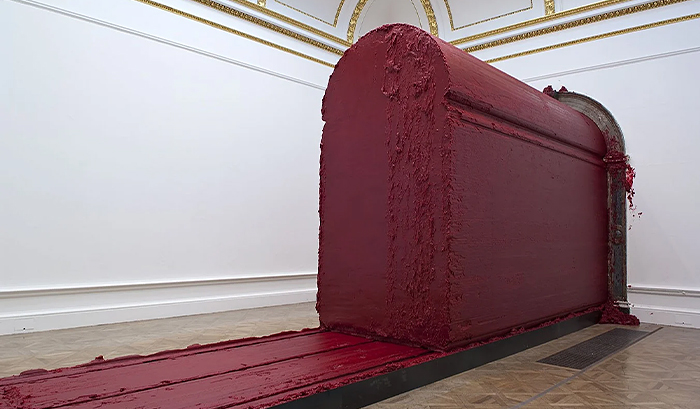
Anish Kapoor, Svayambhu, at the Royal Academy of Arts, London, 2009, Wax and oil-based paint. Dimensions variable © Anish Kapoor. All Rights Reserved, DACS 2022

PALAZZO MANFRIN / ANISH KAPOOR FOUNDATION – VENICE

Anish Kapoor

Anish Kapoor in Venice: Retrospective, Curator: Taco Dibbits, 2022, Palazzo Manfrin and Gallerie dell'Accademia, Venice. Anish Kapoor, Retrospective, 6 May - 8 August 2026, Palazzo Manfrin, Cannaregio, Venice.

Following an extensive restoration process of the Palazzo Manfrin, which he acquired in 2018, Anish Kapoor staged two large-scale exhibitions concurrent with the Venice Biennale. Curated by Taco Dibbits, Director of the Rijksmuseum, the first retrospective exhibition, titled Anish Kapoor in Venice and organised in tandem with the Gallerie dell'Accademia in 2022, serves as a comprehensive compendium of the artist's career. Exhibited here are two of his renowned installations: Mount Moriah at the Gate of the Ghetto, a monumental amorphous structure featuring red and black silicone and paint trickling down from the ceiling, and Shooting into the Corner (2008–2009). Furthermore, this exhibition marked the debut of his void and aperture sculptures executed in Vantablack, a material that absorbs almost all light, the exclusive rights to which Kapoor famously acquired.In 2026, Kapoor organised his second exhibition, running simultaneously with the 61st Venice Biennale. On this occasion, he presented one hundred architectural models, a portion of which comprises unrealised projects, alongside his works Taratantara (1999) and Ark Nova (2013). Here, Kapoor prioritises inquiries into the spatial positioning of the object and its potential for space-making. According to the artist, these exhibited drawings and models constitute playful experimentations with scale and form, thereby facilitating the emergence of his original concepts and propositions. Additionally, this exhibition features a new, monumental iteration of his work At the Edge of the World (1998), spanning eight metres in diameter and suspended from the ceiling. Alongside another iconic work, Descent into Limbo (1992), his grotesque and eschatological concrete installations titled Ga Gu Ma (2012), which oscillate between mechanical production and organicity, are housed in separate rooms. Finally, he concludes this presentation with the Vantablack sculptures, composed of pitch-black forms that simultaneously manifest and dissolve before the viewer’s eyes, which he had first exhibited in this very venue in 2022.

BIOGRAPHY

Anish Kapoor

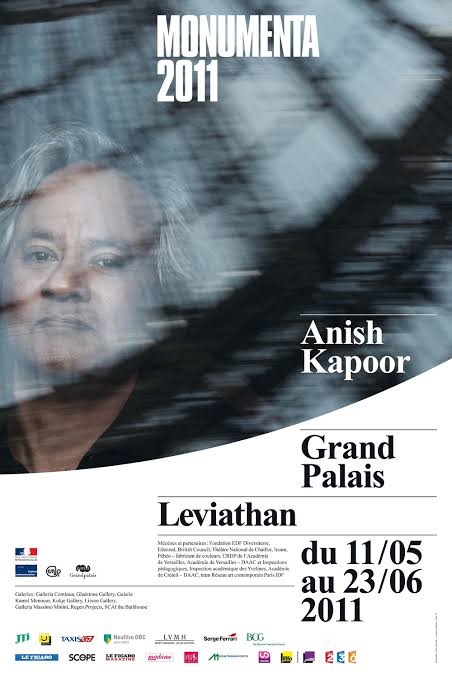
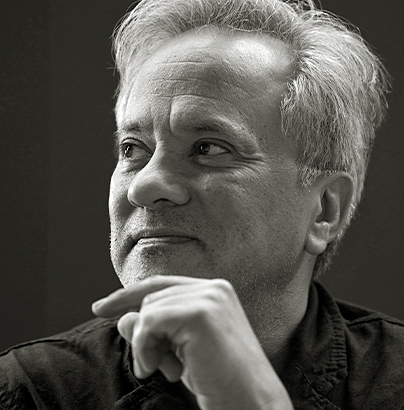
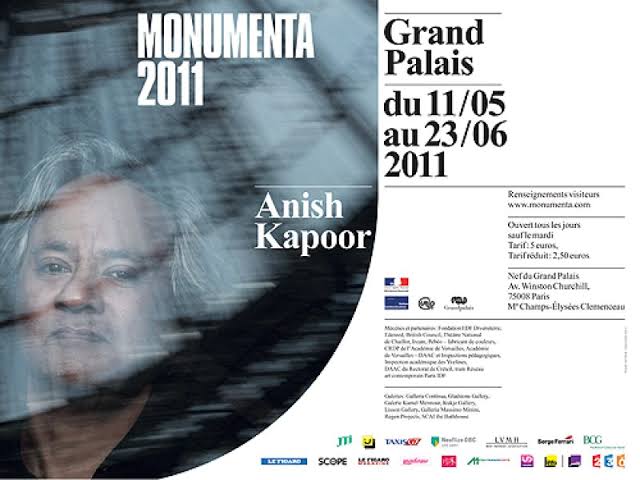
Anish Kapoor (1954, Mumbai) possesses a production practice executed through diverse techniques, dimensions, and materials. He is widely recognized for his monumental sculptural projects that engage with the public sphere, such as Cloud Gate. In both indoor and outdoor settings, he frequently utilizes colossal flayed or inflated PVC membranes integrated with the landscape. The installation titled Marsyas, exhibited at London’s Tate Modern Turbine Hall in 2002, stands as the most prototypical example of this approach. Furthermore, he destabilizes our perception and everyday reality through mirrors that draw the spectator into their dizzying concavity. With works such as Yellow, which comprise pigmented voids carved into stone or walls, he immerses the observer into a symbolic experience of depth. Since the 2000s, Kapoor has continued to blur the boundary between architecture and sculpture through grotesque installations and a performative sequence of self-manifesting artworks centered around concepts such as presence and absence, which he keeps at the forefront of the contemporary agenda through a Post-Minimalist stance. (Anish Kapoor portrait photo by Jillian Edelstein)

İZMİR - LONDON

saglamart; dinamik bir anlayış ile hareket eden, kültür-sanat ortamındaki olay ve olgulara, sanatçı tavırlarına, yapıtlara ve yayınlara odaklanan bağımsız bir yayın etkinliğidir. Tüm hakları saklıdır. Görüntü ve yazılar izinsiz kullanılamaz. / saglamart is an independent publishing initiative driven by a dynamic vision, focusing on events and developments in the cultural-artistic landscape, artist perspectives, works, and publications. All rights reserved. Images and texts cannot be used without permission.

Copyright ©
Can Sağlam - Gülay Yaşayanlar Mümtaz Sağlam, 2025.