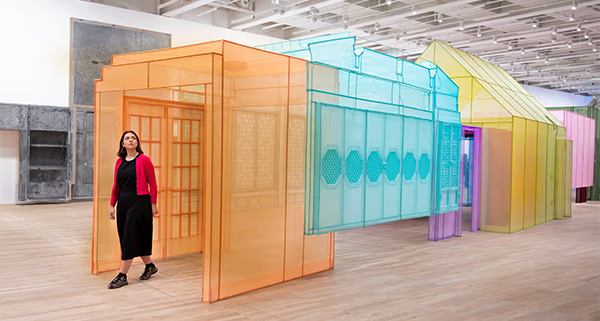
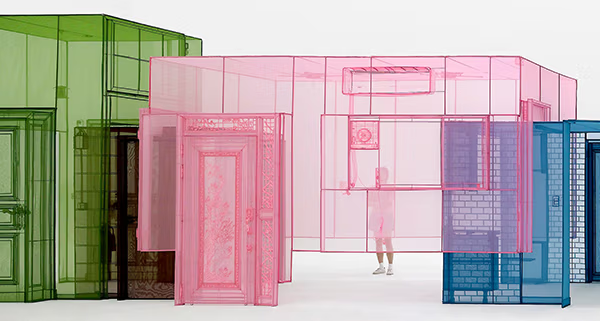
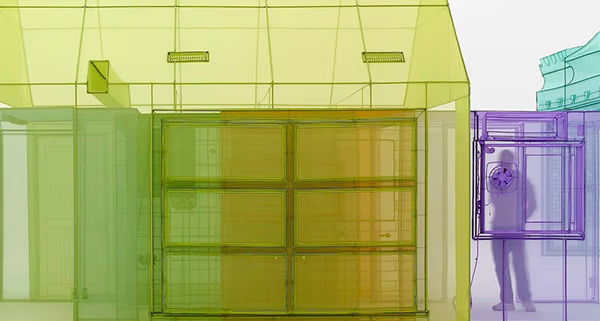
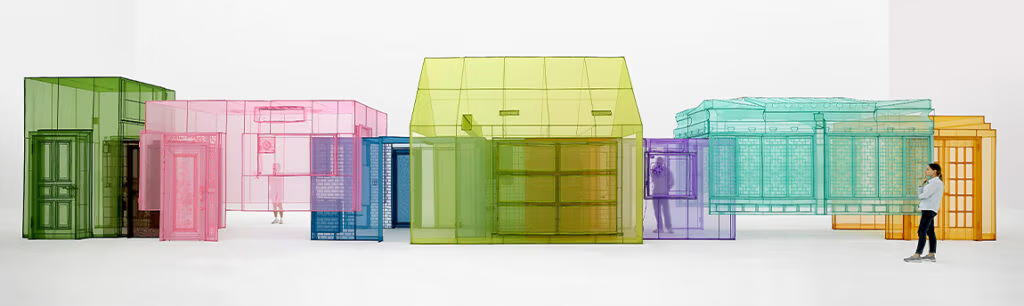
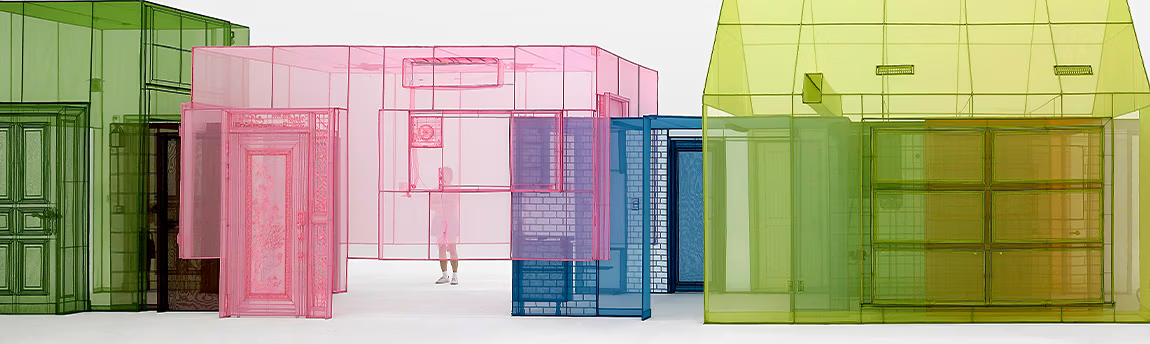
Do Ho Suh, 1998 yılından bu yana, polyester kumaş heykelleri ya da düzenlemeleriyle; koridor, merdiven ve kapı tasavvurlarıyla geçişli ve/fakat imkânsız bir imgelemi zenginleştirmeye koyulmuştur. Bire bir ölçekte ve gerçekçi boyutlarda kurulan mekân olasılıkları, saydam duvar yanılsamalarıyla tehditkâr ve tedirgin edici bir açıklık içindedir. Hayaletimsi bir tasavvura dönüşerek güven telkin etmeyen ve adeta tül ile kaplanmış, iç içe geçirilirek askıya alınmış bu görsellik, hiç kuşku yok ki son derecede etkileyicidir. Ayrıca psişik okumalarla güçlenen, mahremiyet ve kamusallık temalı mekân tartışmalarına örnek teşkil eden, içerisi-dışarısı gibi kavramsal bir paradoks içinde yapılanan bu tahayyül; kırılgan yapısıyla ve yarattığı hafiflik duygusuyla sanki kendi kendini tehdit etmekte, biçimsel açıdan bir belirsizliğe sürüklemektedir. Deneyimsel bir izlenimle; göçebe ruhları ve kimlikleri saran kültürel ve tinsel karmaşanın, farklılık bildirimin bir gösterim alanı olarak beliren bu özgün ve çarpıcı tasarım, benzersiz bir ev/bina görselliğini karşımıza çıkarmaktadır.
Since 1998, Do Ho Suh has set out to enrich a transitive and/or impossible imaginary with his polyester fabric sculptures or arrangements; corridors, stairs and doors. The spatial possibilities established in realistic scale and realistic dimensions are in a threatening and unsettling openness with transparent wall illusions. There is no doubt that this visuality, which does not inspire confidence by turning into a ghostly vision and is almost covered with a veil and suspended by being intertwined, is extremely impressive. Moreover, this imagination, which is strengthened by psychic readings, which sets an example for discussions on privacy and publicity, which is structured in a conceptual paradox such as inside-outside, threatens itself with its fragile structure and the feeling of lightness it creates, and leads to a formal uncertainty. With an experiential impression; this original and striking design, which appears as a display area of cultural and spiritual confusion and difference declaration surrounding nomadic souls and identities, reveals a unique house / building visuality.
BY GÜLAY YAŞAYANLAR & MÜMTAZ SAĞLAM
The GenesIs ExhIbItIon: Do Ho Suh: Walk the House / 2025
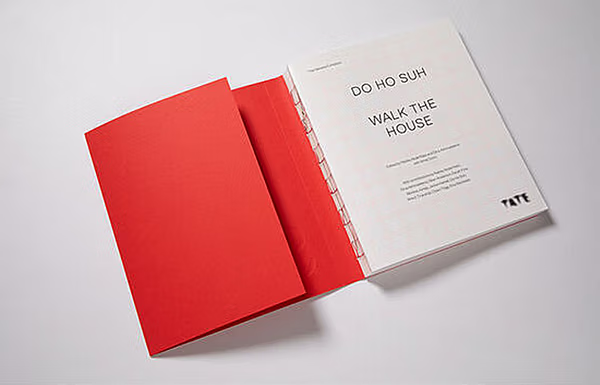
The Genesis Exhibition: Do Ho Suh: Walk the House, Edited by Nabila Abdel Nabi, Dina Akhmadeeva and Amie Corry, With contributors by Sean Anderson, Sarah Fine, Monica Junea, janice Kerbel, Do Ho Suh, Rirkrit Tiravanija, Dylan Tirgg, Kira Wainstein, Designed by Marwan Kaabour, Producted by Juliette Dupire, Tate Publishing, 192 pages, English, Softcover, May 2025, London.
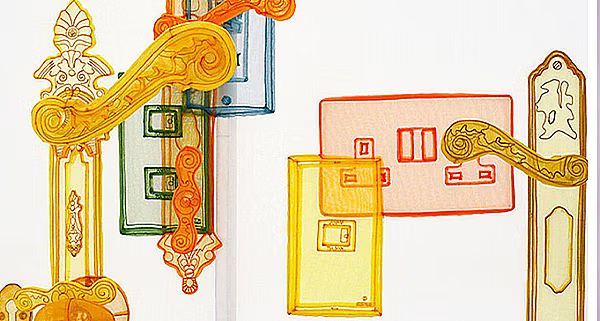
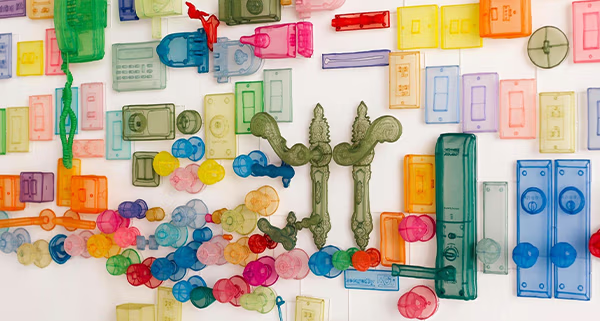
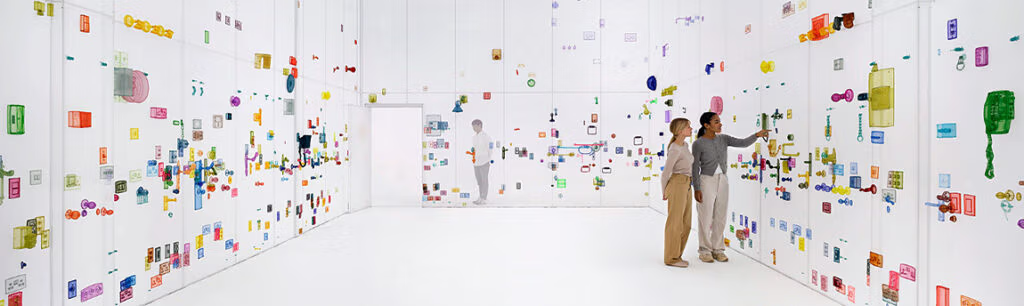
Suh’un kumaş mimarisiyle ürettiği son çalışmasıdır. Yapının yarı saydam dış hatları, sanatçının 2016 yılında Londra’ya taşınmasının ardından şu anki evinin şeklini almaktadır. İçeride, yapı o mekanın detaylarından yoksundur; bunun yerine, Suh ve ailesinin hayatları boyunca yaşadıkları geçmiş ve şimdiki mekanların mimari detayları, sabit eşyaları ve aletleriyle doludur; böylece birden fazla mekan, zaman ve coğrafyayı tek bir çatı altında birleştirir. Duvarlar, ışık anahtarları, kapı kolları, telefonlar ve prizler gibi nesnelerle doludur – konut alanlarımızın görünüşte önemsiz unsurları, zamanla neredeyse bilinçaltında, ev kavramını şekillendirir. Suh, bu duvara monte edilmiş nesnelere “örnekler” adını veriyor ve bunların kökenlerine göre renklendirerek, şu anki evinin hayalet gibi silüetine karşı bir renk cümbüşü yaratıyor.
Suh's most recent fabric architecture work. Its translucent outline takes the form of his present home in London, following his migration to the city in 2016. Inside, the structure is empty of the details of that space, filled instead with the architectural details, fixtures and appliances from past and present spaces Suh and his family have inhabited throughout their lives, folding multiple spaces, times and geographies into one. The walls are filled with objects such as light switches, doorknobs, telephones and plug sockets - seemingly negligible elements of our dwelling spaces which, over time, almost subconsciously, come to furnish our understanding of home. Suh refers to these wall-based objects as 'specimens', and colours them based on their location of origin, creating a cacophony of hues against the ghostly outline of his current home.
See. Kira Wainstein, "Perfect Home: London, Horsham, New York, Berlin, Providence, Seoul, 2024", The Genesis Exhibition: Do Ho Suh: Walk the House, Tate Publishing, May 2025, London, pg. 156.
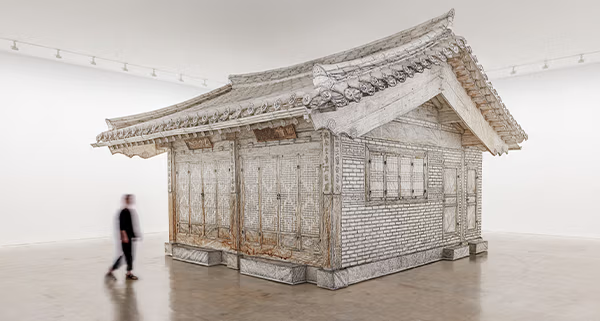
Suh’un Amerika Birleşik Devletleri’ne taşınmasından on yıllar sonra ortaya çıkan Rubbing/Loving: Seoul Home 2013-22, sanatçının Seul’deki çocukluk evinin 1:1 ölçekte somutlaştırılmış hali; sanatçının kendi ifadesiyle “her zaman peşinden gelen” bir ev. Suh, binanın tamamını dut kağıdıyla kapladı ve altındaki yüzeyi ortaya çıkarmak için üzerine grafit sürerek ovuşturdu. Bu zahmetli süreç, sanatçının evinin taşınabilir bir izini oluşturdu; böylece evi toplayıp yanında götürebilir ve başka bir yerde alüminyum bir iskelet üzerine "dikebilirdi". Suh'un çocukluk evi, on dokuzuncu yüzyıldan kalma bir eve dayanıyor. Hanok olarak bilinen bu geleneksel Kore evleri, işgal, savaş ve kalkınma sonucunda yirminci yüzyılda yaygın bir yıkıma maruz kaldı. Suh'un ebeveynleri 1970'lerde evlerini inşa ettiklerinde, hanoklar bu kez apartman bloklarına yer açmak için ortadan kaybolmaya devam ediyordu. Bu eserin yer aldığı serinin başlığı olan Rubbing/Loving, Suh'un "sevgi, şefkat ve özen dolu nazik bir jest" olarak tanımladığı sürtme sürecinin samimiyetine atıfta bulunuyor.
Rubbing/Loving: Seoul Home 2013–22, which emerged decades after Suh’s move to the United States, is a 1:1 scale materialisation of the artist’s childhood home in Seoul; in the artist’s own words, a home that ‘has always followed her’. Suh covered the entire building in mulberry paper and rubbed graphite over it to reveal the surface beneath. This laborious process created a portable trace of the artist’s home; thus, he could pack it up, take it with him, and ‘erect’ it elsewhere on an aluminium frame. Suh’s childhood home is based on a nineteenth-century house. These traditional Korean houses, known as hanok, suffered widespread destruction in the twentieth century as a result of occupation, war and development. When Suh’s parents built their home in the 1970s, hanok were continuing to disappear to make way for apartment blocks. The title of the series in which this work is featured, Rubbing/Loving, refers to the intimacy of the rubbing process, which Suh describes as “a gentle gesture filled with love, compassion and care”.
See. Kira Wainstein, "Rubing/Loving: Seoul Home, 2013-2022", The Genesis Exhibition: Do Ho Suh: Walk the House, Tate Publishing, May 2025, London, pg. 46.
Nests, Do Ho Suh’un “Hubs” adını verdiği ve halen devam eden bir kumaş mimari serisine dayanmaktadır. Bu seri, Suh’un Seul, New York, Londra ve Berlin’de geçirdiği yaşamı boyunca yaşadığı farklı mekanlardan esinlenerek tasarlanan bir dizi “yuva”dan oluşan, bir nevi imkansız mimariyi oluşturmaktadır. Bu yapılar, koridorlar veya girişler gibi eşiklere dayanmaktadır; yani içinde kalmak yerine içinden geçilen bir ara mekandır. Nest/s, ziyaretçilerin bir geçiş alanından diğerine geçmelerini sağlayan bir geçit olarak tasarlanmıştır. (…) Kumaş kullanımı, Suh'un pratiğinin merkezinde yer alan giyim ve mimari arasındaki ilişkiyi de ortaya koyuyor. (…) Günümüzde geleneksel Kore yazlık giysilerinin yapımında sıklıkla kullanılan, kolayca bulunabilen yarı saydam polyester kumaşı kullanarak, nefes alabilen ve gözenekli, müzenin çevresindeki mimariyi içeriye alan mekanlar yaratıyor.
Nests is based on an ongoing series of fabric architecture by Do Ho Suh, which he has titled “Hubs”. This series constitutes a form of impossible architecture, comprising a series of “nests” designed to draw inspiration from the various spaces Suh has inhabited throughout his life in Seoul, New York, London and Berlin. These structures are based on thresholds such as corridors or entrances; that is, they are transitional spaces that one passes through rather than remains within. Nests are designed as a passageway enabling visitors to move from one transitional area to another. (…) The use of fabric also highlights the relationship between clothing and architecture, which lies at the heart of Suh’s practice. (…) By using a readily available, semi-transparent polyester fabric—commonly employed in the production of traditional Korean summer garments today—he creates breathable, porous spaces that bring the surrounding architecture into the museum.
See. Kira Wainstein, "Nest's" 2024", The Genesis Exhibition: Do Ho Suh: Walk the House, Tate Publishing, May 2025, London, pg. 124.
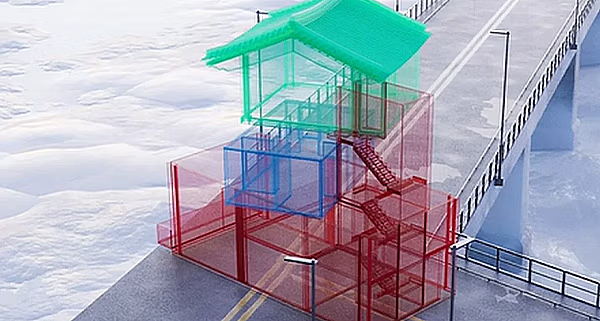
Bridge Project, Suh'nun Londra, Seul ve New York'u birbirine bağlayan bir köprünün merkez noktasında "mükemmel evi"ni hayal ederken geliştirdiği, gerçek dünyanın sosyal, politik ve ekolojik meseleleriyle nasıl kesişen bir araştırmadır. Proje, 1999 yılına kadar uzanmakta olup köprü üzerindeki bir evi betimleyen mürekkep ve suluboya bir çizim olan A Perfect Home (Mükemmel Bir Ev) adlı yapıtla başlamıştır. O tarihten bu yana Suh, projenin disiplinlerarası sınırlarını genişletmiş; hem kendi göç deneyimini yansıtmak amacıyla mimarlık, mühendislik, endüstriyel tasarım, felsefe, antropoloji ve biyoloji gibi çeşitli alanlardan uzmanlarla işbirliği yapmıştır. [...] Suh'nun, aşırı hava koşullarına maruz kalan ve neredeyse erişilemez bir konumda yalnız yaşamayı hayal ettiği bu proje, içerdiği absürd tonuyla, mükemmel bir evin aslında imkânsızlığını gözler önüne sermektedir.
The Bridge Project is a research initiative developed by Suh as he imagined his ‘perfect home’ at the central point of a bridge connecting London, Seoul and New York, exploring how this vision intersects with the social, political and ecological issues of the real world. The project dates back to 1999 and began with a work titled A Perfect Home, an ink and watercolour drawing depicting a house on the bridge. Since then, Suh has expanded the project’s interdisciplinary boundaries; she has collaborated with experts from various fields—including architecture, engineering, industrial design, philosophy, anthropology and biology—to reflect her own experience of migration. [...] Suh’s project, in which he imagines living alone in a location exposed to extreme weather conditions and almost inaccessible, reveals through its absurd tone the impossibility of a perfect home.
See. Kira Wainstein, "Bridge Project / 1999 - Ongoing", The Genesis Exhibition: Do Ho Suh: Walk the House, Tate Publishing, May 2025, London, pg. 164.
Do Ho Suh at Saglamart.COM (TURKISH-ENGLISH)
do ho suh: yapıboumcu bir kışkırtma alanı olarak ev
do ho suh: itiraf odalarından oluşan düşsel bir yapı
rubbing/loving project-2016: anılara ve saklı zamana dokunmak
do ho suh: diyasporik deneyimin simgesel mekânı olarak ev
do ho suh’ta ev: kimlik ve farklılık bildiriminin bir gösterim alanı
rubbing/loving project-2016: geçen zamana ve hatıralara dokunmak
do ho suh: the house as an area of deconstructive provocation
do ho suh: home/an imaginary structure of confession chambers
rubbing/loving project-2016: touching memories and hidden time
do ho suh: the home as a symbolic locale of the diasporic experience
do ho suh: home / an area for declarations of identity and difference
touching bygone times and memories: rubbing/loving project-2016
Do Ho Suh, Rubbing/Loving Project: Unit 2, 348 West 22nd Street, Apartment A, New York, NY 10011, USA, 2014
Do Ho Suh’un uzun yıllar boyunca deneyimlediği, kırılgan mimari unsurları bir araya getirdiği bu tasarımsal ve şiirsel düzlem; mekânsal boyutta odaklanılan sıradan şeylerle de kendini bütünler. Özellikle eşya düzenini oluşturan nesnelerin (radyatör, küvet, klozet, lavabo, duş kabini ve dolap gibi) gündelik yaşamla olan bağlarını ve tuhaf çelişkilerini yansıtır. Dahası; yapıbozumcu bir mantıkla şeyleri-nesneleri yerlerinden sıyırarak, fiziksel olarak kavranabilir, fetişleşen ama dokunulabilir nesneler üzerinden gerçekleşen tuhaf bir işbirliğine zorlar. Örneğin radyatörün, günlük yaşamda hiç de görmeye alışık olmadığımız düzeni, renkli naylon ipler aracılığıyla daha çekici bir hâle gelir. Radyatörün gizemli tülün ardına saklanan el değmemiş görüntüsü, yarattığı mesafe oyunuyla girift bir romantik nesneye dönüşür. Pembe renkli radyatör; fetişleşen bu görüntüsüyle, zarif bir şeffalık içinde kimliğe bürünmüş ve duygularını sergileyen yalnız bir yaşam formu gibidir. Sanki bu şekilde, sanatsal dile çevirilebilir olan her şey, sanatçı tarafından önce hassas tüllerin aralıklarından süzülmeli, anıların sıkıştığı ve zamanın hızlıca katmanlaştığı kendi hikâyesini kurmalıdır. Aslında, evi bütünleyen ve işlevlerinden soyutlanarak heykelsi bir görünüme kavuşturulan bu nesnelerin, dışavurulan ve bastırılan zamanın gizemli hafıza eklentileri ve mekânsal aidiyetin sembolleri olarak bu hikâyelere sağladığı katkı ortadadır. GY
Do Ho Suh, Radiator, 2013, polyester fabric, 93.5 x 74.7 x 18.3 cm. from Specimen Series: 348 west 22nd street, New York, NY
Do Ho Suh’s poetic design narrative also joins itself to everyday objects present in the locations it depicts. It reflects the links and conflicts of everyday objects such as radiators, bathtubs, toilet seats, wash basins, showers and cabinets; with everyday life. By removing them from their everyday locations and contexts; Suh’s deconstructive approach further forces these objects into physically-perceivable, tangible, yet fetishized collaborations with the viewer. For example, the humble radiator becomes an attractive locus thanks to its engagement with colorful nylon strings. Secluded behind a virgin, translucent veil, the pink radiator becomes an ingrained, romantic object thanks to Suh’s play of distances – a solitary life-form fetishized and emotionally-charged in its graceful translucence. In this manner, the artist metaphorically filters narrative from his delicate sieve of veils, and constructs his own layered stories of compacted memories and layered time. The contribution provided by these sculptural, deconstructed appendant objects to a memory of repressed time, and a symbolism of locational belonging, is difficult to overlook. GY
Art Sonje Center, Seoul. August 17 - November 3, 2024. Curator by Sunjung Kim (Artistic Director, Art Sonje Center), Heehyun Cho (Head of Exhibitions, Art Sonje Center)
Do Ho Suh; son 20 yılda sürekli olarak araştırdığı zaman, kişisel alan, hafıza ve hareket gibi temaları, kapsayıcı bir kavram olan “spekülasyon” etrafında düzenleyerek sunuyor.
Do Ho Suh presents themes such as time, personal space, memory and movement, which he has continuously explored over the last 20 years, organised around the overarching concept of "speculation".
In Process, geleneksel galeri sergilerinin ötesinde yapılanan ve sanatçının projelerini öne çıkaran stüdyo benzeri bir alan yaratıyor. Ve izleyicileri, bu karmaşık temaları, sanatsal pratiğinin görünürlük esasları ya da yöntemleri üzerinden deneyimlemeye ve sorgulamaya davet ediyor.
In Process creates a studio-like space that is structured beyond traditional gallery exhibitions and emphasises the artist's projects. And invites viewers to experience and question these complex themes through the principles or methods of visibility of his artistic practice.
DO HO SUH
rubbing/loving project: unit 2
Rubbing/Loving Project: Unit 2, 348 West 22nd Street, Apartment A, New York, NY 10011, USA, 2014.
Rubbing/Loving Project; tek mekânda biçimlenen düşünce ve yaşam biçimi farklılığını enstalasyon pratiğine dönüştüren bütüncül bir yapıttır. Suh, uzun bir süre içinde yaşadığı, duygusal bağı olan bir binayı kağıtla kaplayarak, dekoratif özenle mevcut boşluk arasındaki tezat üzerinden yeni bir psişik bağlamın peşine düşer.
Rubbing/Loving Project is a holistic work that transforms the difference of thought and lifestyle shaped in a single space into an installation practice. By covering an emotionally connected building, in which she has lived for a long time, with paper, Suh pursues a new psychic context through the contrast between decorative care and existing space.
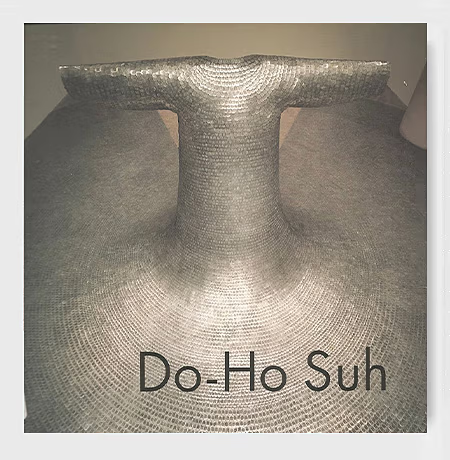
Do Ho Suh, Authors: Miwon Kwon and Lisa G. Corrin, English, Paperback, 48 pages, Publisher: Serpentine Gallery, April 2002.
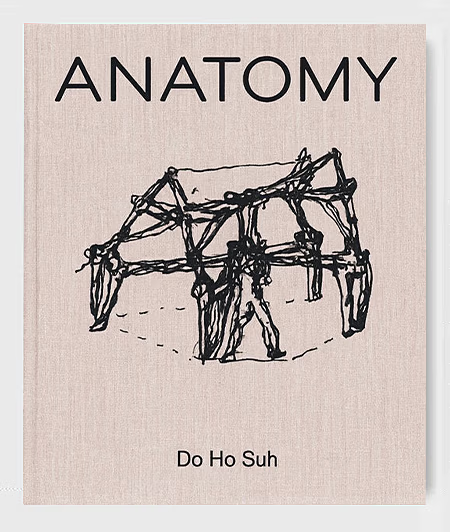
Do Ho Suh: Anatomy, Essays by R. Armstrong, D. Fogle, L. Tillman, R. Gladman, H. Brody, P. Haralambidou, A. Corry, and J. Woo, Conversation by T. Strachan, Hardcover, Publisher: Mackbooks, English, 504 pages, April 2025.
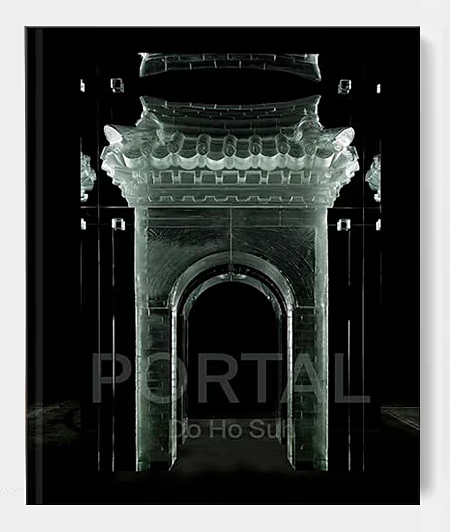
Do Ho Suh: Portal,by Amie Corry (Editor), Do Ho Suh (Artist), Contributors: Martin Coomer, Christine Starkman, Ron Elad and Jon Lash, English, Publisher: DelMonico Books, Hardcover, 104 pages, October 2022.
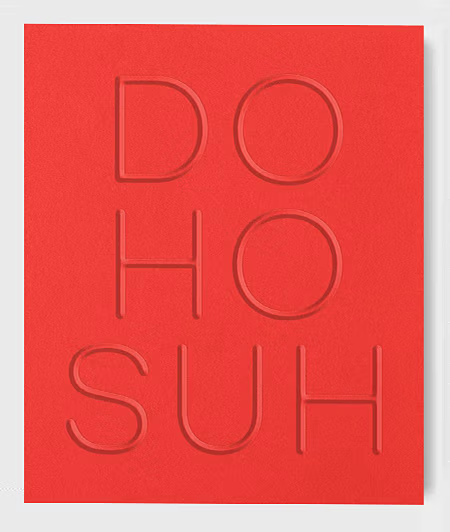
The Genesis Exhibition: Do Ho Suh: Walk the House, Edited by Nabila Abdel Nabi, Dina Akhmadeeva and Amie Corry, Tate Publishing, 192 pages, English, Softcover, May 2025, London.
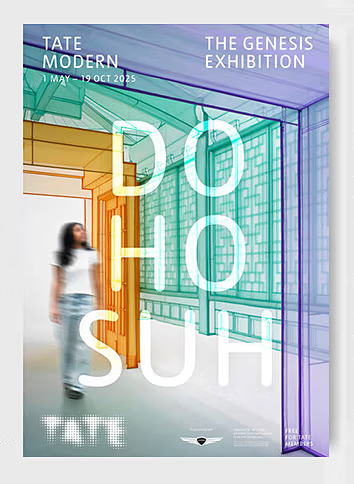
The Genesis Exhibition: Do Ho Suh, Exhibition poster, Tate Publishing, May 2025, London.
TATE MODERN / LONDON
TATE MODERN
BanksIde,
London SE1 9TG
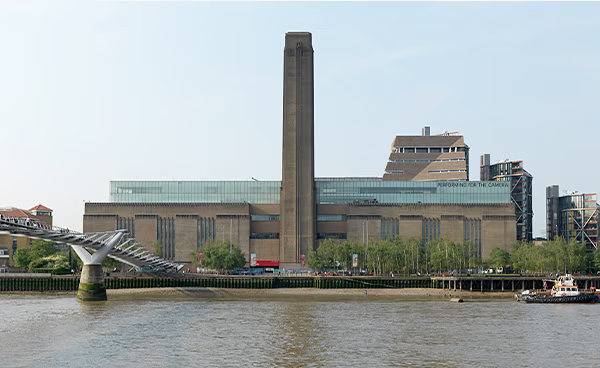
Tate Modern exterior from the Millennium Bridge, Photocredit: Tate Photography
Tate Modern, 1990’lı yılların başında gündeme gelen 2000 yılında da ziyarete açılan bir müzedir. Sergileme alanlarında resim, heykel ve büyük ölçekli yerleştirmelerin yanı sıra performans ve video gibi farklı sanat pratiklerine yer veren kurumsal bir yapıya sahiptir. Thames Nehri’nin kenarında bulunan eski bir elektrik santralinin dönüştürülmesiyle oluşturulmuş, mevcut endüstriyel yapının karakterini koruyarak, yeni işleviyle uyumlu bir hâle getirilmiştir. Bu kapsamda, Turbine Hall binanın merkezi bir dolaşım ve sergileme alanı olarak değerlendirilmiş, 2017 yılında eklenen Blavatnik Binası ile yapı bütünlüğü tamamlanmıştır. Büyük ölçekli sanat eserlerinin sergilenmesine olanak sağlayan bu düzenlemelerle birlikte, kalıcı koleksiyonların yanı sıra geçici sergiler ve etkinlikler, performans alanları, eğitim ortamları, ofisler, yemek ve mağazalar için uygun alanlar yaratılmıştır.
Do Ho Suh, 1962 yılında Güney Kore’nin Seul kentinde doğdu. 29 yaşında ABD’ye taşındı ve burada Rhode Island Tasarım Okulu’nda resim eğitimi aldı. Daha sonra Yale Üniversitesi’nde heykel eğitimi gördü. Kalıcı bir göçmen olarak, sınırlar, kimlik, aidiyet ve kişisel alan gibi kavramlarla ilişkili olarak “ev” kavramının anlamını takıntılı bir şekilde sorgulayan eserler yaratmaktadır. Şu anda Londra'da yaşayan ve çalışan sanatçı, Lehmann Maupin Gallery (New York, Hong Kong, Seul) ve Victoria Miro Gallery (Londra / Venedik) tarafından temsil edilmektedir.
Do Ho Suh was born in Seoul, South Korea in 1962. At the age of 29, he moved to the USA, where he studied painting at the Rhode Island School of Design. He later studied sculpture at Yale University. As a permanent migrant, she creates work that obsessively questions the meaning of home in relation to concepts such as borders, identity, belonging and personal space. Currently living and working in London, she is represented by Lehmann Maupin Gallery (New York, Hong Kong, Seoul) and Victoria Miro Gallery (London / Venice).
saglamart; dinamik bir anlayış ile hareket eden, kültür-sanat ortamındaki olay ve olgulara, sanatçı tavırlarına, yapıtlara ve yayınlara odaklanan bağımsız bir yayın etkinliğidir. Tüm hakları saklıdır. Görüntü ve yazılar izinsiz kullanılamaz. / saglamart is an independent publishing initiative driven by a dynamic vision, focusing on events and developments in the cultural-artistic landscape, artist perspectives, works, and publications. All rights reserved. Images and texts cannot be used without permission.