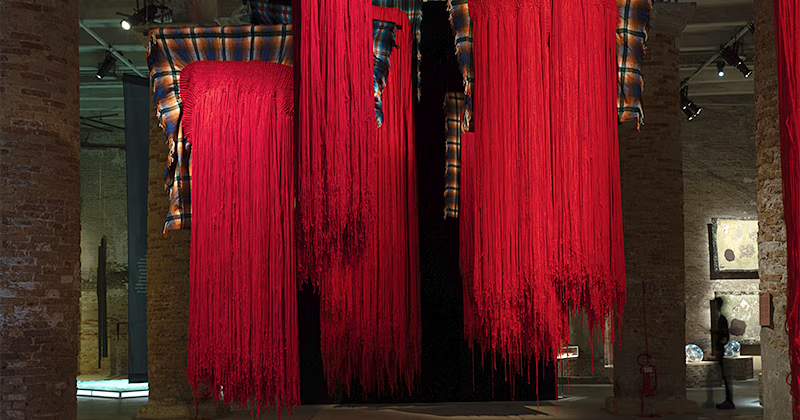
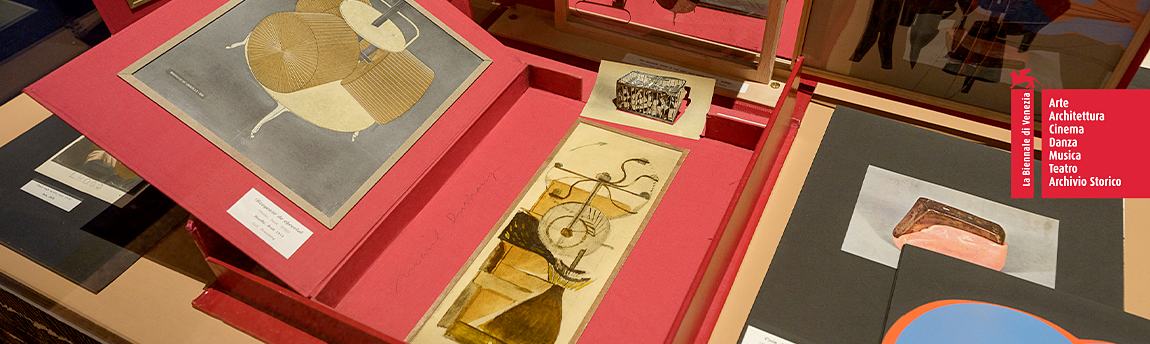
Dyson Torkwase, Tougaloo, 2026, (Detail), Installation: acrylic, graphite, glass on board with immersive sound, 61. Esposizione Internazionale d’Arte – La Biennale di Venezia, In Minor Keys, 61st International Art Exhibition – La Biennale di Venezia, In Minor Keys, Photo by Luca Zambelli Bais, Courtesy: La Biennale di Venezia

61st international art exhibition

on new ways of thinking and creating, or the possibilities of fragile connections

BY MÜMTAZ SAĞLAM

"

When evaluated through the framework of the contemporary, escalatIng Interest In AsIan and AfrIcan vIsual cultures and an aesthetIc-anthropologIcal gaze, It becomes conspIcuously evIdent that Kouoh has assembled artIsts who bear wItness to, and engage wIth, tense states such as mIgratIon, IdentIty, dIsplacement, subjugatIon, and unbelongIng, thereby conceptualIzIng thIs searIng realIty as an Intercultural predIcament or condItIon. Indeed, It Is possIble to argue that a predomInantly curIous, exotIc, provocatIve, and unsettlIngly dramatIc sensatIon dIctates the general character of the central exhIbItIon at the Arsenale.

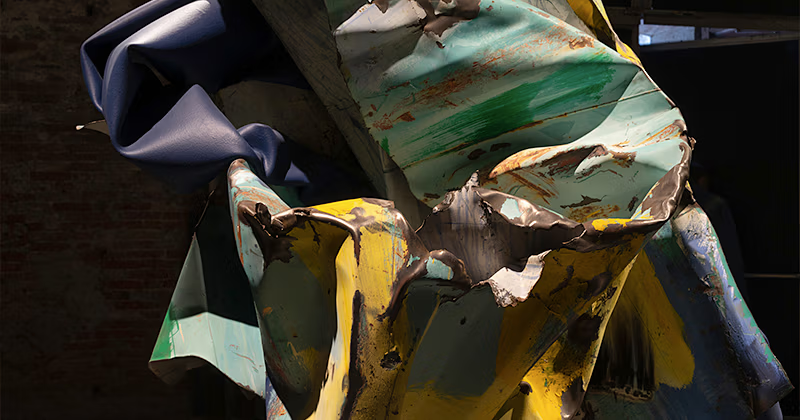
Kenedy Yanko (USA), Disciples of joy in the material world, 2025, Detail, Arsenale, Photo by Luca Zambelli Bais, 61st International Art Exhibition-La Biennale di Venezia, In Minor Keys, Arsenale, Courtesy: La Biennale di Venezia

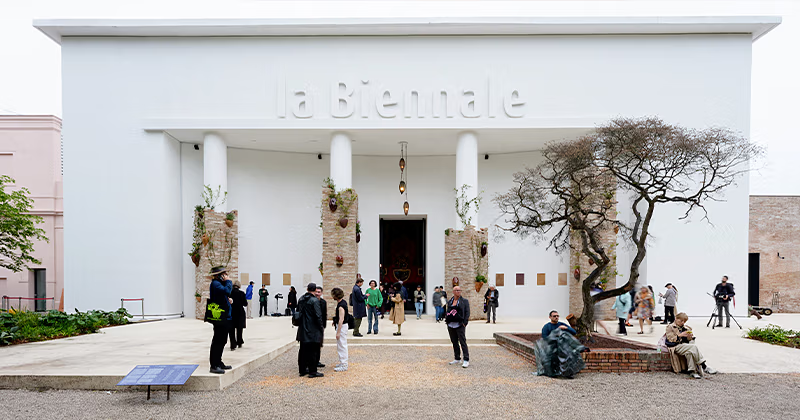
The 61st International Art Exhibition of the Venice Biennale, widely recognized as the world’s largest and oldest art organization, opened under the profound shadow of intense political disputations. The sheer density experienced during the preview days reserved for the press and accredited guests, marked by undulating queues extending under persistent rainfall, alongside debates and protests mirroring contemporary geopolitical frictions, wasted no time in generating its own idiosyncratic agenda. Formulating its overarching conceptual framework under the stewardship of curator Koyo Kouoh, who passed away in 2025, this iteration featured the works of 110 artists and collectives, predominantly composed of women and African artists, unified under the title In Minor Keys, a nomenclature signifying a polyphonic musical metaphor. As explicitly delineated in the preliminary curatorial texts, Kouoh undoubtedly envisaged that a pluralistic manifestation possessing minor tones would culminate in a loose, dispersed constellation of formalizations, progressing through discordant relations. Alternatively, she conceptualized or envisioned a cohesion nourished by psychological crises, complex and perpetually intersecting; an entity that is harsh and fragmented, yet interconnected in equal measure by a profound emotionality.
koyo kouoh: minute nuances emerging in minor keys
 
In terms of its overarching presentation, the Biennale projects a distinct appearance that aligns with Kouoh’s prognostications. Within the Arsenale (Corderie), where the international exhibition is situated, one can acutely discern a continuous flux that leaves the spectator breathless, transpiring within a compressed arrangement that adheres to a disciplined, collective gaze. Consequent to the thematic context, the assertion that the artworks are balanced by a mournful, sorrowful, gentle, and meditative ambiance inherently remains a characterization confined primarily to the curatorial texts. For this reason, it is somewhat arduous to perceive Kouoh’s emphasis on the sensitive, the divergent, and the original—on the minute nuances emerging in minor keys or on meaningful lived experiences—amidst the gargantuan installations here, many of which escalate into excesses through textile-based weaving, knitting, and collage methodologies. Everything appears aligned within a density that is juxtaposed, and indeed, intertwined. Within these arrangements, which predominantly accompany discourses on identity, provenance, alterity, and representation, there exists a grand chaos writhing in search of consensus, driven by an obstinate insistence on geographical positioning and an excess of references to localized cultures. It must be further noted that the informational density engendered by this condition renders the tracking of individual artists virtually impossible after a certain point, occasionally eroding the critical comprehension of the exhibited works’ characteristic qualities.

When evaluated through the framework of the contemporary, escalating interest in Asian and African visual cultures and an aesthetic-anthropological gaze, it becomes conspicuously evident that Kouoh has assembled artists who bear witness to, and engage with, tense states such as migration, identity, displacement, subjugation, and unbelonging, thereby conceptualizing this searing reality as an intercultural predicament or condition. Indeed, it is possible to argue that a predominantly curious, exotic, provocative, and unsettlingly dramatic sensation dictates the general character of the central exhibition at the Arsenale. Consequently, Kouoh’s curatorial selections and exhibition paradigm clearly diverge through the friction of a culture of contestation and historical confrontation, contextualized within a radical reactiveness born of artworks shaped outside Western standards. Thus, it is entirely natural that the collective consciousness formed here has fueled the political debates pressuring the Biennale management regarding the participation of Russia and Israel, transforming through protests interconnected with Palestine and Ukraine.

exotic imagination, divergent representational strategies, and material preferences,
 
Conversely, this anthropological gaze, which gravitates toward an aesthetic of impoverished materials via Asian and African visual lineages, predominantly deploys textiles and weavings as the fundamental elements of an installational lexicon to articulate memory, elapsed time, and lived transformations. Observing the discursive potency related to the ecosystem, and furthermore to water—akin to the climate crisis—through the mediation of these specific materials and techniques is undeniably of paramount importance. It remains an independent reality that this issue directly foregrounds priority within the perception of alterity and continuity extending to local cultures, particularly in the national pavilions, which grow robust through state patronage and take scrupulous care to remain in contact with the primary framework of the biennale as a controversial model of spectacle. In this regard, the Biennale manifestation simultaneously constitutes a comprehensive and significant mega-convergence. The Pavilion of Turkey, for instance, maintains an intimate affinity with the biennale theme in terms of the chosen artist’s identity, ties of belonging, the hybrid cultural background they represent, their preferred mode of representation, and the materials and techniques utilized. Therefore, it is highly appropriate to underscore the proximity that Nilbar Güreş establishes through her linguistic and narrative idiosyncrasies with the fragile possibilities of contact prioritized by Kouoh, expanding into critiques of sexuality and ecosystemic references. Consequently, throughout the biennale at large, it is manifestly evident that an imagination serving as an extension of visual dynamics relative to local culture explicitly holds a fantastic, exotic, and disturbing context in reserve, manifesting as a situational representational strategy crystallized by unaccustomed object-figure concatenations (as exemplified by Wangechi Mutu, Otobong Nkanga, Victoria-Idongesit Udondian, María Magdalena Campos-Pons, and Joana Hadjithomas & Khalil Joreige). However, within the domain constituted by symbolic elements laden with such evocations, it is an independent fact that this very chaos, which presents the exotic quality of the relational state between local culture and art through the naturalness of a naive and direct transference utilizing stone, earth, or ceramic objects alongside miscellaneous textiles like colored fabric remnants, carpets, and kilims, was a condition already foreseen by Koyo Kouoh.
 
In conclusion, it is perhaps most accurate to evaluate this environment -which so radically negates Western representational strategies and experimental exhibition principles through avant-garde propositions, directly foregrounding the fluid representation of reality and artist performances- as a monumental and magnificent convergence of new modes of thought and production directed toward universal anxieties, crises, and future expectations emerging and exerting influence across diverse geographies of the world.

Notlar

1-  La Biennale di Venezia 61st International Art Exhibition, In Minor Keys by Koyo Kouoh, Venice (Giardini – Arsenale) May 9 – November 22, 2026, Venice. Curatorial Team: Gabe Beckhurst Feijoo, Marie Hélène Pereira and Rasha Salti (Art Advisors), Siddhartha Mitter (Chief Editor) and Rory Tsapayi (Research Assistant).

2- See. https://universes.art/en/venice-biennale/2026/in-minor-keys

3- By way of illustration, one might cite Nigerian artist Victoria Idongesit Udondian’s monumental installation of textile waste, alongside the haunting performance titled Kayayei Mamome, both situated within the northern parking zone of the Arsenale. Obroni Wawu translates literally in the local vernacular to ‘dead white man’s clothes, a term designated for the secondhand garments exported from the West into African marketplaces. By transmutedly shaping this concept into a colossal woven installation or sculptural entity, Udondian invokes the ghostly spectrality of migrant communities, who bear the burden of a daily labor that is systematically rendered invisible within Western geographies.

Prof. Mümtaz Sağlam / Copyright © June 2026, All rights reserved.

IN MINOR KEYS: a great work created through collectIve ImagInatIon

The curatorial text penned by Koyo Kouoh is an invitation to confront the fleeting physical, meteorological and environmental conditions you encounter, to slow down, and to attune yourself to the frequencies of minor keys. For, although they are often lost amidst the clamour of the chaos currently ravaging the world; the songs of those who create beauty despite tragic events, the melodies of survivors emerging from the ruins, and the harmonies of those mending wounds and worlds continue. In music, the minor key points to both the structure of a song and its emotional impact. It is such a rich concept that it swiftly transcends its technical definition and overflows with metaphors. It evokes moods, dialogue, lament, allegory and whispers. It comes to life in quiet tones, low frequencies, murmurs, the solace of poetry, and the doors of improvisation that open onto another and the other world. Minor keys demand a listening that stirs emotions and supports them reciprocally.

1– Senzei Maresela, (South Africa), Wall Reefs 104, Detail, 1995-2025, Arsenale, Photo by Luca Zambelli Bais  2- Valid Raad, Far from quieting – Kuwait, Detail, Arsenale, Photo by Marco Zorzanello  3– Marcia Kure, Roadkill III, 2025-2026, Detail, Arsenale, Photo by Andrea Avezzù  4– Kenedy Yanko (USA), Disciples of joy in the material world, 2025, Detail, Arsenale, Photo by Luca Zambelli Bais  5- Sahrap Hura, (India), Things Felt But Not Quite Expressed and Timeless, 2026, Installation view, Arsenale-Giardini, Photo by Andrea Avezzù  6- Georgina Maxim, (Zimbabwe) Borrowed books and underlined statements, 2023-2026, Detail, Arsenale-Giardini, Photo by: Marco Zorzanello, © 61st International Art Exhibition, La Biennale di Venezia, In Minor Keys, Courtesy of La Biennale di Venezia

LA BIENNALE DI VENEZIA 61ST INTERNATIONAL ART EXHIBITION, “IN MINOR KEYS” BY KOYO KOUOH

La Biennale di Venezia, 61st Internation Art Exhibition (Main Page)
la biennale di venezia, in minor keys by koyo kouoh (press release summary)​
in minor keys by koyo kouoh (press release summary) a monumental work built through collective imagination​

3 essays on Kouoh’s curatorIal approach

GÜLAY YAŞAYANLAR / in minor keys by koyo kouoh: a black diasporic energy
GÜLAY YAŞAYANLAR / in minor keys by koyo kouoh: complex and fragile formations that unsette the present
MÜMTAZ SAĞLAM / in minor keys: on new ways of thinking and creating, or the possibilities of fragile connections

NATIONAL PARTICIPATIONS AND SELECTED TWO PAVILIONS

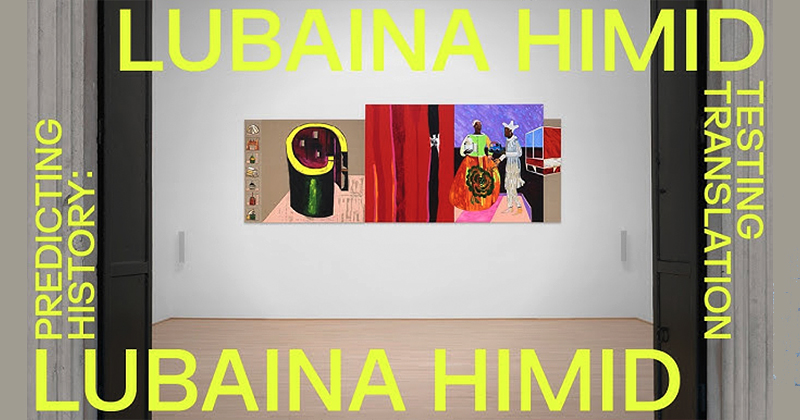
british pavilion: lubaine himid: predicting history: testing translation ​
Lubaina Himid Prediction History Testing Translation 1
GÜLAY YAŞAYANLAR / british pavilion: lubaine himid: predicting history: testing translation
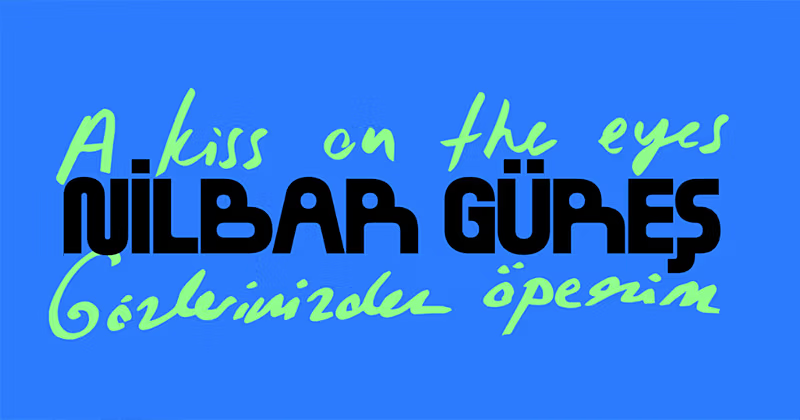
Nilbar Güreş: Land
GÜLAY YAŞAYANLAR / türkiye pavilion: nilbar güreş: A kiss on the eyes: land​

AROUND VENICE / COLLATERAL EVENTS  

NATIONAL PARTICIPATIONS / ULUSAL KATILIMLAR

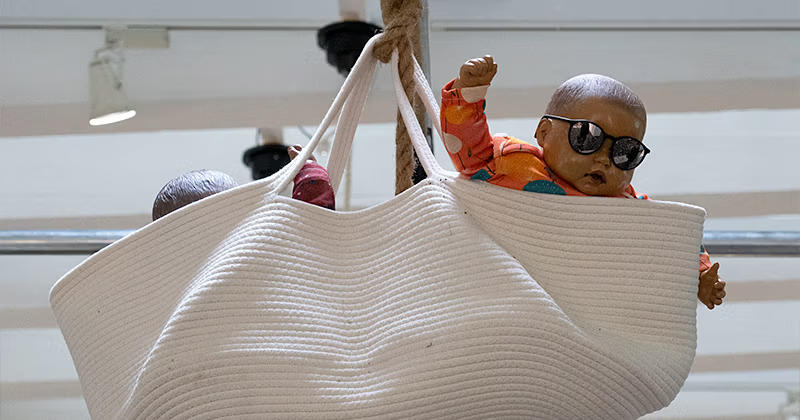
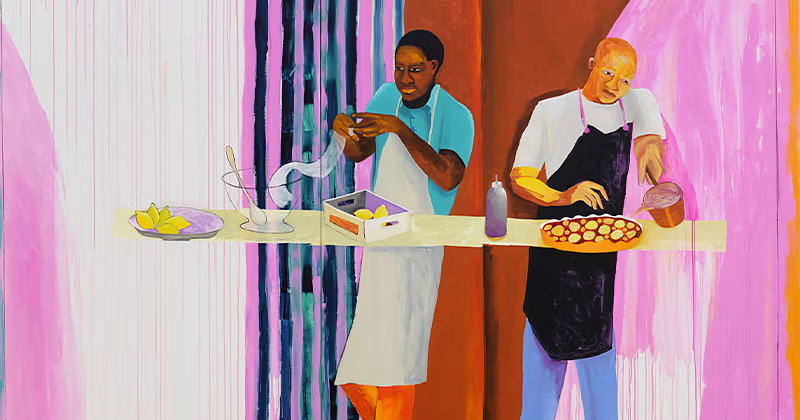
1– Ei Arakawa-Nash, Grass Babies, Moon Babies, 2026, Installation View, Japan Pavilion, Giardini, Photo by Luca Zambelli Bais  2– Florentina Holzinger, Seeworld Venice, 2026, Installation View, Austria Pavilion, Giardini  3- Lubaina Himid, (British Pavilion), Chefs, Detail, Acrylic and charcoal on linen, 2025, Giardini 4Henrike Naumann and Sung Tieu, Ruin, 2026, Installation View, Germany Pavilion, Giardini  5- Oriol Vilanova Los Restos, Installation View, Spain Pavilion, Giardini, Photo by Jacopo Salvi  6- Roberto Diago, Hombres Libres, 2025, Installation View, Cuba Pavilion, Giardini, Photo by Clelia Cadamuro,  © 61st International Art Exhibition, La Biennale di Venezia, In Minor Keys, Courtesy of La Biennale di Venezi

Launched in 2026 under the title ‘In Minor Keys’, the exhibition brings together artists, collectives and national pavilions that reflect forms of coexistence, memory, fragility, and the relationships shaped by sound, material and lived experience. The national pavilions, the majority of which are located in the Giardini, with others in the Arsenale and various locations across the city of Venice, offer thoughtful perspectives linked to more contemporary concerns. Whilst national pavilions remain an official exhibition format through which each country presents its culture, artistic vision and perspective on global issues via its appointed official curator and selected artists, they have increasingly evolved into more independent, grandiose and immersive installations.

CATALOGUE

The official catalogue of the 61st Venice Biennale is a significant publication comprising two distinct sections: one dedicated to the international exhibition curated by Koyo Kouoh, and the other to national contributions and parallel events. The pages devoted to the artists feature sketches and images documenting the creative process, which convey the ideas behind the exhibited works, as well as a comprehensive short essay. The essays on artistic practices further enrich this publication with diverse perspectives. Eight original articles addressing current issues regarding thematic contexts and curatorial practices (written by Tandazani Dhlakama, Adrienne Edwards, Stefanie Hessler, Miguel A. López, Hélio Menezes, Wanda Nanibush, Oluremi C. Onabanjo and Françoise Vergès) are included. Meanwhile, five original articles by Ken Bugul, Teju Cole, Natalie Diaz, Frieda Ekotto and Abdaljawad Omar, which contribute to the intellectual coherence of the exhibitions, also attract particular attention.

Biennale Arte 2026, In Minor Keys, Catalogue / English, 2 Volumes, 21 X 27 Cm, Pages: Vol. I 720 Ca. / Vol. Ii 254 Ca., Paperback, Graphic Design: Clarissa Herbst And Alex Sonderegger.

Biennale Arte 2026, In Minor Keys, Short Guide / English, 15 X 20 Cm, Pages: 552 pages, paperback, Graphic Design: Clarissa Herbst And Alex Sonderegger. 

BIOGRAPHY

Koyo Kouoh. Photo- Mirjam Kluka

Koyo Kouoh, Photo by Mirjam Kluka

KOYO KOUOH

(24 December 1967, Cameroon – 10 May 2025, Switzerland)

For many years, he served as director and chief curator of the Zeitz Museum of Contemporary African Art (Zeitz MOCAA) in Cape Town. Prior to this role, he served as founding artistic director of the RAW Material Company in Dakar, Senegal, which has become a hub for art, knowledge and community. He was also a member of the curatorial teams for documenta 12 (2007) and documenta 13 (2012). Kouoh is the recipient of the 2020 Meret Oppenheim Grand Prize, Switzerland’s most prestigious art award, which honours achievements in the fields of art, architecture, criticism and exhibition curation. She has organised contemporary and influential exhibitions such as *Body Talk: Feminism, Sexuality and the Body in the Works of Six African Women Artists* (2015, Wiels, Brussels). During her tenure at Zeitz MOCAA, she organised significant solo exhibitions focusing on African and African-descended artists. In this context, she curated exhibitions featuring artists such as Otobong Nkanga, Johannes Phokela, Senzeni Marasela, Abdoulaye Konaté, Tracey Rose and Mary Evans. She divides her time and work between Cape Town, Dakar and Basel.

İZMİR - LONDON

saglamart; dinamik bir anlayış ile hareket eden, kültür-sanat ortamındaki olay ve olgulara, sanatçı tavırlarına, yapıtlara ve yayınlara odaklanan bağımsız bir yayın etkinliğidir. Tüm hakları saklıdır. Görüntü ve yazılar izinsiz kullanılamaz. / saglamart is an independent publishing initiative driven by a dynamic vision, focusing on events and developments in the cultural-artistic landscape, artist perspectives, works, and publications. All rights reserved. Images and texts cannot be used without permission.

Copyright ©
Can Sağlam - Gülay Yaşayanlar Mümtaz Sağlam, 2026.