
Lubaina Himid, Şefler / Chefs, 2025, (Detail), acrylic and charcoal on linen, 243.8 x 436.6 x 3.2 cm, at the British Pavilion exhibition at the Venice Biennale. Photograph: Eva Herzog (https://hollybushgardens.co.uk/artists/lubaina-himid/)
lubaina himid
prediction history: testing translation
VENEDİK BİENALİ, 61. ULUSLARARASI SANAT SERGİSİ, BÜYÜK BRİTANYA PAVYONU, GIARDINI
"
LubaIna HImId, boyaresim geleneğini başarılı bir şekilde güncelleyen ironik ve gerçekçi bir yaklaşım içindedir. Yerine göre, huzurlu ve dingin görünen bu betimleme, siyah figür retoriğini aşan eleştirel ve mizahî yoğunluğun peşinde hızla karanlık ve hüzünlü bir konuma evrilmektedir. Dolayısıyla kimlik, göç, aidiyet ve farklılık gibi kavramları duyumsatan bu resimler, bir arada olmanın ya da birlikte yaşamanın dayanılmaz zorluklarına adanmış anlatılarla doludur.
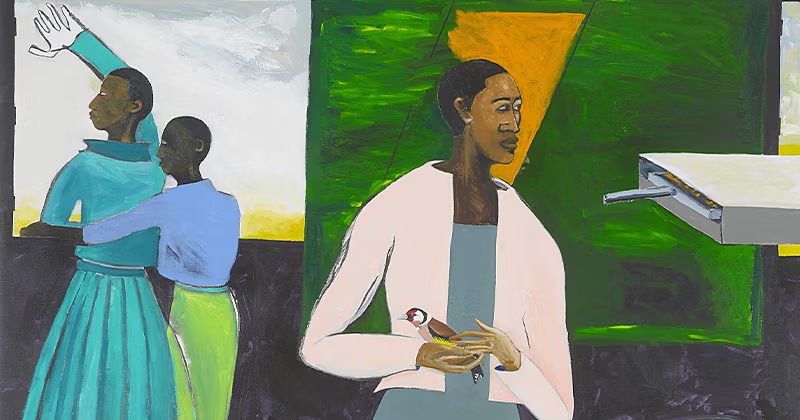
Lubaina Himid, Sometimes you don’t know what you’re getting until it’s too late, 2020, (Detail), acrylic and charcoal on canvas, 244 x 183 cm. (https://hollybushgardens.co.uk/artists/lubaina-himid/)
Lubaina Himid’in tam boy poz veren figürleri, nesne ve mekân düzenleme stratejileri, genellikle etkileşimli ve sürükleyici bir boyutta resimlenir. Çoğu kez bir sahne dekoru özeniyle öne çıkarılan bu yaklaşım, merkezinde siyahî figürleri ve özellikle son dönemde çeşitli meslek temsilcilerinden oluşan prototipleri barındırır. Adeta, duraksayıp donakalmış figürlerden oluşan bu resim pratiği; aslında, örtük bir şekilde; ırk, cinsiyet ve sınıfsal ayrımın peşinde biçimlenen ve tarihsel anlatılarda pek sözü geçmeyen göçmen bireylerin durumlarıyla ilgilenmektedir. Hemen hepsi, bulundukları ortama uyum sağlamak için çaba gösteren ve/fakat yine de kendilerini dışlanmış hisseden; tuhaf bir biçimde boyutsuz ve geçici duran; karanlık ve dramatik hususlarla ilişkili bir bakışın ürüdür.
predicting history: testing translation
Lubaina Himid, Venedik Bienali 61. Uluslararası Sanat Sergisi İngiltere Pavyonunda düzenlenen son sergisinde yine bu bağlamda hareket eder: Bir yere ait olamama meselesini 26 soru bağlamında müzakere eden bir düşünme alanı inşa ederek varlığı sorun teşkil eden ve yersiz olarak kaydedilen insanlara ait bir dünyayı anlatır. Mimarlar, Terziler, Şefler ve Bahçıvanlar gibi bedenlerin aidiyeti üzerinden vurgulanmış bir dizi karakteri skalası oluşturur. Yeni bir ortama uyum sağlamanın eşiğinde yaşanan psikolojik dönüşümleri, birlikte yaşamaya yönelik bir beklentiyi canlı tutarak dramatik biçimde ifade eder.
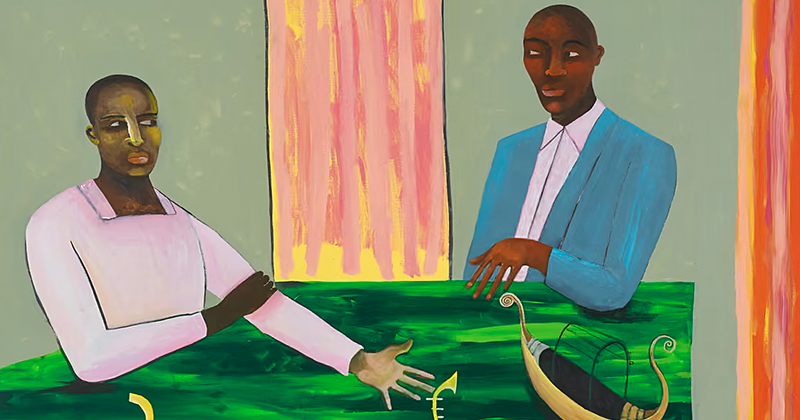
Sergide öne çıkan Mimarlar (2025), inanç sistemleri ve tarih arasındaki güçlü ve zorlu ilişkiyi simgeleyen dini yapılarla figürleri buluşturan bir akış düzenine sahiptir. Üç panelden oluşan bu dengeli çalışma, İki figürün görüşme anını betimler. Tuhaflaşan bir imge dolayımı üzerinden Himid burada; düz, zarif ve gerçekçi bir yorum düzlemine uzanır. Benzer şekilde yapılanan Terziler adlı kompozisyonda da yine, desen ve denge aralığında beliren, terzi figürlerine özgü bilgi ve eylem karakteristiğini temsil eden iki siyahî figür etrafında kuruludur. Renkli ve soyut dekoratif unsurların arka planını oluşturduğu figüratif bir örüntü düzeni içinde kendini bütünleyen bu resimde, kontrast ilişkiler üzerinden yan yana getirilen renkli alanlar durgun görünen betimlemeye daha dinamik bir etki kazandırır. Keza yine aynı tarihli Şefler (2025) isimli anıtsal kompozisyon ise, siyahî insanların taşıyıp getirdiği kültüre ait şeyleri, mizahî bir boyutta biçimleyen etkili bir resimdir. Simetrik konumlanmış iki panel burada yan yana duran iki şef figürünün ritmik çalışma düzenini basit bir içerik düzleminde anlamsızlaştırarak daha içkin bir boyuta taşır. Keza; Tekne Yapım Ustaları ve Bahçıvanlar adlı resimler de benzer şekilde, dramatik bir ifşa ile dolaysız bir gösterim esası arasında sıkışıp kalarak, izleyiciyi ara konumlara ve durumlara yönelmeye zorlar.
Bir yere ait olamama duygusu hiç kuşkusuz, insanların duygusal ve toplumsal statüsüyle ilgili karmaşık ve büyük bir toplumsal sorundur. Himid’in resimlerinde vurgulanan şey de zaten bu güvencesiz dünyaya karşı duyulan derin rahatsızlık ve hayal kırıklığı hissidir. Parlak renklerine ve dekoratif niteliğine rağmen karanlık bir gerçeğe odaklanan bu resimler, dingin bir anlatı düzeni dahilinde; yerinden edilme travmasının neden olduğu zorlukları, tüm ağırlığıyla hissettirmeye çalışmaktadır. Betimlenen meslek sahipleri belki de o yüzden, geçici konumlarının farkında olup, bir kararsızlık anında ve temkinli bir mesafede, devam eden bir tartışmanın içinde bocalayan insanlar gibidir. Buluşma, karşılaşma veya çalışma anlarında duydukları tedirginlik, mesafe duyumu ve gerginlik ise, doğal olarak ifadenin dramatik yoğunluğunu arttırmaktadır.
ironik ve gerçekçi bir yaklaşım
Özetle belirtmek gerekirse Lubaina Himid, boyaresim geleneğini başarılı bir şekilde güncelleyen ironik ve gerçekçi bir yaklaşım içindedir. Yerine göre, huzurlu ve dingin görünen bu betimleme, siyah figür retoriğini aşan eleştirel ve mizahî yoğunluğun peşinde hızla karanlık ve hüzünlü bir konuma evrilmektedir. Dolayısıyla kimlik, göç, aidiyet ve farklılık gibi kavramları duyumsatan bu resimler, bir arada olmanın ya da birlikte yaşamanın dayanılmaz zorluklarına adanmış anlatılarla doludur.
a narrative shaken by an absurd mise-en-scène
LUBAINA HIMID OPERATES WITHIN AN IRONIC AND REALIST APPROACH THAT SUCCESSFULLY RENEWS THE TRADITION OF PAINTING. AT TIMES APPEARING TRANQUIL AND SERENE, HER DEPICTIONS RAPIDLY EVOLVE TOWARD A DARK AND MELANCHOLIC REGISTER IN PURSUIT OF A CRITICAL AND HUMOROUS INTENSITY THAT TRANSCENDS THE RHETORIC OF THE BLACK FIGURE. THESE PAINTINGS, WHICH EVOKE CONCEPTS SUCH AS IDENTITY, MIGRATION, BELONGING, AND DIFFERENCE, ARE THUS FILLED WITH NARRATIVES DEDICATED TO THE UNBEARABLE DIFFICULTIES OF COEXISTENCE AND LIVING TOGETHER.

Lubaina Himid, Terziler / Tailors, 2025, (Detail), acrylic and cotton fabric on linen,243.8 x 436.6 cm, at the British Pavilion exhibition at the Venice Biennale. Photograph: Eva Herzog (https://hollybushgardens.co.uk/artists/lubaina-himid/)
Lubaina Himid’s full-length standing figures, along with her strategies for arranging objects and spaces, are typically rendered in an interactive and immersive register. Foregrounded with the care of a stage set, this approach centers Black figures and, particularly in her recent work, prototypical representatives of various professions. This painting practice, composed of figures that appear to have paused and frozen in place, is in fact quietly concerned with the circumstances of migrant individuals shaped by racial, gender, and class divisions, those whose stories rarely surface in historical narratives. Almost all of them are products of a gaze associated with dark and dramatic concerns: figures striving to adapt to their surroundings yet still feeling excluded, strangely dimensionless and transient.
predicting history: testing translation
In her latest exhibition at the British Pavilion of the 61st International Art Exhibition of the Venice Biennale, Lubaina Himid operates within this same framework. She constructs a space of reflection that negotiates the question of non-belonging through twenty-six questions, narrating a world that belongs to those whose existence is deemed problematic and whose presence is registered as out of place. She builds a scale of characters defined through the belonging of bodies, including Architects, Boatbuilders, Tailors, Chefs, and Gardeners. She gives dramatic expression to the psychological transformations experienced on the threshold of adapting to a new environment, while keeping alive an expectation oriented toward coexistence.
Architects (2025), one of the most prominent works in the exhibition, follows a compositional flow that brings together figures and religious structures symbolizing the powerful and fraught relationship between systems of belief and history. This balanced triptych depicts the moment of an encounter between two figures. Through the mediation of an estranged image, Himid reaches here toward a flat, elegant, and naturalistic plane of interpretation. The similarly structured composition Tailors is likewise built around two Black figures who, appearing within an interval of pattern and balance, embody the particular knowledge and agency characteristic of the tailor’s trade. Within a figurative pattern unified by colorful and abstract decorative elements in the background, chromatic fields placed in contrast lend a more dynamic energy to what appears an otherwise still depiction. The monumental composition Chefs (2025), also from the same year, is a compelling painting that shapes, with a dimension of humor, the cultural things that Black people have carried and brought with them. Two symmetrically positioned panels here elevate the rhythmic working dynamic of two chef figures placed side by side beyond a surface level of content, carrying it toward a more immanent plane of meaning. Similarly, Boatbuilders and Gardeners are caught between dramatic disclosure and direct presentation, compelling the viewer to turn toward in-between positions and states.
The feeling of not belonging is, without question, a complex and profound social problem concerning the emotional and societal status of people. What Himid’s paintings foreground is precisely this sense of deep unease and disillusionment in the face of a precarious world. Focused on a dark reality despite their bright colors and decorative quality, these paintings seek, within a calm narrative order, to make the hardships caused by the trauma of displacement felt in their full weight. The depicted professionals are perhaps, for this very reason, like people who are aware of their provisional position and who, at a moment of indecision and at a cautious distance, find themselves adrift within an ongoing dispute. The unease, the sense of distance, and the tension they experience in moments of meeting, encounter, or work naturally intensify the dramatic density of expression.
an ironic and realist approach
To summarize, Lubaina Himid operates within an ironic and realist approach that successfully renews the tradition of painting. At times appearing tranquil and serene, her depictions rapidly evolve toward a dark and melancholic register in pursuit of a critical and humorous intensity that transcends the rhetoric of the Black figure. These paintings, which evoke concepts such as identity, migration, belonging, and difference, are thus filled with narratives dedicated to the unbearable difficulties of coexistence and living together.
Ayrıca bakınız / Also see
Kaynaklar / Sources
1- Lanre Bakare, “We put our heads above the parapet: Lubaina Himid on winning her 40-year battle to storm the Venice Biennale”, 5 May 2026, https://www.theguardian.com/artanddesign/2026/may/05/parapet-lubaina-himid-venice-biennale-britain
2- Eddy Frankel, “Lubaina Himid’s British pavilion at the Venice Biennale review – alienation in a green and pleasant land”, The Guardian, 5 January 2026, https://www.theguardian.com/artanddesign/2026/may/05/lubaina-himid-british-pavillion-at-the-venice-biennale-review
3- See. https://hollybushgardens.co.uk/artists/lubaina-himid/
4- Allie Biswas,“Lubaina Himid: All the World’s a Stage”, Frieze, 05 January 2022. https://www.frieze.com/article/lubaina-himid-2022-review
Hazırlayanlar / Prepared by Prof. Gülay Yaşayanlar & Prof. Mümtaz Sağlam / Copyright © Mayıs 2026, Tüm hakları saklıdır / All rights reserved.
İNGİLTERE PAVYONU / GREAT BRITAIN PAVILION
GIARDINI
LubaIna HImId: PredIctIng HIstory: TestIng TranslatIon, Curator: Ese Onojeruo, Soundscape: Magda Stawarska.
9 May – 22 November 2026, Great Britain Pavilion, Biennale Arte 2026, 61st International Art Exhibition, La Biennale di Venezia, © Photo by Adrea Avezzù, Courtesy: La Biennale di Venezia
Two selected exhIbItIons

Kettle’s Yard / CambrIdge

BIOGRAPHY

LUBAINA HIMID
Lubaina Himid 1954 yılında Zanzibar’da (Tanzanya) doğdu. 1976’da Wimbledon Sanat Koleji’nde lisans ve 1984’te Royal College of Art’ dan yüksek lisans derecesi aldı. Himid, resimleri, enstalasyonları ve heykelleri aracılığıyla izleyicilerin ırk, cinsiyet, sınıf ve tarihle ilgili acil sorularla etkileşim kurmaları için platformlar yaratıyor. Geleneksel tuvaller, kesilmiş karton portreler veya yeniden tasarlanmış ev mobilyaları üzerinde çalışan sanatçı, unutulmuş marjinal tarihlere ve insanlara dikkat çekiyor ve onları günümüze bağlar. Siyahî Sanatlar Hareketi’nin ilk öncülerinden biri olan Himid, sanat dünyasına dahil olmanın, sergilerin küratörlüğünün küratörlüğünün ve Birleşik Krallık’taki Siyahi kadın sanatçılar için alanlar yaratmanın savunucusu olmuştur. Himid 65 yaşında 2017 yılında verilen Turner Prize kazanmıştır. 2026 yılında düzenlenen 61. Venedik Bienali Uluslararası Sanat Sergisi’nde İngiltere’yi temsil etmiştir. Birleşik Krallık’ta yaşıyor ve çalışıyor.
Lubaina Himid was born in Zanzibar (Tanzania) in 1954. She obtained a Bachelor’s degree from Wimbledon College of Art in 1976 and a Master’s degree from the Royal College of Art in 1984. Through her paintings, installations and sculptures, Himid creates platforms for viewers to engage with pressing questions regarding race, gender, class and history. Working on traditional canvases, cut-out cardboard portraits or reimagined domestic furniture, the artist draws attention to forgotten marginal histories and people, connecting them to the present day. As one of the early pioneers of the Black Arts Movement, Himid has been an advocate for inclusion in the art world, for curating exhibitions, and for creating spaces for Black women artists in the UK. Himid won the Turner Prize in 2017 at the age of 65. She represented the UK at the 61st Venice Biennale International Art Exhibition in 2026. She lives and works in the UK.
Related content about LUBAINA HIMID

Lubaina Himid, Terziler / Tailors, 2025, (Detail), acrylic and cotton fabric on linen,243.8 x 436.6 cm, at the British Pavilion exhibition at the Venice Biennale. Photograph: Eva Herzog (https://hollybushgardens.co.uk/artists/lubaina-himid/)
GÜLAY YAŞAYANLAR


İZMİR - LONDON
saglamart; dinamik bir anlayış ile hareket eden, kültür-sanat ortamındaki olay ve olgulara, sanatçı tavırlarına, yapıtlara ve yayınlara odaklanan bağımsız bir yayın etkinliğidir. Tüm hakları saklıdır. Görüntü ve yazılar izinsiz kullanılamaz. / saglamart is an independent publishing initiative driven by a dynamic vision, focusing on events and developments in the cultural-artistic landscape, artist perspectives, works, and publications. All rights reserved. Images and texts cannot be used without permission.