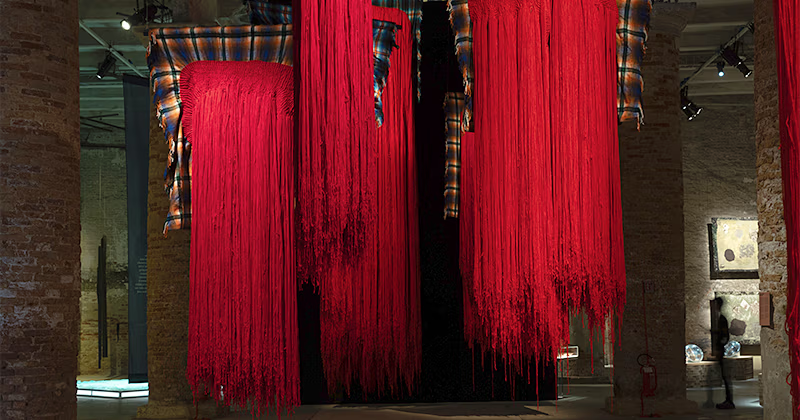
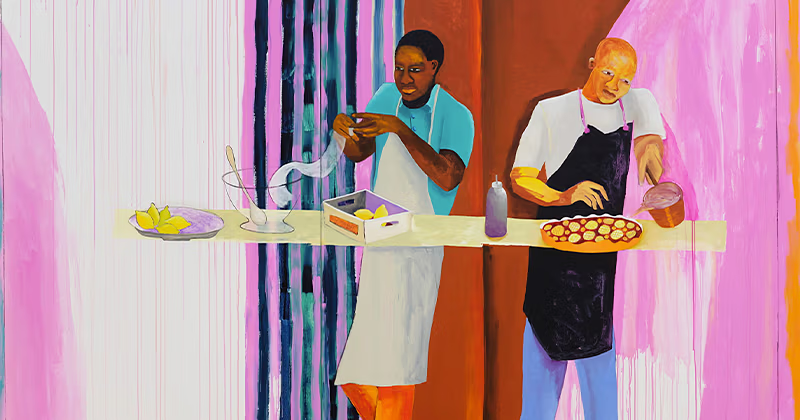
Marcia Kure, Roadkill III, 2025-2026, Installation view, Arsenale, Photo by Andrea Avezzù

la biennale di venezia

complex and fragile formations that unsettle the present

BY GÜLAY YAŞAYANLAR

"

THERE IS LITTLE DOUBT THAT THE COMPRESSED ARRANGEMENT OF THE CENTRAL PAVILION, BY CREATING A SINGULAR LINGUISTIC COHERENCE THROUGH CULTURAL SYMBOLS AND COMPARABLE MATERIAL ELEMENTS, EXPANDS THE FIELD OF FREEDOM OF MOVEMENT. IN THIS DIRECTION, ALONG A LINE PARALLEL TO KOUOH'S CORE PROPOSITIONS, IT IS SIGNIFICANT THAT CULTURAL PRACTICES GOVERNING EVERYDAY LIFE, AS WELL AS MATTERS SUCH AS IDENTITY, BELONGING, AND DISPLACEMENT, ADHERE TO THIS COLLECTIVE PLANE AND ARE TRANSFORMED INTO AN ARTISTIC ADVENTURE OF TRANSGRESSION. IN THIS CONTEXT, IN MINOR KEYS, REACHING TOWARD THE PURE STATES OF MEANING THROUGH TENDENCIES OF SUBLIMATION AND SYMBOLIZATION, SEEMS TO DRAW ITS POWER FROM A DEPRESSIVE ENERGY THAT ANTICIPATES A METAMORPHOSIS. IT MUST ALSO BE NOTED THAT THERE IS A PHANTASMATIC EFFORT AT WORK HERE, SHAPED BY STRANGE RUPTURES FELT ESPECIALLY IN THE WEAVING AND TEXTILE-HEAVY WORKS, ONE THAT ESSENTIALLY SWEEPS ALONG ALL SURFACE RESIDUES, PENETRATES THE REALITY OF THINGS, AND RENDERS MINOR TONALITIES VISIBLE IN AN ARTISTIC SENSE.

Ranti Bam, Ifa Ile Oja, 2025-2026, Installation view, 61st International Art Exhibition – La Biennale di Venezia, In Minor Keys, Photo by Marco Zorzanello, Courtesy: La Biennale di Venezia 

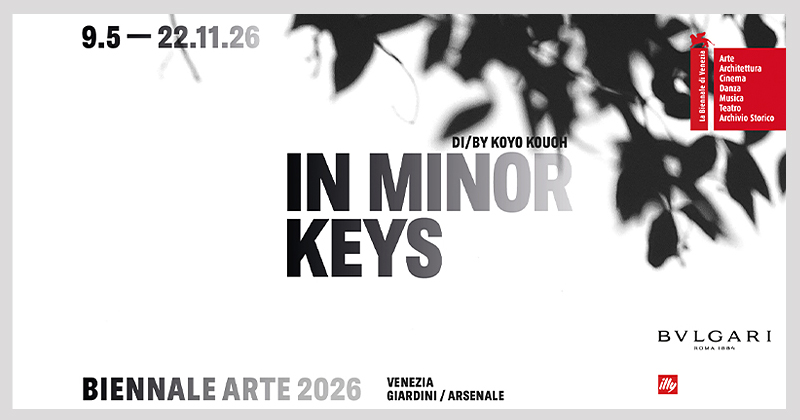
Curated by Koyo Kouoh under the title In Minor Keys and realized according to a predetermined program, the 61st International Art Exhibition of the Venice Biennale focuses on questions of identity, social inequalities, and cultural symbols. In accordance with the established thematic framework, it encompasses not only self-expressive propositions but also divergent orientations at the level of discourse, thereby analyzing an internally constructed present that clusters around a collectively anticipated shared language.

What we encounter here, then, is a vast installation into which a schizoid minor-difference structure infiltrates every interval: one that is bound to Black geographies, clarified within the context of hegemonic narratives and discourses of precarity, and that redefines traditional heritage through a kind of bending of artistic language. Within the Arsenale, this environment, composed of woven and textile works, ethnographic object arrangements, and multivalent configurations of varied complexity, has further been transformed into a field of experience in which interlocking identity problematics and cultural belongings are recombined. These traumatic narratives, reminiscent of psychological and socio-political mechanisms of resistance, are also seen to emerge as liberating dynamic elements that protest economic inequality and the absence of social justice. It must equally be emphasized, within this framework, that approaches nourished by sexuality, nature, the environment, local connections, and cultural influences have been transformed into installative works through a peculiar display of corporeality, seeking to establish consensual relationships with the viewer.

fragile formations that unsettle the present

As is plainly evident, Koyo Kouoh grants priority to African, Latin American, and Asian women artists and narratives. In doing so, a map is constructed that completes this field, one that seems to chart a precarious world order within the post-colonial condition, generating fragile formations that unsettle the present. The aura emanating from this enchanting and colorful totality that Kouoh has assembled within a map of depressive identification oriented toward Black geographies exists in a state of summoning or searching for social dialogue.

There can be no doubt that Kouoh’s textual directives consciously aim, on the one hand, at the repair of damaged psychic worlds produced by socio-cultural tensions, while on the other, they seek the emergence of new expressive models and independent performances taking shape within a turbulent visual language. Through the minor interactions she foregrounds in this context, one arrives at a space in which policies of suppression spreading through deprivation, vulnerability, and identity erosions are interrogated, and where artist-activist resistances are experienced. It is evident that artistic practices and initiatives, having assumed the character of relational acts of identification, are here transformed into a systematic transgression and cry aimed at mitigating the effects of the inequalities being lived in a tragic present, or that they generate an independent, unbounded, and singular clustering. Through this totalizing imaginary, new conceptual deviations and subjective sensations intersecting with deep and dynamic artistic practices are subjected to a kind of analysis.

artist practices transformed into an adventure of transgression

There is little doubt that the compressed arrangement of the Central Pavilion, by creating a singular linguistic coherence through cultural symbols and comparable material elements, expands the field of freedom of movement. In this direction, along a line parallel to Kouoh’s core propositions, it is significant that cultural practices governing everyday life, as well as matters such as identity, belonging, and displacement, adhere to this collective plane and are transformed into an artistic adventure of transgression.

In this context, In Minor Keys, reaching toward the pure states of meaning through tendencies of sublimation and symbolization, seems to draw its power from a depressive energy that anticipates a metamorphosis. It must also be noted that there is a phantasmatic effort at work here, shaped by strange ruptures felt especially in the weaving and textile-heavy works, one that essentially sweeps along all surface residues, penetrates the reality of things, and renders minor tonalities visible in an artistic sense.

La Biennale di Venezia, 61st International Art Exhibition, “In Minor Keys” by Koyo Kouoh, May 9 – November 22, 2026, (Giardini – Arsenale and Arround Venice) Venice. 

Curatorial Team: Gabe Beckhurst Feijoo, Marie Hélène Pereira and Rasha Salti (Art Advisors), Siddhartha Mitter (Chief Editor) and Rory Tsapayi (Research Assistant).

Prof. Gülay Yaşayanlar  / Copyright © June 2026, All rights reserved.

IN MINOR KEYS: kolektif hayal gücüyle kurulan büyük bir eser

The curatorial text penned by Koyo Kouoh is an invitation to confront the fleeting physical, meteorological and environmental conditions you encounter, to slow down, and to attune yourself to the frequencies of minor keys. For, although they are often lost amidst the clamour of the chaos currently ravaging the world; the songs of those who create beauty despite tragic events, the melodies of survivors emerging from the ruins, and the harmonies of those mending wounds and worlds continue. In music, the minor key points to both the structure of a song and its emotional impact. It is such a rich concept that it swiftly transcends its technical definition and overflows with metaphors. It evokes moods, dialogue, lament, allegory and whispers. It comes to life in quiet tones, low frequencies, murmurs, the solace of poetry, and the doors of improvisation that open onto another and the other world. Minor keys demand a listening that stirs emotions and supports them reciprocally.

61ST INTERNATIONAL ART EXHIBITION (CENTRAL PAVILION – ARSENALE)

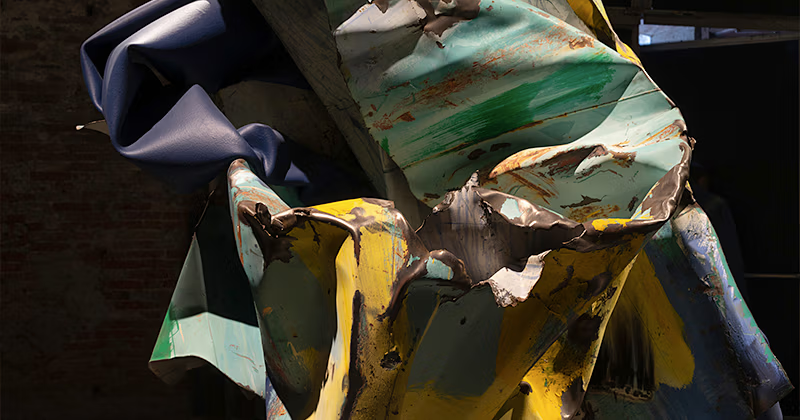
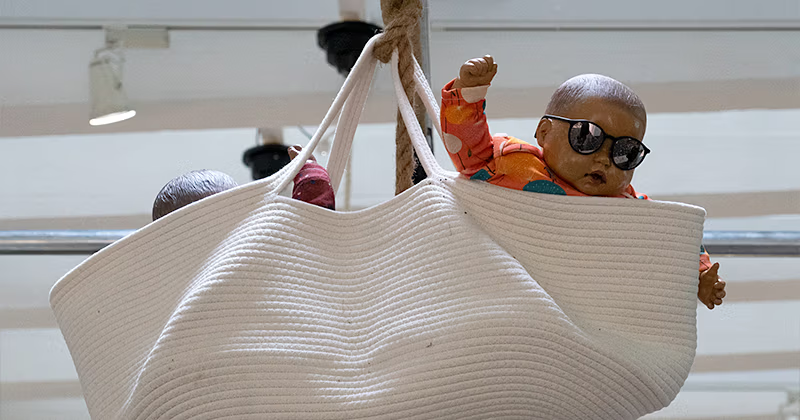
1– Senzei Maresela, (South Africa), Wall Reefs 104, Detail, 1995-2025, Arsenale, Photo by Luca Zambelli Bais  2- Valid Raad, Far from quieting – Kuwait, Detail, Arsenale, Photo by Marco Zorzanello  3– Marcia Kure, Roadkill III, 2025-2026, Detail, Arsenale, Photo by Andrea Avezzù  4– Kenedy Yanko (USA), Disciples of joy in the material world, 2025, Detail, Arsenale, Photo by Luca Zambelli Bais  5- Sahrap Hura, (India), Things Felt But Not Quite Expressed and Timeless, 2026, Installation view, Arsenale-Giardini, Photo by Andrea Avezzù  6- Georgina Maxim, (Zimbabwe) Borrowed books and underlined statements, 2023-2026, Detail, Arsenale-Giardini, Photo by: Marco Zorzanello, © 61st International Art Exhibition, La Biennale di Venezia, In Minor Keys, Courtesy of La Biennale di Venezia

LA BIENNALE DI VENEZIA

61ST INTERNATIONAL ART EXHIBITION, “IN MINOR KEYS” BY KOYO KOUOH

La Biennale di Venezia, 61st Internation Art Exhibition (Main Page)
la biennale di venezia, in minor keys by koyo kouoh (press release summary)​
in minor keys by koyo kouoh (press release summary)

3 essays on Kouoh’s curatorIal approach

GÜLAY YAŞAYANLAR / in minor keys by koyo kouoh: a black diasporic energy
GÜLAY YAŞAYANLAR / in minor keys by koyo kouoh: complex and fragile formations that unsette the present
MÜMTAZ SAĞLAM / in minor keys: on new ways of thinking and creating, or the possibilities of fragile connections

NATIONAL PARTICIPATIONS AND SELECTED TWO PAVILIONS

la biennale di venice: 61st international art exhibition / highlights: 10 national participations / öne çıkanlar: 10 ulusal katılım
Nilbar Güreş: Land
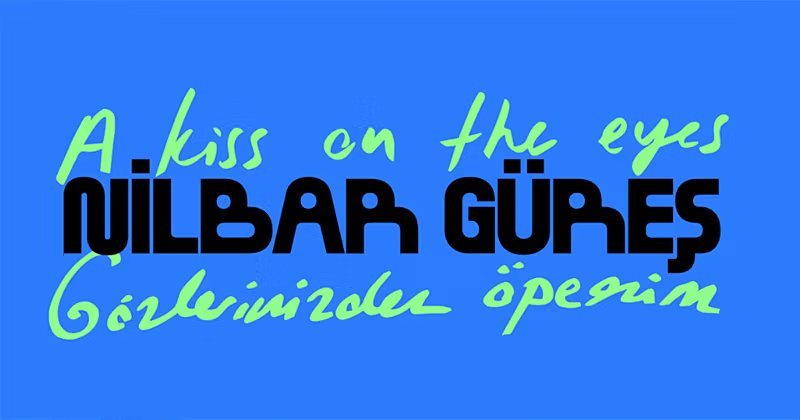
GÜLAY YAŞAYANLAR / türkiye pavilion: nilbar güreş: A kiss on the eyes: land​
Ekstra / MÜMTAZ SAĞLAM / kadife bakış / velvet stare​
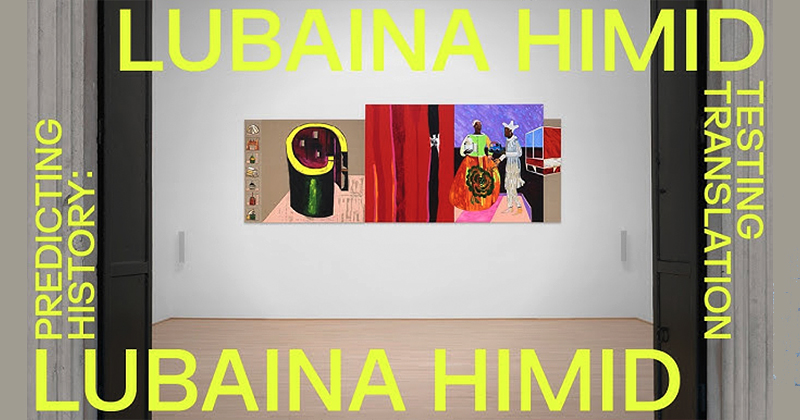
great britain pavilion: lubaine himid: predicting history: testing translation ​
Lubaina Himid Prediction History Testing Translation 1
GÜLAY YAŞAYANLAR / great britain pavilion: lubaine himid: predicting history: testing translation

AROUND VENICE / COLLATERAL EVENTS  

collateral events in venice: must-see exhibitions in venice / venedik'te görülmesi gereken diğer sergiler
Ocean Space

CATALOGUE

The official catalogue of the 61st Venice Biennale is a significant publication comprising two distinct sections: one dedicated to the international exhibition curated by Koyo Kouoh, and the other to national contributions and parallel events. The pages devoted to the artists feature sketches and images documenting the creative process, which convey the ideas behind the exhibited works, as well as a comprehensive short essay. The essays on artistic practices further enrich this publication with diverse perspectives. Eight original articles addressing current issues regarding thematic contexts and curatorial practices (written by Tandazani Dhlakama, Adrienne Edwards, Stefanie Hessler, Miguel A. López, Hélio Menezes, Wanda Nanibush, Oluremi C. Onabanjo and Françoise Vergès) are included. Meanwhile, five original articles by Ken Bugul, Teju Cole, Natalie Diaz, Frieda Ekotto and Abdaljawad Omar, which contribute to the intellectual coherence of the exhibitions, also attract particular attention.

Biennale Arte 2026, In Minor Keys, Catalogue / English, 2 Volumes, 21 X 27 Cm, Pages: Vol. I 720 Ca. / Vol. Ii 254 Ca., Paperback, Graphic Design: Clarissa Herbst And Alex Sonderegger.

Biennale Arte 2026, In Minor Keys, Short Guide / English, 15 X 20 Cm, Pages: 552 pages, paperback, Graphic Design: Clarissa Herbst And Alex Sonderegger. 

BIOGRAPHY

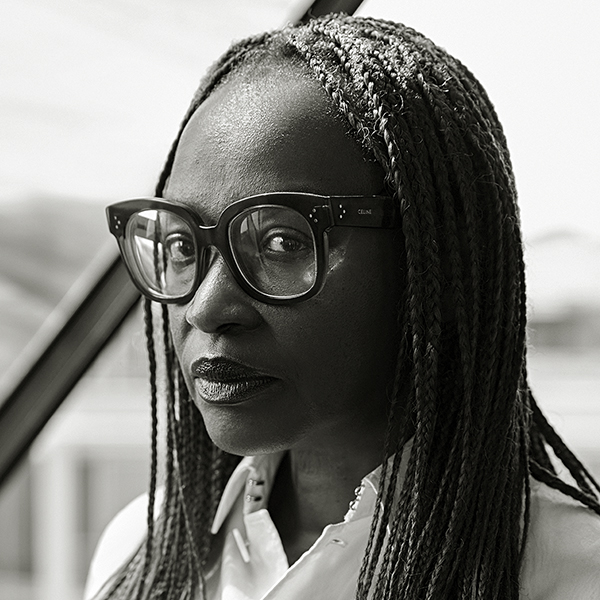
Koyo Kouoh. Photo- Mirjam Kluka

Koyo Kouoh, Photo by Mirjam Kluka

KOYO KOUOH

(24 December 1967, Cameroon – 10 May 2025, Switzerland)

For many years, he served as director and chief curator of the Zeitz Museum of Contemporary African Art (Zeitz MOCAA) in Cape Town. Prior to this role, he served as founding artistic director of the RAW Material Company in Dakar, Senegal, which has become a hub for art, knowledge and community. He was also a member of the curatorial teams for documenta 12 (2007) and documenta 13 (2012). Kouoh is the recipient of the 2020 Meret Oppenheim Grand Prize, Switzerland’s most prestigious art award, which honours achievements in the fields of art, architecture, criticism and exhibition curation. She has organised contemporary and influential exhibitions such as *Body Talk: Feminism, Sexuality and the Body in the Works of Six African Women Artists* (2015, Wiels, Brussels). During her tenure at Zeitz MOCAA, she organised significant solo exhibitions focusing on African and African-descended artists. In this context, she curated exhibitions featuring artists such as Otobong Nkanga, Johannes Phokela, Senzeni Marasela, Abdoulaye Konaté, Tracey Rose and Mary Evans. She divides her time and work between Cape Town, Dakar and Basel.

İZMİR - LONDON

saglamart; dinamik bir anlayış ile hareket eden, kültür-sanat ortamındaki olay ve olgulara, sanatçı tavırlarına, yapıtlara ve yayınlara odaklanan bağımsız bir yayın etkinliğidir. Tüm hakları saklıdır. Görüntü ve yazılar izinsiz kullanılamaz. / saglamart is an independent publishing initiative driven by a dynamic vision, focusing on events and developments in the cultural-artistic landscape, artist perspectives, works, and publications. All rights reserved. Images and texts cannot be used without permission.

Copyright ©
Can Sağlam - Gülay Yaşayanlar Mümtaz Sağlam, 2026.