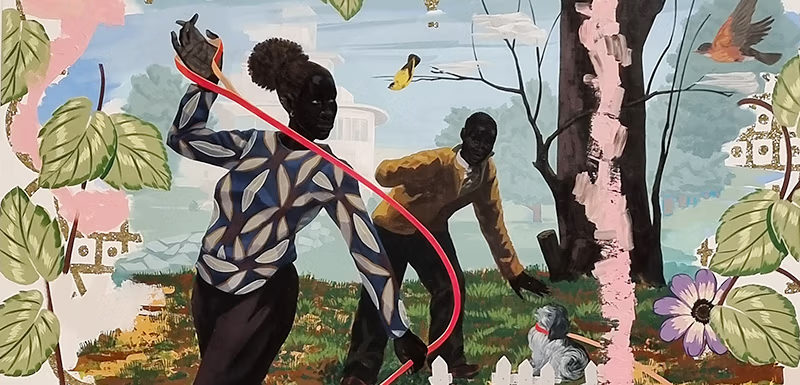
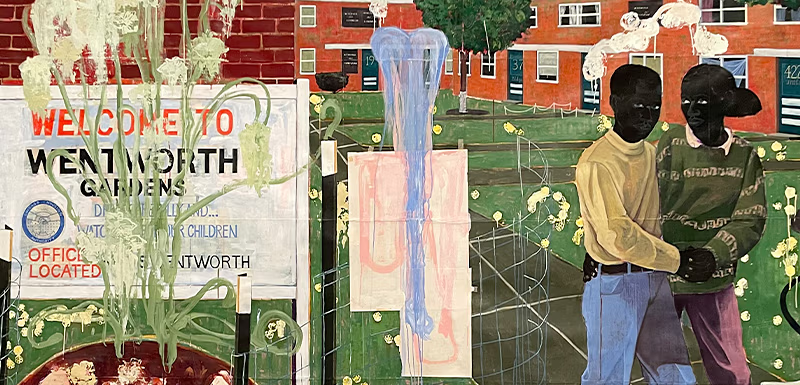
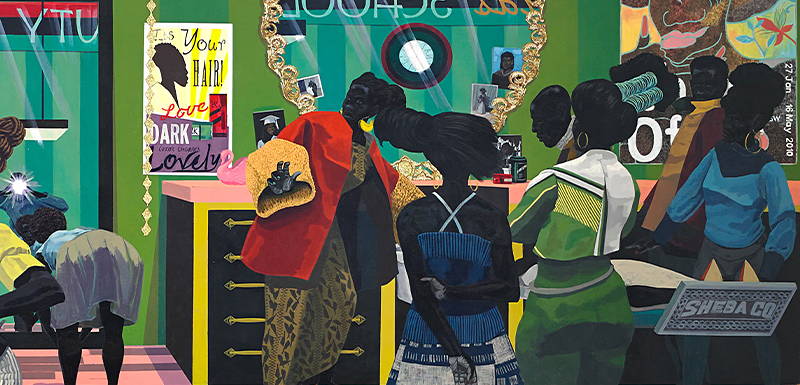
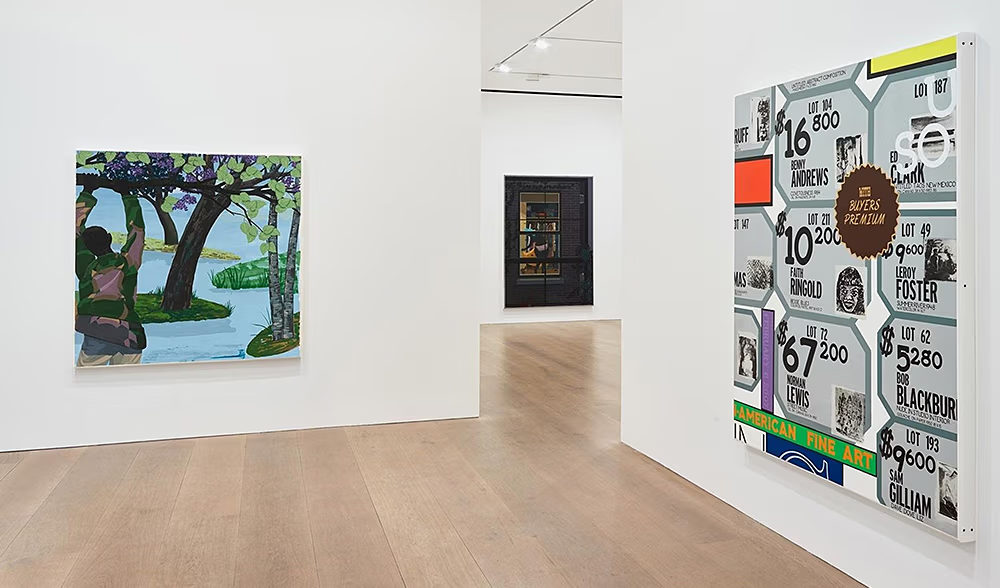
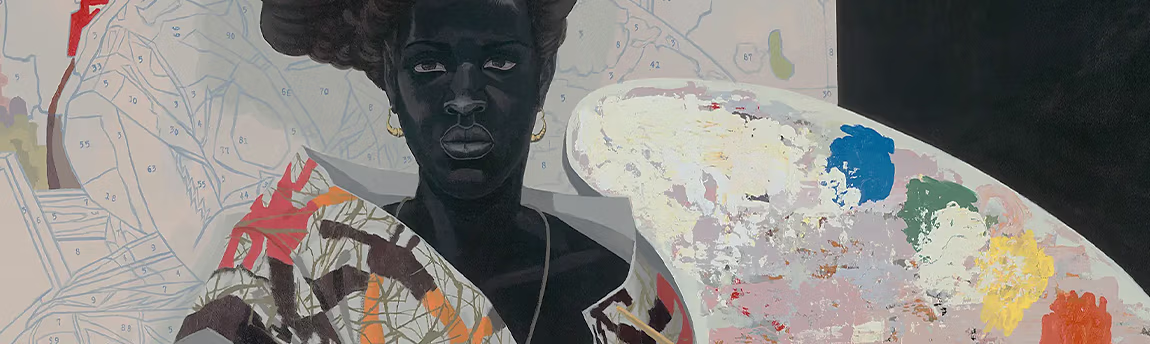
WHILE MARSHALL CENTERS HIS FIGURES BY DEPICTING THEM WITH IDENTITY, CREATING A NEW HIERARCHICAL ORDER LADEN WITH ENRICHED DETAILS, HE SUSPENDS THE DOMINANT REPRESENTATION OF WHITE FIGURES AND TRANSFORMS THE EXALTED BLACK FIGURES INTO TRANSCENDENT SUBJECTS. IN HIS PAINTINGS, MARSHALL GRAPPLES WITH A MASS OF IMAGES WHERE LIFESTYLES, EMOTIONS, BELIEFS, CULTURAL HABITS, AND DESIRES FOR EQUAL RIGHTS ARE ALSO ANALYZED - IT IS CERTAIN THAT HE IS ENGAGED IN A CREATIVE ACT THAT SIMULTANEOUSLY DEFEATS HIS OWN TRAUMAS.
Throughout the entire processes of art history, it can be said that Black figures have been subjected to a perception devoid of narrative depth, unable to become subjects. Kerry James Marshall, who creates a ground of transcendence in his paintings that legitimizes the everyday life and culture of Black people, brings a new dimension precisely for this reason to the discussions of identity and origin that he approaches with a different social-psychological perspective. This situation may naturally be related to the translation of a creative perception that becomes manifest in the field of culture and art into a desired plane. Or it consists of nothing more than the transfer of a constructed privileged visual totality to a field of experience in a productive state, missing nothing.
a pitch-black representation shaped by radical reactions
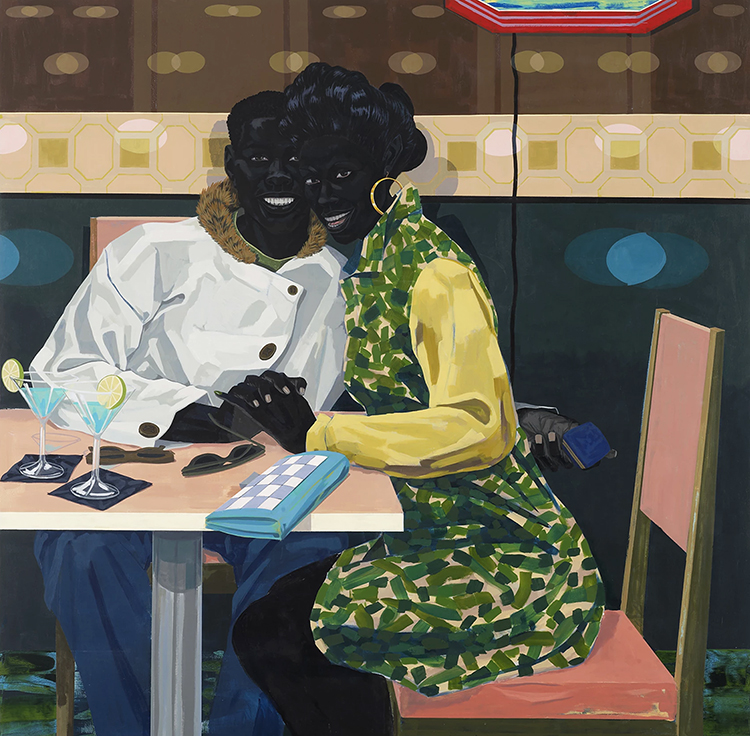
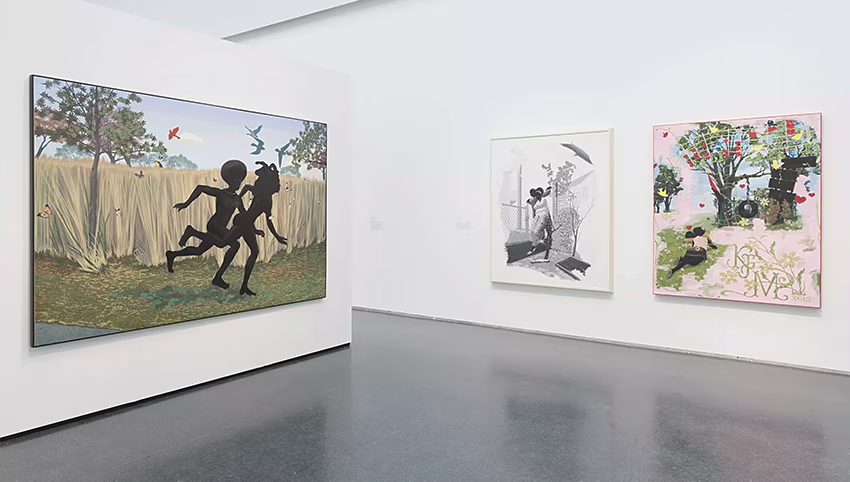
Kerry James Marshall’s paintings possess powerful art historical references beyond the depiction that takes place and the stories that are told. Here, one can speak of a multidimensional and effective visuality containing sensitive gestures, where Black culture is predominantly centered and rituals are subjected to detailed analysis. On the other hand, it is also a fact that a race whose all comprehensions of truth and standards of living were rejected and ignored in the past finds a place in Marshall’s paintings along with their passions. Indeed here, numerous Black subject-figures that replace white figures are evaluated within a unity of space and event, transforming into identified characters. Moreover, in these stories handled according to the classical logic of depiction, seeing, and forming that is employed, it is possible to feel with all its details the hope that emerges in their daily lives.
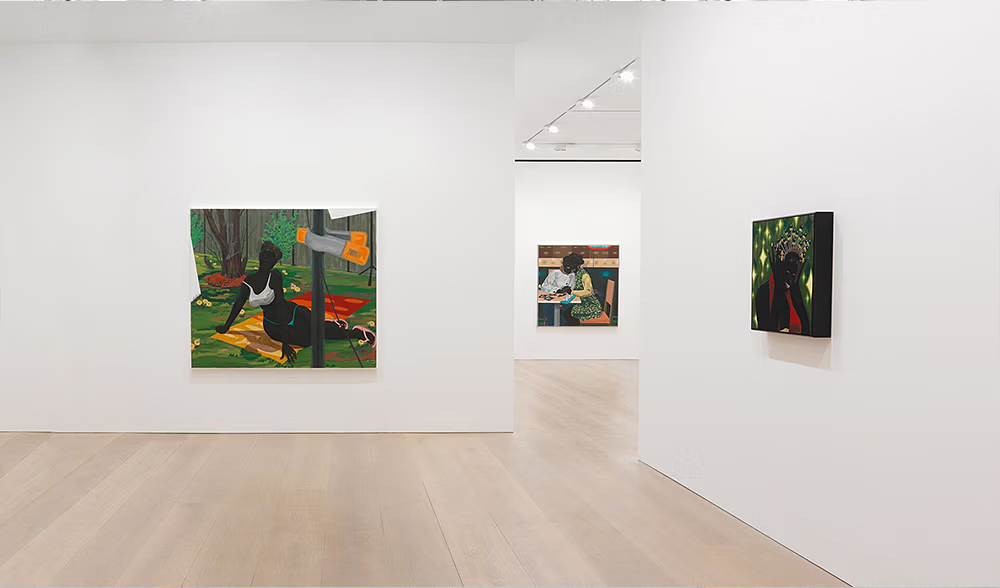
Thus, Kerry James Marshall, whose Black figures form a power at the center of his art with their exceptional appearances deserving of all care and attention, challenges the racial hegemony in art history with his paintings that he transforms almost into an atmosphere of festivity. In other words, he places the Black figures he characterizes as valuable identities in the ordinary living spaces of everyday life and gives radical reactions within a pitch-black representation using data pertaining to Western art. To show figures in fictional roles, in their own cultural environments, moreover to reflect them in a manner specific to a dominant civilization with a depiction adapted to images pertaining to whites, is undoubtedly quite important for Marshall.
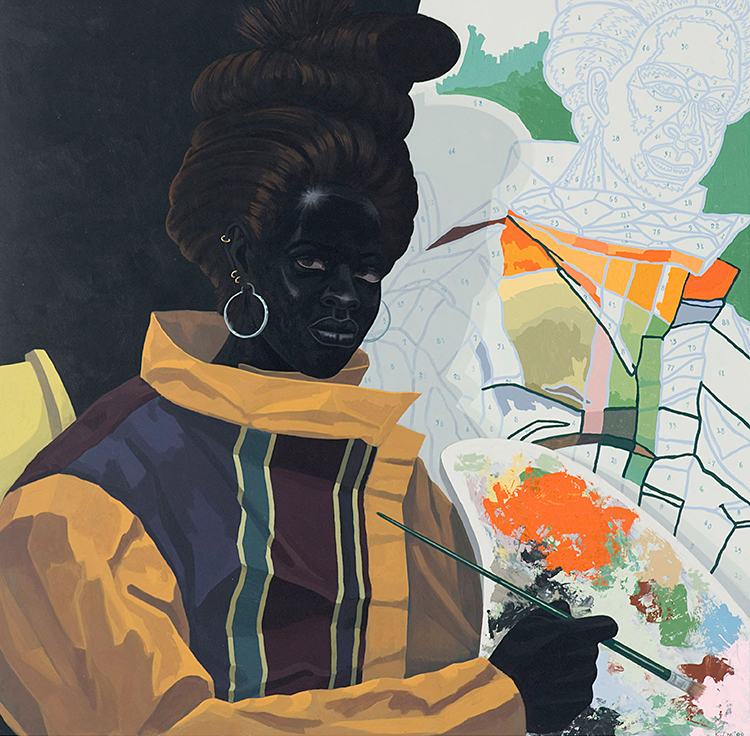
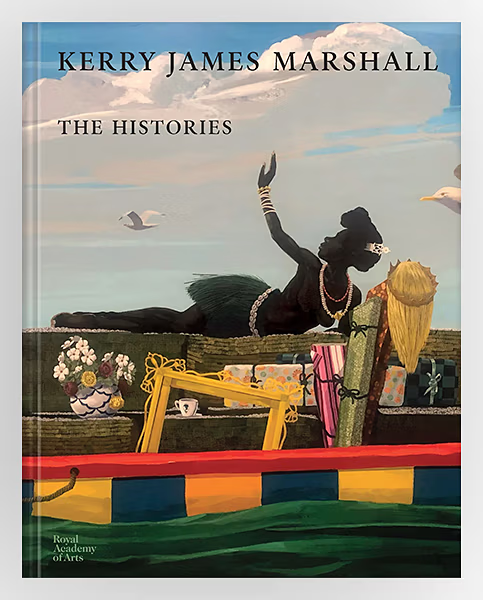
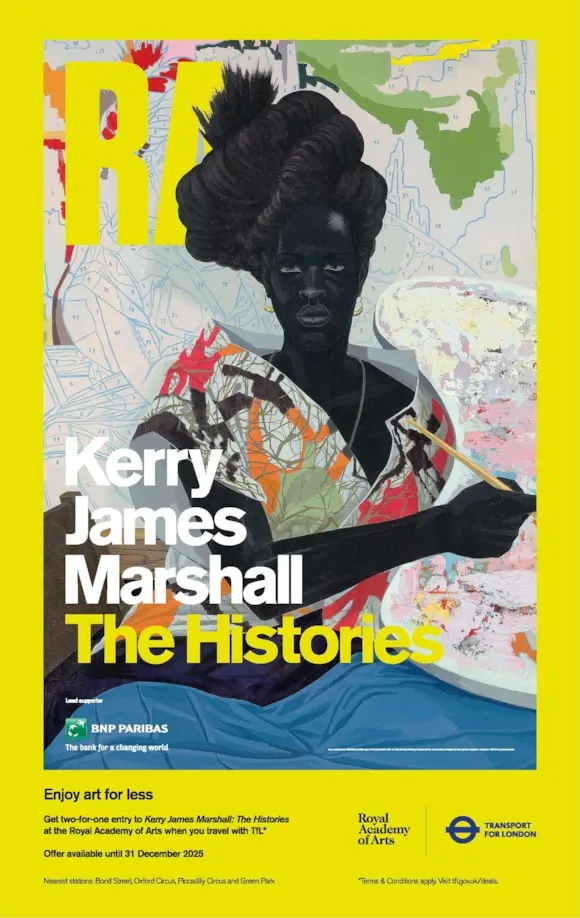
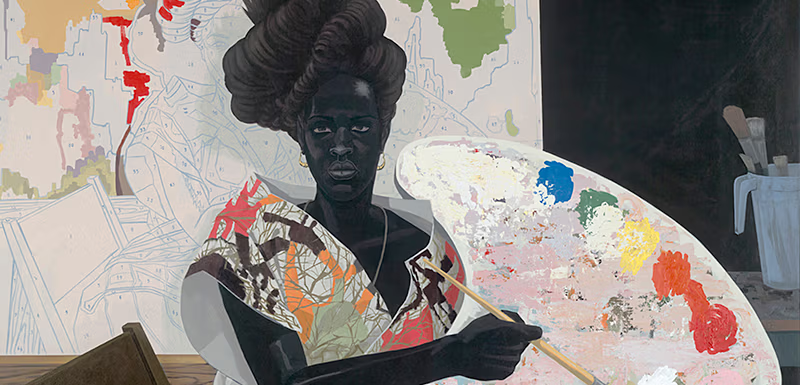
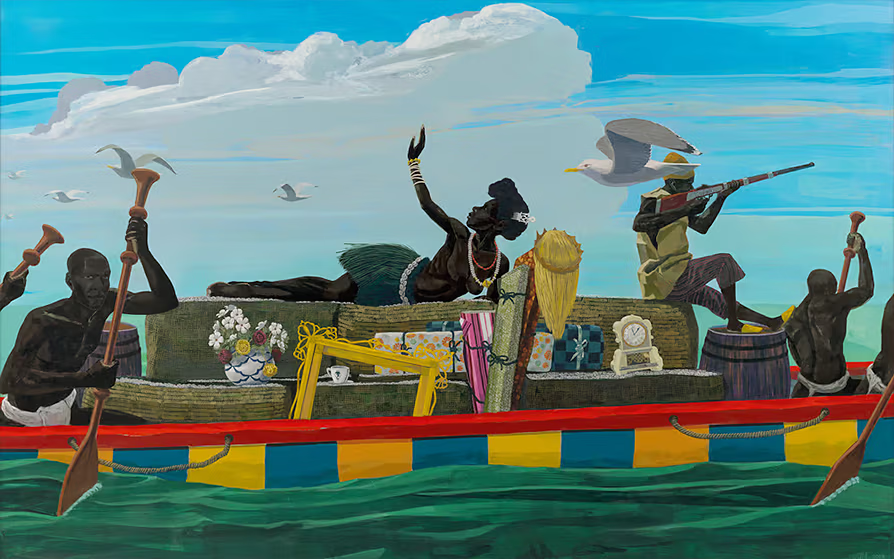
In a continuity that preserves the original stances of his figures, Marshall stages and narrativizes the transition from one character to another almost with a cinematic flow, subjecting his paintings shaped by neo-modernist connections to an effective realist transformation by keeping them in the present time and space. This energetic circulation of figures that provides continuity in time can sometimes transform into a female painter with a color palette in her hand, and sometimes into a beautiful female idol lying on a boat. Here, one speaks of a transmission that makes daily excitement and emotions penetrate the viewer through conceptually exalted figure-images, rendered authentic, or of an imagination that questions the realistic-intellectual totality of the boundaries of things. The emotional wholeness of a Black perception that has become conceptual is presented as if conforming to a dream atmosphere or as a peaceful and performative utopian landscape, continuing to create internal shocks in the viewer.
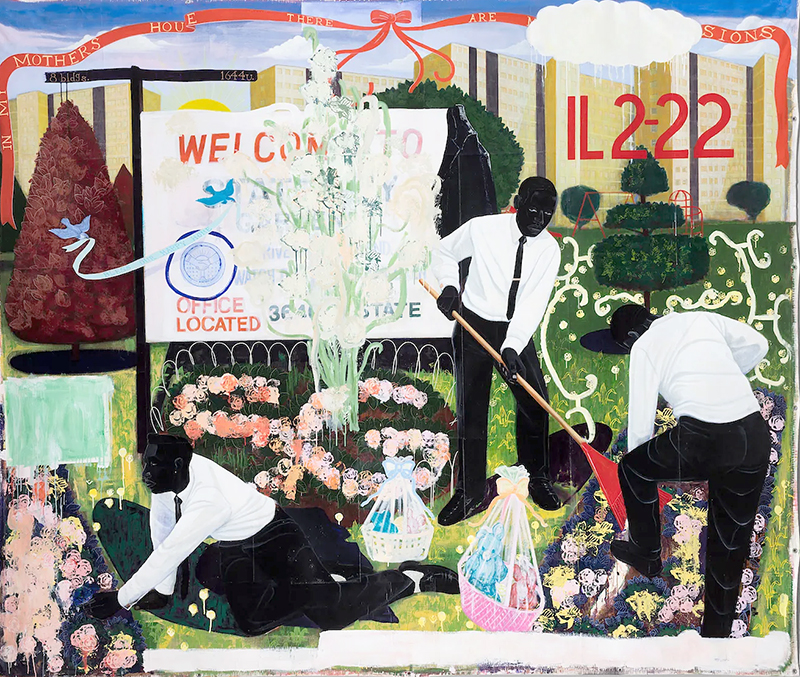
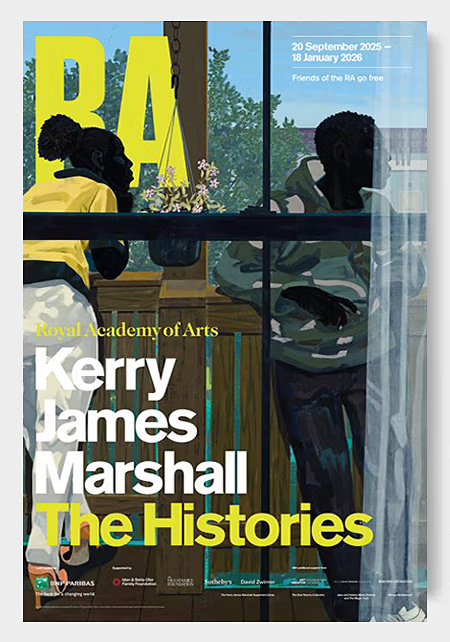
Marshall thus develops here an experience of thinking upon cultural history and memory with the figures and the everyday mise-en-scènes he creates. In fact, it is interesting that the extent of this breadth of the relationship between human and nature or of socialization spaces is presented as the signifier of an emotional structure that transcends a theatrical order and does not leave the viewer indifferent. Indeed, as also seen in the pastoral effect that dominates the Garden Project series consisting of three paintings and in the desire for harmony and reconciliation expressed… Such paintings are undoubtedly the product of a structure entirely dedicated to peace aimed at purifying the souls traumatized by the race problem or by people’s psychic legacies. This pitch-black figure examination that continues with themes related to Afro-American history by the artist who insistently positions figures with art historical references at the center is actually the most important indicator of an ideological, technical, and Black cultural collage understanding and the desire to create conscious fictional heroes.
Therefore, while Marshall centers his figures by depicting them with identity, creating a new hierarchical order laden with enriched details, he suspends the dominant representation of white figures and transforms the exalted Black figures into transcendent subjects. In his paintings, Marshall grapples with a mass of images where lifestyles, emotions, beliefs, cultural habits, and desires for equal rights are also analyzed – it is certain that he is engaged in a creative act that simultaneously defeats his own traumas.
prof. gülay yaşayanlar Artist, art writer and curator. He has published extensively on contemporary issues, theoretical debates and prominent artistic approaches in the field of plastic arts. He lives and works in Izmir and London.
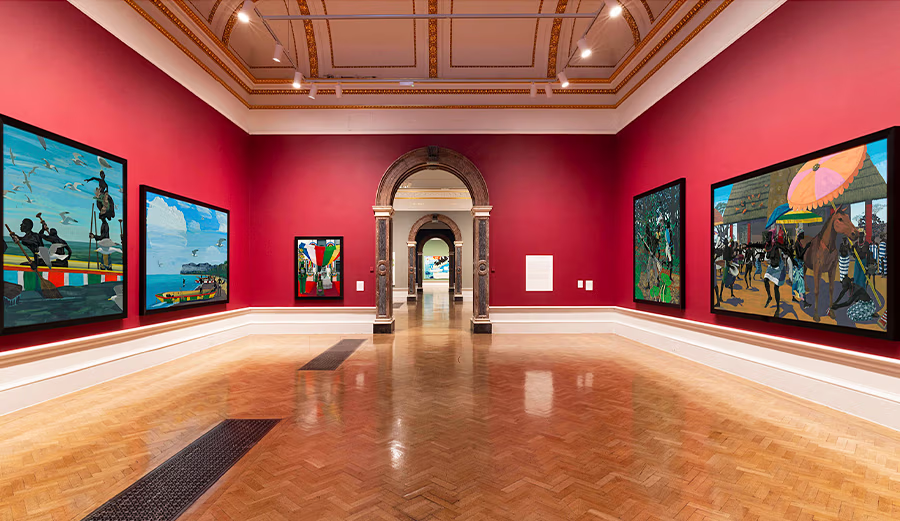
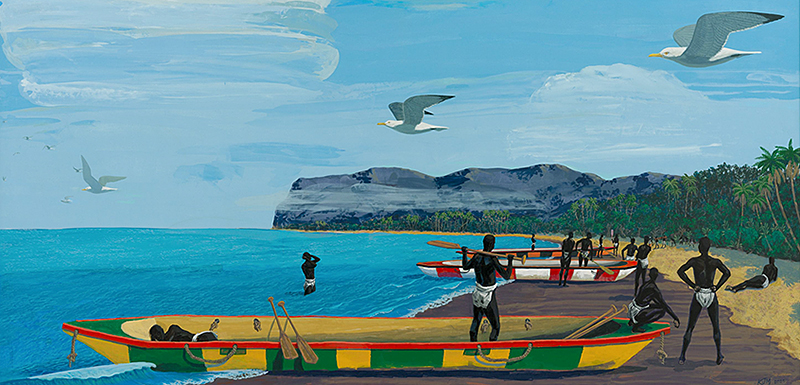
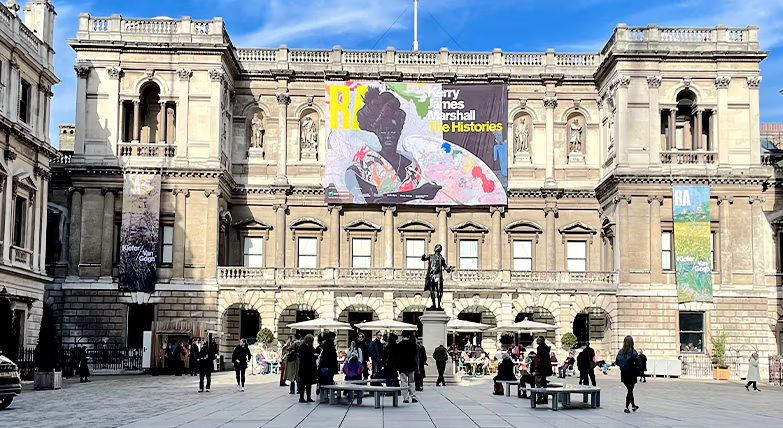
The series of paintings entitled Africa Revisited, displayed in a separate room at The Histories exhibition, consists of Marshall’s recent, ambitious and highly detailed compositions. Compositions such as Haul (2025), Cove (2025) and Outbound (2023), based on historical facts and imagined by the artist, examine scenes and stories of abduction or pursuit involving Africans complicit in the shameful underbelly of the slave trade. Here, too, the artist borrows compositional knowledge and perspective strategies that have significantly shaped the Western tradition and enable a deceptive treatment of space. She reuses these to demonstrate how problematic history is constructed.
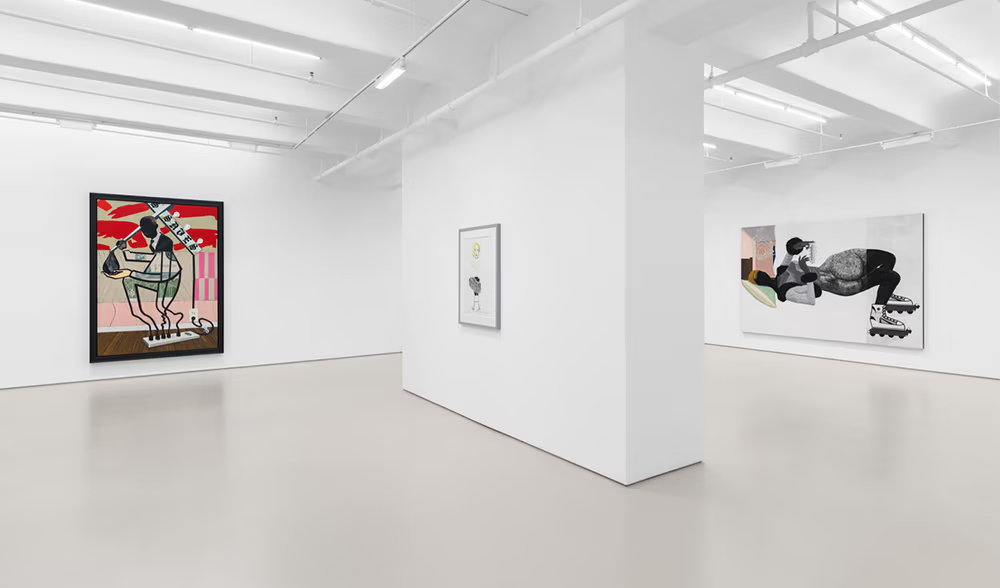
Kerry James Marshall: Exquiste Corpse: This is Not the Game
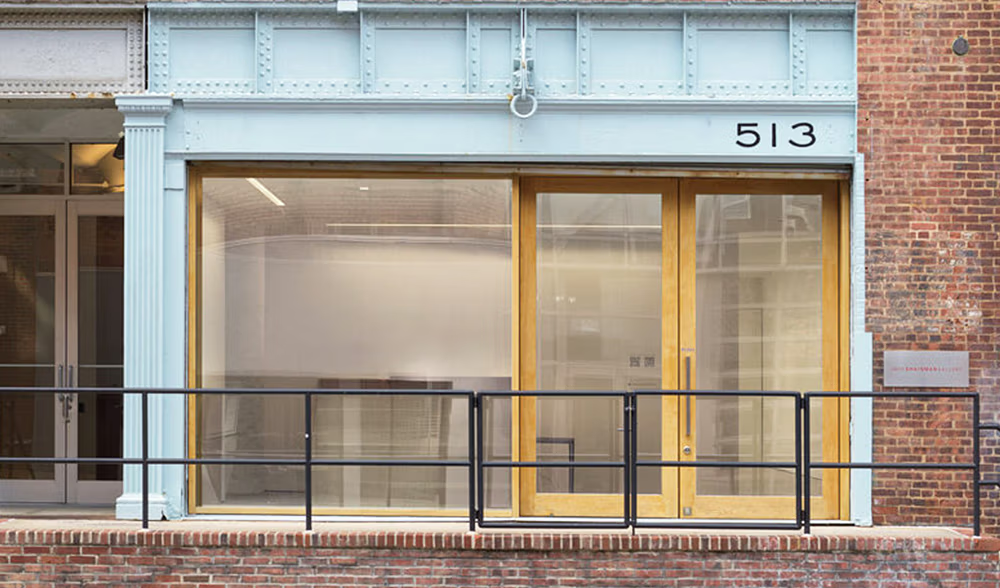
Kerry James Marshall: Exquisite Corpse: This is Not the Game, November 3 - December 23, 2022, Jack Shainman Gallery,
513 West 20th Street, New York, NY 10011
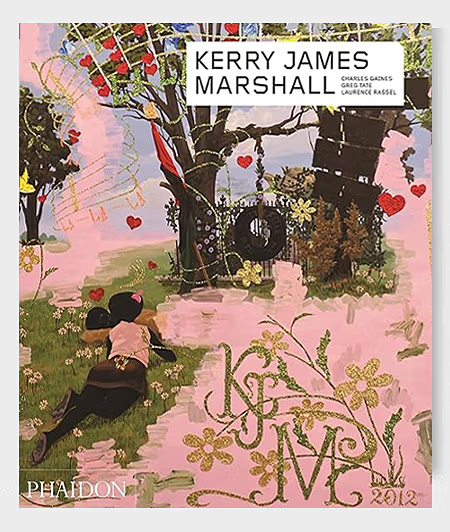
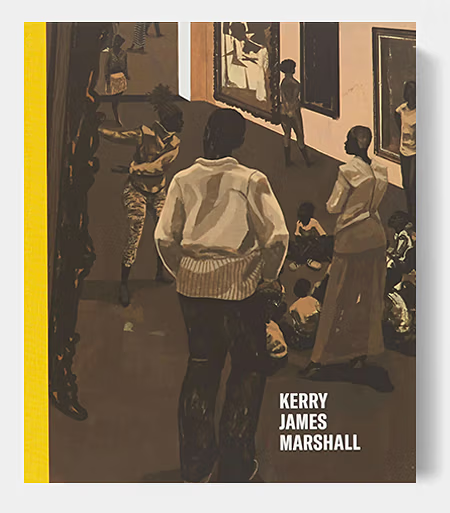
Kerry James Marshall, Contributors: Charles Gaines, Laurence Rassel, Greg Tate, Softcover, English, Pages: 160, Publisher: Phaidon, 2017.
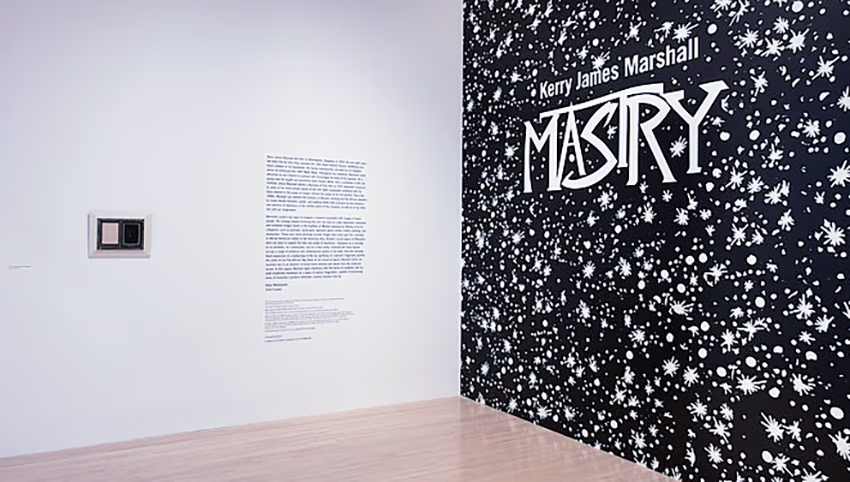
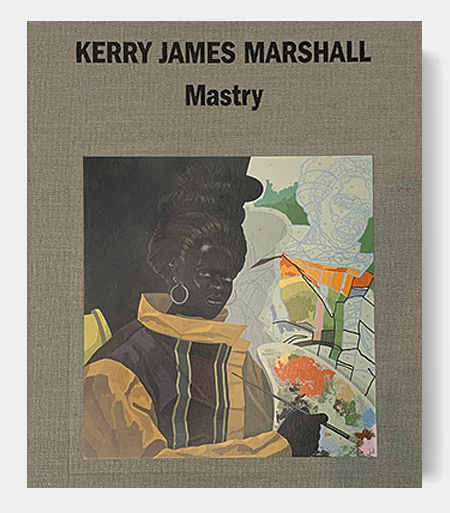
Kerry James Marshall / Mastry, Authors: Ian Alteveer, Hlen Malesworth, Dieter Roelstraete and Abigail Winograd, Publisher: Skira Rizzoli, Hardcover, English, Pages: 288, May 2016, USA.
Kerry James Marshall: History of Painting, Authors: Hal Foster and Teju Cole, Hardcover, English, 96 Pages, Publisher: David Zwirner Books, August 2019.
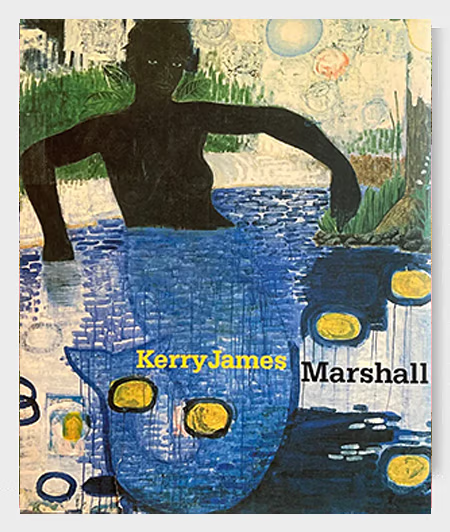
Kerry James Marshall, Author: Kerry James Marshall, English, 128 Pages, Hardcover, Publisher: Harry N. Abrams, November, 2000.
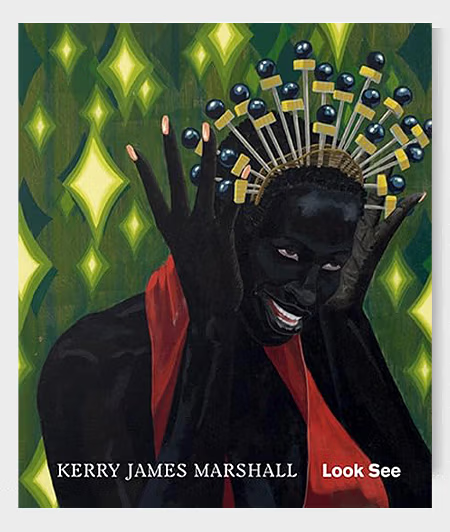
Kerry James Marshall / Look See, Contributors: Robert Storr, Angela Choon, Designer: Jason Pickleman, JNL Design, Printer: Studio Fasoli, Verona, Italy, Hardcover, Pages: 112, Publisher: David Zwirner Books, Publication Date: 2015,
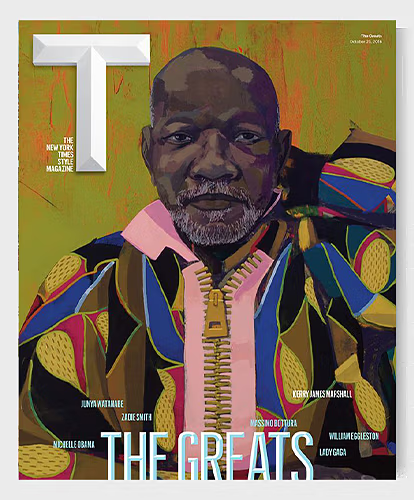
Cory Reynolds,”The Greats”, T / New York Times Style Magazine, 23 October 2016, USA.
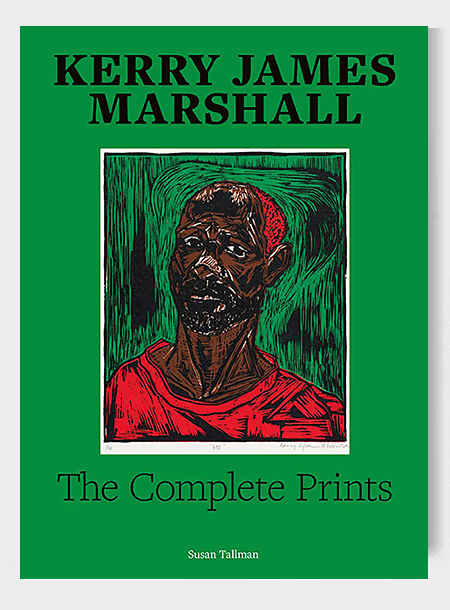
Susan Tallman,Kerry James Marshall / The Complete Prints 1976-2022, Hardcover, English, Pages: 272, Publisher: Ludion/D.A.P. October 2023.
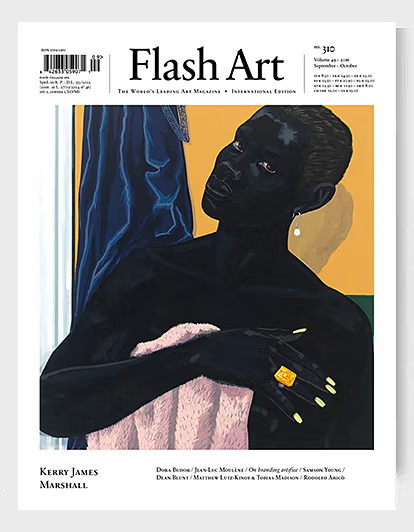
Flash Art, Issue: 310. October 2016. In October 2016 in New York and in March 2017 in Los Angeles, the artist spoke with Helen Molesworth on the occasion of the travelling retrospective ‘Mastry’.
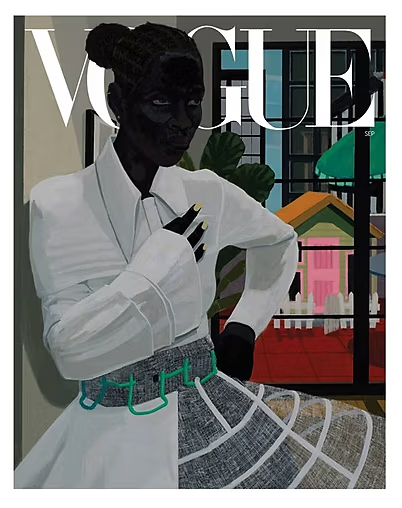
VOGUE / SEPTEMBER 2020
Vogue, September, 2020, Cover Image: Kerry James Marshall
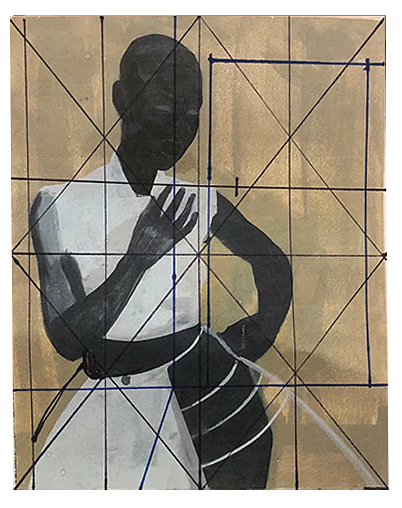
A sketch of Kerry James Marshall’s work for the September issue, Working Study 1, 2020.
Marshall creates a confident fictional character wearing an elegant evening gown for the cover of Vogue magazine in 2020, one who can act independently of the viewer’s and reader’s gaze.
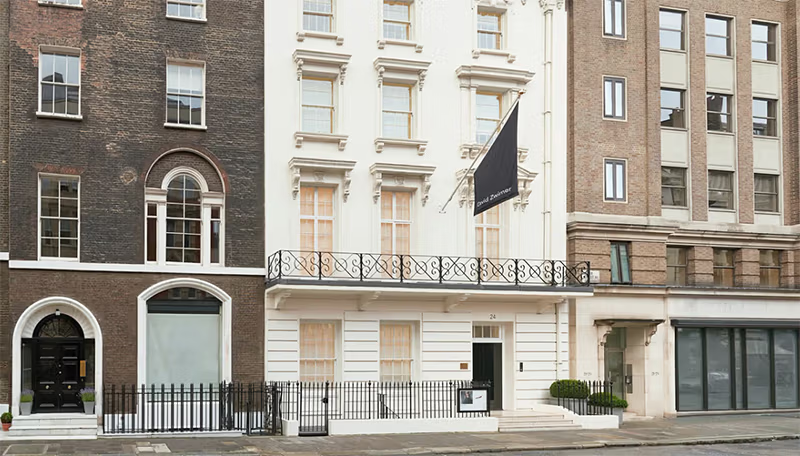
David Zwirner London, 24 Grafton Street, London W1S 4EZ
David Zwirner is a leading art gallery renowned for hosting innovative, original and pioneering exhibitions. David Zwirner opened his first gallery in New York’s SoHo district in 1993. In the early 2000s, he moved from SoHo to Chelsea. In 2012, it opened a gallery in London’s Mayfair district, followed shortly thereafter by galleries in Hong Kong, Paris, and, two years ago, Los Angeles, all of which have attracted attention with their spacious exhibition areas and facilities.
Jack Shainman, 513 West 20th Street, New York, NY 10011
It was founded in Washington DC in 1984 by Jack Shainman and Claude Simard (1956–2014). Shortly afterwards, it relocated to New York, opening two additional exhibition spaces in a new 30,000-square-metre building known as The School. Today, Jack Shainman Gallery is known for its extensive roster of both emerging and established artists and collectives engaged with the social and cultural issues of the time.
The Royal Academy of Arts (RA) was founded in 1768 by King George III. Its first president was Sir Joshua Reynolds. It is governed by successful Royal Academicians, artists and architects elected by their peers. The institution, which also houses Britain’s oldest art school, the Royal Academy, has been promoting the creation of visual arts for over 250 years through public programmes, regular exhibition projects and publications. It has a mission to support art, artists and art education. It also organises the Summer Exhibition, the world’s largest open-entry art exhibition, every year.
KERRY JAMES MARSHALL / BIO
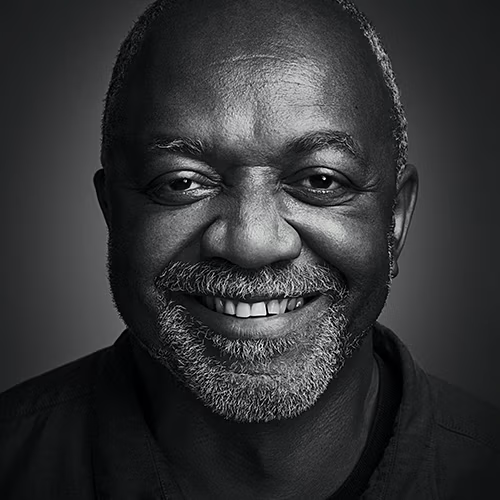
Kerry James Marshall, (born in 1955), is a graduate of Otis College of Art and Design with a Bachelor of Fine Arts (BFA) degree. He lives and works in Chicago. He is the recipient of numerous awards, including the 1997 MacArthur Fellowship. A comprehensive retrospective of Marshall’s work was organised by the Museum of Contemporary Art, Chicago (2016), the Metropolitan Museum of Art, New York (2016–17), and the Museum of Contemporary Art, Los Angeles (2017). Marshall’s paintings, sculptures, collages, videos, and photographs address themes of Black identity, experience, and representation. Through her compelling recent paintings, she combines political references that question the established order of Western art, challenging traditional representational forms and historical narratives, with an exploration of assumed new realities. (Photo: Jason Bell)
saglamart; dinamik bir anlayış ile hareket eden, kültür-sanat ortamındaki olay ve olgulara, sanatçı tavırlarına, yapıtlara ve yayınlara odaklanan bağımsız bir yayın etkinliğidir. Tüm hakları saklıdır. Görüntü ve yazılar izinsiz kullanılamaz. / saglamart is an independent publishing initiative driven by a dynamic vision, focusing on events and developments in the cultural-artistic landscape, artist perspectives, works, and publications. All rights reserved. Images and texts cannot be used without permission.