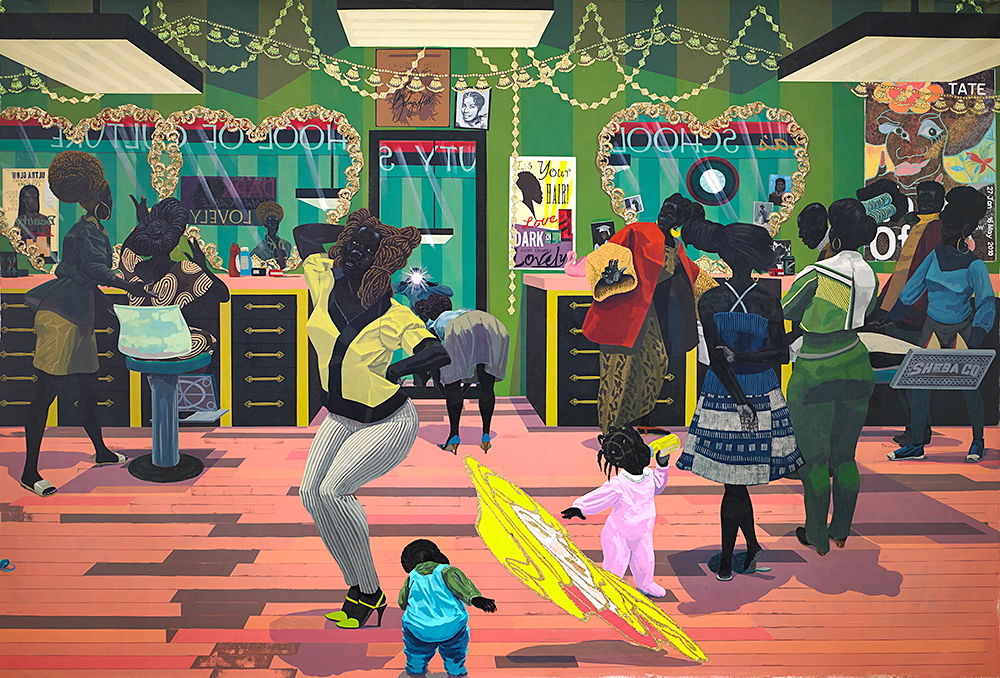
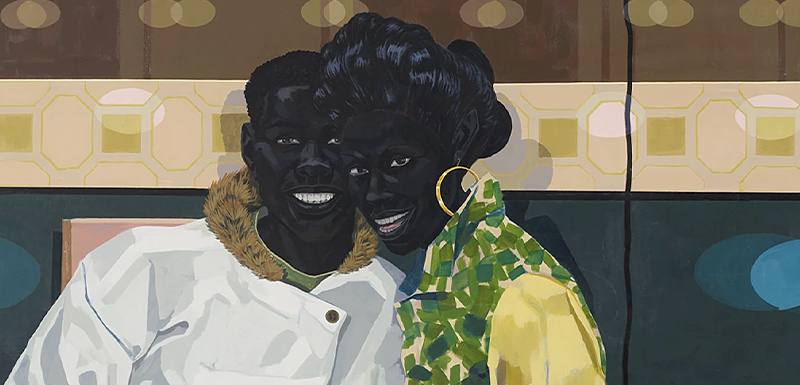
THE WOMEN AT THE BEAUTY SCHOOL / CULTURE SCHOOL; WITH THEIR VIBRANT, CHARISMATIC AND ASSERTIVE APPEARANCES, STRIVE TO BRING THE ESTABLISHED MISE-EN-SCÈNE TO LIFE, THEIR BODIES APPEARING TO BE IN A LIVELY AND ALLURING POSTURE. HERE, WITH AN INTERPRETATION THAT RETURNS TO THE AESTHETICS OF THE BLACK IS BEAUTIFUL MOVEMENT, THE SPIRIT OF THE SHARED SPACE AND ITS CULTURAL CONTEXT ARE REFLECTED ALONGSIDE THE COLOURFUL INNER WORLDS OF THE FIGURES. ULTIMATELY, THIS PAINTING IS A LAVISH PRODUCTION, FILLED WITH EXPLICIT REFERENCES TO GREAT COMPOSITIONS IN ART HISTORY, PRESENTED THROUGH A FIGURATIVE MEDIATION SYMBOLICALLY PROCESSED IN AN ENVIRONMENT WOVEN WITH SPECIALLY DESIGNED GARMENTS AND ACCESSORIES.
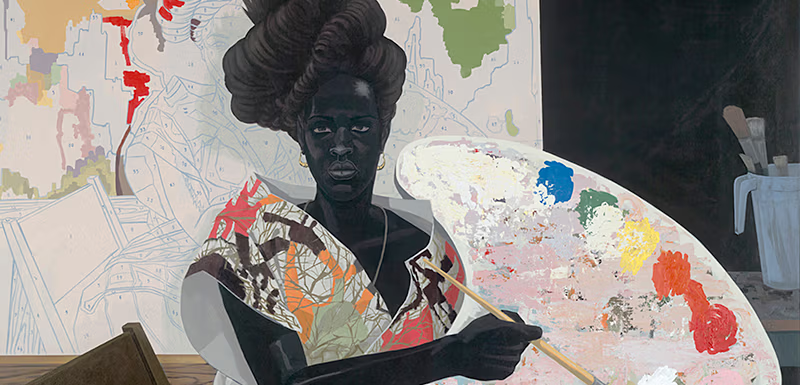
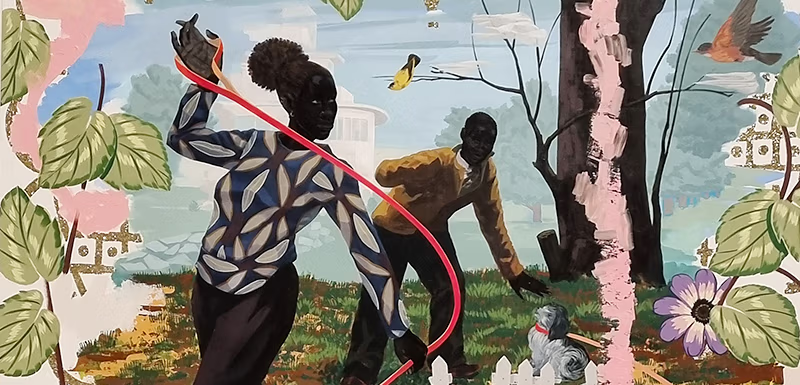
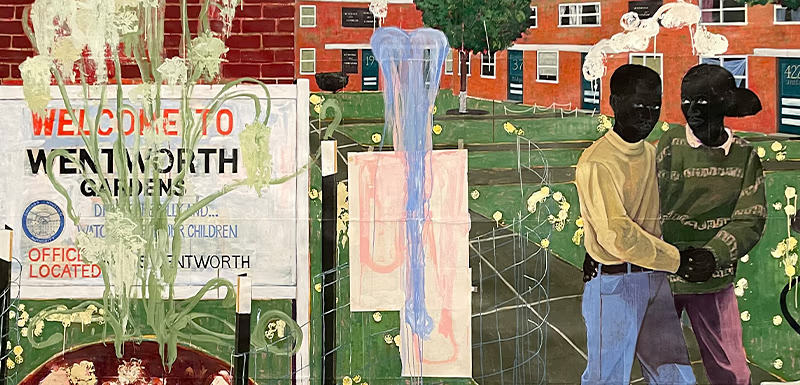
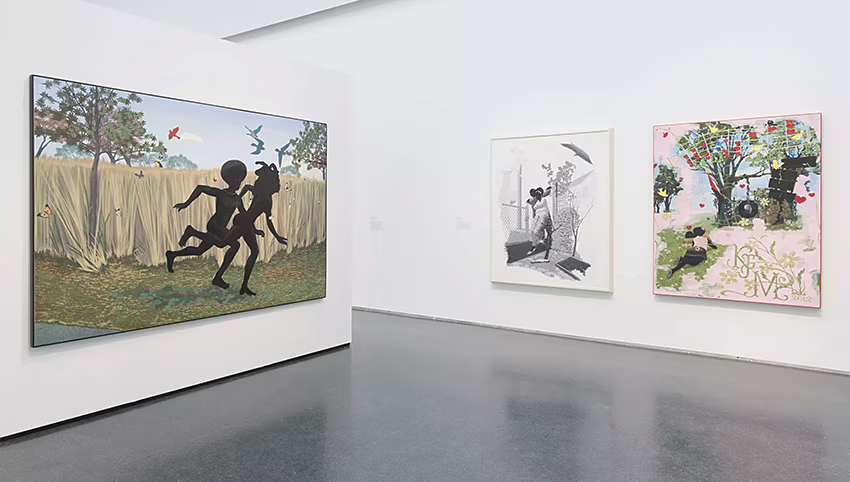
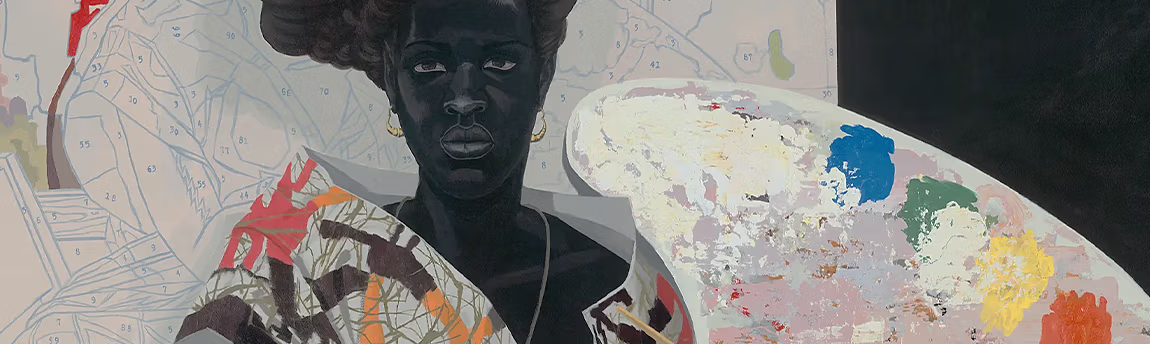
Kerry James Marshall explicitly finds the Western painting tradition insufficient regarding the representation of Black figures. In his monumental paintings, he develops an effective perspective on the issue of Black identity, culture, and representation. He creates an entirely new visual space through the aesthetic experience he undertakes based on everyday scenes of African American life alongside cultural phenomena and historical events. Using references taken from important exemplary works of art history, he arrives at paintings that express an ordinary life in a spectacular manner. He does not shy away from radically criticizing established perceptions and society.
school of beauty / school of culture: an effective interior arrangement
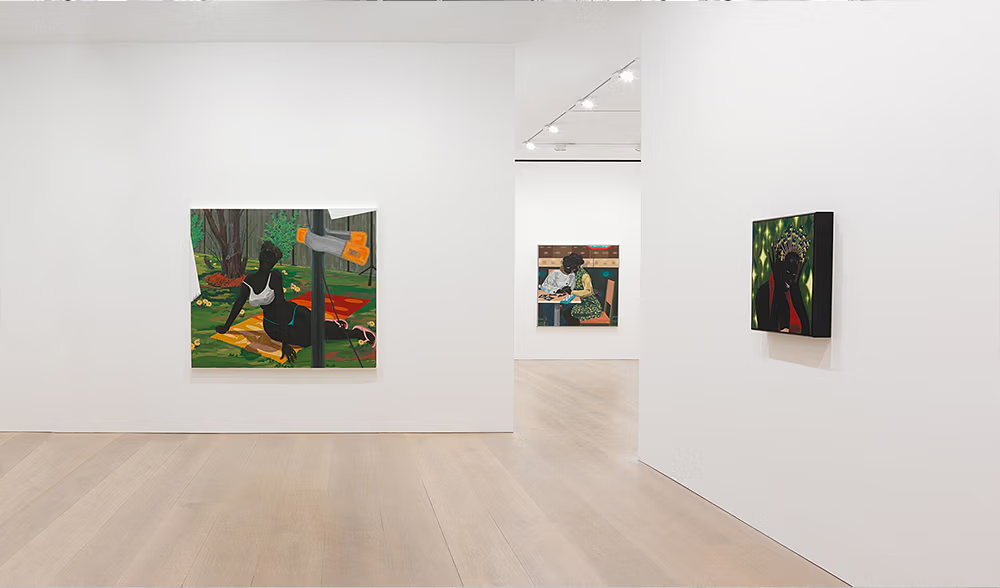
Kerry James Marshall frequently notes that the figures in his paintings are shaped not in the traditional naturalistic sense but according to a fiction living in a realistic field. He assigns them a discursive function, stating that he uses them to fill the void sensed in an aesthetic and epistemological context, just like characters performing in a drama. For example, the 2012 arrangement titled School of Beauty, School of Culture, which offers a glimpse of the distinctive everyday life of Black Americans, can be shown as an apt example of this context. This composition, which addresses the beauty obsession of Black women constrained by popular culture’s beauty perception and which appears to be the product of a practical staging, animates a crowded and complex beauty salon mise-en-scène.(1)
The painting’s main character, a woman in a yellow dress, is depicted as a star shining under the lights. In the lower section are two children innocently examining the surrealist abnormality of Disney’s Sleeping Beauty’s anamorphic head, reminiscent of Hans Holbein. The poster positioned in the center is a plastic element placed to resist the white beauty standards represented by Sleeping Beauty’s disturbing face.(2)In the background, a hairdresser positioned attends to a client reclining in her chair. On the other side of the room, another beauty specialist silently and powerfully makes eye contact with Marshall’s gaze in her salon’s heart-shaped mirror.(3)
If one notices, the women in School of Beauty, School of Culture attempt to animate the established mise-en-scène with their vibrant, charismatic, and assertive appearances, while their bodies seem to possess a lively and attractive posture. Here, with an interpretation returning to the aesthetic of the Black is Beautiful movement, the spirit and cultural context of the shared space and the colorful inner worlds of the figures are reflected.(4) Ultimately, this painting is a spectacular production filled with explicit references to art history’s grand compositions, through a figurative mediation symbolically processed in an environment woven with garments and accessories.
2 Marshall replaces the skull in Hans Holbein’s 1533 painting The Ambassadors with a Disney-esque blonde woman’s image. Parallel to the skull in The Ambassadors, which reminds us that death lurks amidst human vitality, this distorted head recalls the dominant beauty understanding in the vibrant environment of the Black beauty salon.
3 Kerry James Marshall also places himself in the painting Beauty School / Culture School by placing the camera flash in the mirror behind the woman posing for the photograph. This is a clear reference to Velázquez’s painting Las Meninas.
3 The Black is Beautiful movement began in the 1960s. It rejected the social and historical idealization of white beauty and transformed negative perceptions of Blackness into celebration.
an integrated image aesthetic
From this point, it can be seen that Kerry James Marshall uses perspective and depth relations in his paintings in a sufficient and competent manner to create a fictional micro-universe. Despite this, each figure, appearing collage-like, though painted independently of the other, evolves into an image that harmonizes and integrates with others in interior or exterior spatial depth. This situation always stands before us as a stage that preserves the narrative and masterfully interprets the pictorial. Perhaps that is why Marshall successfully sustains a different approach that updates the monumental painting tradition with historical context and positions Black people at the center.
prof. mümtaz sağlam Art writer and curator. He has numerous publications on current issues, theoretical debates and prominent artist attitudes in the field of plastic arts. He lives and works in Izmir and London.
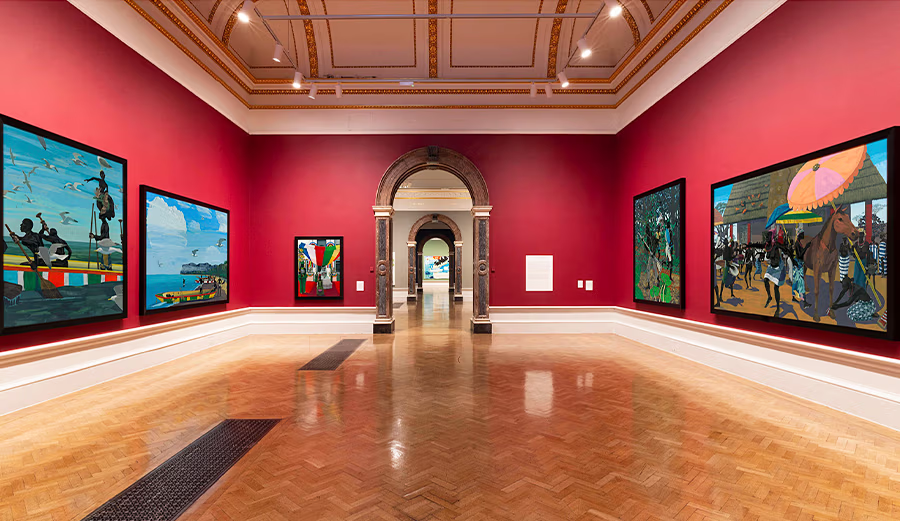
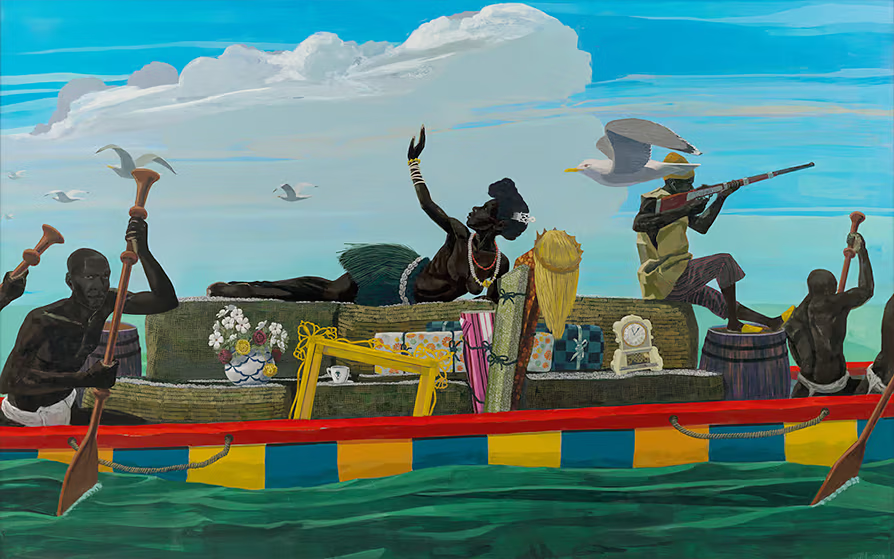
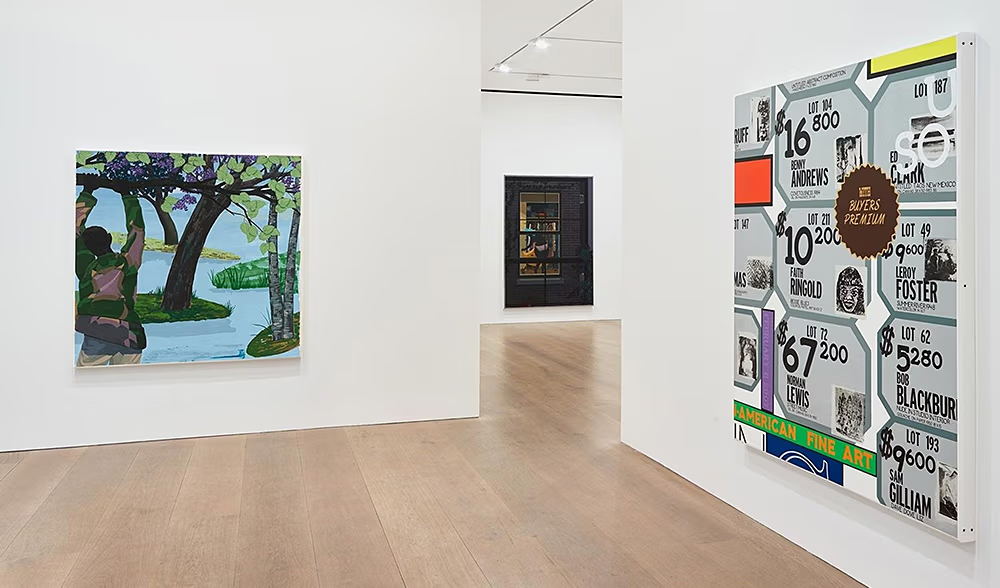
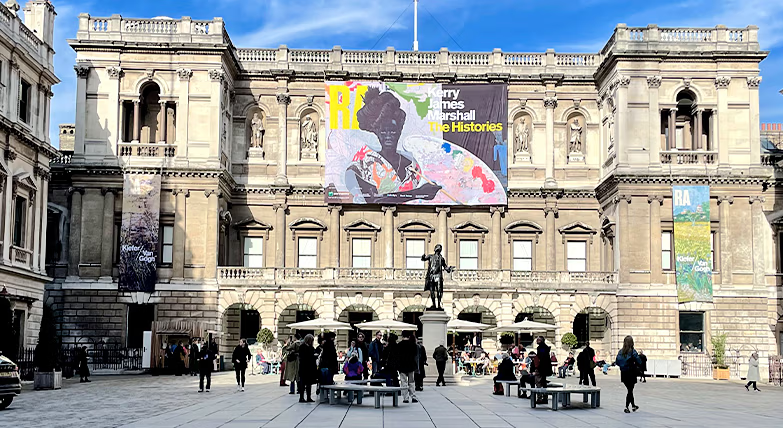
The series of paintings entitled Africa Revisited, displayed in a separate room at The Histories exhibition, consists of Marshall’s recent, ambitious and highly detailed compositions. Compositions such as Haul (2025), Cove (2025) and Outbound (2023), based on historical facts and imagined by the artist, examine scenes and stories of abduction or pursuit involving Africans complicit in the shameful underbelly of the slave trade. Here, too, the artist borrows compositional knowledge and perspective strategies that have significantly shaped the Western tradition and enable a deceptive treatment of space. She reuses these to demonstrate how problematic history is constructed.
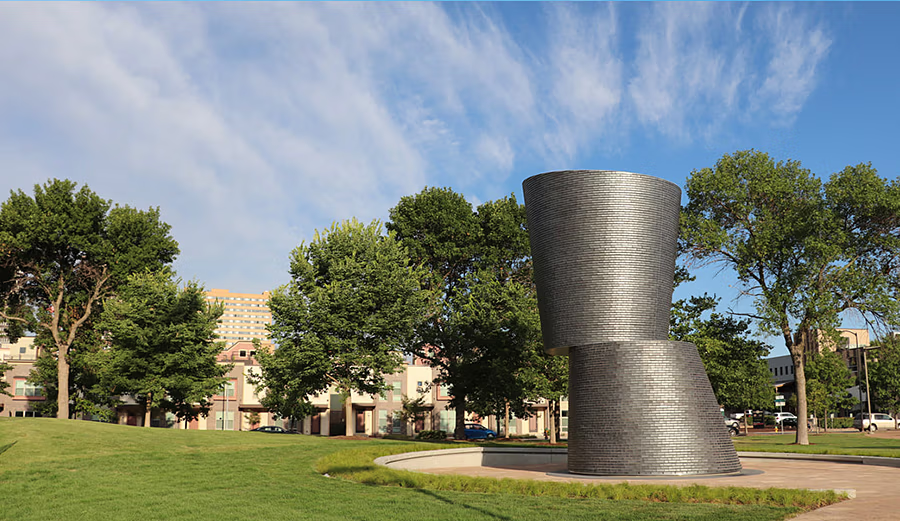
Commissioned by the Greater Des Moines Public Art Foundation in 2018, the public monument was created by Kerry James Marshall. Located in Hansen Triangle Park in Des Moines, Iowa, it is dedicated to pioneering black lawyers who, unable to register with the bar, successfully established their own professional organisation (the National Bar Association). Marshall created a powerful physical and poetic expression in this project, based on the concept of one drum form precariously stacked atop another. The sculpture embodies the concept of communication between different peoples and a legal system striving for balance, if not perfection. It stands 9 metres tall and has a diameter of 5 metres; the cladding material is manganese iron and stained brick.
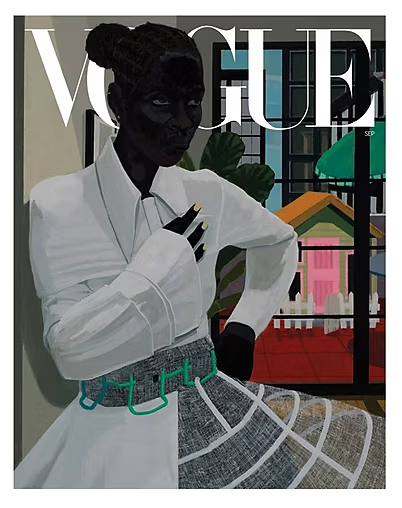
Vogue, September, 2020, Cover Image: Kerry James Marshall
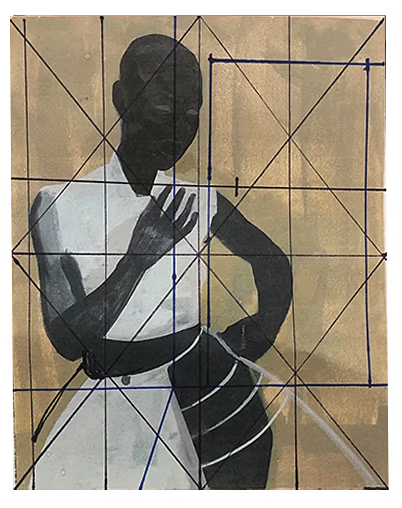
A sketch of Kerry James Marshall’s work for the September issue, Working Study 1, 2020.
Marshall creates a confident fictional character wearing an elegant evening gown for the cover of Vogue magazine in 2020, one who can act independently of the viewer’s and reader’s gaze.
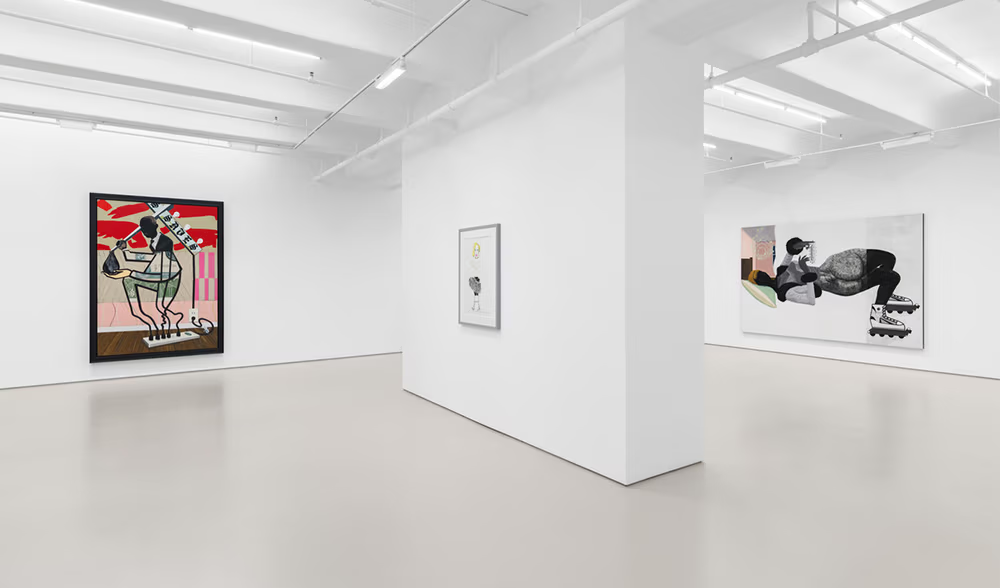
Kerry James Marshall: Exquiste Corpse: This is Not the Game
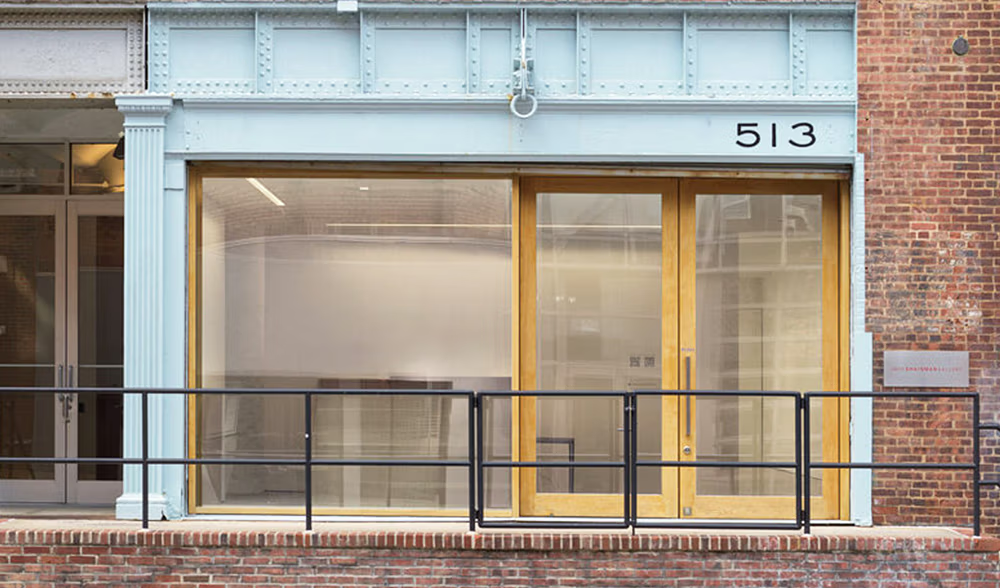
Kerry James Marshall: Exquisite Corpse: This is Not the Game, November 3 - December 23, 2022, Jack Shainman Gallery,
513 West 20th Street, New York, NY 10011
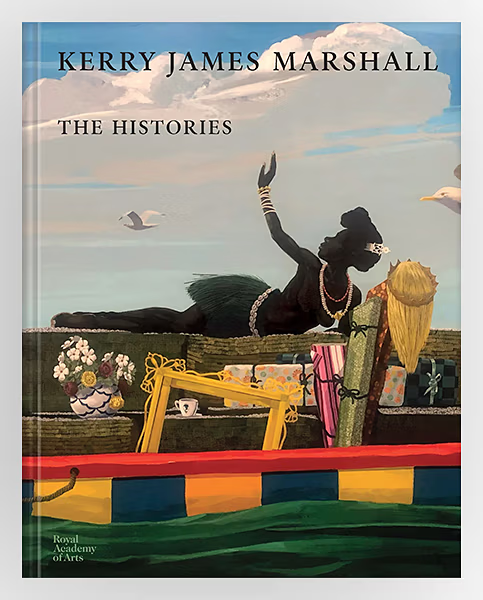
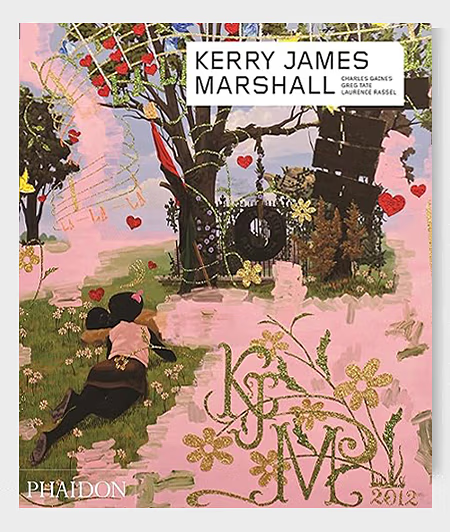
Kerry James Marshall, Contributors: Charles Gaines, Laurence Rassel, Greg Tate, Softcover, English, Pages: 160, Publisher: Phaidon, 2017.
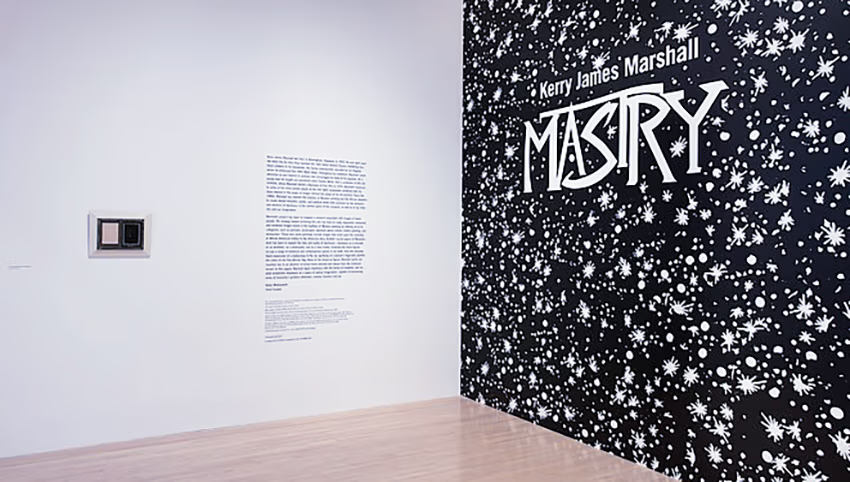
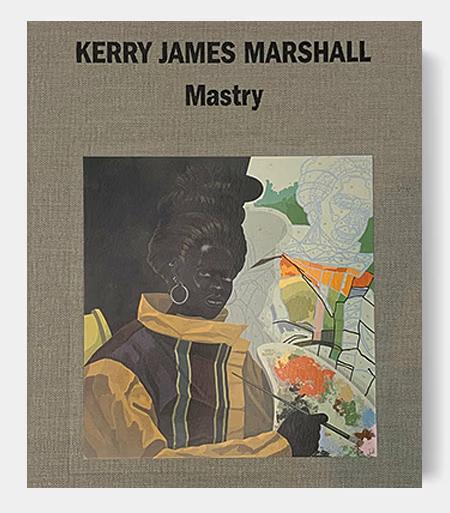
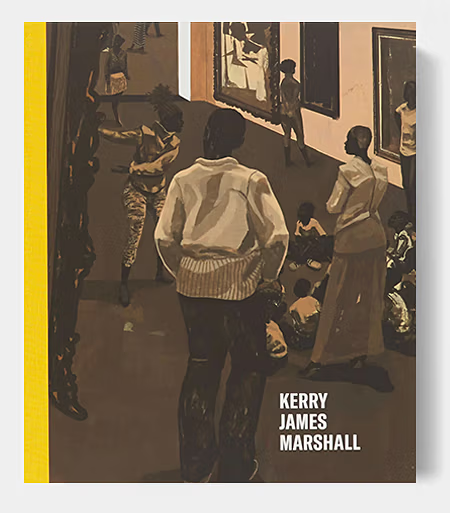
Kerry James Marshall / Mastry, Authors: Ian Alteveer, Hlen Malesworth, Dieter Roelstraete and Abigail Winograd, Publisher: Skira Rizzoli, Hardcover, English, Pages: 288, May 2016, USA.
Kerry James Marshall: History of Painting, Authors: Hal Foster and Teju Cole, Hardcover, English, 96 Pages, Publisher: David Zwirner Books, August 2019.
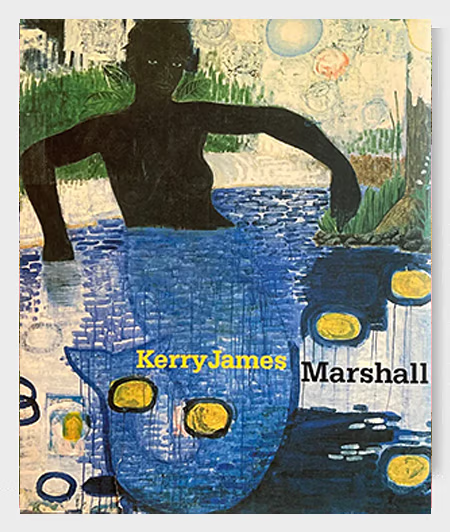
Kerry James Marshall, Author: Kerry James Marshall, English, 128 Pages, Hardcover, Publisher: Harry N. Abrams, November, 2000.
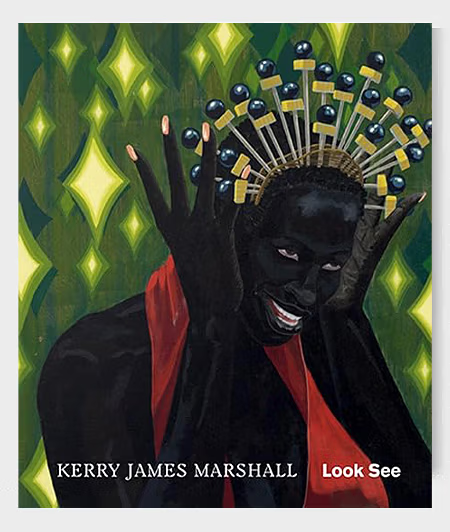
Kerry James Marshall / Look See, Contributors: Robert Storr, Angela Choon, Designer: Jason Pickleman, JNL Design, Printer: Studio Fasoli, Verona, Italy, Hardcover, Pages: 112, Publisher: David Zwirner Books, Publication Date: 2015,
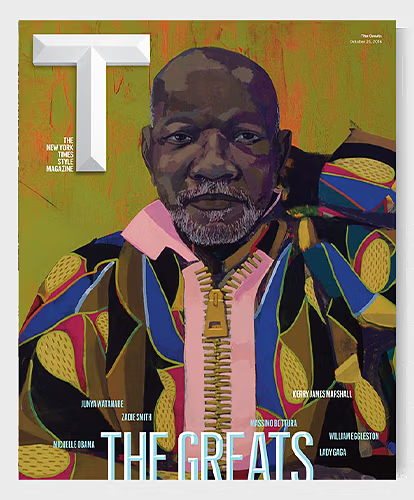
Cory Reynolds,”The Greats”, T / New York Times Style Magazine, 23 October 2016, USA.
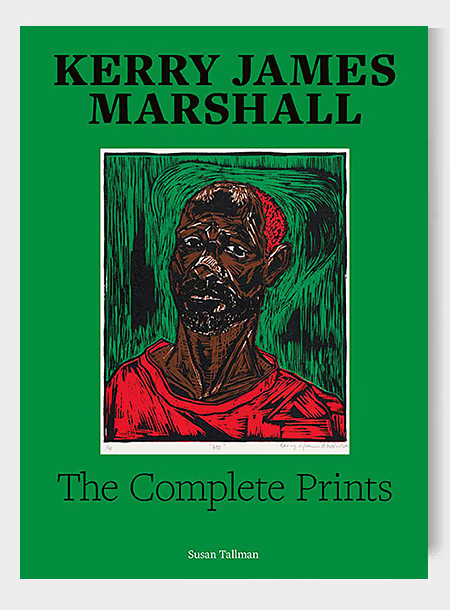
Susan Tallman,Kerry James Marshall / The Complete Prints 1976-2022, Hardcover, English, Pages: 272, Publisher: Ludion/D.A.P. October 2023.
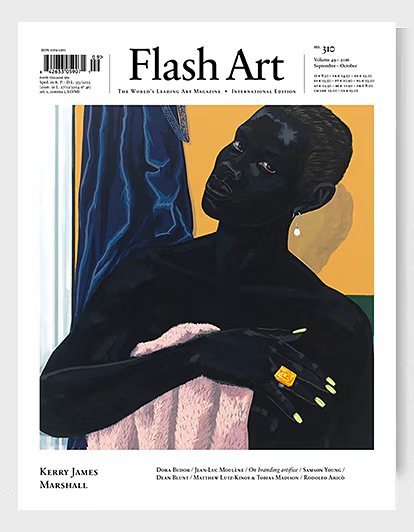
Flash Art, Issue: 310. October 2016. In October 2016 in New York and in March 2017 in Los Angeles, the artist spoke with Helen Molesworth on the occasion of the travelling retrospective ‘Mastry’.
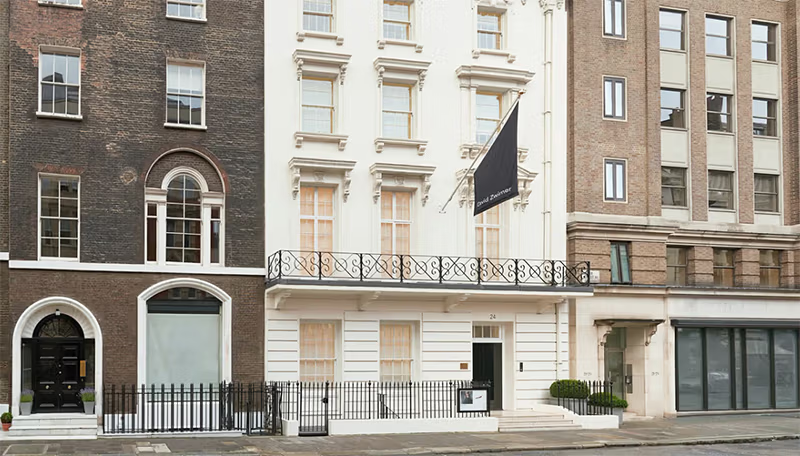
David Zwirner London, 24 Grafton Street, London W1S 4EZ
David Zwirner is a leading art gallery renowned for hosting innovative, original and pioneering exhibitions. David Zwirner opened his first gallery in New York’s SoHo district in 1993. In the early 2000s, he moved from SoHo to Chelsea. In 2012, it opened a gallery in London’s Mayfair district, followed shortly thereafter by galleries in Hong Kong, Paris, and, two years ago, Los Angeles, all of which have attracted attention with their spacious exhibition areas and facilities.
Jack Shainman, 513 West 20th Street, New York, NY 10011
It was founded in Washington DC in 1984 by Jack Shainman and Claude Simard (1956–2014). Shortly afterwards, it relocated to New York, opening two additional exhibition spaces in a new 30,000-square-metre building known as The School. Today, Jack Shainman Gallery is known for its extensive roster of both emerging and established artists and collectives engaged with the social and cultural issues of the time.
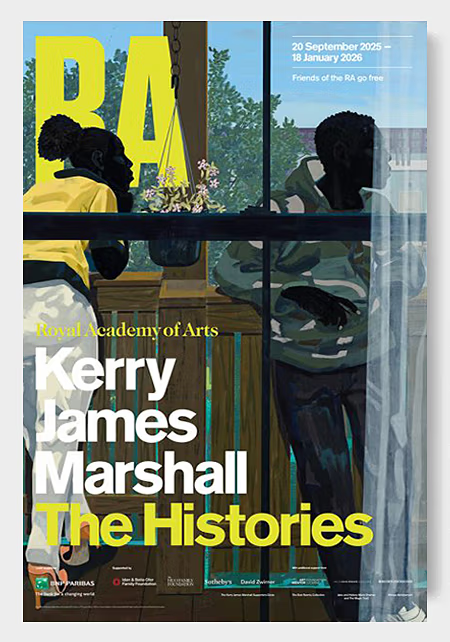
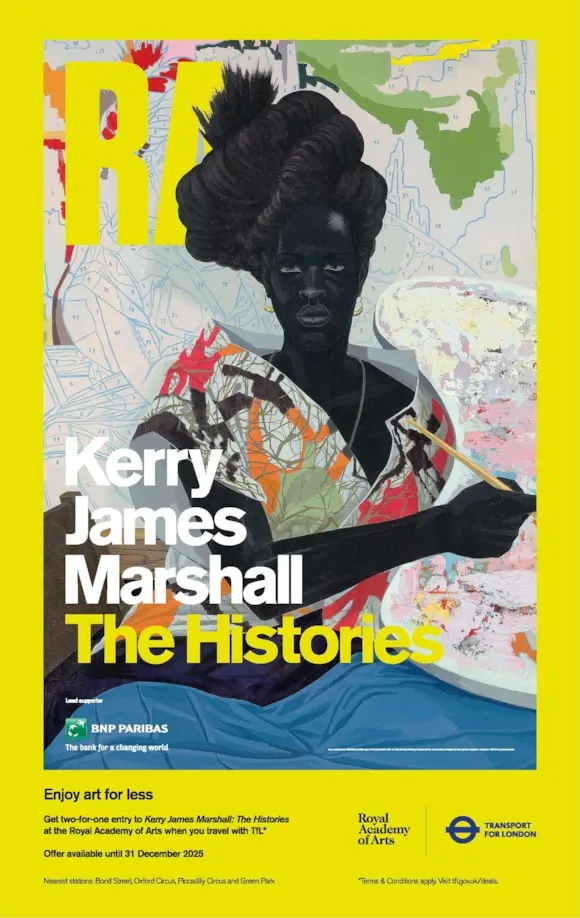
The Royal Academy of Arts (RA) was founded in 1768 by King George III. Its first president was Sir Joshua Reynolds. It is governed by successful Royal Academicians, artists and architects elected by their peers. The institution, which also houses Britain’s oldest art school, the Royal Academy, has been promoting the creation of visual arts for over 250 years through public programmes, regular exhibition projects and publications. It has a mission to support art, artists and art education. It also organises the Summer Exhibition, the world’s largest open-entry art exhibition, every year.
KERRY JAMES MARSHALL / BIO
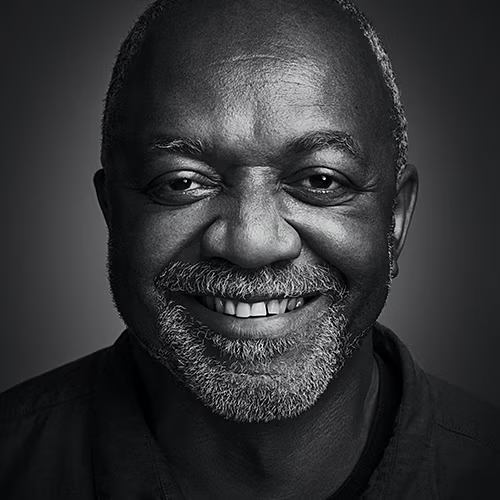
Kerry James Marshall, (born in 1955), is a graduate of Otis College of Art and Design with a Bachelor of Fine Arts (BFA) degree. He lives and works in Chicago. He is the recipient of numerous awards, including the 1997 MacArthur Fellowship. A comprehensive retrospective of Marshall’s work was organised by the Museum of Contemporary Art, Chicago (2016), the Metropolitan Museum of Art, New York (2016–17), and the Museum of Contemporary Art, Los Angeles (2017). Marshall’s paintings, sculptures, collages, videos, and photographs address themes of Black identity, experience, and representation. Through her compelling recent paintings, she combines political references that question the established order of Western art, challenging traditional representational forms and historical narratives, with an exploration of assumed new realities. (Photo: Jason Bell)
saglamart is an independent publishing initiative driven by a dynamic vision, focusing on events and developments in the cultural-artistic landscape, artist perspectives, works, and publications. All rights reserved. Images and texts cannot be used without permission.