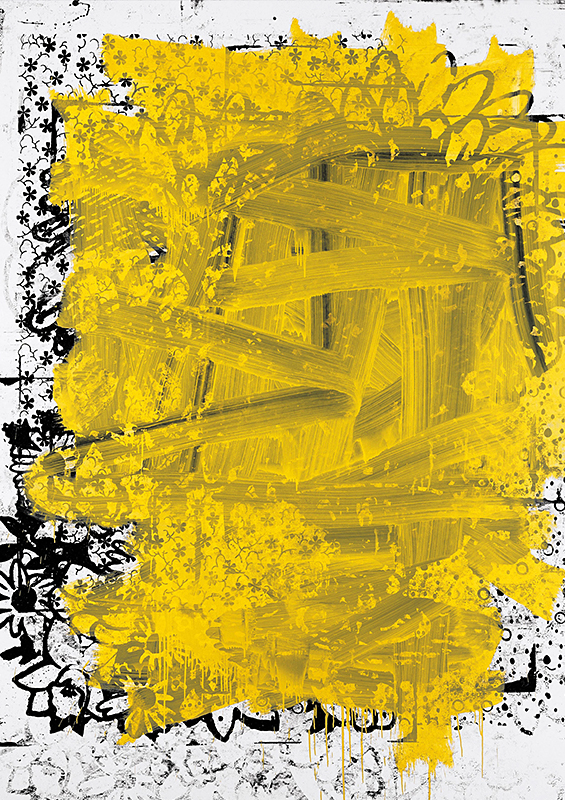
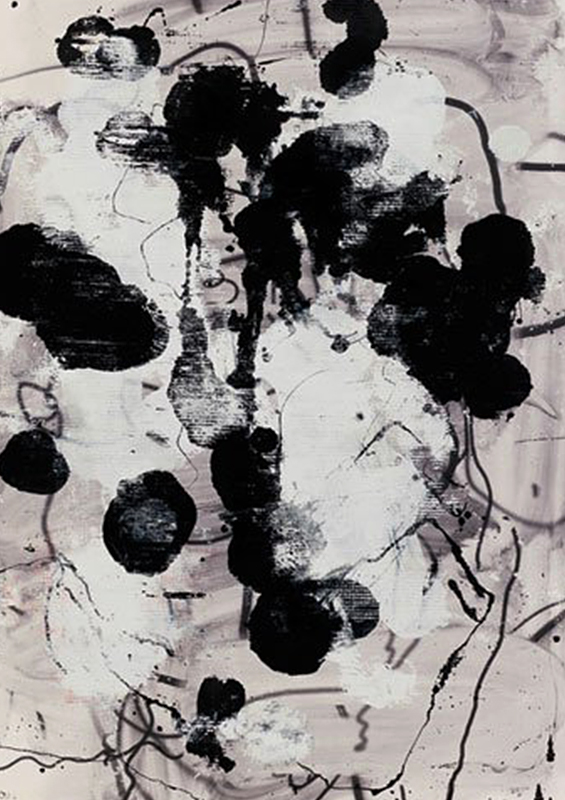
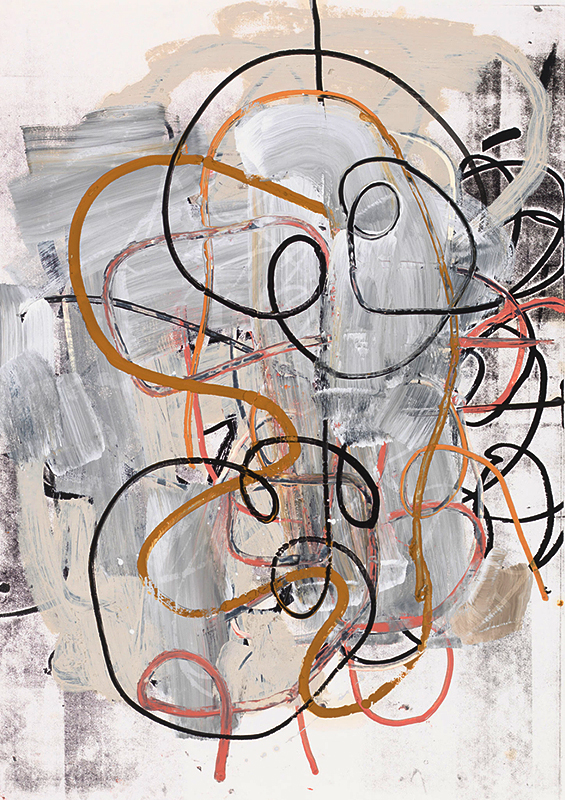
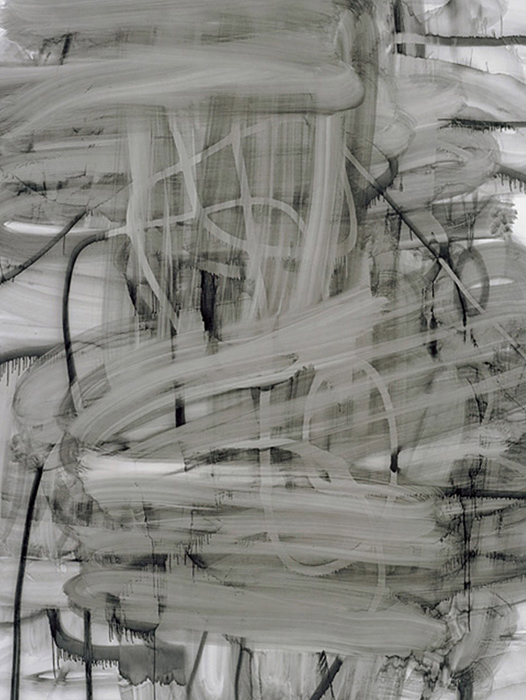
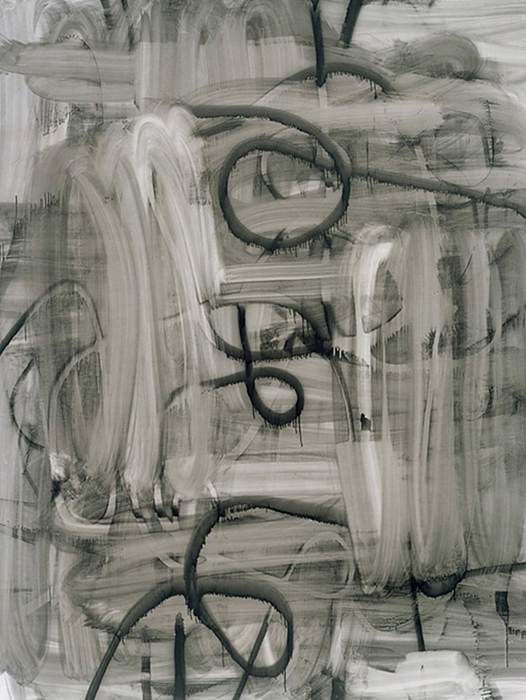
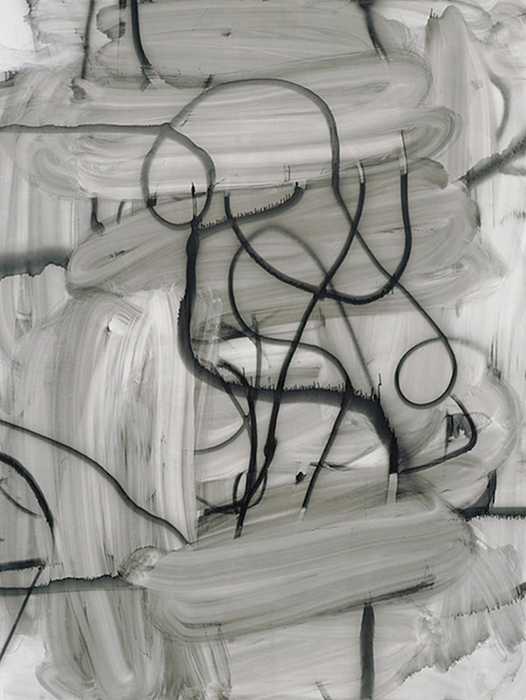
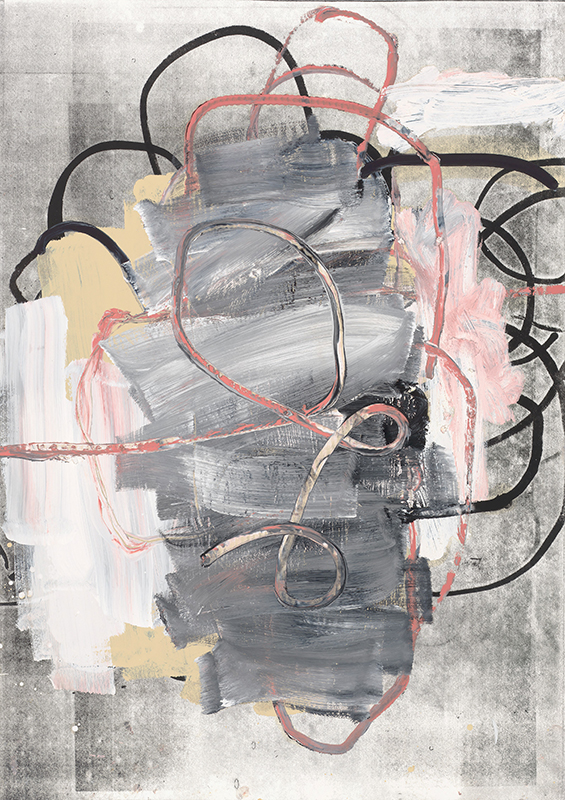
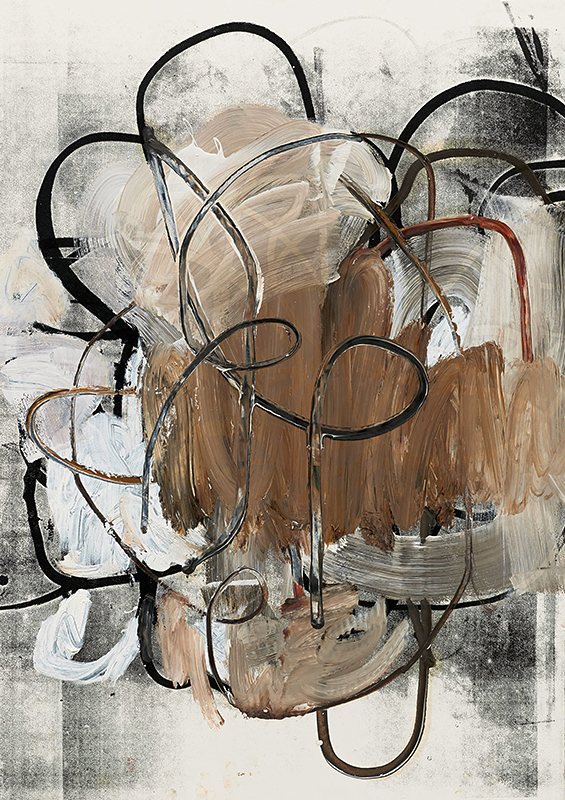
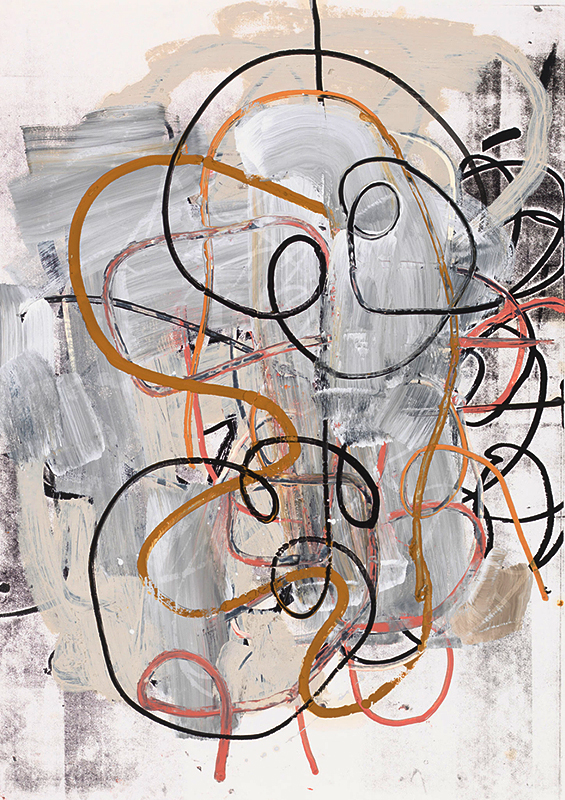
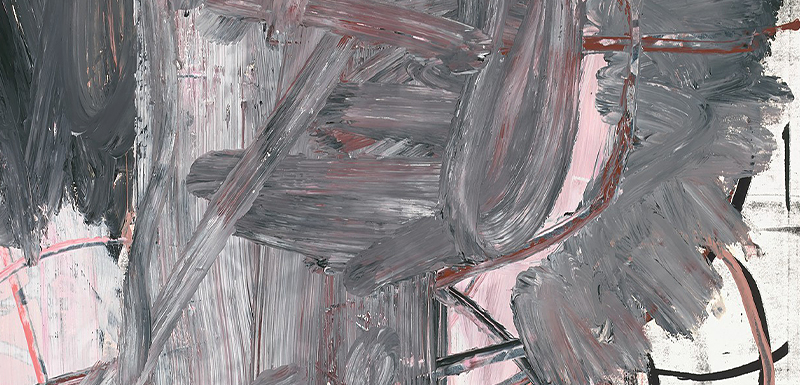
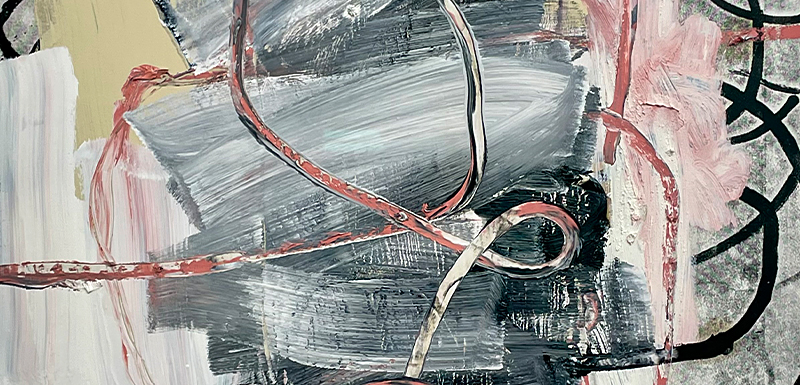
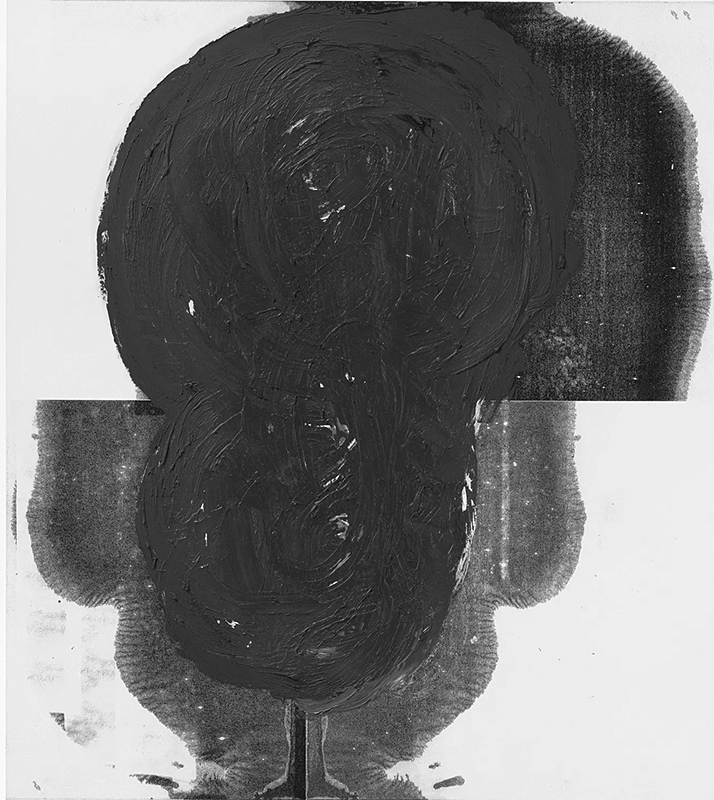
Image: Christopher Wool, Untitled (detail), 2020, oil and inkjet on paper, 56 × 43 cm. Artwork © Christopher Wool and Xavier Hufkens; Photograph: Tim Nighswander/Imaging4art.
Christopher Wool’s art takes shape within an abstract expressionist trajectory determined by a variable, experimental, and minimal production, simultaneously charged with an anarchic energy. He attempts to control the chaotic order of the surface, which integrates digital marks alongside painterly gestural attitudes and typographic contributions. In other words, he produces the outcomes of an intertextual encounter that renders visible the relationship between language and meaning emerging under the psychological conditions of an uncanny production environment.
the variable performance of the early period
Wool’s early paintings are formed beyond any ideological positioning, through tense surface relations experienced on a seemingly contradictory axis. That is, although they propose a conceptual quality, they refuse the possibility of positioning anywhere outside their psychological and cultural connotations. Moreover, here he seeks to draw attention to an anarchist spirit and energy that determines the visual language. Consequently, this venture that boldly interrogates its own painting reveals, in many respects, the austere results of experimental paint applications.
In the first phase, the artist confronts harshly such issues as decoration, design, and language that problematize the commodification process of modern painting, then rapidly adopts an understanding of surface design based on repetition. Through floral-patterned paintings, he transitions to a Minimalist procedure, arriving at abstract arrangements that appear extremely radical. Precisely at this stage, a crude and emotional paint rhetoric comes into play—one that displaces legible images and is either covered over or reinforced by printing techniques. The abstract-conceptual arrangements categorized under the name Language Paintings, which bring the calligraphy of letters and words closer to graffiti aesthetics, emerge as an anti-painting approach with manipulated, fragmented, and irregularly spaced elements within a logic of syncopated rhythmic order. These provocative paintings position themselves at a distance through their lyrical connections. Furthermore, they do not delay in evolving into radical abstract arrangements with Wool’s turn toward monochrome paint usage.
Indeed, Wool’s paintings reach monochrome, pure painterly abstractions with a mature aesthetic comprehension in a short time. Dense and layered surfaces are presented as closed psychic fields created through simultaneous interventions. These monochrome abstractions must inevitably be seen in terms of the dynamism of paint movements. However, it would be more appropriate to characterize them as internal and contradictory interpretations developed upon the idea of order and chaos—interpretations that resist parodic impulses, beyond any modernist emulation.
the products of an abrasion practice
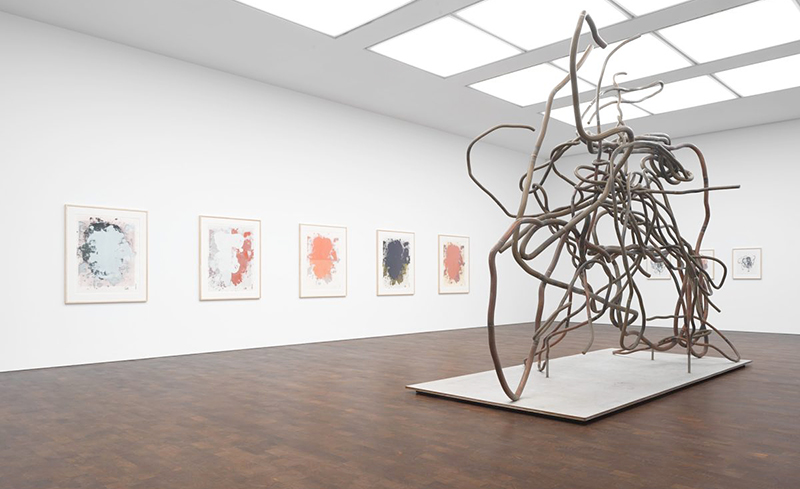
Already, photographic series and experimental prints consisting of scenes of alienation and decay that convey the tension between control and disorder gradually consolidate this shared and subversive creative will. Thus, this search for multiple languages achieves a rich diversity of production that also encompasses sculpture. The chaos created with metal rods seems structured here as the equivalent of an erosive urban vernacular language that finds its meaning in sculptural practice.
Christopher Wool generally maintains an approach that works with abstract forms, directing or renewing painting’s expressive potential through strategies of multiplication, erasure, and manipulation. His paintings that most clearly reveal this scope are also, in fact (and always), an aesthetic element that inverts the image sequence, formed through expressionless repetitions or collaged with different components.

This text is based primarily on the article ‘Patterns of Intent: Christopher Wool’ by Bruce W. Feruson, published in Art Forum magazine in 1991.
CURRENT EXHIBITIONS / LONDON 2025
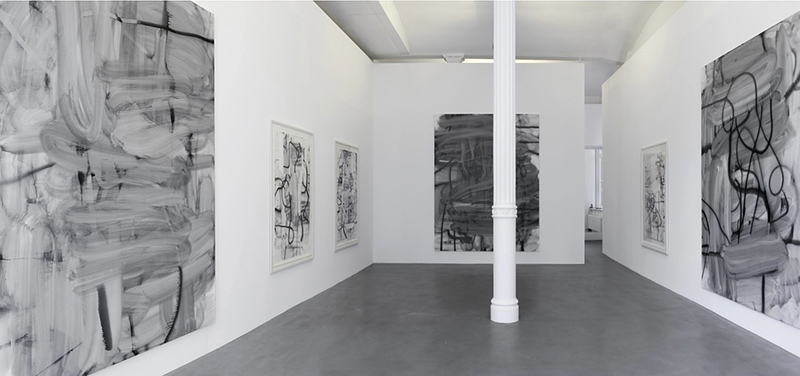
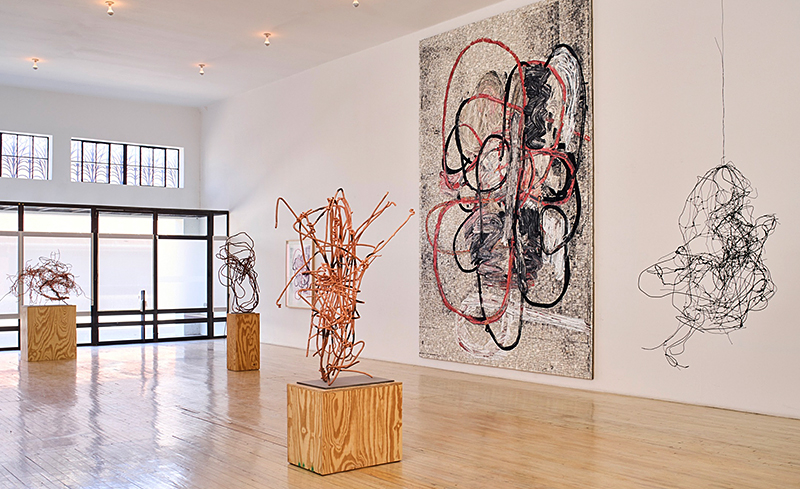
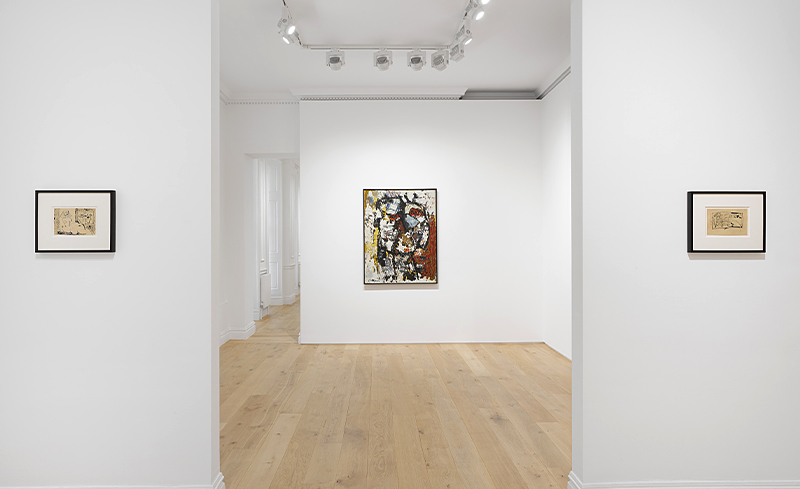
Exhibition view, Christopher Wool, Gagosian Gallery, Grosvenor Hill, London. Artwork © Christopher Wool, photo: Maris Hutchinson
1- Christopher Wool, Untitled, 2007, enamel on linen, 320 x 243.8 cm. Photo: Tom Powel Imaging. 2- Christopher Wool, Untitled, 2007, enamel on linen, 320 x 243.8 cm. Photo: Tom Powel Imaging. © Christopher Wool. 3- Christopher Wool, Untitled, 2007, enamel on linen, 320 x 243.8 cm. Photo: Tom Powel Imaging.
Christopher Wool’un sanatı; değişken, deneysel ve minimal bir üretimin ve aynı zamanda anarşik bir enerjinin belirlediği soyut dışavurumcu bir yörüngede şekillenir. Boyasal tavırlı jestler ve tipografik katkılar eşliğinde dijital lekelerle bütünleşen yüzeyin kaotik düzenini kontrol altına almaya çalışmaktadır. Başka bir deyişle, tekinsiz bir üretim ortamının psikolojik koşulları altında beliren dil ve anlam ilişkilerini görünür kılan metinlerarası bir buluşmanın ürünlerini ortaya çıkarmaktadır.
erken dönemin değişken performansı
Wool’un erken dönem resimleri, çelişkili görünen bir eksende yaşanan gergin yüzey ilişkileriyle herhangi bir ideolojik konumlandırmanın ötesinde biçimlenir. Yani kavramsal bir niteliği önermesine rağmen, psikolojik ve kültürel çağrışımları dışında herhangi bir yere konumlandırma olasılığını reddeder. Dahası burada, görsel dilin belirleyicisi olan anarşist bir ruha ve enerjiye dikkatleri çekmek ister. Dolayısıyla kendi resmini cüretle sorgulayan bu girişim, birçok bakımdan deneysel boya uygulamalarının yalın sonuçlarını karşımıza çıkarır.
İlk evrede modern resmin metalaşma sürecini sorunsallaştıran süsleme, tasarım ve dil gibi konularla sert biçimde yüzleşen sanatçı, hemen ardından tekrara dayalı bir yüzey tasarımı anlayışını hızla benimser. Çiçek imgeli örüntü resimleri üzerinden, Minimalist bir prosedüre geçiş yaparak son derece radikal görünen soyut düzenlemelere ulaşır. Tam da bu aşamada okunur imgeleri öteleyen ve baskı teknikleriyle üzeri örtülen ya da pekişen kaba ve duygusal bir boya retoriği devreye girer. Language Paintings adı altında kategorize edilen, harf ve sözcük unsurlarının kaligrafisini graffiti estetiğine yakınlaştıran soyut-kavramsal düzenlemeler, aksak ritimli düzen mantığı içinde manipüle edilmiş, parçalanmış ve düzensiz boşluklara sahip bir anti-resim yaklaşımı olarak karşımıza çıkar. Kışkırtıcı bir nitelik taşıyan bu resimler, lirik bağlantılarıyla mesafeli bir şekilde konumlanır. Dahası, Woll’un monokroma dönüşen boya kullanımıyla radikal soyut düzenlemelere evrilmekte gecikmez.
Gerçekten de Wool’un resimleri, kısa bir zamanda olgun bir estetik kavrayışla monokrom, saf boyasal soyutlamalara ulaşır. Yoğun ve katmanlı yüzeyler, eşzamanlı müdahalelerle oluşturulan kapalı psişik alanlar hâlinde karşımıza çıkarılır. Bu monokrom soyutlamaları, kaçınılmaz bir şekilde boya hareketlerinin dinamizmi açısından görmek gerekir. Ancak, onları modernist bir öykünmenin ötesinde, parodiye yönelik dürtülere direnen düzen ve kaos fikri üzerine geliştirilmiş içsel ve çelişkili yorumlar olarak nitelemek daha yerinde olur.
bir aşındırma pratiğinin ürünleri
Zaten; kontrol ve düzensizlik arasındaki gerilimi duyumsatan yabancılaşma ve çürüme sahnelerinden oluşan fotoğraf dizileri ve deneysel baskıresimler de zamanla bu ortak ve aykırı yaratıcı iradeyi pekiştirir. Dolayısıyla bu çoklu dil arayışı, heykeli de kapsayan zengin bir üretim çeşitliliğine kavuşur. Metal çubuklarla oluşturulan karmaşa, burada heykel pratiğinde anlamını bulan aşındırıcı bir kentsel yerel dilin karşılığı olarak yapılandırılmış gibidir.
Christopher Wool genelde, soyut formlarla çalışan, çoğaltma, silme ve manipülasyon stratejileriyle resmin ifade potansiyelini yönlendiren ya da yenileyen bir tavır içindedir. Bu kapsamı en net biçimde ortaya koyan resimleri de aslında (ve her zaman) görüntü dizilimini ters yüz eden, ifadesiz tekrarlarla biçimlenen ya da farklı unsurlarla kolajlanmış estetik bir unsurdur.
Bu metinde ağırlıklı olarak Bruce W. Feruson tarafından 1991 yılında Art Forum dergisinde yayınlanan “Patterns of Intent: Christopher Wool” adlı yazıdan yararlanılmıştır.
SOLO EXHIBITION / BERLIN 2007
Installation view, Christopher Wool, Solo Exhibition, Berlin-Mitte: Zimmerstraße 90/91, Berlin 2007.
WOOL’S PAINTINGS
Wool’s paintings quickly attain a mature aesthetic understanding, reaching monochrome, pure painterly abstractions. Dense and layered surfaces emerge as closed psychic spaces created through simultaneous interventions. These monochrome abstractions must inevitably be viewed in terms of the dynamism of the paint movements. However, it would be more accurate to describe them as contradictory internal interpretations developed around the idea of order and chaos, resisting the urge towards parody, beyond a modernist interpretation. […] Wool generally adopts an attitude of working with abstract forms, directing or renewing the expressive potential of painting through strategies of duplication, erasure and manipulation. His paintings that most clearly demonstrate this scope are actually (and always) an aesthetic element that reverses the sequence of images, shaped by expressionless repetitions or collaged with different elements.
Wool’un resimleri, kısa bir zamanda olgun bir estetik kavrayışla monokrom, saf boyasal soyutlamalara ulaşır. Yoğun ve katmanlı yüzeyler, eşzamanlı müdahalelerle oluşturulan kapalı psişik alanlar hâlinde karşımıza çıkarılır. Bu monokrom soyutlamaları, kaçınılmaz bir şekilde boya hareketlerinin dinamizmi açısından görmek gerekir. Ancak, onları modernist bir öykünmenin ötesinde, parodiye yönelik dürtülere direnen düzen ve kaos fikri üzerine geliştirilmiş çelişkili içsel oyrumlar olarak nitelemek daha yerinde olur. […] Wool genelde, soyut formlarla çalışan, çoğaltma, silme ve manipülasyon stratejileriyle resmin ifade potansiyelini yönlendiren ya da yenileyen bir tavır içindedir. Bu kapsamı en net biçimde ortaya koyan resimleri de aslında (ve her zaman) görüntü dizilimini ters yüz eden, ifadesiz tekrarlarla biçimlenen ya da farklı unsurlarla kolajlanmış estetik bir unsurdur.
WOOL’S SCULPTURES
Installation view, Christopher Wool: See Stop Run West Texas, Marfa, Texas, May 2, 2025–May 2027. [Image: https://gagosian.com/quarterly/2025/10/15/essay-christopher-wool-see-stop-run/]
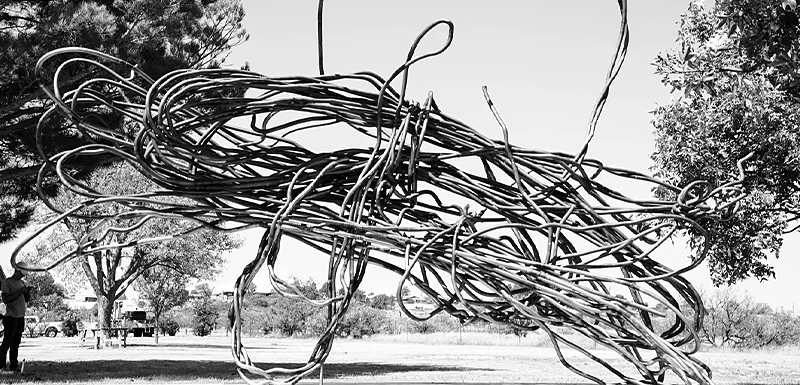
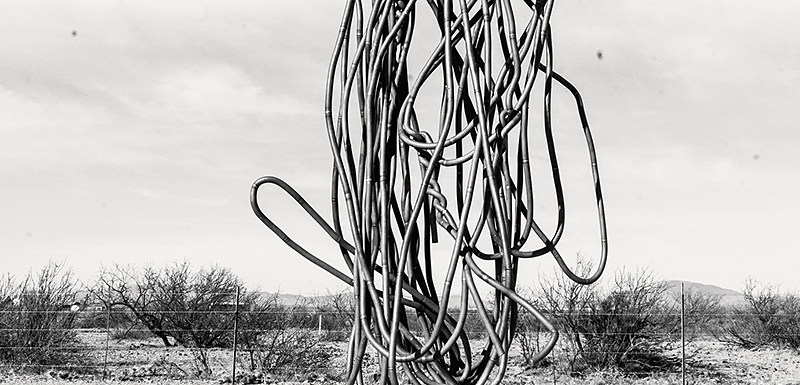
Christopher Wool’s photographs taken in Marfa in the 2010s consist of images that thematically reflect sculptural situations and lead him towards three-dimensional arrangements. Here, he also encounters old fences and hay bale wires that evoke the linear elements seen in his paintings and resemble lyrical scribbles. The model sculpture practice undertaken with these discarded materials, immediately followed by modelling and casting in bronze on a large scale, acquires a symbolic meaning, particularly in relation to abandoned rural areas. Thus, this production, which almost spontaneously determines its formal character, transforms into sculptures that interact with the outdoor space through a large-scale structure, possessing a dynamic linear intensity and a lyrical yet threatening appearance.
Christopher Wool’un 2010’lu yıllarda Marfa’da çektiği fotoğraflar tematik olarak heykelsi durumları yansıtan görüntülerden oluşur ve onun üç boyutlu düzenlemelere yönelmesini sağlar. Burada aynı zamanda resimlerinde görülen çizgisel unsurları çağrıştıran ve lirik karalamalara benzeyen eski çitlerle ve saman balyası telleriyle karşılaşır. Hurdaya ayrılmış bu malzemelerle girişilen maket heykel pratiği, hemen ardından modellenerek bronza dökülmüş büyük ölçeklere kavuşarak özellikle terk edilmiş kırsal alanlara ilişkin simgesel bir anlam değer kazanır. Böylece neredeyse kendiliğinden biçimsel karakterini belirleyen bu üretim; büyük boyutlu bir yapılandırmayla dış mekânla etkileşime giren, dinamik çizgisel yoğunluğa, lirik ve tehditkâr bir görünüme sahip heykellere dönüşür.
TWO ESSAYS ON WOOL’S SCULPTURES / BY GÜLAY YAŞAYANLAR
AN ICONIC EXHIBITION: SEE STOP RUN
Installation view, Christopher Wool: See Stop Run, 101 Greenwich St, March 14 – July 28, 2024, New York, Artwork © Christopher Wool.
SEE STOP RUN EXHIBITION IN MARFA / 2027
Installation view, Christopher Wool: See Stop Run West Texas, Brite Building, Marfa, Texas, May 2, 2025–May 2027. Artwork © Christopher Wool. Photo: Alex Marks
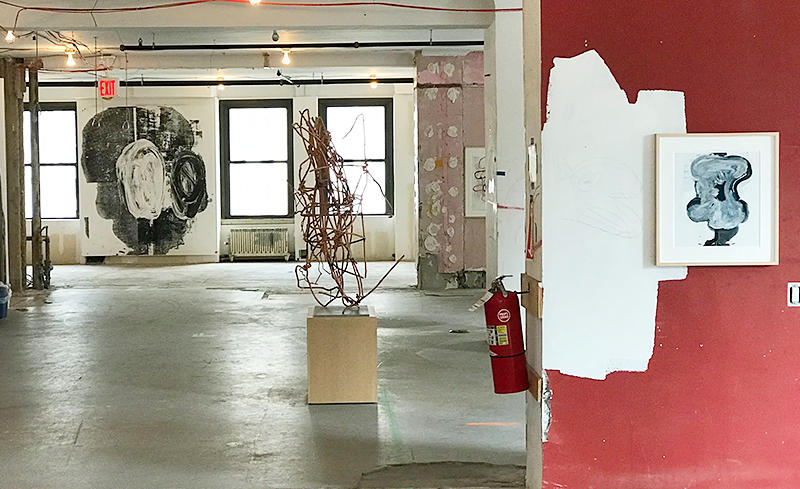
A new chapter of See Stop Run, a survey of more than seventy works by Christopher Wool from the past decade first presented in New York in 2024, is on view in the historic Brite Building in Marfa, Texas. Organized by the artist with curator Anne Pontégnie, the selection emphasizes Wool’s complex image-making process and the interconnectivity between mediums: painting, sculpture, photography, and mosaic. In Marfa, where Wool’s sculptural practice originated, three large outdoor sculptures will be on view. The exhibition is free and open to the public.
Christopher Wool’un son on yılda yaptığı yetmişten fazla eserin yer aldığı ve ilk olarak 2024’te New York’ta sergilenen See Stop Run sergisinin yeni bölümü Teksas, Marfa’daki tarihi Brite Binası’nda izleyiciyle buluşuyor. Sanatçı ve küratör Anne Pontégnie tarafından düzenlenen seçki, Wool’un karmaşık imge oluşturma sürecini ve resim, heykel, fotoğraf ve mozaik gibi ortamlar arasındaki bağlantıyı vurguluyor. Wool’un heykel çalışmalarının doğduğu yer olan Marfa’da, üç büyük açık hava heykeli de sergileniyor.
WOOL’S SILKSCRENS
Christopher Wool, Untitled,
2016, silkscreen ink on linen
274.3 x 243.8 cm. © Christopher Woll.
Christopher Wool, Untitled,
2017, silkscreen ink on linen
274.3 x 243.8 cm. © Christopher Woll.
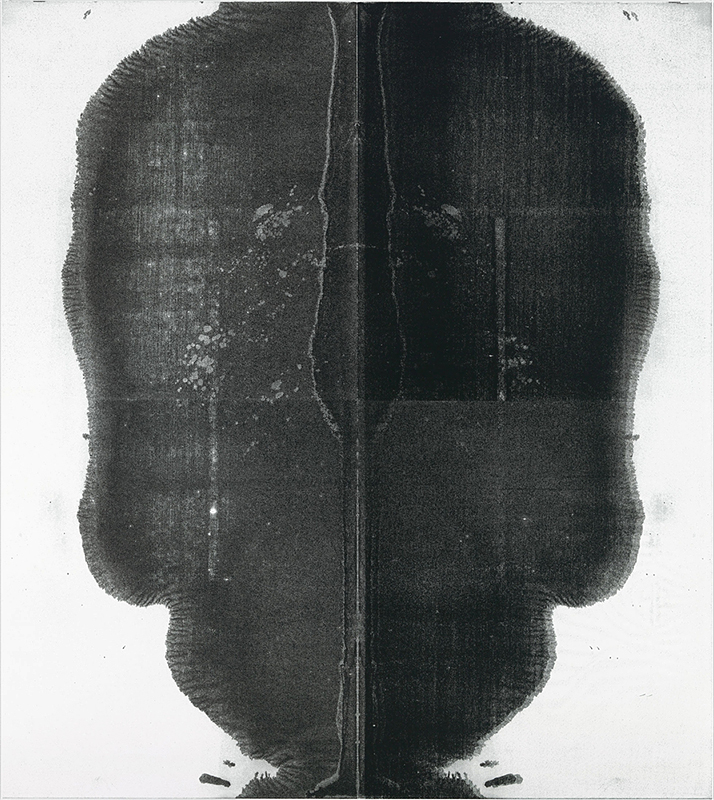
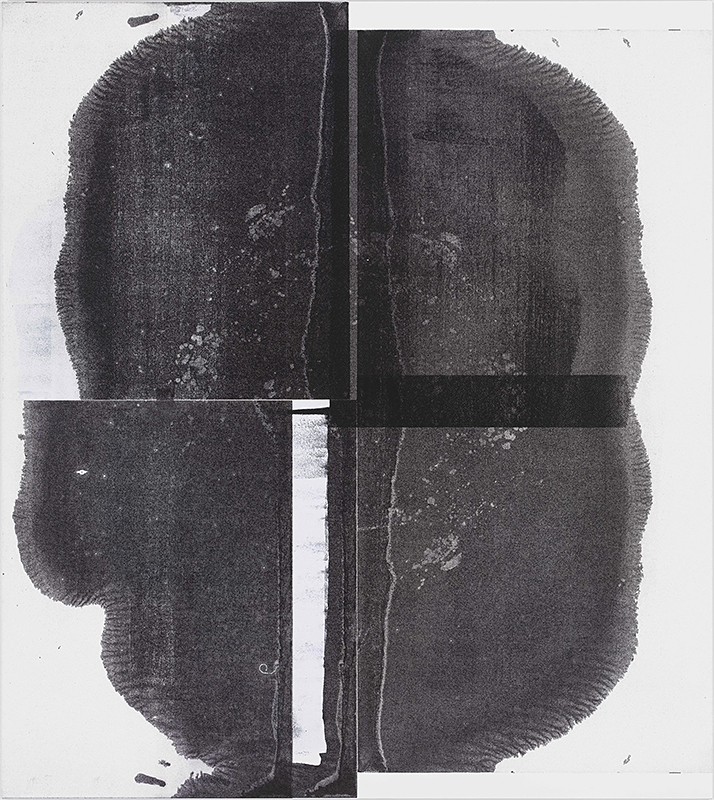
The vast majority of Christopher Wool’s works, created using printmaking techniques on paper, are produced for use in limited-edition artist’s books. Organised in successive thematic series, these sequential images, differentiated by repetition and partial interventions, evolve into a unique character, approaching the realm of painting. The images that emerge on these surfaces, where paint is layered in a complex manner, resemble the images used in Rorschach tests. Here, the manipulation of scanned images using digital methods becomes an extension of the overlapping understanding that characterises Wool’s artistic production process. Undoubtedly, this reproduction technique, which allows for layering through inversion, detail extraction, enlargement or reduction, is also significant in terms of preserving distinct gestures at a mechanical distance… This fragmented structure is the focal point of the narrative and possesses an ironic power that enables the prints, which increasingly reconcile with the canvas, to achieve biomorphic shapes that are mixed and turned inside out. (See: Mark Prince, ArtReview, October 2017)
Christopher Wool’un kâğıt üzerine baskıresim tekniklerini kullanarak gerçekleştirdiği işlerin büyük çoğunluğu, sınırlı sayıda hazırlanan sanatçı kitapları içinde kullanılmak üzere üretilir. Birbirini takip eden tematik seriler halinde yapılanan, yani tekrarla ve kısmi müdahalelerle farklılaşan dizi resimler, özgün bir karaktere evrilerek boyaresimlere yakınlaşır. Boyanın karmaşık bir şekilde katmanlaştığı bu yüzeylerde beliren imgeler, tıpkı Rorschach testlerinde kullanılan görüntüleri andırır. Burada taranmış imgelerin dijital yöntemlerle manipülasyonu Wool’un sanatsal üretim sürecinde tipikleşen ve örtüşen anlayışın bir uzantısı hâline gelir. Hiç kuşkusuz ki, ters çevirme, detay alma, büyütme ya da küçültme ile katmanlaşmaya izin veren bu yeniden üretim uygulaması, aynı zamanda belirgin jestleri mekanik bir mesafede koruması bakımından önemlidir… Bu parçalı yapılanma, olay örgüsünün odak noktasıdır ve giderek tuvalle uzlaşan baskıların, karıştırılarak ters yüz edilen biyomorfik şekillere ulaşmasını sağlayan ironik bir güce sahiptir. (Bkz. Mark Prince, ArtReview, October 2017)
SELECTED BOOKS & POSTERS
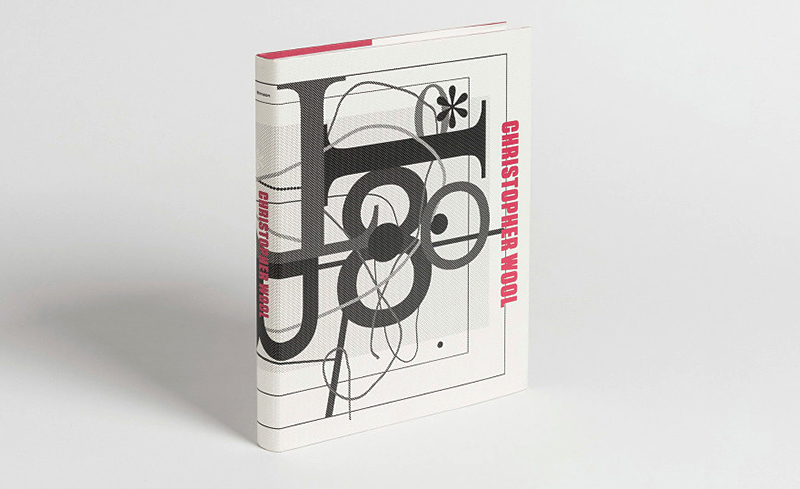
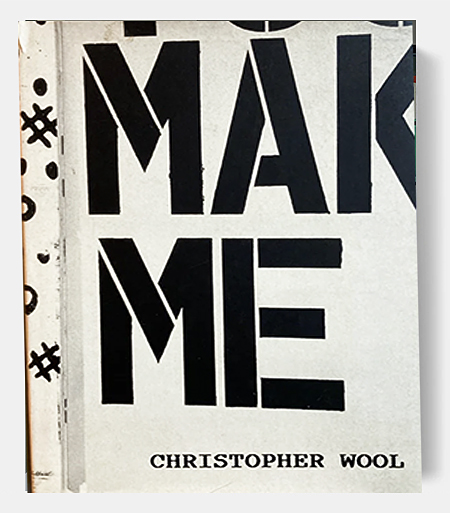
Christopher Wool, by Christopher Wool (Artist), Contributors: Katherine Brinson, Suzanne Hudson, Melinda Lang, Richard Prince, 288 pages, English, Hardcover, Guggenheim Museum Publications, November 30, 2013. New York, USA.
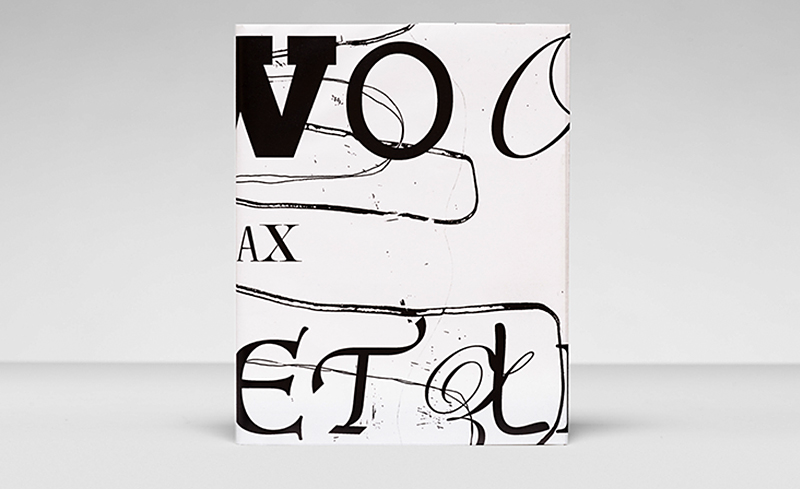
Christopher Wool, Publisher: Galerie Max Hetzler Berlin | Paris / Holzwarth Publications, Softcover, 56 pages, Berlin 2017.
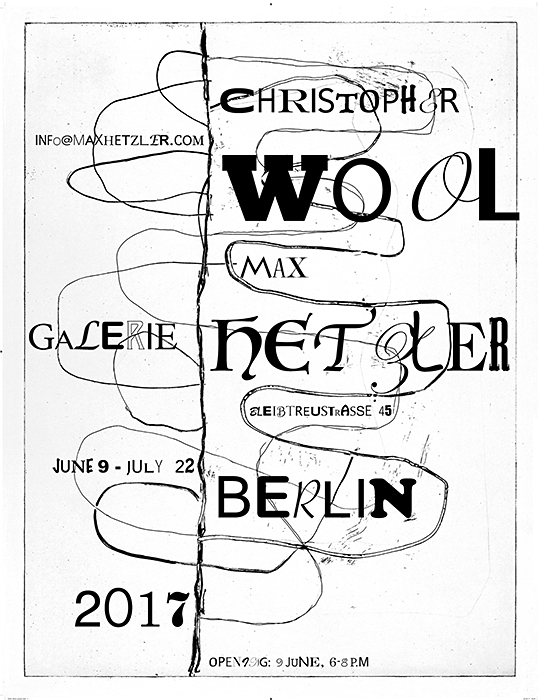
Christopher Wool (Exhibition Poster), Created by the Artist, Max Hetzler Gallery, Bleibtreustraße 45, Berlin, 9 June – 22 July 2017, 86.5 x 67 cm.
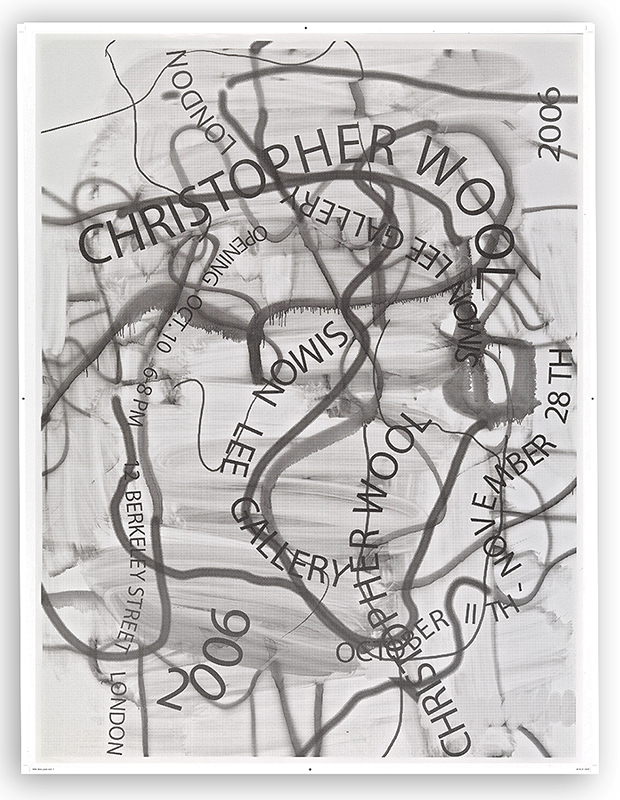
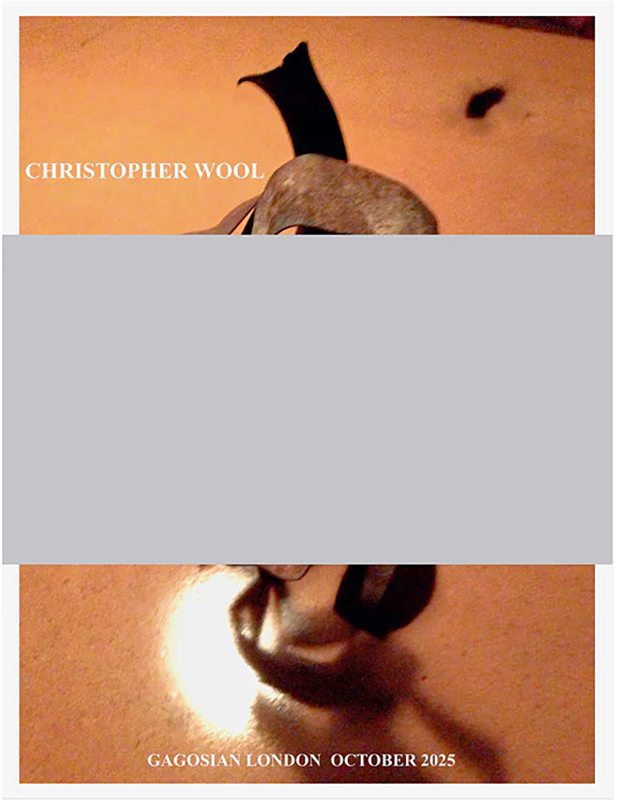
Christopher Wool, Exhibition Poster, Gagosian, Grosvenor Hill, London, October 2025, Publisher: Gagosian, 2025, 81.2×62.2 cm.
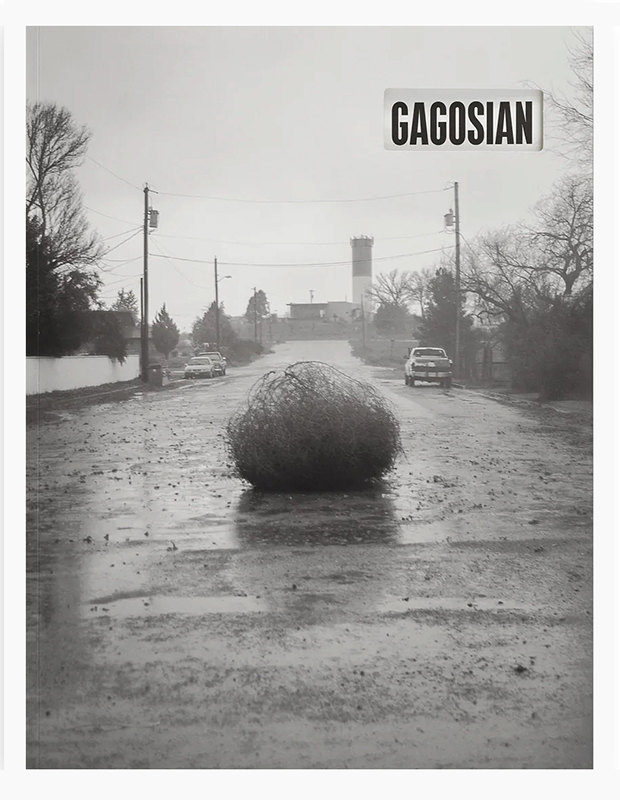
Gagosian Quarterly; No: 12, Winter 2019, Publisher: Gagosian Media, Designer: Graphic Thought Facility, London, Printer: Pureprint Group, Uckfield, England, Softcover, 186 pages, English
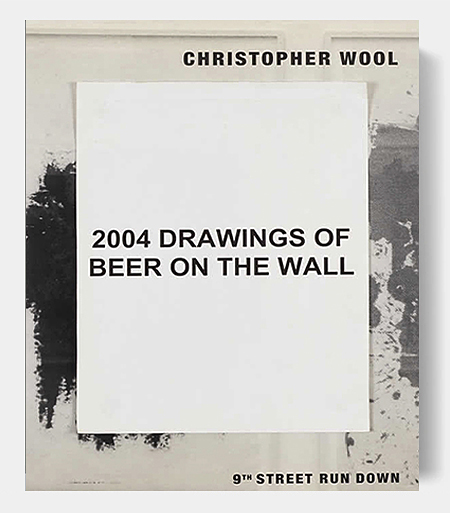
Christopher Wool: 2004 Drawings Of Beer On The Wall, Archival inkjet print, printed paper, Publisher: Christopher Wool, New York, 2004.
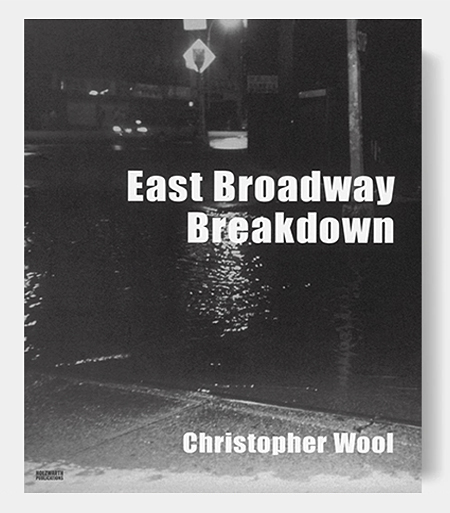
Christopher Wool: East Broadway Breakdown, by Christopher Wool (Artist), Paperback, 320 pages , English, Holzwarth Publications, February 2024. USA
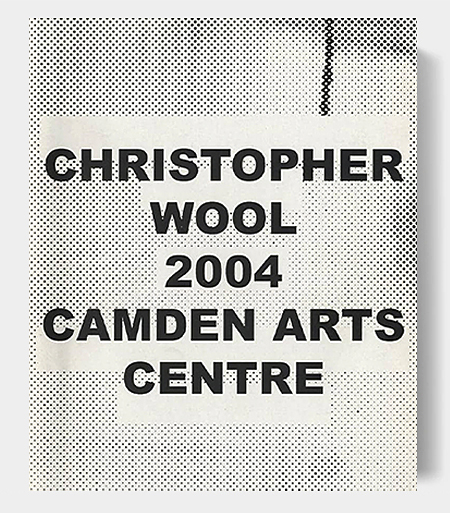
Christopher Wool 2004 Camden Arts Centre, Camden Arts Centre Publication, English, 24 unbound sheets, London, 2004.
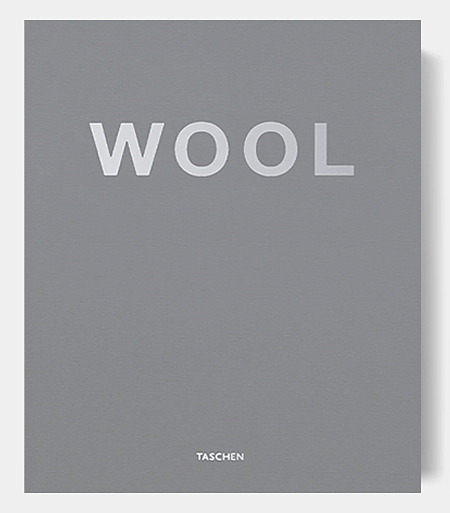
Christopher Wool, (English, French, German) Edition of 1000 Hardcover in clamshell box, 426 pages, Tashen. (Limited Collector’s Edition of 1,000 copies) 2008.
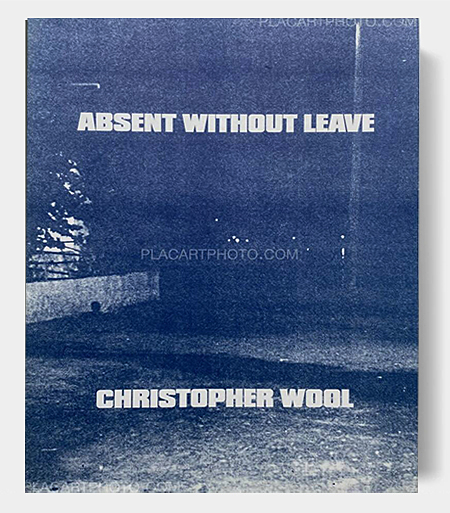
Christopher Wool: Absent Without Leave, Unknown Binding, by Christopher Wool (Author), English, Publisher: DAAD, January 1, 1993, USA.
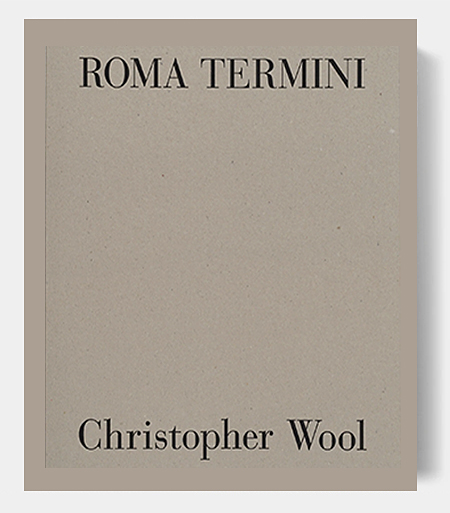
Christopher Wool: Roma Termini, Contributors: Tommaso Pincio, Designer: An Art Service, Minneapolis-New York, Softcover, 76 pages, English, Italian, Publisher: Gagosian, Shapco Printing, 2010,
Christopher Wool, Absent Without Leave, Christopher Wool, Ann Goldstein, Thomas Crow, Scalo Verlag – Museum of Contemporary Art, English, Hardcover, Los Angeles, 1998, Zurich.
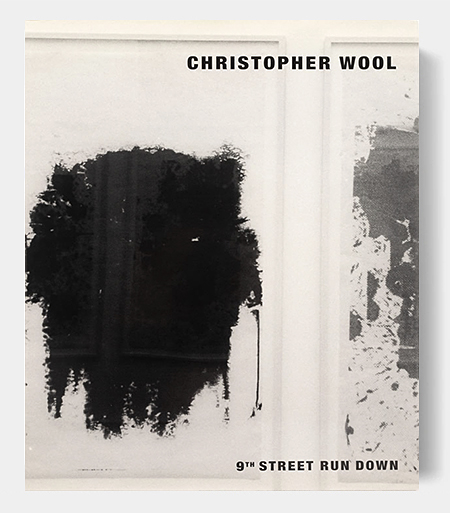
Christopher Wool: 9th Street Run Down, by Christopher Wool (Author), English, Paperback, 96 pages, 6 August 2001.
Gallery RepresentatIon
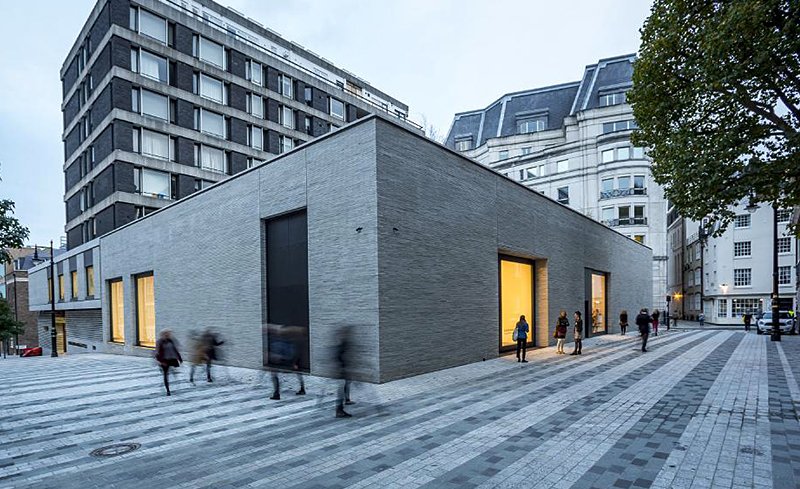
Founded in Los Angeles in 1980 by Larry Gagosian, Gagosian is a global gallery specialising in modern and contemporary art, with eighteen exhibition spaces across the United States, Europe and Asia. Gagosian operates with an approach that presents the works of its artists alongside historical research and in-depth analysis. It works with major artists such as G. Baselitz, U. Fischer, K. Grosse, A. Gursky, D. Hirst, A. Kiefer, T. Murakami, A. Oehlen, G. Penone, R. Prince, E. Ruscha, J. Saville, T. Simon, J. Wall, and R. Whiteread. Gagosian established a publishing house that produces exhibition catalogues as well as limited editions of monographs. It also maintains a distinguished publishing presence in the art world with its digital publication, Gagosian Quarterly, and the print version of Gagosian magazine, published four times a year.
Larry Gagosian tarafından 1980 yılında Los Angeles’ta kurulan Gagosian, Amerika Birleşik Devletleri, Avrupa ve Asya’da on sekiz sergi alanına sahip, modern ve çağdaş sanat konusunda uzmanlaşmış küresel bir galeridir. Gagosian sanatçılarının eserlerini, tarihsel araştırmalar ve derinlemesine çözümlemeler eşliğinde takdim eden bir anlayışla hareket eder. G. Baselitz, U. Fischer, K. Grosse, A. Gursky, D. Hirst, A. Kiefer, T. Murakami, A. Oehlen, G. Penone, R. Prince, E. Ruscha, J. Saville, T. Simon, J. Wall ve R. Whiteread gibi önemli sanatçılarla birlikte çalışmaktadır. Gagosian, sergi kataloglarının yanı sıra monografilerle sınırlı sayıda basımlar üreten bir yayınevi kurar. Ayrıca, Gagosian Quarterly adlı dijital yayın ve yılda dört sayı olarak yayınlanan Gagosian adlı basılı dergi versiyonu ile sanat alanında ayrıcalıklı bir yayıncılık etkinliğini sürdürmektedir.
Galerie Max Hetzler is a global contemporary art gallery representing over sixty artists across six spaces in Berlin, Paris and London, with an exhibition space and artist residency in Marfa. Founded in Stuttgart in 1974, in its early years the gallery championed the generation of influential German artists emerging at the time, including Albert Oehlen, Günther Förg and Martin Kippenberger, and their international counterparts Christopher Wool, Jeff Koons, Robert Gober and Cady Noland, amongst others. Over several decades, Galerie Max Hetzler has expanded, having worked with nearly 175 artists and representing a strong core of leading international artists while supporting the legacy of several estates. The gallery’s programme is conceived as a fruitful dialogue between established artists and younger generations, representing a constantly evolving discourse.
Galerie Max Hetzler, Berlin, Paris ve Londra’da altı mekanda altmıştan fazla sanatçıyı temsil eden, Marfa’da bir sergi alanı ve sanatçı rezidansı bulunan küresel bir çağdaş sanat galerisidir. 1974 yılında Stuttgart’ta kurulan galeri, ilk yıllarında Albert Oehlen, Günther Förg ve Martin Kippenberger gibi o dönemde ortaya çıkan etkili Alman sanatçıları ve Christopher Wool, Jeff Koons, Robert Gober ve Cady Noland gibi uluslararası sanatçıları desteklemiştir. Galerie Max Hetzler, birkaç on yıl içinde büyüyerek yaklaşık 175 sanatçıyla çalışmış ve önde gelen uluslararası sanatçıların güçlü bir çekirdeğini temsil ederken, birkaç mirasın devamlılığını da desteklemiştir. Galerinin programı, sürekli gelişen bir söylemi temsil eden, tanınmış sanatçılar ve genç nesiller arasında verimli bir diyalog olarak tasarlanmıştır.
CHRISTOPHER WOOL / BIO
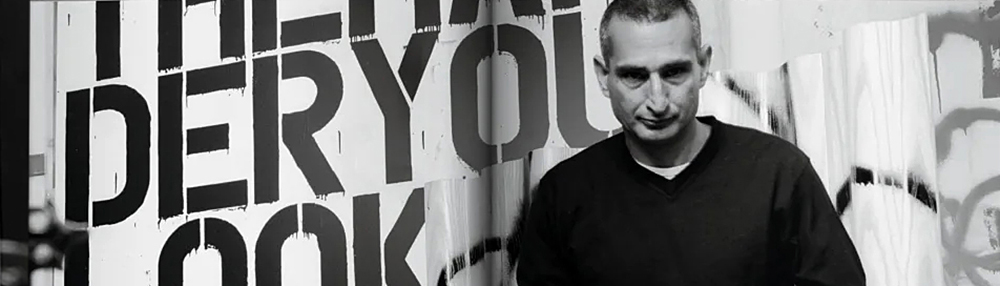
He was born in Chicago in 1955. He lives and works in New York and Marfa (Texas). He studied at the New York Studio School in 1973. In 1986, he created designs, fine and imperfect patterns using black enamel paints on white panels to achieve emotional effects. During this period, he also produced his first graffiti-inspired text paintings using stencils. From the early 1990s to the present day, he has used the silkscreen technique to expand the visual language of his paintings, which rely on a practice of painting, erasing and abrasion. He then created repetitive, layered textures and erased compositions with enamel or spray paint interventions. Woll, who is also closely involved with photography, has published numerous albums/artist books. In 2024, he held a major exhibition entitled See Stop Run in an unusual venue in New York. This exhibition was completed with three large outdoor sculptures and reopened in 2025 at the Brite Building in Marfa.
1955 yılında Chicago’da doğdu. New York ve Marfa’da (Teksas) yaşıyor ve çalışıyor. 1973 yılında New York Studio School’a öğrenim gördü. 1986 yılında beyaz paneller üzerine siyah emaye boyalarla desenler, ince ve kusurlu örüntüler oluşturarak duygusal efektler elde etti. Bu süreçte şablon kullanarak graffiti esintli ilk metin resimlerini de üretti. 1990’ların başından günümüze kadar, bir boyama, silme ve aşındırma pratiğine bel bağlayan resimlerinin görsel dilini genişletmek üzere serigrafi tekniğini kullandı. Ardından emaye veya sprey boyalı müdahalelerle tekrara dayalı, katmanlı dokular ve silinmiş kompozisyonlar oluşturdu. Fotoğrafla da yakından ilgilenen Woll, çok sayıda albüm/sanatçı kitabı yayınladı. 2024 yılında New Yorkta sıra dışı bir mekânda See Stop Run adıyla büyük bir sergi düzenledi. Bu sergi, üç büyük açık hava heykeli ile tamamlanarak 2025 yılında Marfa’da Brite Building’de yeniden açıldı.
saglamart; dinamik bir anlayış ile hareket eden, kültür-sanat ortamındaki olay ve olgulara, sanatçı tavırlarına, yapıtlara ve yayınlara odaklanan bağımsız bir yayın etkinliğidir. Tüm hakları saklıdır. Görüntü ve yazılar izinsiz kullanılamaz. / saglamart is an independent publishing initiative driven by a dynamic vision, focusing on events and developments in the cultural-artistic landscape, artist perspectives, works, and publications. All rights reserved. Images and texts cannot be used without permission.