
MINIMAL
PINAULT COLLECTION - BOURSE DE COMMERCE / 2025 - 2026 PARIS
COLLECTION EXHIBITION
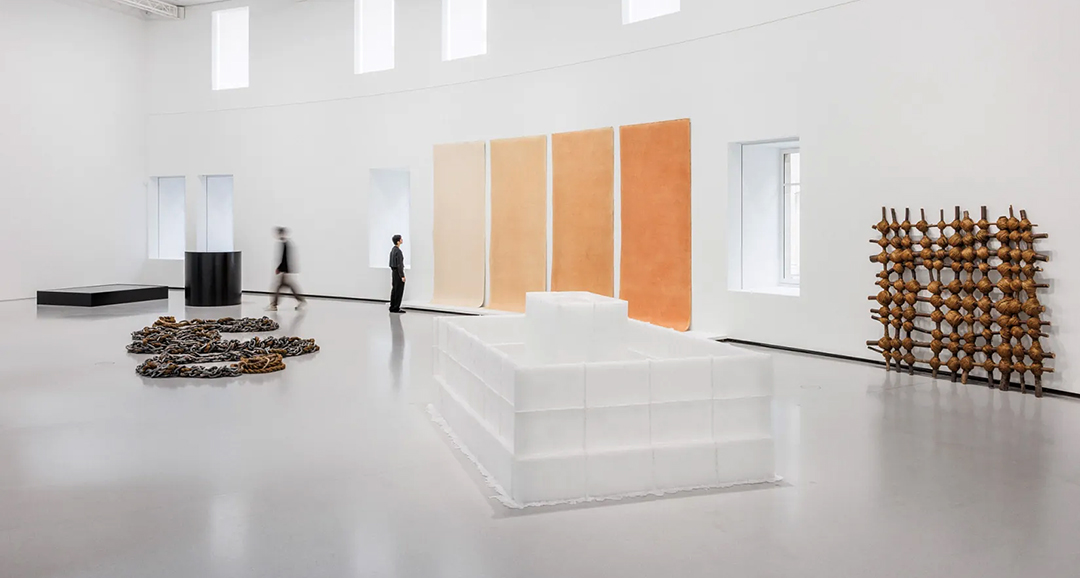
Exhibition view from Minimal, Bourse de Commerce – Pinault Collection, 2nd Floor: Materialism, Gallery 5.
BOURSE DE COMMERCE / PARIS
The Bourse de Commerce hosted a comprehensive exhibition dedicated to minimalist art. The exhibition brings together for the first time over a hundred significant works that trace the diversity of this movement, which began in the 1960s with a generation of artists introducing a radical approach to art. Alongside these masterpieces from the Pinault Collection, works on loan from prestigious collections highlight the historical significance and international resonance of the themes explored throughout the exhibition. Curated by Jessica Morgan, the exhibition is organized into seven thematic sections: Light, Mono-ha, Balance, Surface, Grid, Monochrome, and Materialism, highlighting these unique yet interconnected global artistic developments through an extraordinary group of works from the Pinault Collection.
ARTISTS
Hassinger / Mary Heilmann / Eva Hesse / Nancy Holt / Robert Irwin / Donald Judd / On Kawara / Susumu Koshimizu / David Lamelas / Seung‑Taek Lee / Lee Ufan / Sol LeWitt / Francesco Lo Savio / Bernd Lohaus / Brice Marden / Enzo Mari / Agnes Martin / François Morellet / Senga Nengudi / Helio Oiticica / Pauline Oliveros / Blinky Palermo / Lygia Pape / Howardena Pindell / Charlotte Posenenske / Steve Reich / Bridget Riley / Dorothea Rockburne / Robert Ryman / Nobuo Sekine / Richard Serra / Keith Sonnier / Michelle Stuart / Kishio Suga / Jiro Takamatsu / Anne Truitt / Günther Uecker / Yoshi Wada / Merrill Wagner / Meg Webster / Jackie Winsor / Iannis Xenakis
CURATOR
Jessica Morgan joined the Dia Art Foundation as director in January 2015 and was appointed Director of the Nathalie de Gunzburg in October 2017. At Dia, Morgan is responsible for strengthening and energizing all aspects of Dia’s multifaceted program, including pioneering Land Art projects, site-specific commissions, and collections and programs in various locations. Since assuming the directorship, Morgan has spearheaded a series of initiatives that reaffirm and revitalize the nonprofit organization’s founding vision and principles.
MINIMALIST ARTISTS
DONALD JUDD
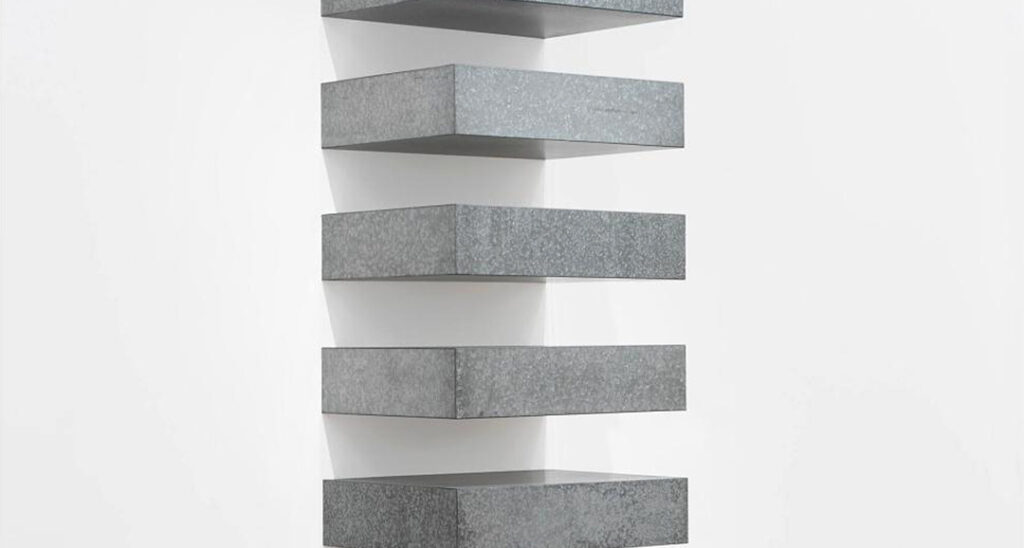
Donald Judd, Untitled, (Detail), 1965, Galvanized steel Dimensions, 297,7 × 101,6 × 76,2 cm NMSK 1927 Collection Materialitet, Art © Donald Judd Foundation/Bildupphovsrätt 2026, Sweden/VAGA, New York
Donald Judd (1928-1994) describes his series of works, which shifted from painting to sculpture and consisted of a few identical elements mounted on the wall through radical experiments, as “specific objects,” in accordance with the term he used in his 1965 manifesto. Judd’s works, created with an extremely simple and radical approach to abstraction, have a distant spatial effect. Conceiving his objects in an equivalent relationship with space, Judd envisions a minimalist and unsettling plane derived from form and structural formation. He thus spreads a spirit of minimal transcendence, legitimized by creating a potential for questioning the causality and uniformity of the perceptible, across the object and space. By withdrawing the sensory perception caused by things and thoughts in an abstract and ambiguous relational environment, he recreates the expanded rigidity emitted by the pure image within an aesthetic mise-en-scène. With his hard lines and angular boundaries, Donald Judd leaves nothing behind from the plane of perceived consistency and immanence in the context of constantly repeating new impossible forms.
MEG WEBSTER
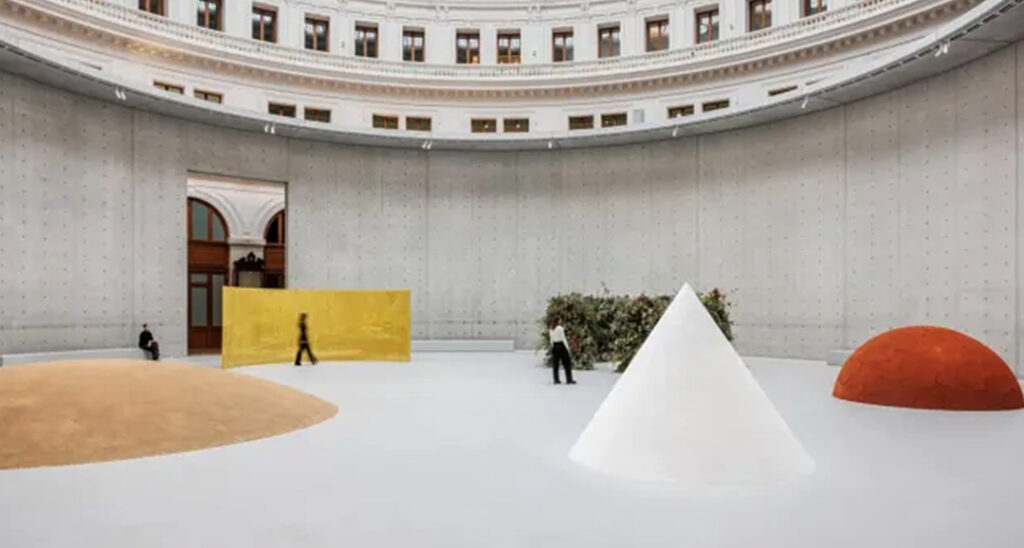
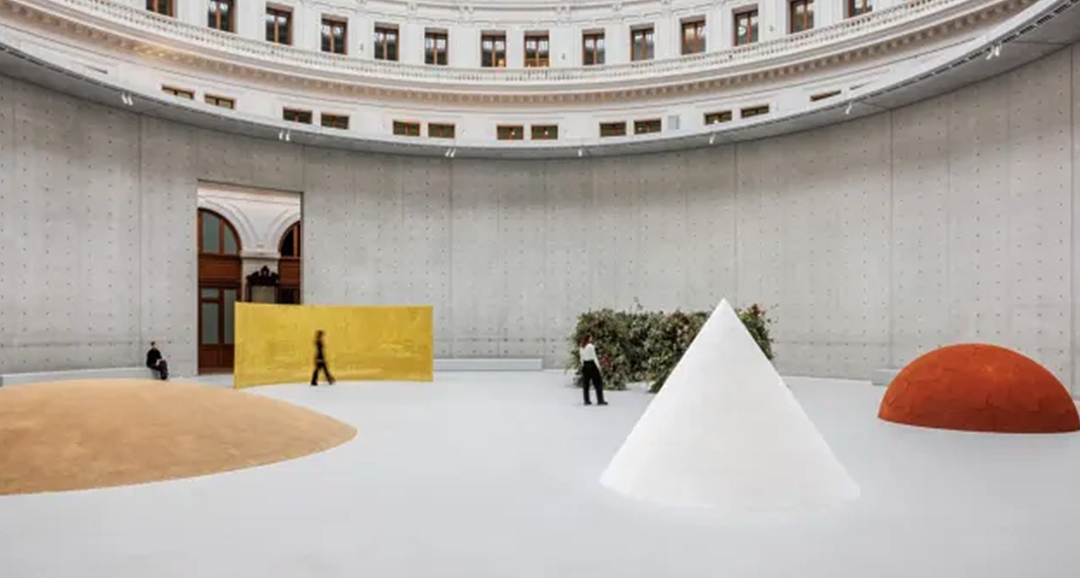
Meg Webster'ın eserlerinin yer aldığı“Minimal” sergisinden bir görünüm, Bourse de Commerce - Pinault Koleksiyonu, Paris, 2025. Fotoğraf: Nicolas Brasseur.
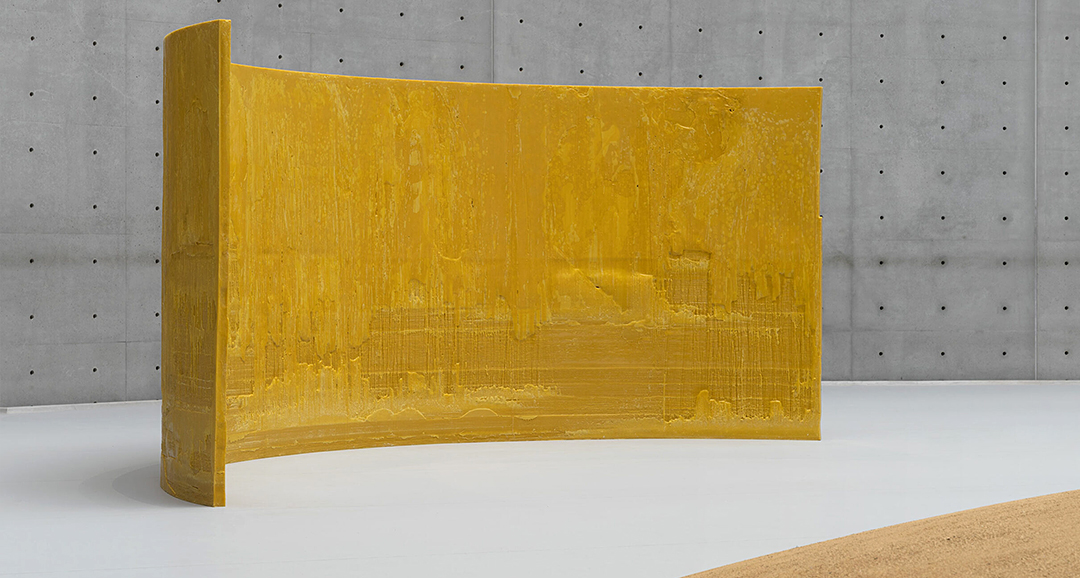
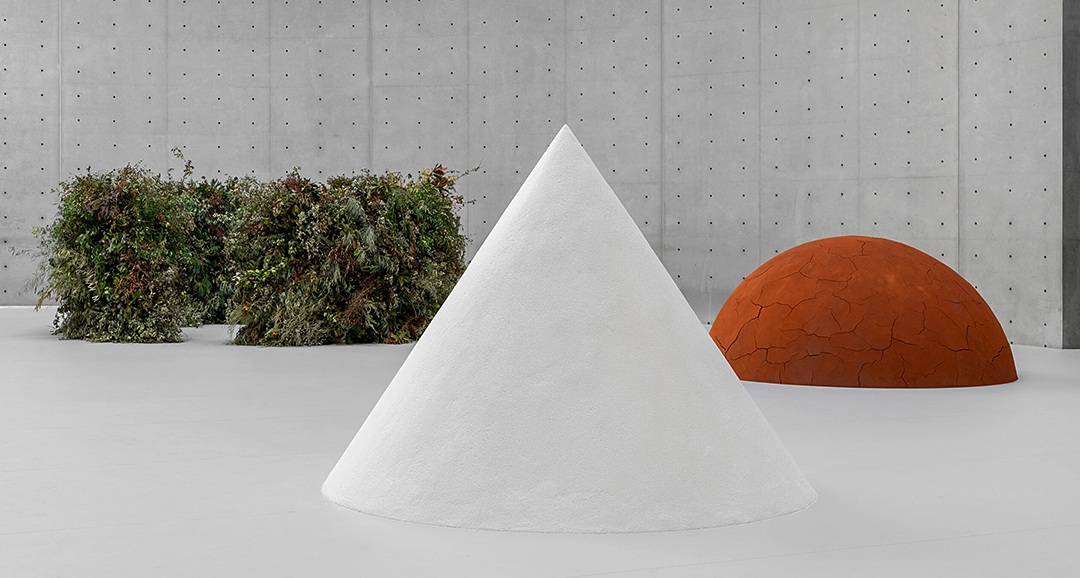
Meg Webster‘s three-dimensional works, composed of minimal geometric and monumental forms, also reference ecological concerns. Her installations, created from red ash piles shaped like hemispheres, white salt, and beeswax, alongside living plants, highlight ecological pollution threatening the natural world and the endangered cycle of organic components. Webster’s salt or clay clusters, which grow largely through the functional power of organic micro-arrangements, take on a meditative function that triggers a kind of sensory effort. Here, there is an extraordinary spiritual molecular mass where the body and sensations turn inward and layer perception thresholds. These minimal clusters, simple yet containing a multiplicity of sensations, carry the fragile yet complex dimension of the relationship established with the natural environment into a conceptual phase. Webster’s simple arrangements also solidify with the smooth boundaries of the material form, evolving into an experiential threshold and a powerful natural landscape that transforms its own perception order. With their simple forms, they are like an extremely powerful critical emotional response to the new world order. Or these minimal forms are, in a way, sensitive and interactive monumental metaphors for sensing the world. Gülay Yaşayanlar
RICHARD SERRA
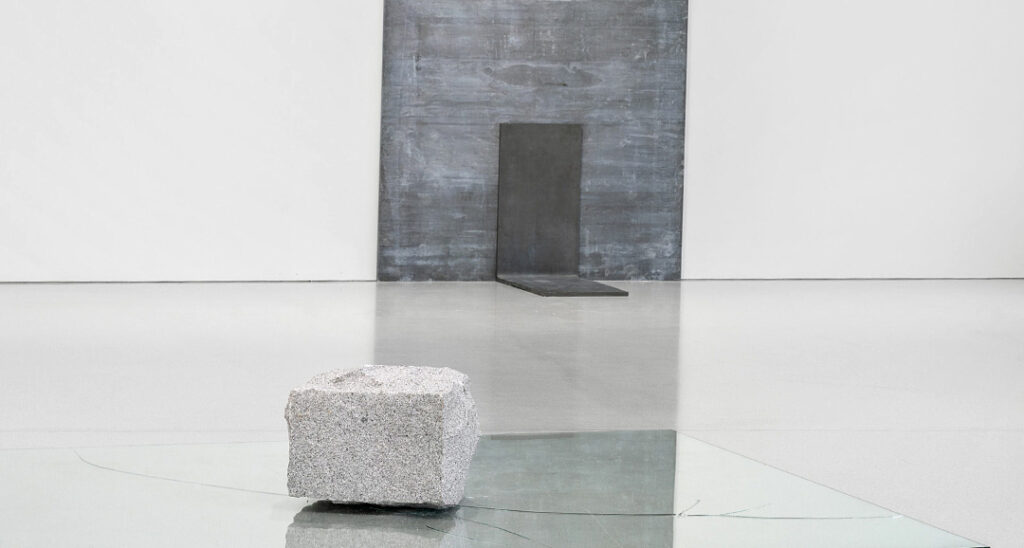
Richard Serra ve Lee Ufan'ın eserlerinin yer aldığı “Minimal” sergisinden bir görünüm, Bourse de Commerce - Pinault Koleksiyonu, Paris, 2025. Fotoğraf: Nicolas Brasseur.
Richard Serra (1938-2024) is one of the first Minimalist artists known for his monumental sculptures. He uses industrial materials such as steel to create simple, continuous surfaces that bend or curve in space. He attempts to influence our perception of space and dimension by compelling the viewer to enter the sculpture. The rusty textures that form on the plate surfaces lend a pictorial quality to the conceptual origins of his artistic practice. To the extent that he avoids ostentation, a monumental effect based on the structural and graphic integrity of the form is always present. That is why Serra’s metal plates have an extremely disturbing, metaphysical, and existential quality. Arrangements consisting of massive panels, especially flat walls or irregular rows or rising, falling, sloping narrow passages, resembling a labyrinth, take on a chaotic quality. They persistently make the viewer feel the threatening space of the sculpture. In this process, the aura of the sculpture enters into a psychological and intellectual concentration within the mediation of heavy mass reality.
DAN FLAVIN
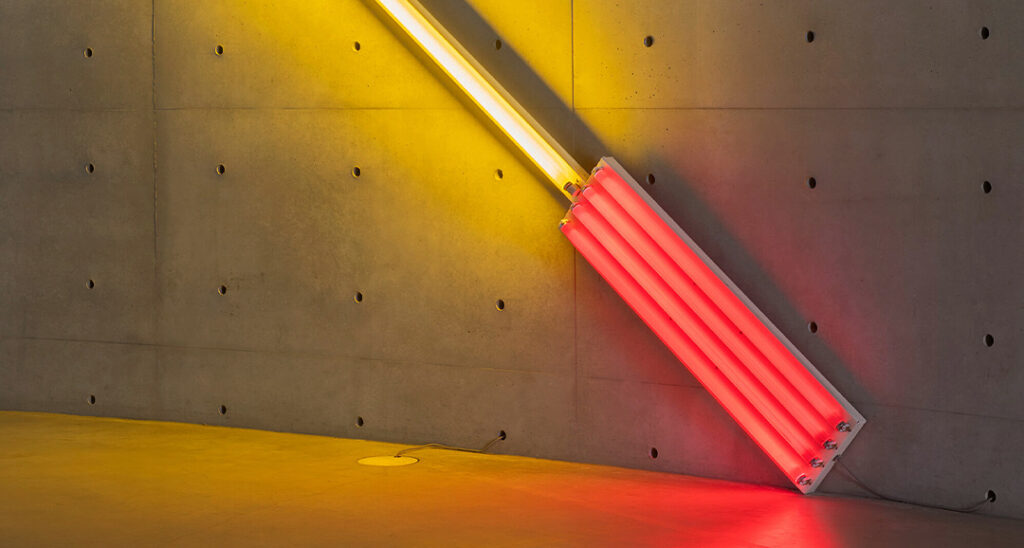
Dan Flavin, Alternate Diagonals of March 2, 1964 (to Don Judd), (Detail) 1964, red and yellow fluorescent light, 365.8 cm (diagonal), Pinault Collection. © Dan Flavin / Adagp, Paris, 2025. View of the exhibition “Minimal,” Bourse de Commerce – Pinault Collection, Paris, 2025. Photo: Nicolas Brasseur.
Dan Flavin (1933–1996) is considered one of the pioneers of Minimal Art for his work with fluorescent light beams and his radical and innovative sculptures. In the early 1960s, he experimented with fluorescent light, a mysterious material that suggested simplicity and singularity, emphasized its form and therefore itself, and possessed independent qualities. With this material, he created radically simple and transformative light installations that led to a new breakthrough. His work to Don Judd (1964), found in the Pinault Collection, consists of neon lights arranged in an alternating cross pattern. Here, the cross pattern extending along the wall brings together industrial aesthetics, the sensuality of the material, and the intensity of the light, conveying a palpable sense of energy that alters the viewer’s perception of space and draws their gaze. This work is the first in which Flavin systematically used the wall sconces and standard fluorescent tubes found in stores. It transforms an everyday object into a work of art and reconfigures the spatial experience.
AGNES MARTIN
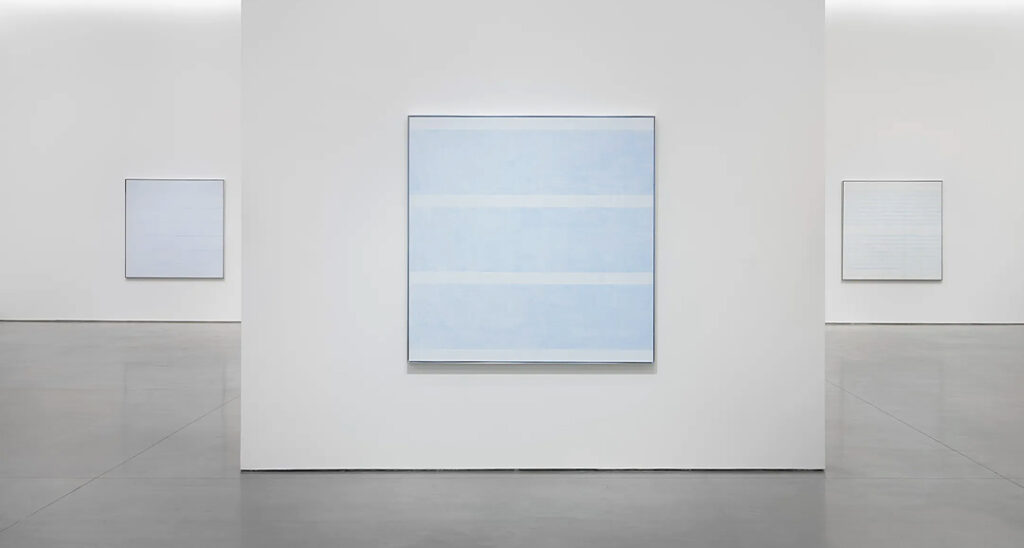
Installation view: Agnes Martin: Innocent Love, Pace Gallery, New York, 2025. Courtesy Pace Gallery. Photo: Pace Gallery. (https://brooklynrail.org/2025/12/artseen/agnes-martin-innocent-love/)
Agnes Martin (1912–2004) Martin’s square-format works lean on a dialectic of line, contrasting with the concept of order. Martin has actually transferred the effective conceptual elements of Minimal Art into a formable spiritual perception with her works, which exclude subject matter and exist within a rhythmic flow. She seems to define a manifesto of liberation on a grid plane carrying harmonious linear vibrations that are constantly recoded. On the other hand, Agnes Martin produces permeable and simple forms with a metaphor of social and intellectual exaltation that centers on humanity with a perfectionism that originates from herself. She appears to possess an effective minimal power with her ability to foresee, construct, and transform this unique mystical power of transmission into a power of contemplation that changes. Emotional thresholds without subject or form change the nature of visual arrangement each time and are positioned on a new grid plane. Therefore, the determination of the rhythmic structure using the visual field and homogeneous differentiation in Martin’s paintings undoubtedly creates the conditions for the potential for production. Therefore, in this environment where a deep spirituality meets a static and silent vibration, the transformation of forms of feeling woven from intuitive codes and layers, originating from an inner fusion, is narrated… Gülay Yaşayanlar
SOL LEWITT
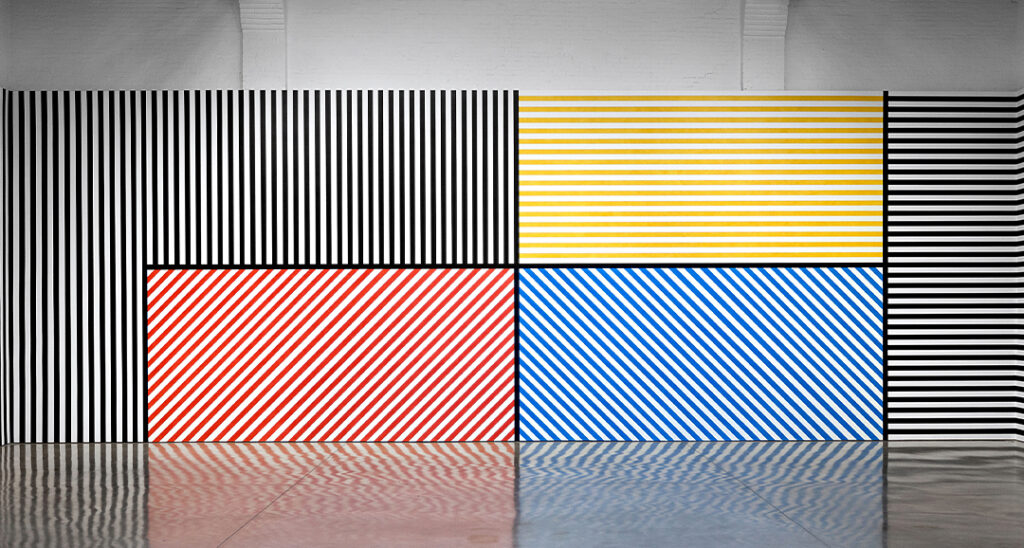
Sol LeWitt, Installation view, Paula Cooper Gallery, September 2016. [https://www.paulacoopergallery.com/exhibitions/sol-lewitt2#tab:slideshow]
Sol LeWitt (1928-2004) One of the leading figures of Minimal Art, LeWitt is known for his wall drawings or geometric sculptures, which he referred to as “structures.” By creating multiple variations of his structures, LeWitt explored a geometric and mathematical system using industrial materials such as aluminum, metal, or concrete. A key figure in the evolution of Conceptual Art, LeWitt insisted that the idea, the diagram, and the planning of these structures were the artwork itself. In doing so, the actual implementation of the sculptures—the objects themselves—was less important than the concept of the structure.
INTERSTITIAL Areas
CHARLOTTE POSENENSKE
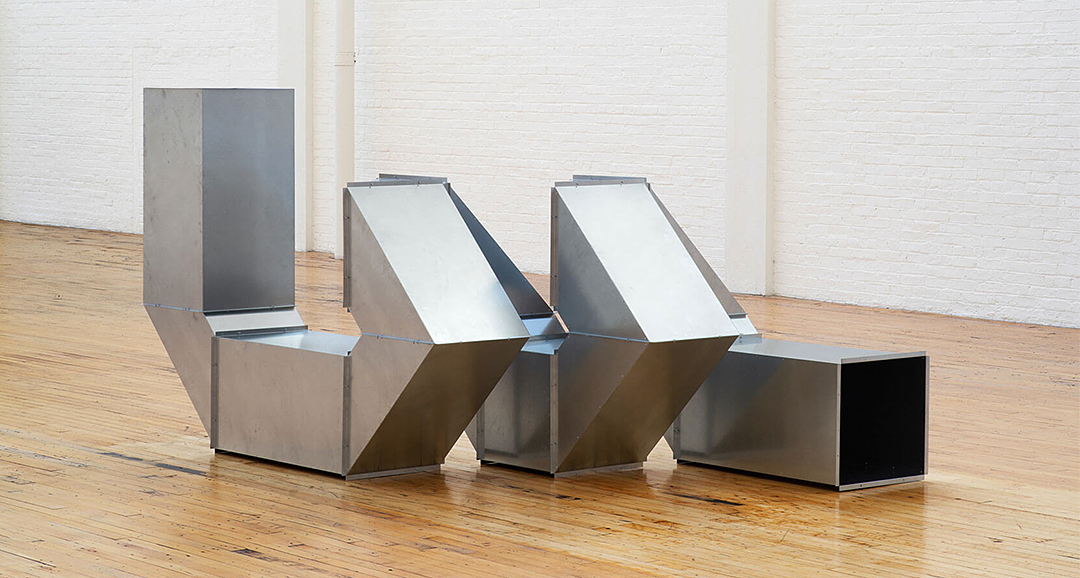
Charlotte Posenenske, Vierkantrohre Serie D (Square Tubes Series D), 1967/2015-18. Installation view, Dia: Beacon, Beacon, New York. © Estate of Charlotte Posenenske, Frankfurt. Photo: Bill Jacobson Studio, New York, courtesy Dia Art Foundation (New York).
Charlotte Posenenske (1930-1985) Charlotte Posenenske, who began her sculptural work in the second half of the 1960s, is a significant figure in Conceptual and Minimal Art. The artist produced works that could be reproduced as widely as possible through industrial processes, developing series of geometric sculptures that fit together and can be endlessly rearranged. The sculptures from the Vierkantrohre Serie D (1967–2020) series, located in the interstitial spaces of the Bourse de Commerce building, were designed inspired by industrial channel systems. They consist of square tube elements that can be assembled into complex forms through bending, branching, and rotating movements. They are made of galvanized steel sheet, a durable material that can withstand extreme weather conditions and can be installed both indoors and outdoors. Posenenske’s works have also been exhibited in various commercial and public spaces, from airport hangars to parking lots, train stations to intersections.
PASSAGE
ON KAWARA

On Kawara, SEPT. 13, 2001, (Detail) 2001, acrylic on canvas, 25.5 × 34.3 cm. Pinault Collection © One Million Years Foundation.
On Kawara (1932-2014) Kawara’s works are conceptually defined and thus distinct from minimalism; however, the deliberately simplified form and style (or grammar) in works such as his History Paintings are distinctly minimalist. Like many conceptual artworks, Kawara’s paintings have adopted minimalism’s formal language as one of seriousness, reality, directness, and the language of truth. The Passage section displays numerous examples from Japanese artist On Kawara’s iconic Today series in corridors and display cases. Kawara’s works, markers of a universal and collective history, are presented within the museum’s circular architecture as a reminder of the relentless passage of time. Placed around the central area, each of these antique cabinets contains a single On Kawara Date Painting, with the date of the painting indicated in white letters and numbers. In a box beneath the painting is a page from the newspaper of the city where On Kawara painted that day. Beneath the painting dated October 5, 1982, a newspaper reports that Israeli planes attacked missile bases in Syria. Beneath the painting dated June 20, 1975, the box contains a full-page advertisement for the movie Jaws, which was released in US cinemas that day.
TWO ARTISTS OUTSIDE THE EXHIBITION
CARL ANDRE
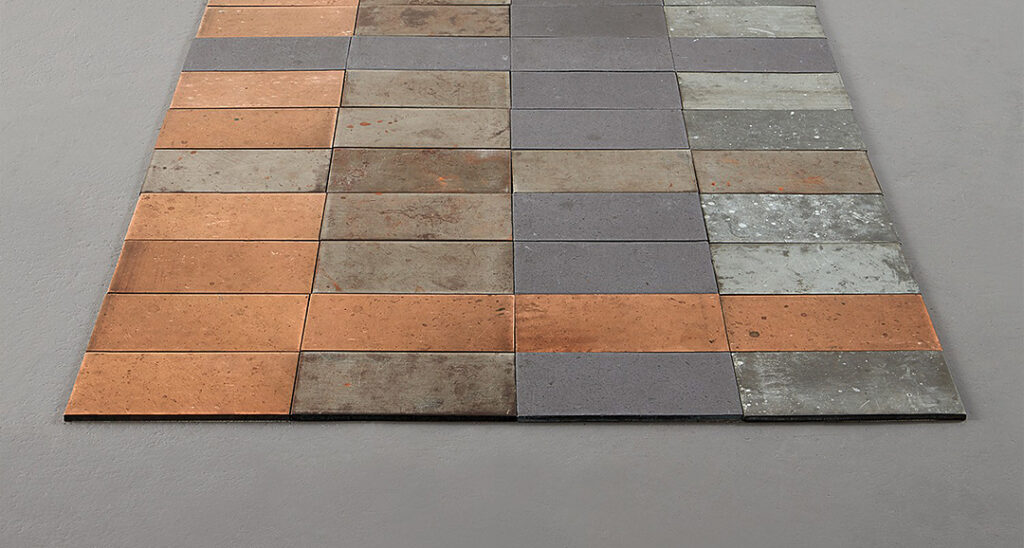
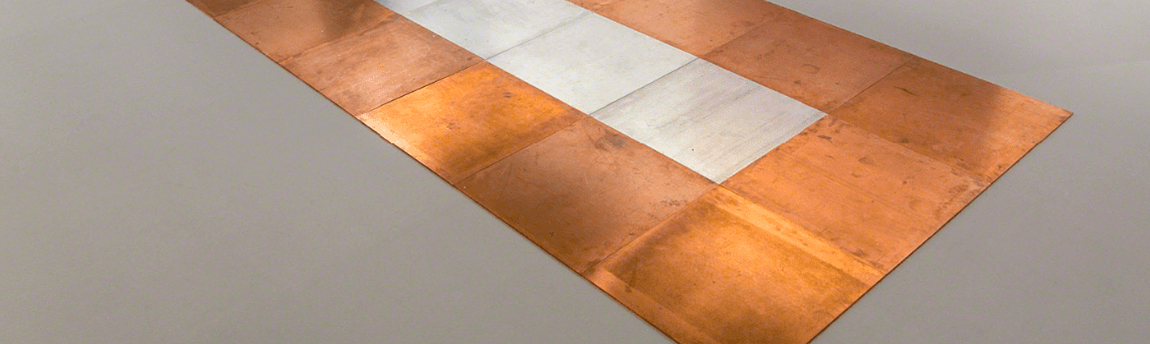
Carl Andre (1935-2024) Works composed of stone and wooden blocks or metal squares and placed on the gallery floor in repeating units are considered early examples of minimalist sculpture. These arrangements, characterized as a conscious expression of the space they inhabit, are actually created in an objective silence. They also highlight concepts and situations such as balance, symmetry, and order as indicators of a rational approach. Andre insists that his works exist solely from their own materials, devoid of any spiritual or intellectual qualities, and are nothing else. Carl Andre’s sculptural practice is an effort to develop a sensitivity to raw materials through transformations carried out in the context of material-object and space, and through multi-unit/object arrangements. In this approach, where time and perception are concretized, a spiritual dimension, with its hidden depth and internal order, is made meaningful through a paradox that evokes a sense of ordinariness. The artist, who thus aligns the idea of sculpture with a sequential and variable relationship between surface and material, develops this approach as a radical and infinite solution strategy. (See. :https://www.tate.org.uk/art/art-terms/m/minimalism
ROBERT MORRIS
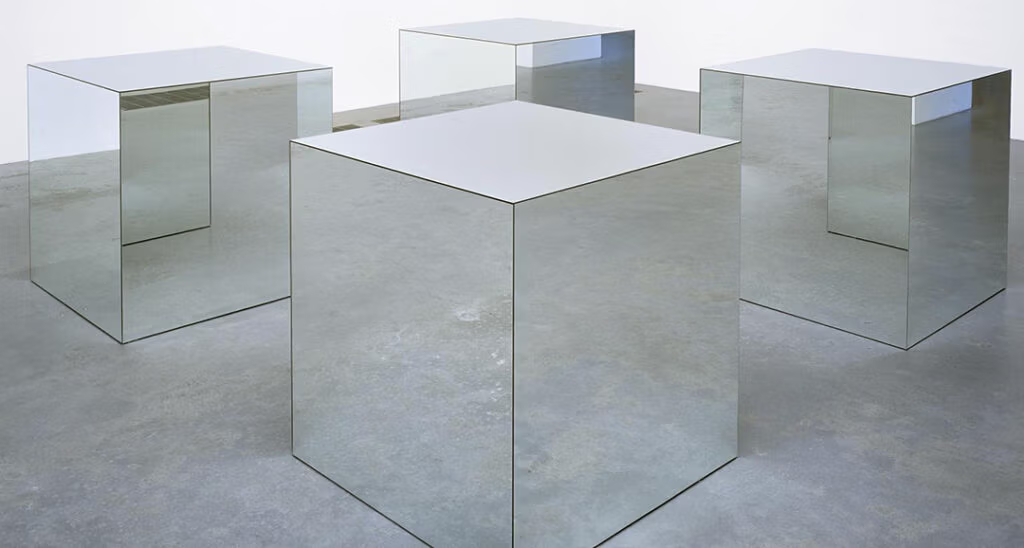
Robert Morris (1931–2018) is one of the most influential figures in post-war American art. He is one of the artists who developed Minimalism, which emerged in New York in the early 1960s, with his radically simplified practice. Starting his career as a painter, he adopted a new style consisting of sculptural arrangements. In the second half of the 1960s, he published a series of influential articles and helped define the minimalist movement with his exhibitions. He is also known as one of the pioneers of Land Art and is associated with Fluxus and Performance Art.
EXHIBITION CATALOGUE
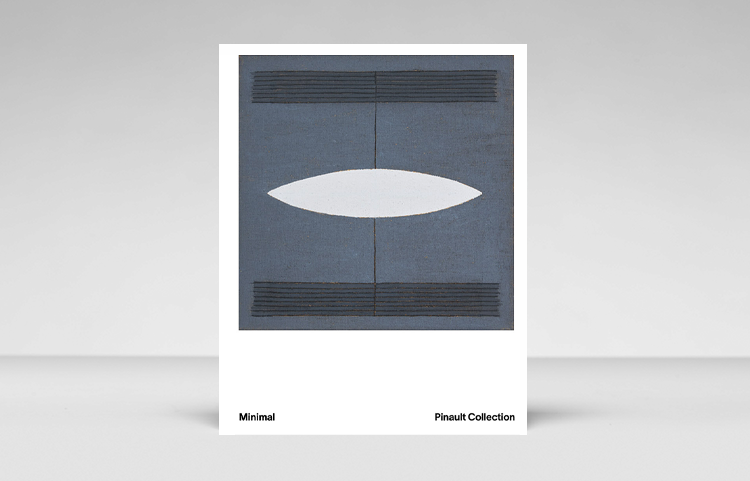
Minimal, Editor: Jessica Morgan, Contributors: Emma Lavigne, Jessica Morgan, Jean-Pierre Criqui, Frances Morris, Alexandra Bordes, Clara Meister, Teresa Kittler, Nicolas-Xavier Ferrand ve Alexis Lowry, Pinault Collection & Éditions Dilecta, Paris, 2025.
LYGIA PAPE: WEAWING SPACE
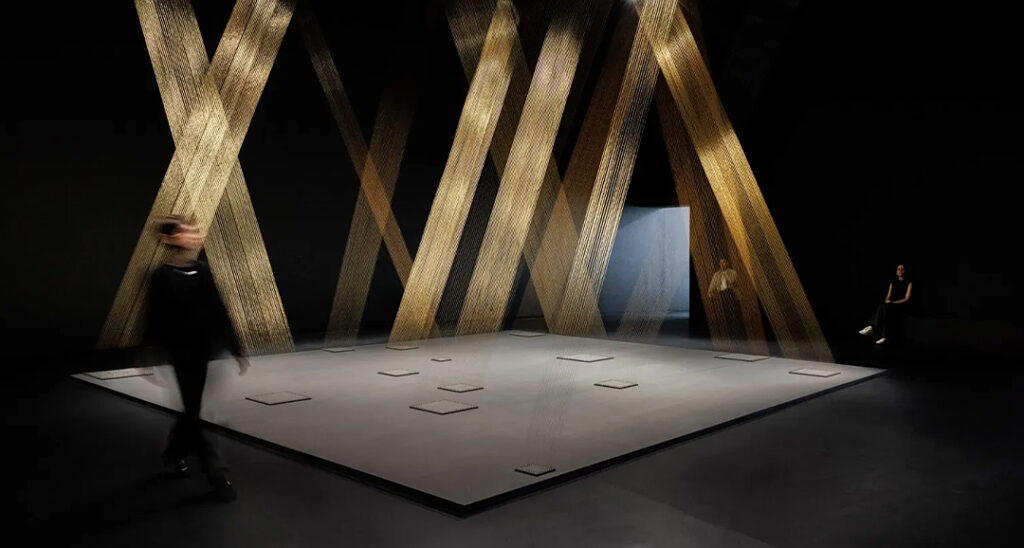
Lygia Pape, Ttéia 1, C (2003/2025), Installation view of Lygia Pape, “Ttéia 1, C” (2003-25), golden thread, wood, nails, light, dimensions variable. © Pinault Collection. © Projeto Lygia Pape.
Lygia Pape: Weaving Space, Curated by Emma Lavigne, Chief Curator and Director in charge of the Pinault Collection, with Alexandra Bordes, Curatorial Projects Manager at Pinault Collection. As part of the Brazil-France 2025 season. 10 September 2025- 26 January 2026. Pinault Collection, Bourse de Commerce, 2 Rue de Viarmes, Paris, France.
The Bourse de Commerce also hosted Lygia Pape, one of the leading figures of Brazilian avant-garde art, as part of the Minimal exhibition. The exhibition, titled Weaving Space, featured a selection of Pape’s works and was described as a tribute to the artist’s experimental practice. Weaving Space revolves around Ttéia 1, C (2001–7), a light installation that is one of the key works in the Pinault Collection. Ttéia 1, C (2001–7), an installation consisting of gold-colored wires stretched across an imaginary plane in space, is essentially a combination of geometric diagrams and emotions. It also has a variable spatial geometry effect depending on the viewer’s movement. This is because, in this gold-colored space-time conception, forms and tones are constantly changing, and new forms or intersections emerge in flat and increasing or multiplying dimensions. In other words, this magical installation, which draws the viewer directly into a sensory experience, takes shape and comes to life according to the angle of the light and the movements of the visitor. This minimalist installation, which offers an immersive sensory experience that changes with movement, can also be described as a kind of magnetic field that envelops the viewer or traps the void, transforming into a new spatial capsule that complicates the time-space dimension. It demonstrates how Pape’s emotional atmosphere presents a multi-layered structure and how a construction that creates its own boundaries establishes a profound intellectual relationship with the concepts of sense and consciousness. In a way, it is like a silent melody reflected from copper wires, representing emotional intersections between the present and the future.
…
Lygia Pape (1927–2004) is one of the most important figures of the Brazilian avant-garde art movement of the second half of the 20th century. She conceived of art not as a finished, completed object, but as a sensory entity that interacts with visitors’ senses and consciousness. A performance artist closely connected to social and political issues, Pape conceives of art not as a finished, completed object, but as a sensory entity that interacts with visitors’ senses and consciousness.
PINAULT COLLECTIONS AND MUSEUMS
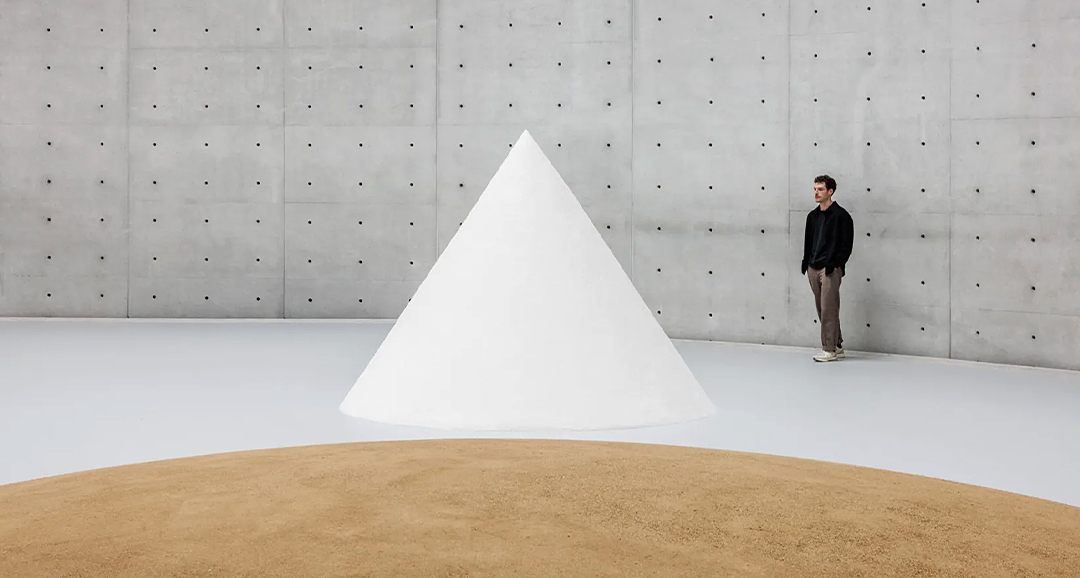
Meg Webster’ın Minimal’da sergilenen, pürüzsüz, sıkıştırılmış kilden yapılmış neredeyse yarım küre şeklindeki kubbesi. Fotoğraf: Florent Michel, Pinault Koleksiyonu
François Pinault is one of the world’s most important contemporary art collectors. The collection he has assembled over the past fifty years comprises more than 10,000 works spanning from the 1960s to the present day. His cultural goal is to share his passion for the art of his time with as many people as possible. He stands out for his enduring commitment to artists and his relentless exploration of new creative fields. Since 2006, François Pinault has focused on three cultural activities in particular: museums, comprehensive exhibition programs, and initiatives to support artists and promote modern and contemporary art history.
The Museums showcasing selections from the Pinault Collection comprise three extraordinary venues: Palazzo Grassi, acquired in 2005 and opened in 2006; Punta della Dogana, opened in 2009; and Teatrino, opened in 2013. In May 2021, the Pinault Collection opened its new museum in Paris’s Bourse de Commerce with the Ouverture exhibition. These four venues were restored and developed by Japanese architect Tadao Ando, winner of the Pritzker Prize. In all three museums, works selected from the Pinault Collection are presented in regularly changing personal and thematic group exhibitions. Artists invited to create new works also play an active role in this process. The museums’ cultural and educational programs continue through partnerships with local and international institutions and universities.
BOURSE DE COMMERCE / PARIS
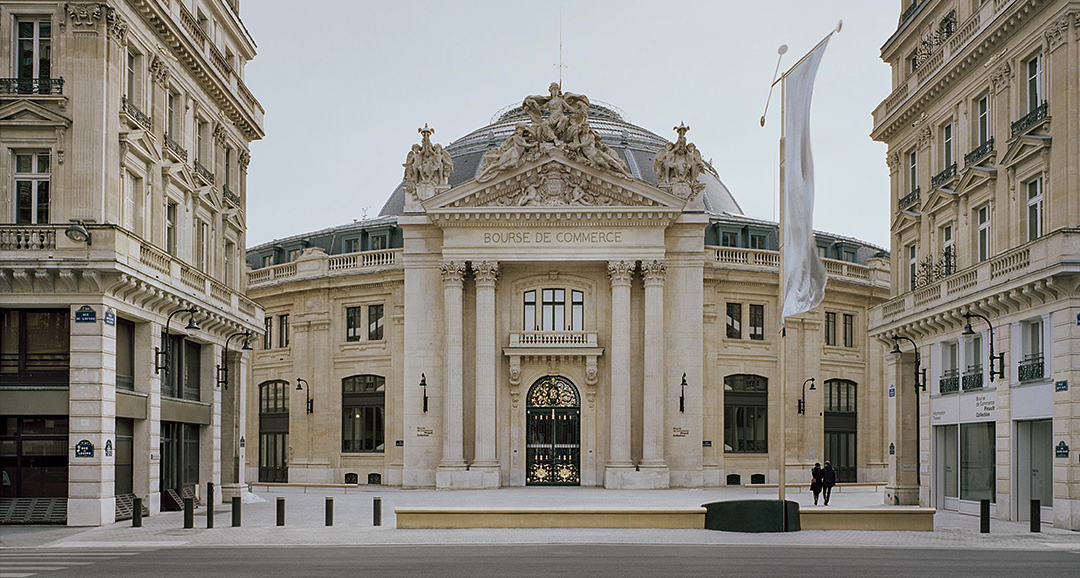
Bourse de Commerce-Pinault Collection Building. Image: © Tadao Ando Architect & Associates, Niney et Marca Architectes, agence Pierre-Antoine Gatier
Opened in 2021, the Bourse de Commerce – Pinault Collection building is a contemporary art space in Paris that combines historic architecture with striking design. It hosts exhibitions from François Pinault’s collection. One of the building’s most iconic features is the massive concrete cylinder designed by renowned Japanese architect Tadao Ando. Located beneath the original glass dome, it serves as the central exhibition space, creating a striking dialogue between the past and the present. The François Pinault Collection, which began to take shape in the 1970s, comprises approximately 10,000 artworks spanning various disciplines, featuring world-renowned artists such as Damien Hirst, Jeff Koons, and Cindy Sherman, as well as showcasing emerging talents. The collection is particularly known for its engagement with significant social and political issues surrounding race, gender, and politics. Pinault retains the rights to use the Bourse de Commerce under an agreement with the City of Paris. The recent restoration by Tadao Ando focused on preserving the historic architecture while seamlessly integrating contemporary elements. Known for his minimalist approach and extraordinary skill with concrete, Ando added a striking concrete cylinder to the interior, creating a powerful connection between the building’s rich architectural heritage and the cutting-edge artworks displayed inside. Ando’s design integrates harmoniously with the preserved glass dome, paying respect to the building’s heritage. Combining iron and glass, the dome allows natural light to illuminate the building’s central space. During Ando’s renovation work, glass panels were replaced with modern double-glazed systems, ensuring thermal efficiency without compromising the quality of natural light. Additionally, the historic frescoes adorning the lower part of the dome were carefully restored to preserve the building’s cultural and artistic heritage.
MINIMALISM / MINIMALIST SCULPTURE

İZMİR - LONDON
saglamart; dinamik bir anlayış ile hareket eden, kültür-sanat ortamındaki olay ve olgulara, sanatçı tavırlarına, yapıtlara ve yayınlara odaklanan bağımsız bir yayın etkinliğidir. Tüm hakları saklıdır. Görüntü ve yazılar izinsiz kullanılamaz. / saglamart is an independent publishing initiative driven by a dynamic vision, focusing on events and developments in the cultural-artistic landscape, artist perspectives, works, and publications. All rights reserved. Images and texts cannot be used without permission.