
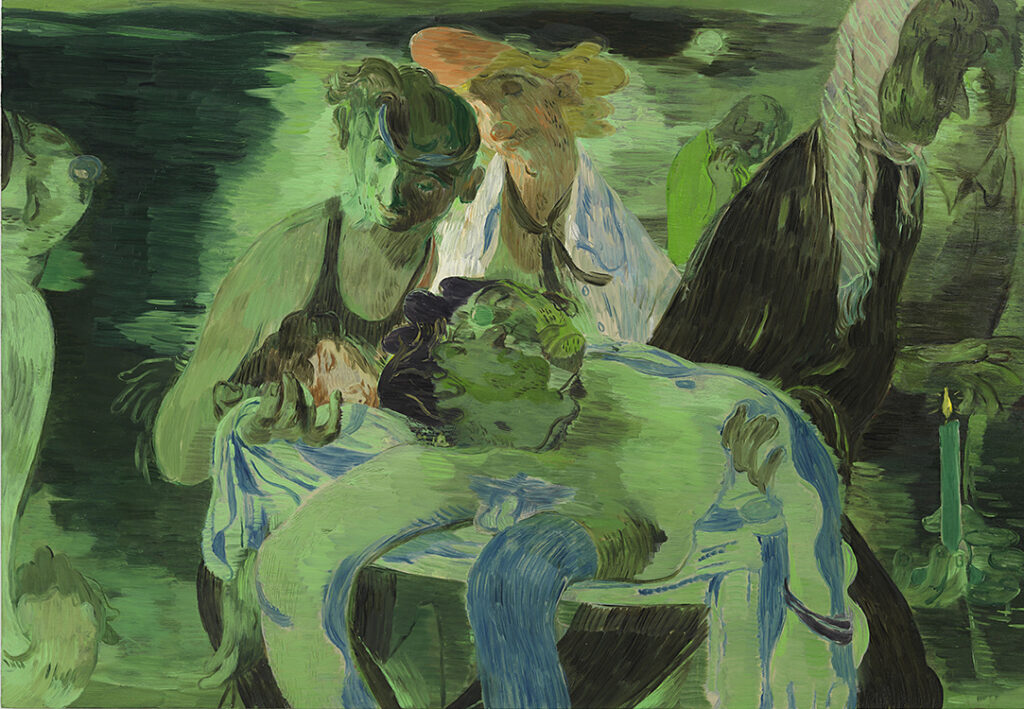
Salman Toor, The Inheritors, (Detail), 2022, Oil on canvas, 109.2 x 129.5 cm. The Baltimore Museum of Art: Art Fund established with exchange funds from gifts of Dr. and Mrs. Edgar F. Berman, Equitable Bank, N.A., Geoffrey Gates, Sandra O. Moose, National Endowment for the Arts, Lawrence Rubin, Philip M. Stern, and Alan J Zakon. © Salman Toor; Courtesy of the artist, Luhring Augustine, New York and Thomas Dane Gallery. Photo: Farzad Owrang
salman toor
a seemingly playful, immanent, and restless imaginary
MÜMTAZ SAĞLAM
"
To state It plaInly, Salman Toor’s playful yet equally unsettlIng Imagery InhabIts a regIster where hesItatIon and tensIon sIt sIde by sIde. AssocIated wIth fluId brushwork, the IMAGES and fIgures here remaIn In an actIve posture that preserves theIr agency. WIthIn thIs context, Toor’s paIntIng asserts Itself as a model of performatIve organIsatIon, transformIng Into the stage for a dIstInct typology. EnergetIc and sombre expressIon, reInforced by pathologIsed anxIetIes, generates formal equIvalents for the exIstIng content wIthIn thIs complex fIeld. It Is evIdent that a new mode of behavIour and thought, Indulged wIthIn green voIds, comes to defIne Toor’s paIntIng as a resolutIon to an IndIvIdual rupture and a problem of self-presentatIon.
Salman Toor, Fag Puddle with Carriers, 2026, Oil on panel, 68.6 x 99.1 cm. Private collection © Salman Toor; Courtesy of the artist, Luhring Augustine, New York and Thomas Dane Gallery. Photo: Genevieve Hanson
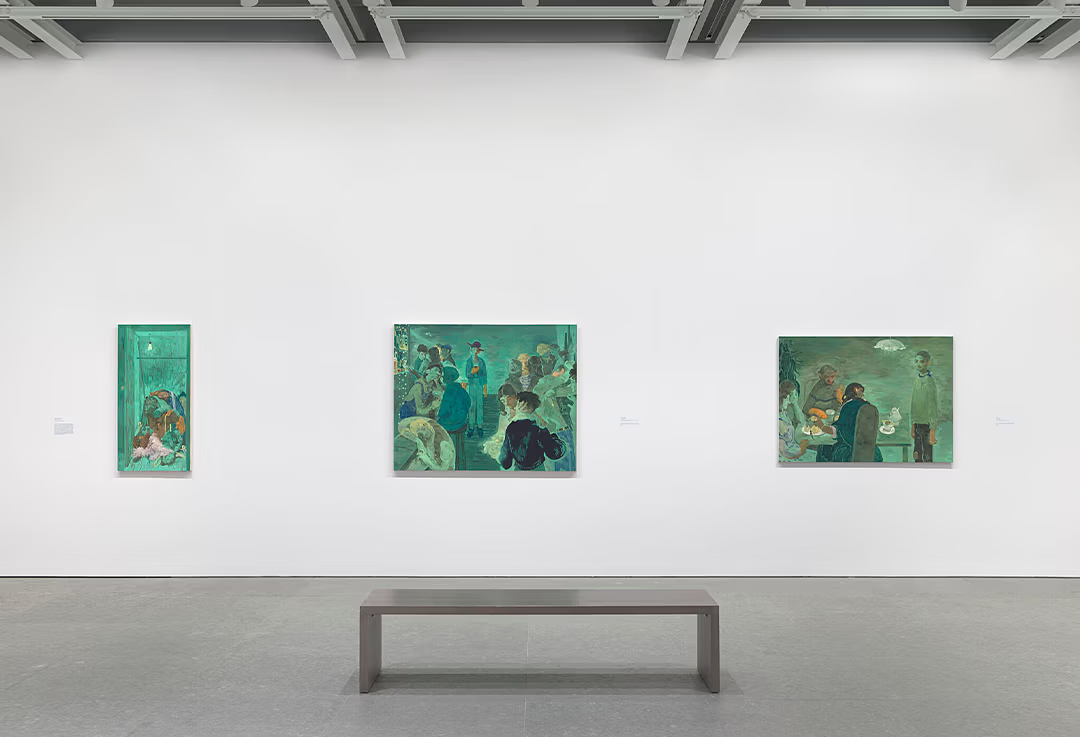
In his recent exhibition at the Courtauld Gallery, Salman Toor continues to narrate stories of integration experienced through migration alongside confrontations tied to his queer identity. Favouring a mode of figurative painting that compellingly proposes its own formal renewal across structural organisation, visual coding, and stylistic idiom, Toor merits distinct critical attention. First and foremost, what sets Toor apart in this trajectory, given that he never hesitates to anchor his compositions in art-historical lineage and overt references, is undoubtedly an expressive intensity laden with queer and excessive qualifiers, blending humour with tension. Here, an extraordinary conception of space encompasses the painting, structured within a fluid continuity. Problematising his diasporic experience through a South Asian, brown-skinned identity, Toor saturates this domain, which he integrates with queer themes and codes, in a darkness and a toxic green that hold the subject matter in reserve.
an immanent dimension caught between a sense of freedom and safety
The principal distinction of this imagery, which never loses its luminosity, stems from how it stages ostensibly sexualised content as an acutely dramatic yet ordinary lived experience. Consequently, the solitude of the revelling figures situated within a dark and cavernous space becomes the most candid articulation of the prevailing dramatic imagery in an environment drenched in green. Here, every narrative added to the mise-en-scène unfolds upon a discourse centred on the developmental, traumatic position of a brown identity navigating migration and assimilation. As a result, it occupies a far more marginal terrain than other representations addressing similar traumas. Plainly put, it conveys the uncanny sensation inflicted upon body and identity by an individual and historical rupture, or more precisely, an expressive intensity forged through the friction of life and sexuality shaped by discovery. Toor achieves this through an expressionist imagery intertwined with humour, operating within clear coding, relational coherence, and excess. Furthermore, he chooses to present the gender representation of brown identity, linking resolute queer coding with the reality of social conflict as a decisive semantic nexus, through behaviours and thoughts steeped in absolute unease. Perhaps for this reason, the spatial quality of the paintings and their psychic dimension merged with green reside within an aesthetic structure that reabsorbs, veils, or conceals the very debate on representation it opens.
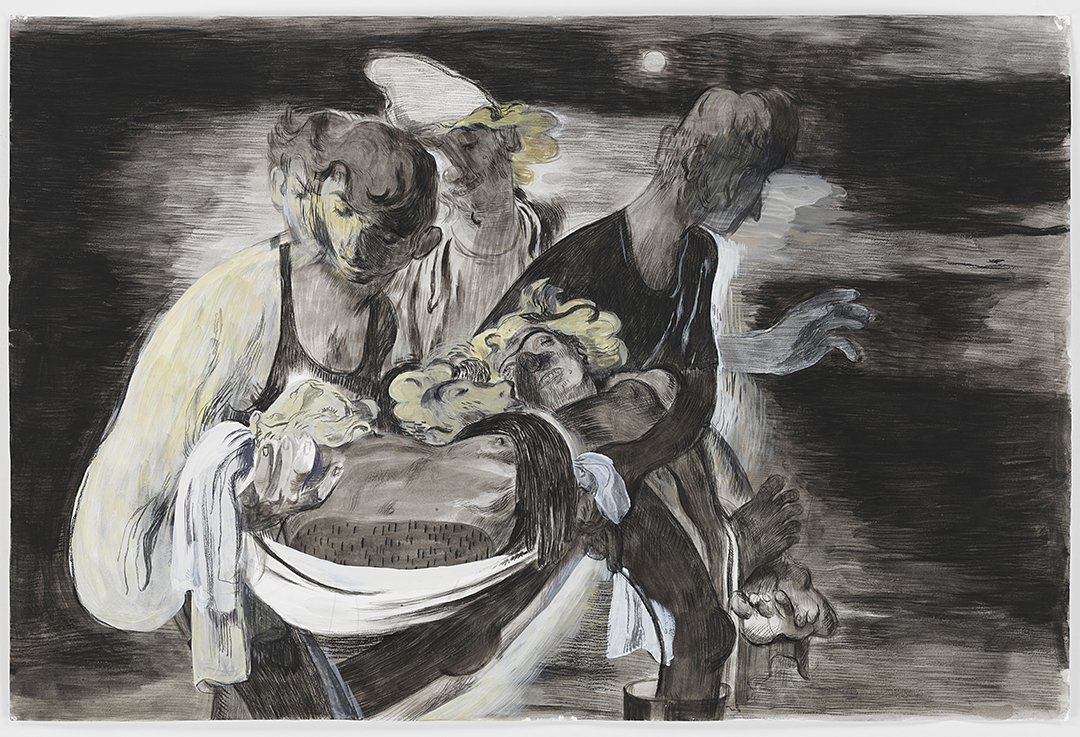
More specifically, it is remarkably intriguing how the expressive excess achieved here surrenders representation to an aestheticism emerging within the boundaries of order and tradition, thereby normalising the painting and partially deferring its content. Indeed, the way the conflicted unity of language and representational plane conceals its potency within Toor’s drawings, becoming subsumed by a more classicist or traditionalist sensibility, can be identified as a singular phenomenon within this scope. Thus, the painting, wherein radicalised form or figure nearly dissolves, evolves into an ambiguous appearance oriented toward self-cancellation, a flattened and almost liquid conception. Drifting toward the absurd in an effort to maintain equilibrium, this interpretation lends a psychosocial dimension to an alienated, solitary imaginary that is, much like historical precedents, rendered buoyant.
To state it plainly, Salman Toor’s playful yet equally unsettling imagery inhabits a register where hesitation and tension sit side by side. Associated with fluid brushwork, the figures and images here remain in an active posture that preserves their agency. Within this context, Toor’s painting asserts itself as a model of performative organisation, transforming into the stage for a distinct typology. Energetic and sombre expression, reinforced by pathologised anxieties, generates formal equivalents for the existing content within this complex field. It is evident that a new mode of behaviour and thought, indulged within green voids, comes to define Toor’s painting as a resolution to an individual rupture and a problem of self-presentation.
a depressive register compressed within the details
In place of a ravaged subject, we encounter a conception that foregrounds a will or desire eager for reconciliation. As the playful and melancholic mise-en-scène loses its sharp edges, it normalises, folding queer content into an ongoing practice of production aligned with a historical rhetoric. Undoubtedly, this irony, cultivated by Toor under the weight of his lived conditions as an immigrant, is above all a burden disguised as a question of language and style. Ultimately, within this visual field that transforms through relational inference into a representation of belonging, identity, and gender, Toor generates responses to new narratives that are dissonant, fractured, yet deeply sincere.
Prof. Mümtaz Sağlam, Copyright © November 2026, All rights reserved.

In his recent exhibition Someone Like You at the Courtauld Gallery, Salman Toor continues to narrate stories of integration experienced through migration alongside confrontations tied to his sexual identity. Favouring a mode of figurative painting that compellingly proposes its own formal renewal across structural organisation, visual coding, and stylistic idiom, Toor merits distinct critical attention. First and foremost, what sets Toor apart in this trajectory, given that he never hesitates to anchor his compositions in art-historical lineage and overt references, is undoubtedly an expressive intensity laden with eccentric and excessive qualifiers, blending humour with tension. Here, a queer space encompasses the painting, structured within a fluid continuity. Problematising his migratory experience through a South Asian, brown-skinned identity, Toor saturates this domain, wherein he integrates this sensibility with queer themes and codes, in a darkness and a toxic green that hold the subject matter in reserve.
Salman Toor: How Will I Now
ARTICLES ON SALMAN TOOR’S WORKS


gülay yaşayanlar / salman toor: a seemingly playful, immanent, and restless imaginary

gülay yaşayanlar / salman toor: a seemingly playful, immanent, and restless imaginary
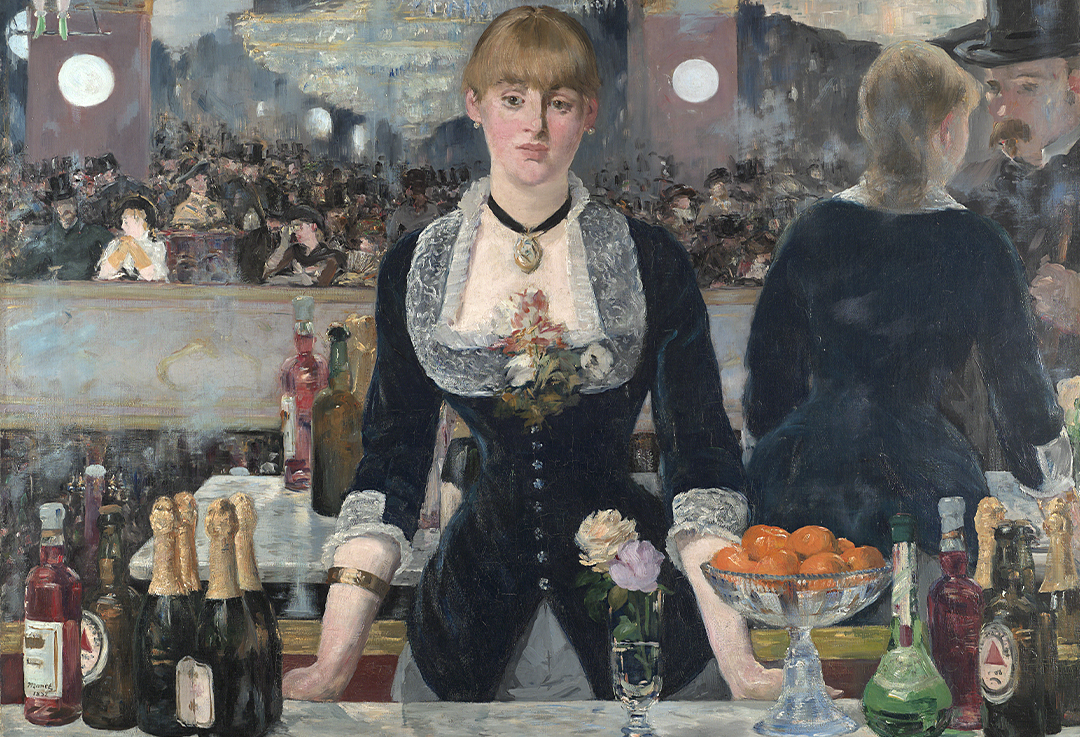
THE BAR ON EAST 13TH (2019)

EXHIBITION BOOKS AND POSTERS

Salman Toor: Someone Like You, Contributions by Richard Meyer, Aziz Sohail and Elena Crippa, Hardback, 152 pages, 80 colour illustrations, English, Paul Holberton Publishing, October 2026, London.

Salman Toor: No Ordinary Love, Foreword: Asma Naem and Christine, Contributor: Hanya Evan Maffitt, 143 pages, Hardcover, English, Publisher: Gregory R. Miller & Co. / Baltimore Museum of Art, November 2022, USA.

M Woods Museum in Beijing presented Salman Toor’s first solo museum exhibition in Asia, Salman Toor: New Paintings and Drawings (December 17, 2022 – April 2, 2023), curated by Victor Wang and Qi Yuanlin.

M Woods Museum in Beijing presented Salman Toor’s first solo museum exhibition in Asia, Salman Toor: New Paintings and Drawings (December 17, 2022 – April 2, 2023), curated by Victor Wang and Qi Yuanlin.
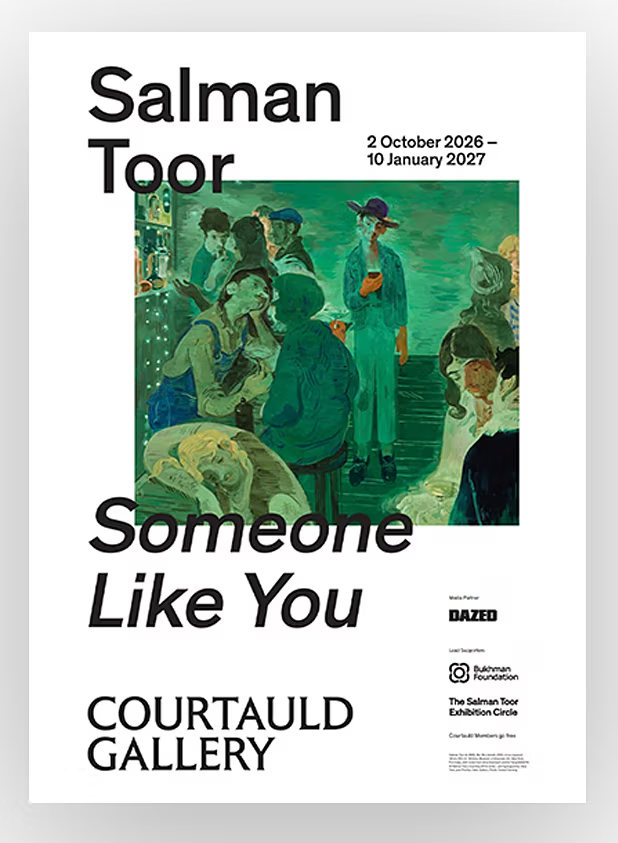
Courtauld Gallery in London presented Salman Toor’s first solo museum exhibition in Europa, Salman Toor: Someone Like You, 2026-2027, curated by Dr. Elena Crippa. .
BIOGRAPHY

Portrait of Salman Toor, Detail, Image credit Hugh Rochfort.
Salman Toor was born in 1983 in Lahore, Pakistan. He moved to the United States in 2002. He studied painting and drawing at Ohio Wesleyan University. In 2009, he completed his master’s degree at the Pratt Institute in New York. He has created portraits and group figure compositions that explore themes of social inequality and exclusion linked to notions of class. He has participated in major international exhibitions, including his highly acclaimed first solo exhibition at the Whitney Museum of American Art in New York (2020–21). She took part in the 60th International Art Exhibition of the Venice Biennale (2024). The exhibition at the Courtauld marks Toor’s first solo museum exhibition in Europe.


İZMİR - LONDON
saglamart; dinamik bir anlayış ile hareket eden, kültür-sanat ortamındaki olay ve olgulara, sanatçı tavırlarına, yapıtlara ve yayınlara odaklanan bağımsız bir yayın etkinliğidir. Tüm hakları saklıdır. Görüntü ve yazılar izinsiz kullanılamaz. / saglamart is an independent publishing initiative driven by a dynamic vision, focusing on events and developments in the cultural-artistic landscape, artist perspectives, works, and publications. All rights reserved. Images and texts cannot be used without permission.