
amar kanwar
paper and memory
MÜMTAZ SAĞLAM
"
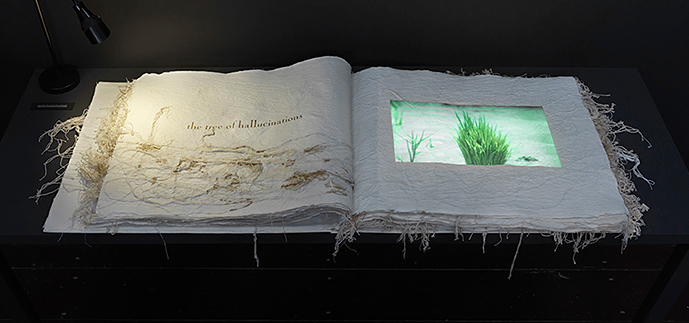
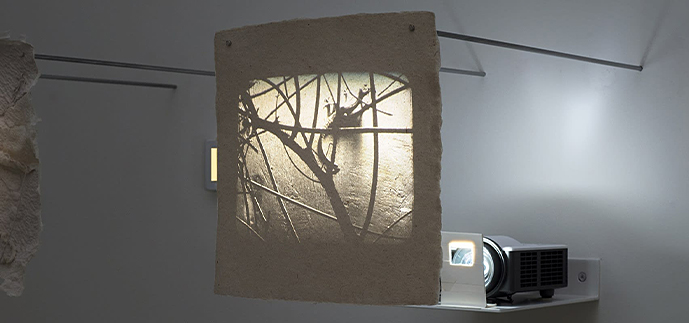
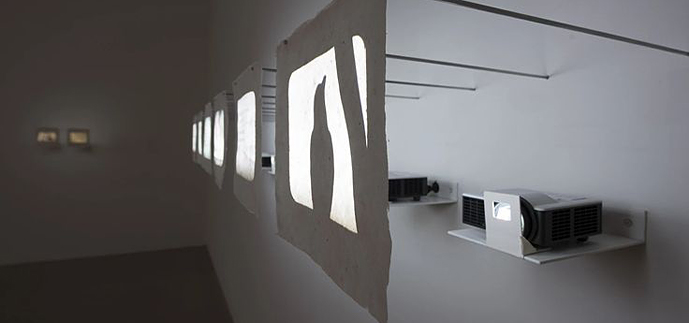
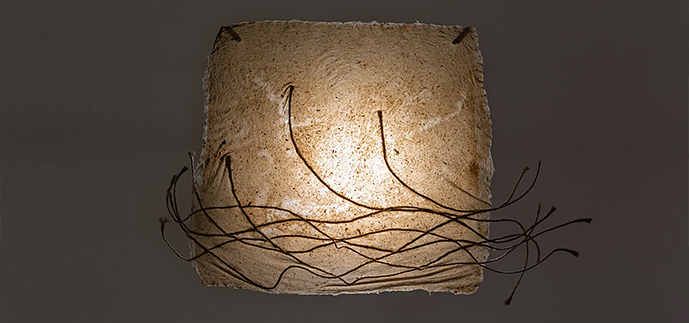
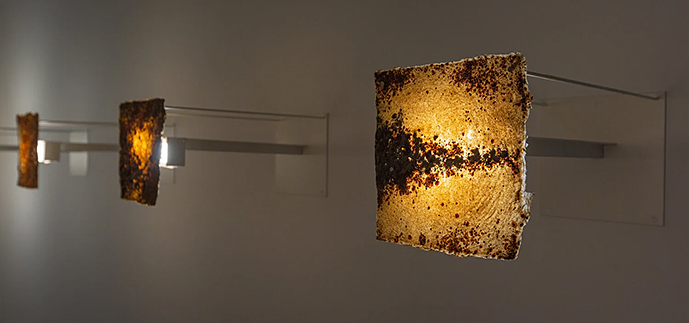
AMAR KANWAR’S INSTALLATIONS, WHICH CAN BE DESCRIBED AS A NARRATIVE AND CONCEPTUAL EXTENSION OF HIS FILMS, ARE PRIMARILY EXAMPLES OF AN APPROACH THAT INTEGRATES WITH PAPER. IN THIS CONTEXT, THE LETTERS WRITTEN BY AN ELDERLY MATHEMATICS PROFESSOR AFTER TAKING REFUGE IN AN ABANDONED TRAIN CAR IN THE FOREST, ESCAPING THE CHAOS OF THE WORLD, THE INTOLERANCE HE FACED, AND THE CRISIS OF TRUTH, SERVE AS CLEAR MANIFESTATIONS OF THE CONCEPTUAL FRAMEWORK AND MATERIAL CHOICES UNDERPINNING A BODY OF WORK THAT COULD ALSO BE DESCRIBED AS A TYPOLOGY OF DARKNESS AND BLINDNESS. THESE HANDMADE, WEATHERED PAPERS - ALONG WITH THE IMAGES AND TEXTUAL ELEMENTS THEY BEAR OR REFLECT - TRANSFORM INTO A LAYER OF MEMORY BROUGHT TO LIFE THROUGH LIGHT, SERVING AS THE INNER ARCHIVE OF AN ISOLATED MIND THROUGH AN ARRANGEMENT ANIMATED BY LIGHT PROJECTIONS.
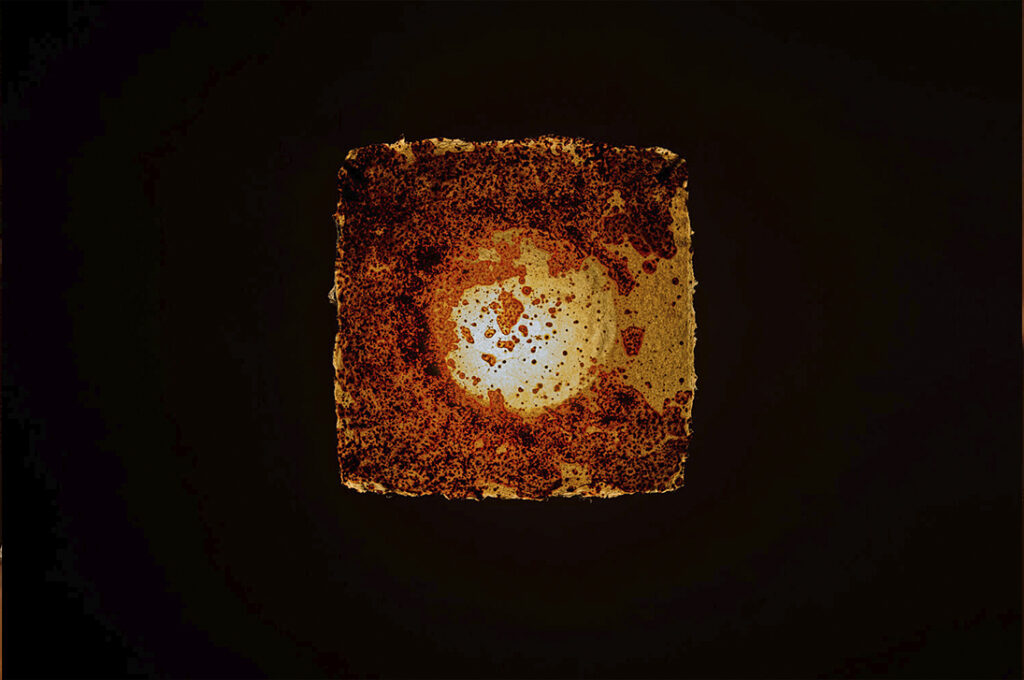
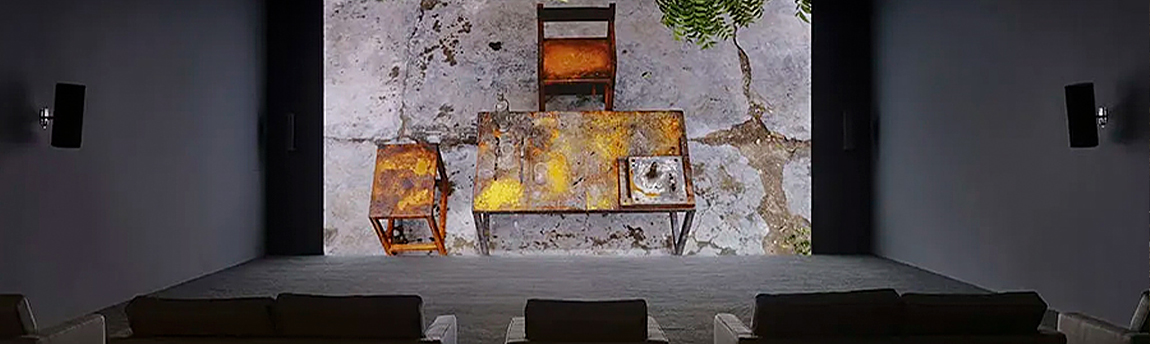
Amar Kanwar, installation view, Serpentine North, 2026. © Amar Kanwar. Photo: © Serpentine and Luke Walker.
Prof. Mümtaz Sağlam, Copyright © November 2026, All Rights Reserved.
NOTES
(1) Such a Morning (2017) is a contemporary allegory about the search for truth. From this epic sensory experience emerges an Album of Darkness, consisting of forty-nine letters dedicated to various forms of darkness; through this album, Kanwar reflects on ways to reinterpret the present and imagine new forms of thought and action. (https://www.pinaultcollection.com/palazzograssi/en/such-morning-amar-kanwar)
(2) Amar Kanwar’s Letters series is a multidisciplinary installation that emerged from the universe of the artist’s 2017 feature film Such a Morning and extends the narrative beyond the physical boundaries of the movie screen. In the film, a renowned mathematics professor, who takes refuge in an abandoned train car in the woods following his sudden retirement, draws the car’s windows shut, retreating into absolute darkness. During his time in the dark, as a result of the hallucinations he experiences and the inner epiphanies he undergoes, he writes a series of letters in which he classifies and examines “forty-nine different types of darkness.” The Letters installation transforms the letters written by this fictional character in the film into physical objects and spatial installations, directly immersing the viewer in the story.
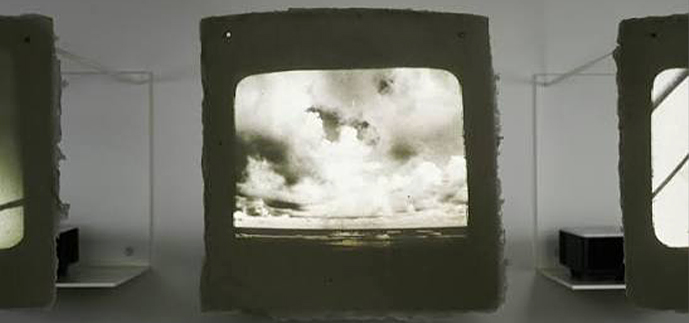
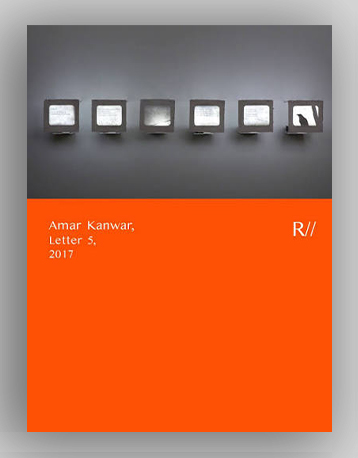
(3) Seven letters were created on 62 leaves made of banana, ramie, and cotton fibers, handcrafted by Sherna Dastur, with whom Kanwar collaborated. Amar Kanwar, Letter 6, 2017, Single back-projection, digital video, handmade ramie and cotton fiber paper, Edition of 6 plus 2 artist’s proofs (20345) Amar Kanwar, Letter 6, 2017, Single projection, digital video, 1 handmade ramie fiber paper, Edition 2/6 + 2AP, © Amar Kanwar. Courtesy Marian Goodman Gallery, Marian Goodman Gallery Installation view: Amar Kanwar, Letter 7, 2017, 4 digital video back-projections, 49 handmade ramie, cotton and banana fiber papers. Courtesy of the artist and Ishara Art Foundation. Photograph by Ismail Noor | Seeing Things
(4) Bakınız. [https://www.serpentinegalleries.org/about/press/amar-kanwar]
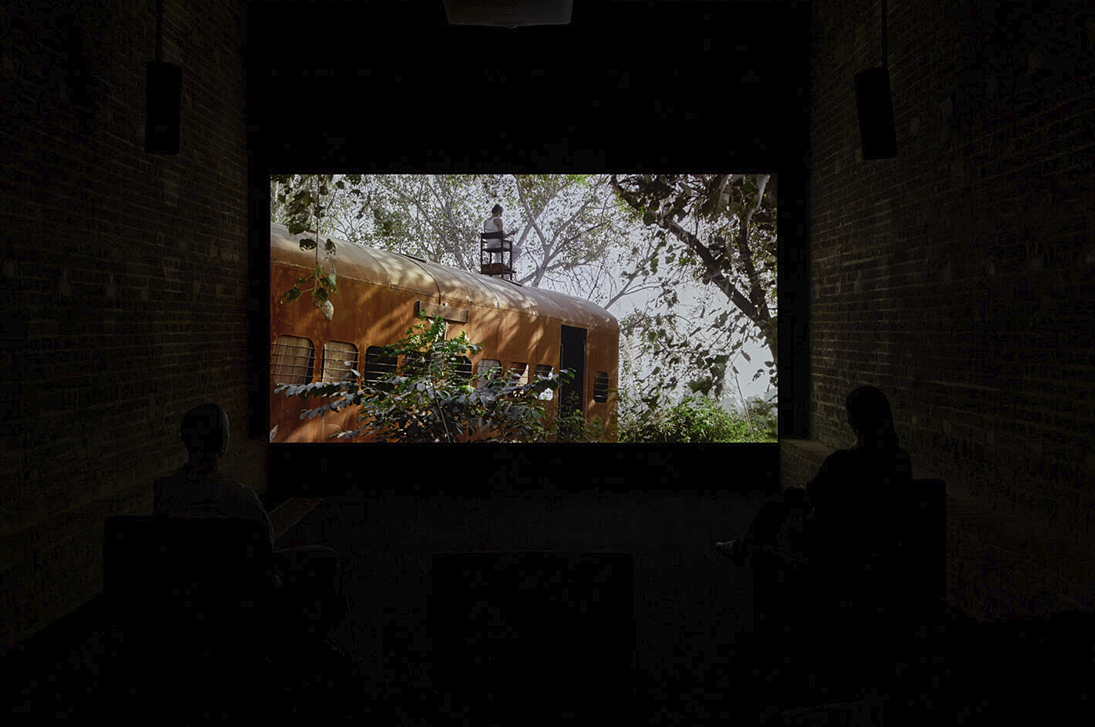
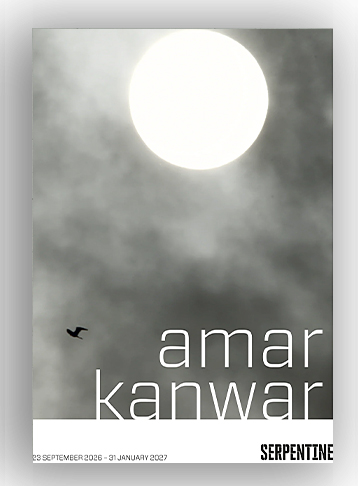
Amar Kanwar’s exhibition at Serpentine North encompasses works born of a practice operating through moving images and a fragmented visual order. The numerous visual elements aligned side by side in quiet harmony may be characterised as the emotional notations of a psychogeography. Here, alongside an approach that generates new narratives concerning tragic realities, one must particularly note an acute aesthetic sensibility that embraces drift as a strategy. Equally worthy of attention are the outcomes of a conceptual and experimental arrangement situated within a darkened environment, which transforms into literary forms through a discourse of history and politics fused with lyricism. In a sense, Kanwar constructs a layered temporality for himself through the non-hierarchical juxtaposition and repetition of interconnected archival elements. With these installations, presented as a rhetoric of expression and distinctly shaped by the reflections of a wounded consciousness, he pursues a critical dimension that emerges through linguistic shifts and relational aesthetics. Furthermore, he transforms each narrative into records synthesised by crisis, memory, and political history.

Amar Kanwar, The Peacock's Graveyard, 2023 (film still). Digital video installation, 7 screens, dimensions variable, 28 min., 16 sec. Courtesy of the artist and Marian Goodman Gallery.
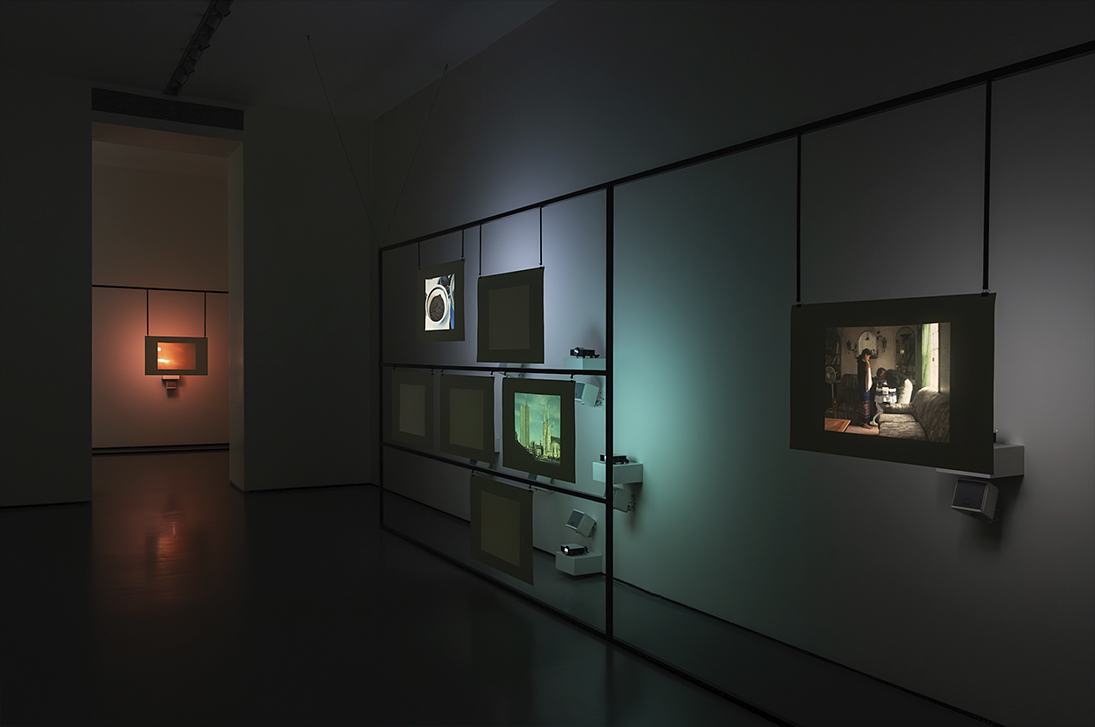
Amar Kanwar, The Torn First Pages, 2004-2008, Collection of the artist. Installation view Amar Kanwar. Co-travellers, 2026 Ph. Marco Cappelletti Studio © Palazzo Grassi, Pinault Collection
EXHIBITION CATALOGUE
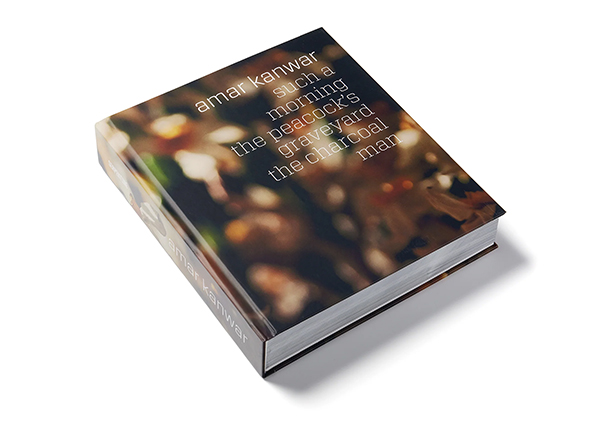
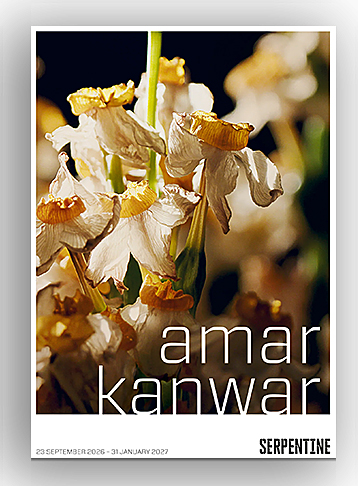
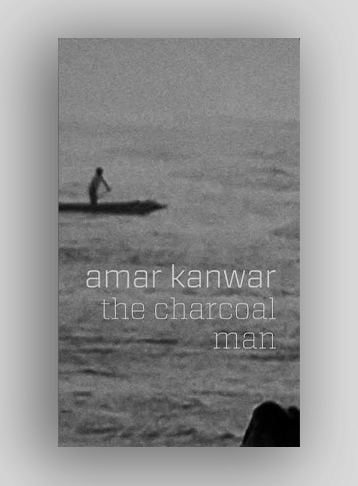
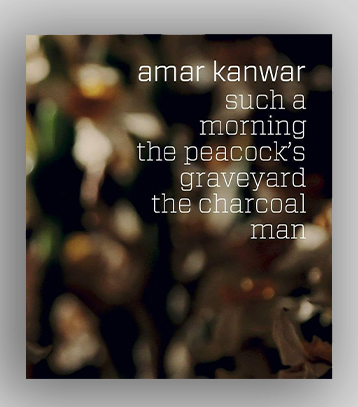
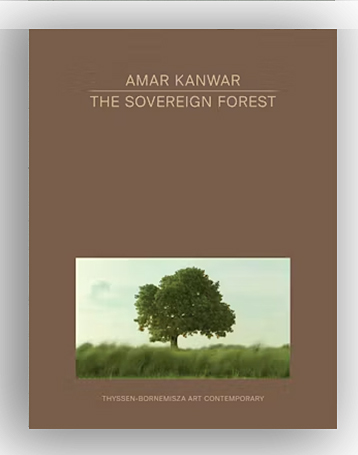
The catalogue, produced to accompany her exhibition at Serpentine North, was conceived by Kanwar as a storybook for adults. And it took the exhibition beyond the gallery. Designed by Sherna Dastur, the book reimagines the stories told in the artist’s moving-image works—Such a Morning (2017), The Peacock’s Graveyard (2023) and The Charcoal Man (2026)—in print.
ARTICLES ON AMAR KANWAR’S WORKS
mümtaz sağlam / amar kanwar: a visual language anchored in the aesthetics of ambiguity
mümtaz sağlam / belirsizlik estetiği üzerine yaslanan görsel dil
ABOUT THE THREE FILMS SCREENED AT THE EXHIBITION / GÖSTERİMİ YAPILAN ÜÇ FİLM HAKKINDA
Such a MornIng, 2017-19
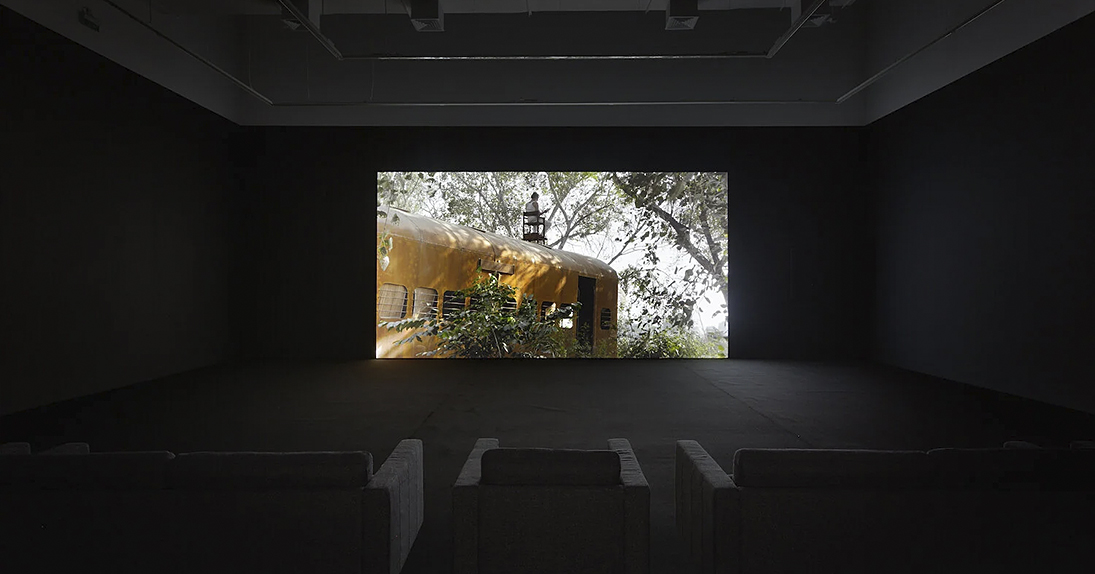
Amar Kanwar, Such a Morning, 2017–19 Digital video, colour, sound, 85 minutes 62 handmade ramie, cotton and banana fibre papers 17 digital video back projections Courtesy of the artist and Marian Goodman Gallery.
The Charcoal Man, 2026
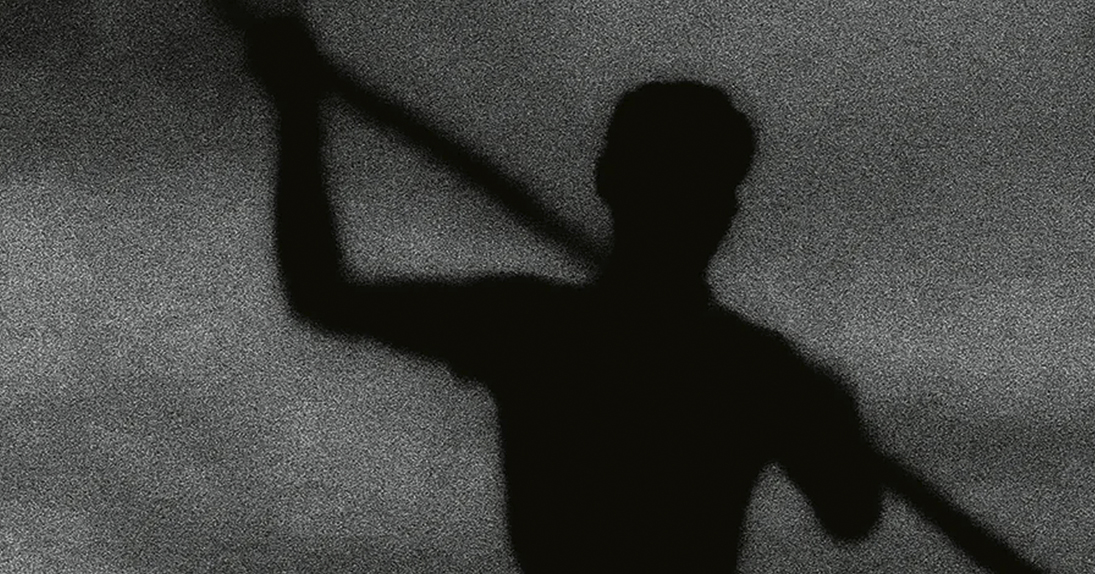
Amar Kanwar, The Charcoal Man, 2026, Digital video installation, 7 screens Colour, sound, 61 minutes 57 seconds (sync, loop) Courtesy of the artist and Marian Goodman Gallery.
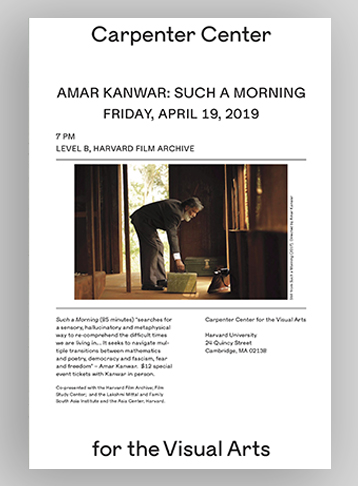
Such a Morning is a contemporary parable recounting the quiet relationship two people form with truth. Serving as a philosophical response to present-day reality, this feature film follows the story of a well-known retired mathematics professor who takes refuge in an abandoned train carriage in the forest. Throughout the film, as the professor blacks out the windows of the carriage, he develops new ways of seeing as darkness settles in. These revelations, part epiphany, part hallucination, take the form of a series of letters examining forty-nine different kinds of darkness. Through these letters, comprising video, light projections, and texts written on handmade fibrous paper, the exhibition carries the narrative beyond the film and into the gallery space. Meanwhile, the train carriage built for the film remains in Delhi: a monument dedicated to the professor who refuses to submit, steps off the tracks, and walks deep into the wild.
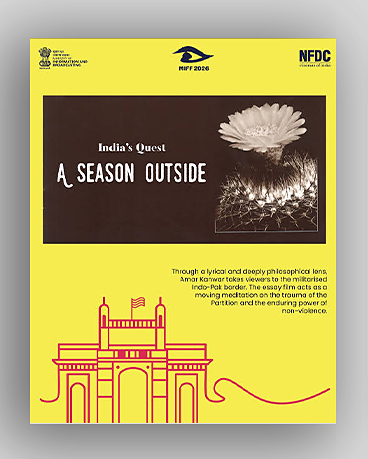
The Charcoal Man is a new seven-channel installation situated in a hybrid space where reality and fiction seamlessly coexist. Marking the 80th anniversary of the 1947 Partition of India, the work emerges from a relentless cycle of betrayal, revenge, and delusion. Witnessing the division of the Indian subcontinent into India, Pakistan, and later Bangladesh in 1971, this process triggered one of the largest and most violent mass migrations in history. Considered an extension of the narrative and cinematographic strategies explored in The Peacock’s Graveyard (2023), the piece weaves together diverse memories, images, texts, and archival materials to seek “coherence from fragmentation, insight from confluence, and stories within stories.”
The Peacock’s Graveyard, 2023
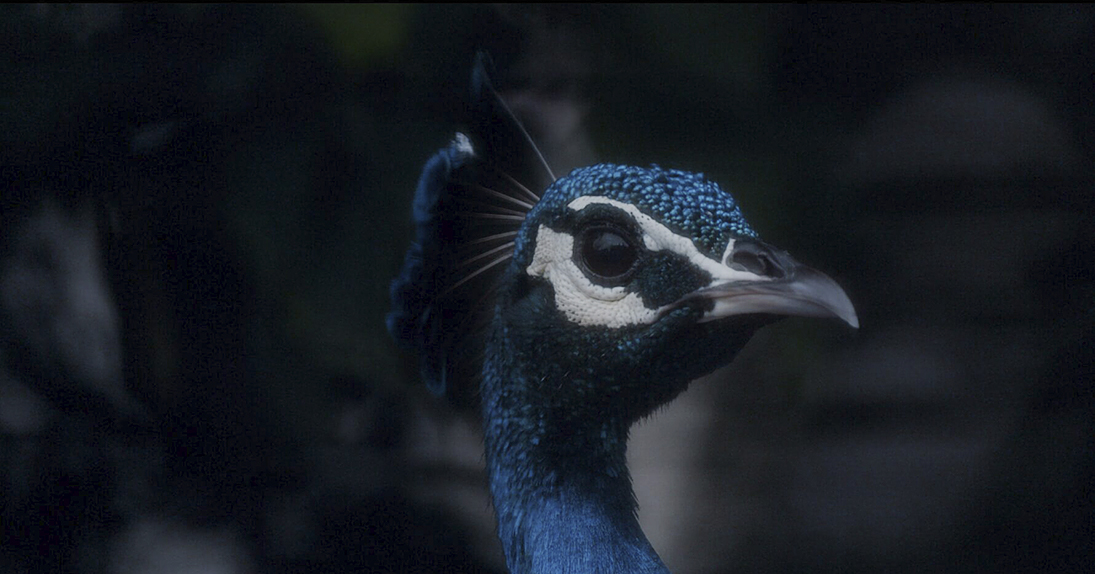
Amar Kanwar, The Peacock's Graveyard, 2023 (film still). Digital video installation, 7 screens colour, dimensions variable, 28 minutes, 16 seconds, Courtesy of the artist and Marian Goodman Gallery.
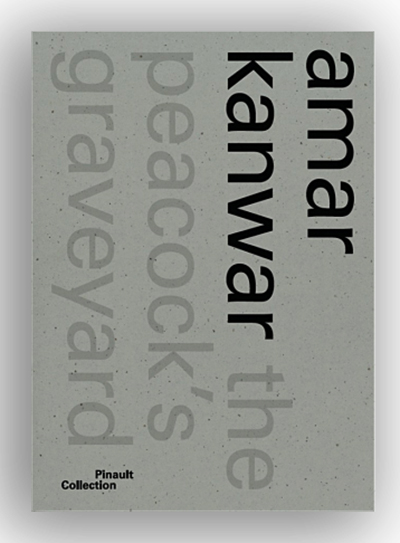
The Peacock’s Graveyard* brings together images and texts that meditate deeply on the impermanence of existence. Across a constellation of seven invisible screens, five stories rhythmically emerge and recede. Kanwar describes these stories as follows: “Perhaps a kind of gift, an anthology; something one can keep close at hand or carry along to help us reshape life, ideologies, politics, and forms of solidarity. Stories that open up space to reflect on our unbearable arrogance, our delusions, and our deep-seated desire for violence.”
LETTERS SERIES / MEKTUPLAR SERİSİ
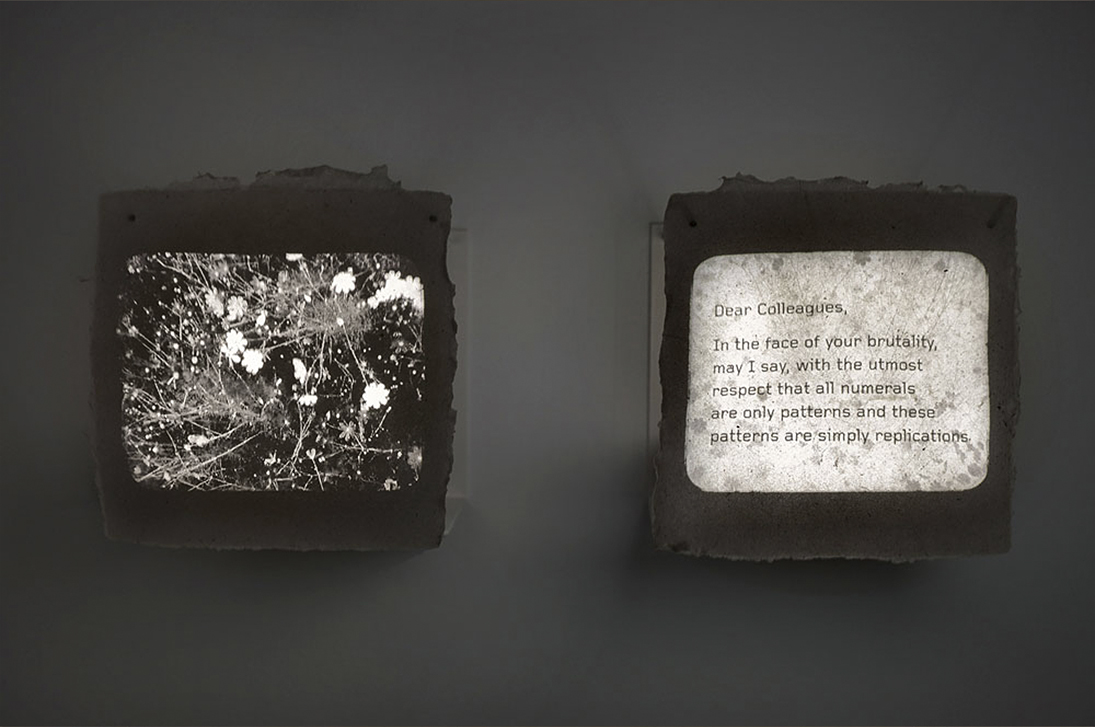
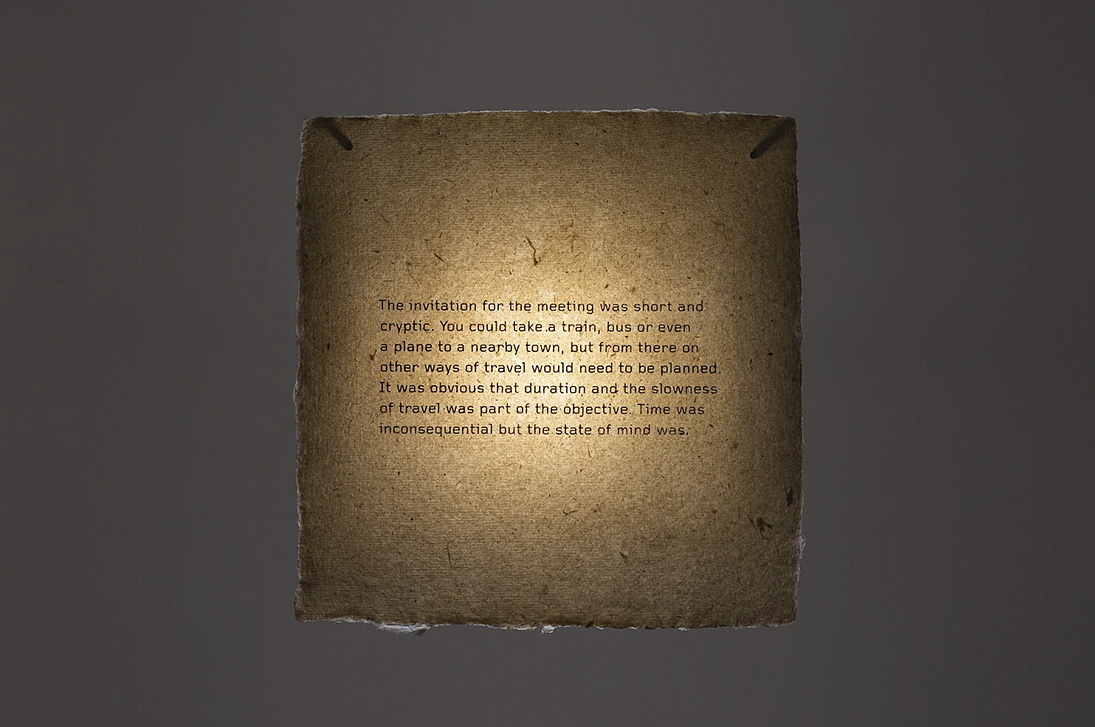
Amar Kanwar’s Letters series is a multidisciplinary installation emerging from the diegetic universe of the artist’s 2017 feature film, Such a Morning, extending the narrative beyond the material confines of the cinematic apparatus. In the film, following his abrupt retirement, a renowned mathematics professor takes refuge in an abandoned train carriage deep within a forest, blacking out the windows to retreat into absolute darkness. During this period of ocular deprivation, prompted by hallucinations and inner epiphanies, he composes a series of epistles that classify and investigate "forty-nine distinct types of darkness." The Letters installation materializes these fictional missives into physical artifacts and spatial interventions, reconfiguring the viewer’s position from passive observer to embodied participant within the narrative architecture. Kanwar conceives of the letters not merely as texts to be read, but as haptic, sculptural surfaces that enter into dialogue with light and tactile perception: the texts are printed on handmade natural papers composed of banana, ramie, and cotton fibers. The materiality, translucency, and fragility of these substrates register varying gradations of obscurity, challenging the ocularcentric demand for absolute transparency. Animated by micro-video projections and chiaroscuro plays of light cast onto or behind the sheets, the texts remain in visual flux—periodically surfacing, receding, and dissolving into the ambient darkness of the gallery. Select letters are accompanied by low-frequency sonic installations evocative of wind, rustling foliage, or the distant cadence of a train, further destabilizing the primacy of the visual. Whereas Western scopic regimes conventionally align darkness with ignorance, fear, or void, Kanwar’s series reclaims it as a site of resistance, sanctuary, deep contemplation, and a counter-visuality. Alongside its spiritual resonances, the "forty-nine darknesses" operate as a poetic critique of contemporary authoritarianism, the post-truth spectacle, and collective sociopolitical blindness. In this framework, the professor’s gesture of sealing the carriage windows signifies not a withdrawal from the world, but a deliberate suspension of dominant visual noise and media manipulation in order to attune oneself to truth anew. Letters typically unfolds across the corridors, liminal thresholds, or adjacent galleries immediately surrounding the black-box screening room of Such a Morning. Prior to entering or upon exiting the screening, spectators navigate through these textual constellations, engaging with the fragmented notations of the protagonist’s psyche through a self-directed, embodied temporality. Premiering in 2017 within the framework of Documenta 14, the installation has subsequently been realized in site-specific iterations at the Ishara Art Foundation (Dubai), the Kiran Nadar Museum of Art (New Delhi), and the Serpentine North Gallery (London). (Compiled Text)
DOKÜMANLAR
BİYOGRAFİ
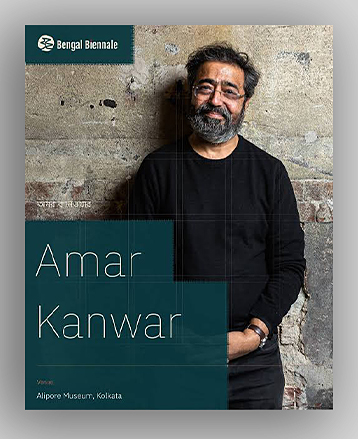
Amar Kanwar
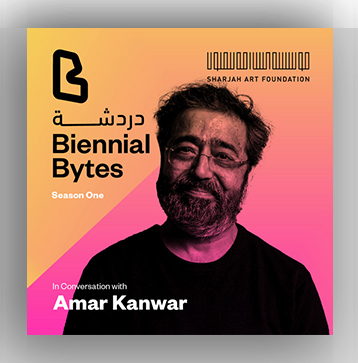
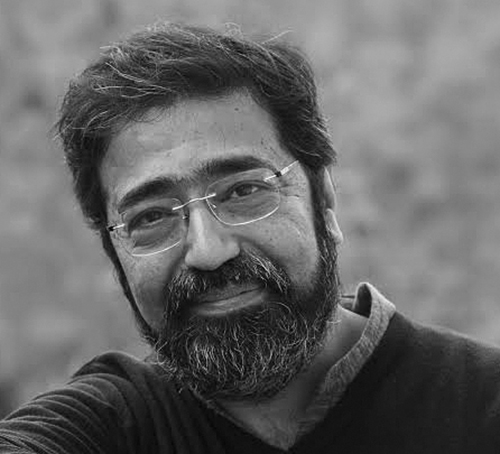
Photo: Monica Tewary.
Amar Kanwar (b. 1964, New Delhi, India) has, for over three decades, developed a singular body of lyrical films and multi-screen video installations rooted in the distinct context of the Indian subcontinent. Steeped in regional specificity and deeply personal histories, his works navigate seamlessly between documentary and fiction, as well as the archival and the poetic, while addressing some of the most urgent issues of our time. Shaped by the history of India, Kanwar frequently reflects on the enduring legacy of decolonization and the 1947 Partition, which led to the creation of India, Pakistan, and later Bangladesh in 1971. Across his films, he investigates the politics of power, displacement, violence, justice, and memory. Reckoning with the past to better grasp the pressing concerns of the present, Kanwar’s practice uncovers the elements that unite us regardless of geography or context.
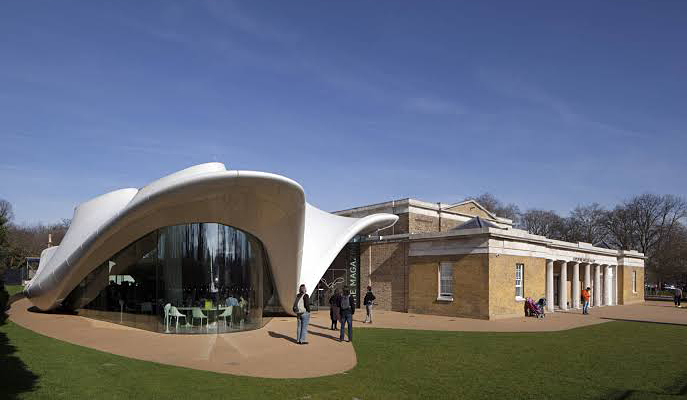
Serpentine North Gallery, West Carriage Drive, London W2 2AR (Fotoğraf: Luke Hayes)

İZMİR - LONDON
saglamart; dinamik bir anlayış ile hareket eden, kültür-sanat ortamındaki olay ve olgulara, sanatçı tavırlarına, yapıtlara ve yayınlara odaklanan bağımsız bir yayın etkinliğidir. Tüm hakları saklıdır. Görüntü ve yazılar izinsiz kullanılamaz. / saglamart is an independent publishing initiative driven by a dynamic vision, focusing on events and developments in the cultural-artistic landscape, artist perspectives, works, and publications. All rights reserved. Images and texts cannot be used without permission.